Clifford G. Gaddy - Böcker
Visar alla böcker från författaren Clifford G. Gaddy. Handla med fri frakt och snabb leverans.
5 produkter
5 produkter
376 kr
Skickas inom 10-15 vardagar
Fiona Hill and other U.S. public servants have been recognized as Guardians of the Year in TIME's 2019 Person of the Year issue.From the KGB to the Kremlin: a multidimensional portrait of the man at war with the West.Where do Vladimir Putin's ideas come from? How does he look at the outside world? What does he want, and how far is he willing to go?The great lesson of the outbreak of World War I in 1914 was the danger of misreading the statements, actions, and intentions of the adversary. Today, Vladimir Putin has become the greatest challenge to European security and the global world order in decades. Russia's 8,000 nuclear weapons underscore the huge risks of not understanding who Putin is.Featuring five new chapters, this new edition dispels potentially dangerous misconceptions about Putin and offers a clear-eyed look at his objectives. It presents Putin as a reflection of deeply ingrained Russian ways of thinking as well as his unique personal background and experience.Praise for the first edition:If you want to begin to understand Russia today, read this book.Sir John Scarlett, former chief of the British Secret Intelligence Service (MI6)For anyone wishing to understand Russia's evolution since the breakup of the Soviet Union and its trajectory since then, the book you hold in your hand is an essential guide.John McLaughlin, former deputy director of U.S. Central IntelligenceOf the many biographies of Vladimir Putin that have appeared in recent years, this one is the most useful.Foreign AffairsThis is not just another Putin biography. It is a psychological portrait.The Financial TimesQ: Do you have time to read books? If so, which ones would you recommend? My goodness, let's see. There's Mr. Putin, by Fiona Hill and Clifford Gaddy. Insightful.Vice President Joseph Biden in Joe Biden: The Rolling Stone Interview.
809 kr
Skickas inom 10-15 vardagar
Fiona Hill and other U.S. public servants have been recognized as Guardians of the Year in TIME's 2019 Person of the Year issue.From the KGB to the Kremlin: a multidimensional portrait of the man at war with the West.Where do Vladimir Putin's ideas come from? How does he look at the outside world? What does he want, and how far is he willing to go?The great lesson of the outbreak of World War I in 1914 was the danger of misreading the statements, actions, and intentions of the adversary. Today, Vladimir Putin has become the greatest challenge to European security and the global world order in decades. Russia's 8,000 nuclear weapons underscore the huge risks of not understanding who Putin is.Featuring five new chapters, this new edition dispels potentially dangerous misconceptions about Putin and offers a clear-eyed look at his objectives. It presents Putin as a reflection of deeply ingrained Russian ways of thinking as well as his unique personal background and experience.Praise for the first edition:If you want to begin to understand Russia today, read this book.Sir John Scarlett, former chief of the British Secret Intelligence Service (MI6)For anyone wishing to understand Russia's evolution since the breakup of the Soviet Union and its trajectory since then, the book you hold in your hand is an essential guide.John McLaughlin, former deputy director of U.S. Central IntelligenceOf the many biographies of Vladimir Putin that have appeared in recent years, this one is the most useful.Foreign AffairsThis is not just another Putin biography. It is a psychological portrait.The Financial TimesQ: Do you have time to read books? If so, which ones would you recommend? My goodness, let's see. There's Mr. Putin, by Fiona Hill and Clifford Gaddy. Insightful.Vice President Joseph Biden in Joe Biden: The Rolling Stone Interview.
282 kr
Skickas inom 10-15 vardagar
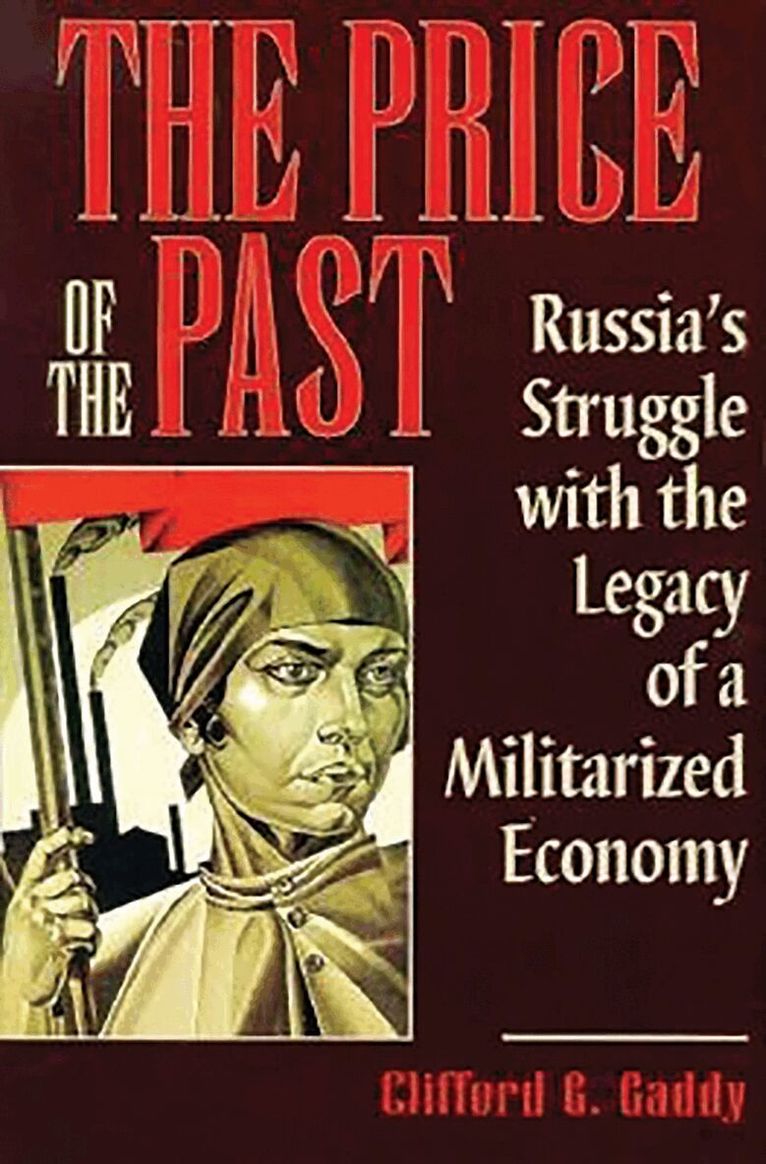
For nearly sixty years, the Soviet Union had the most militarized economy in history. The sheer volume of arms produced, and the physical and human dimensions of the industrial apparatus used to produce those arms, was unmatched. Militarization affected every fiber of the economic system; for individuals and households, it provided support for measures to restrict free choice in almost every aspect of people's personal lives, from where they lived and worked to what they ate and wore.All of this has now changed radically. Russia has removed nearly all the restrictions on individuals and it is now drastically reducing its military-industrial sector. By some measures, one could say that the country has already demilitarized. Russia today produces only a small fraction of the arms it did five years ago, but militarization of the economy is far from an issue of the past for Russia. As this book clearly demonstrates, the costs which it imposed represent one of the biggest continuing burdens that Russia will have to bear. One of Clifford Gaddy's main purposes of this book is to uncover the enduring costs of militarization.This book differs from other studies of the overall effect of militarization on Soviet society in two ways. First, it stresses the connection between market reform and demilitarization. It shows how introducing market prices and giving citizens and firms freedom of choice have progressively stripped away many of the advantages previously enjoyed by the Soviet military-industrial complex. Second, the book concentrates on the consequences of militarization and demilitarization not only for enterprises, but also for individuals and local communities. This broad view provides new insights into how pervasive militarization really was in the past and how difficult demilitarization is and will continue to be in the transition period.The book is divided into two parts that focus loosely on ""the system"" and ""the people."" The first talks about what the Soviet defense economy was and how it has become encompassed by the overall reform process since 1985. The second analyzes how the behavior of the people at the grassroots is helping to shape the overall process of demilitarization in Russia. Gaddy focuses on the workers of the Russian defense enterprises, the notion of a paternalistic enterprise, and the cities and regions that depend on the defense enterprises. He concludes by assessing what the future of demilitarization will be, with attention to three levels: the enterprises, the people, and the regions.
296 kr
Skickas inom 10-15 vardagar
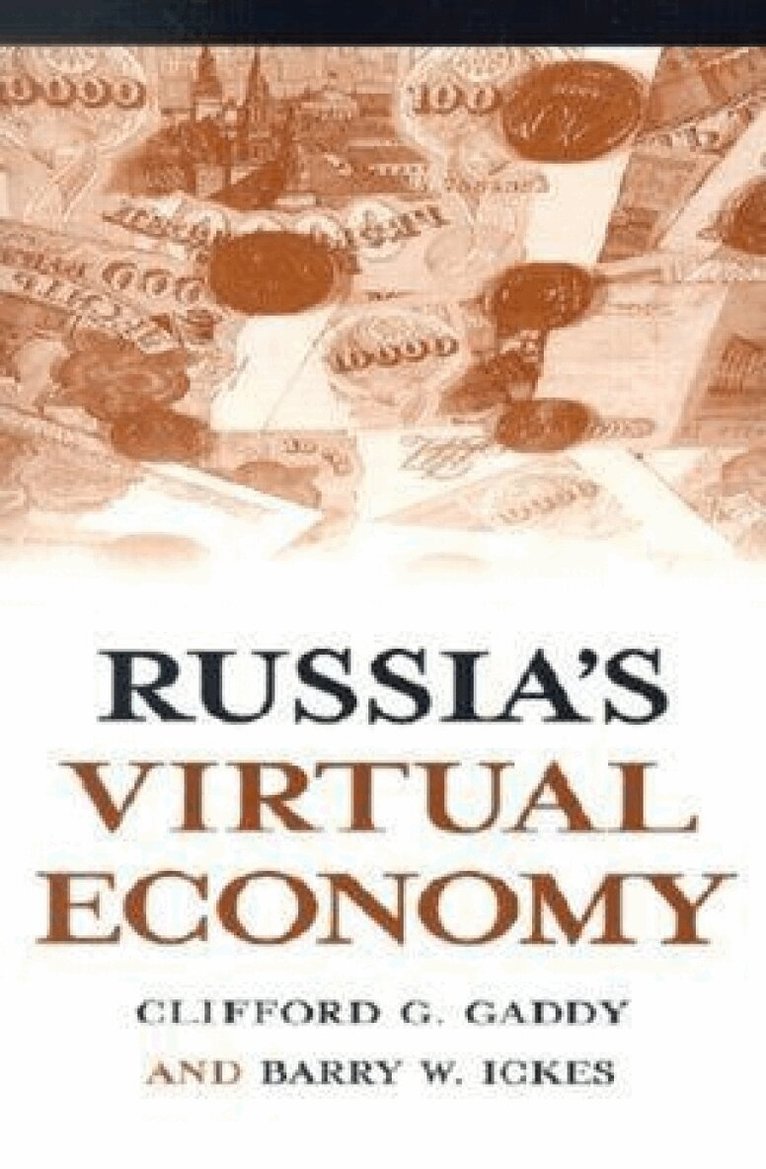
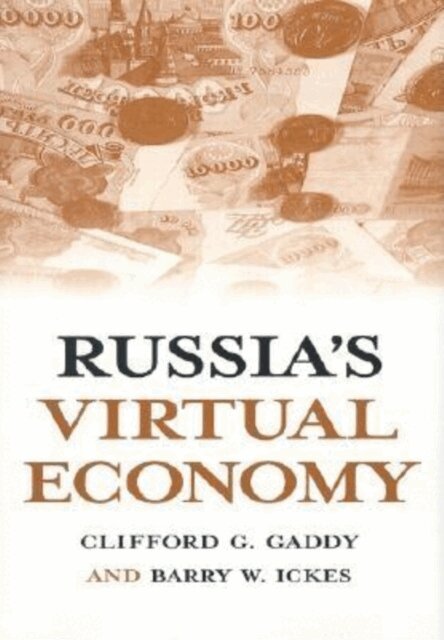
Clifford Gaddy's and Barry Ickes' paradigm of the ""virtual economy"" has fundamentally changed the way people think about Russia's economy. Circulated at the highest levels of the Russian and U.S. governments and reported in leading publications worldwide, their thesis--that Russia's economy is based on illusion or pretense about nearly every important economic yardstick, including prices, sales, wages and budgets--has forced broad recognition of the inadequacies of the intended market reform policies in Russia. More important, their work has provided a coherent framework for understanding how and why so much of Russia's economy has resisted reform. Gaddy and Ickes now use the virtual economy concept to project the near- and middle-term future of the Russian economy and suggest possible policy responses. Drawing on new empirical material from published and unpublished sources and from their own extensive field work in Russia, the authors examine critical aspects of the virtual economy: manufacturing enterprises, households and the public sectors, both local and federal. For the first time, they will also integrate the financial and agricultural sectors into their model. Gaddy's and Ickes' book can be expected to be a seminal work for understanding the inner workings of the Russian economy. Clifford G. Gaddy is a fellow in Foreign Policy Studies at the Brookings Institution and a member of Brookings' Center on Social and Economic Dynamics. He is the author of The Price of the Past: Russia's Struggle with the Legacy of a Militarized Economy (Brookings, 1996) and coauthor of Open for Business: Russia's Return to the Global Economy(Brookings, 1992). Barry W. Ickes is associate professor of economics at Pennsylvania State University and director of research at the New Economic School, Moscow.
287 kr
Skickas inom 10-15 vardagar
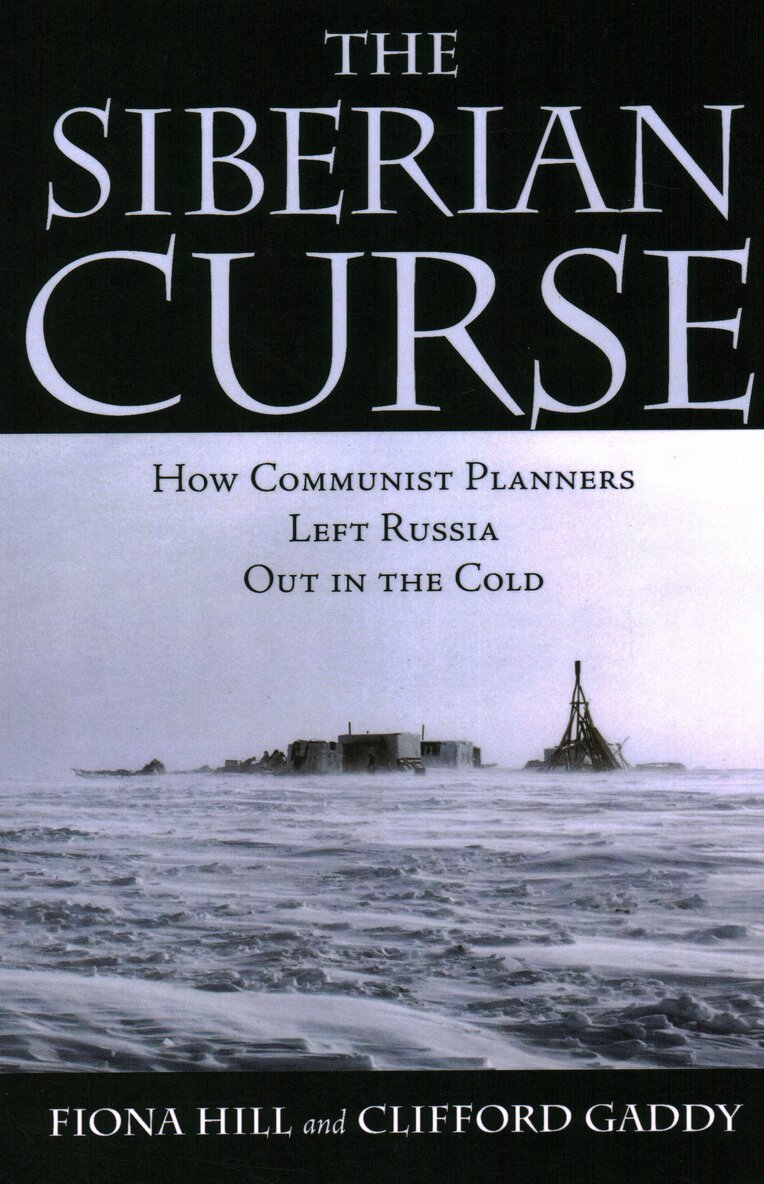
Can Russia ever become a normal, free-market, democratic society? Why have so many reforms failed since the Soviet Union's collapse? In this highly-original work, Fiona Hill and Clifford Gaddy argue that Russia's geography, history, and monumental mistakes perpetrated by Soviet planners have locked it into a dead-end path to economic ruin. Shattering a number of myths that have long persisted in the West and in Russia, The Siberian Curse explains why Russia's greatest assetsits gigantic size and Siberia's natural resourcesare now the source of one its greatest weaknesses. For seventy years, driven by ideological zeal and the imperative to colonize and industrialize its vast frontiers, communist planners forced people to live in Siberia. They did this in true totalitarian fashion by using the GULAG prison system and slave labor to build huge factories and million-person cities to support them. Today, tens of millions of people and thousands of large-scale industrial enterprises languish in the cold and distant places communist planners put themnot where market forces or free choice would have placed them. Russian leaders still believe that an industrialized Siberia is the key to Russia's prosperity. As a result, the country is burdened by the ever-increasing costs of subsidizing economic activity in some of the most forbidding places on the planet. Russia pays a steep price for continuing this follyit wastes the very resources it needs to recover from the ravages of communism. Hill and Gaddy contend that Russia's future prosperity requires that it finally throw off the shackles of its Soviet past, by shrinking Siberia's cities. Only by facilitating the relocation of population to western Russia, closer to Europe and its markets, can Russia achieve sustainable economic growth. Unfortunately for Russia, there is no historical precedent for shrinking cities on the scale that will be required. Downsizing Siberia will be a costly and wrenching proce