Committee on the Consequences of Uninsurance – författare
501 kr
Läs direkt efter köp
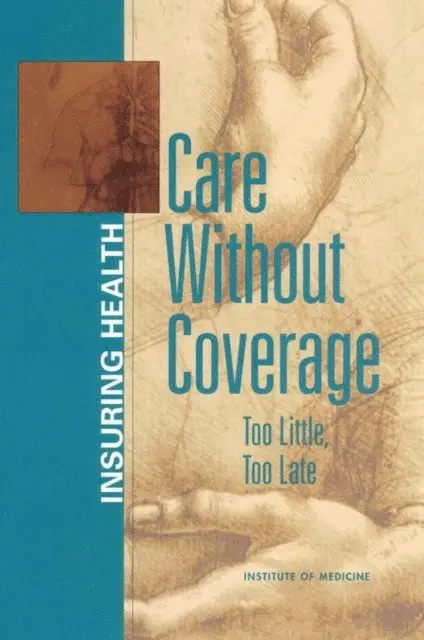
Many Americans believe that people who lack health insurance somehow get the care they really need. Care Without Coverage examines the real consequences for adults who lack health insurance. The study presents findings in the areas of prevention and screening, cancer, chronic illness, hospital—based care, and general health status. The committee looked at the consequences of being uninsured for people suffering from cancer, diabetes, HIV infection and AIDS, heart and kidney disease, mental illness, traumatic injuries, and heart attacks. It focused on the roughly 30 million—one in seven—working—age Americans without health insurance. This group does not include the population over 65 that is covered by Medicare or the nearly 10 million children who are uninsured in this country. The main findings of the report are that working-age Americans without health insurance are more likely to receive too little medical care and receive it too late; be sicker and die sooner; and receive poorer care when they are in the hospital, even for acute situations like a motor vehicle crash.
501 kr
Läs direkt efter köp
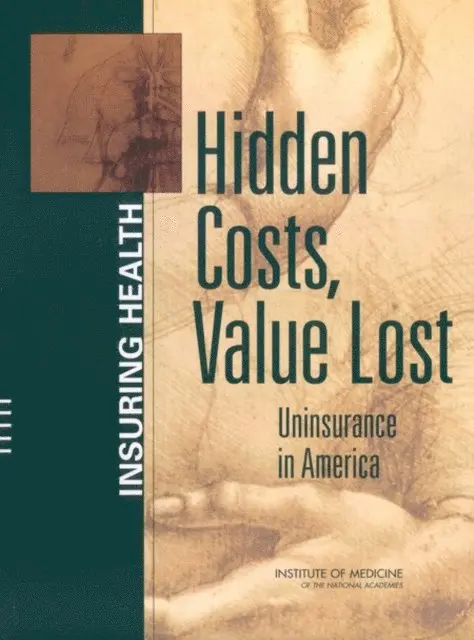
Hidden Costs, Value Lost concludes that the estimated benefits across society in health years of life gained by providing the uninsured with the kind and amount of health services that the insured use, are likely greater than the additional social costs of doing so. The potential economic value to be gained in better health outcomes from uninterrupted coverage for all Americans is estimated to be between $65 and $130 billion each year.
752 kr
Läs direkt efter köp
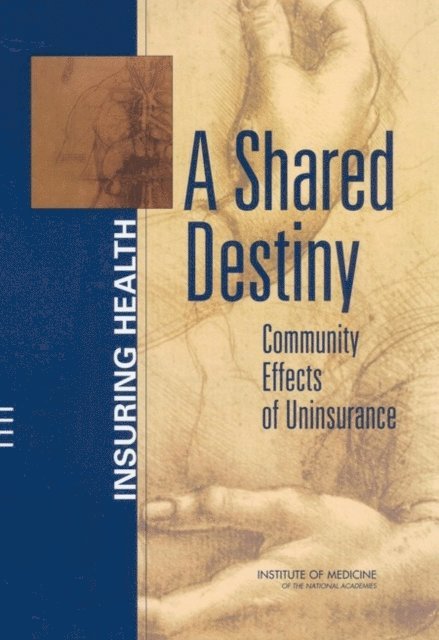
A Shared Destiny is the fourth in a series of six reports on the problems of uninsurancein the United States. This report examines how the quality, quantity, and scopeof community health services can be adversely affected by having a large or growinguninsured population. It explores the overlapping financial and organizational basisof health services delivery to uninsured and insured populations, the effects of communityuninsurance on access to health care locally, and the potential spillovereffects on a community''s economy and the health of its citizens. The committeebelieves it is both mistaken and dangerous to assume that the persistence of a sizableuninsured population in the United States harms only those who are uninsured.
752 kr
Läs direkt efter köp
641 kr
Läs direkt efter köp
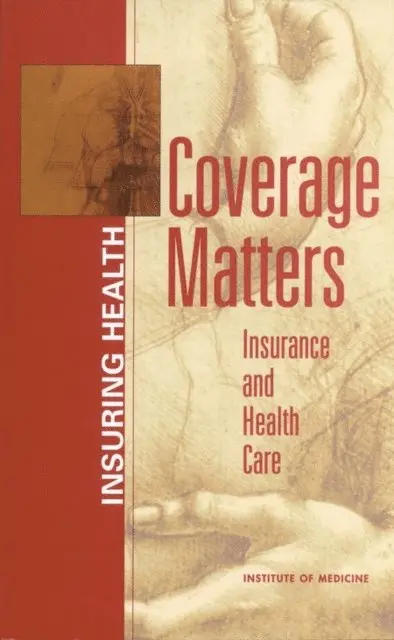
Roughly 40 million Americans have no health insurance, private or public, and the number has grown steadily over the past 25 years. Who are these children, women, and men, and why do they lack coverage for essential health care services? How does the system of insurance coverage in the U.S. operate, and where does it fail? The first of six Institute of Medicine reports that will examine in detail the consequences of having a large uninsured population, Coverage Matters: Insurance and Health Care, explores the myths and realities of who is uninsured, identifies social, economic, and policy factors that contribute to the situation, and describes the likelihood faced by members of various population groups of being uninsured. It serves as a guide to a broad range of issues related to the lack of insurance coverage in America and provides background data of use to policy makers and health services researchers.
376 kr
Läs direkt efter köp
A Shared Destiny is the fourth in a series of six reports on the problems of uninsurancein the United States. This report examines how the quality, quantity, and scopeof community health services can be adversely affected by having a large or growinguninsured population. It explores the overlapping financial and organizational basisof health services delivery to uninsured and insured populations, the effects of communityuninsurance on access to health care locally, and the potential spillovereffects on a community''s economy and the health of its citizens. The committeebelieves it is both mistaken and dangerous to assume that the persistence of a sizableuninsured population in the United States harms only those who are uninsured.
351 kr
Läs direkt efter köp
Many Americans believe that people who lack health insurance somehow get the care they really need. Care Without Coverage examines the real consequences for adults who lack health insurance. The study presents findings in the areas of prevention and screening, cancer, chronic illness, hospital—based care, and general health status. The committee looked at the consequences of being uninsured for people suffering from cancer, diabetes, HIV infection and AIDS, heart and kidney disease, mental illness, traumatic injuries, and heart attacks. It focused on the roughly 30 million—one in seven—working—age Americans without health insurance. This group does not include the population over 65 that is covered by Medicare or the nearly 10 million children who are uninsured in this country. The main findings of the report are that working-age Americans without health insurance are more likely to receive too little medical care and receive it too late; be sicker and die sooner; and receive poorer care when they are in the hospital, even for acute situations like a motor vehicle crash.
326 kr
Läs direkt efter köp
Roughly 40 million Americans have no health insurance, private or public, and the number has grown steadily over the past 25 years. Who are these children, women, and men, and why do they lack coverage for essential health care services? How does the system of insurance coverage in the U.S. operate, and where does it fail? The first of six Institute of Medicine reports that will examine in detail the consequences of having a large uninsured population, Coverage Matters: Insurance and Health Care, explores the myths and realities of who is uninsured, identifies social, economic, and policy factors that contribute to the situation, and describes the likelihood faced by members of various population groups of being uninsured. It serves as a guide to a broad range of issues related to the lack of insurance coverage in America and provides background data of use to policy makers and health services researchers.
351 kr
Läs direkt efter köp
Hidden Costs, Value Lost concludes that the estimated benefits across society in health years of life gained by providing the uninsured with the kind and amount of health services that the insured use, are likely greater than the additional social costs of doing so. The potential economic value to be gained in better health outcomes from uninterrupted coverage for all Americans is estimated to be between $65 and $130 billion each year.
376 kr
Läs direkt efter köp
According to the Census Bureau, in 2003 more than 43 million Americans lackedhealth insurance. Being uninsured is associated with a range of adverse health,social, and economic consequences for individuals and their families, for the healthcare systems in their communities, and for the nation as a whole. This report isthe sixth and final report in a series by the Committee on the Consequences ofUninsurance, intended to synthesize what is known about these consequences andcommunicate the extent and urgency of the issue to the public. Insuring America''sHealth recommends principles related to universality, continuity of coverage, affordabilityto individuals and society, and quality of care to guide health insurancereform. These principles are based on the evidence reviewed in the committee''s previousfive reports and on new analyses of past and present federal, state, and localefforts to reduce uninsurance. The report also demonstrates how those principlescan be used to assess policy options. The committee does not recommend a specificcoverage strategy. Rather, it shows how various approaches could extend coverageand achieve certain of the committee''s principles.
390 kr
Läs direkt efter köp
655 kr
Tillfälligt slut
562 kr
Tillfälligt slut
727 kr
Tillfälligt slut
727 kr
Tillfälligt slut
562 kr
Tillfälligt slut
590 kr
Tillfälligt slut