Board on Health Care Services – författare
552 kr
Läs direkt efter köp
Digital health encompasses a broad array of tools and strategies with the goals of advancing research, increasing health care access and quality, and making care more personalized. It encompasses health content, digital health interventions, and digital applications, such as communication tools connecting patients and clinicians (e.g., secure email in the patient portal, text, chat, video visit), remote monitoring tools, clinical decision support tools, and systems for exchanging health information. Patient-facing tools, tools for clinicians, and systems to facilitate research and care improvement are all part of this diverse landscape, and each raises unique opportunities and potential challenges.
To examine key policy issues for the effective and safe development, implementation, and use of digital health technologies in oncology research and care, the National Cancer Policy Forum of the National Academies of Sciences, Engineering, and Medicine held a virtual workshop in collaboration with the Forum on Cyber Resilience. The workshop, Opportunities and Challenges for Using Digital Health Applications in Oncology, held on July 13-14, 2020, convened a broad group of experts, including clinicians and researchers; patient advocates; and representatives of federal agencies, health professional societies, health care organizations, insurers, and the pharmaceutical and health technology industries. Many workshop speakers found the opportunities presented by digital health tools to be particularly compelling for oncology; however, capitalizing on these opportunities necessitates careful attention to the design, implementation, and use of digital health technologies. This publication summarizes the presentations and discussions from the workshop.
276 kr
Läs direkt efter köp
The Institute of Medicine''s Forum on the Science of Health Care Quality Improvement and Implementation held a workshop on January 16, 2007, in Washington, DC. The workshop had its roots in an earlier forum meeting when forum members discussed what is meant by the terms "quality improvement" and "implementation science" and became convinced that they mean different things to different people. At the time, the members also discussed the need to identify barriers to quality improvement research and to implementation science. Thus the purpose of this workshop was to bring people together from various arenas to discuss what quality improvement is, and what barriers exist in the health care industry to quality improvement and also to research about quality improvement.
The summary that ensues is thus limited to the presentations and discussions during the workshop itself. We realize that there is a broader scope of issues pertaining to this subject area but are unable to address them in this summary document.
The workshop''s first session was devoted to experiences that various institutions have had with quality improvement. Recognizing the wealth of experiences available outside of health care services, the workshop included presenters from outside the health care service industry as well as from inside. This includes discussions from a variety of perspectives: non-health care services, health plans, hospitals, and nursing. Advancing Quality Improvement Research: Challenges and opportunities - Workshop Summary describes the events of the workshop.
557 kr
Skickas inom 3-6 vardagar
335 kr
Läs direkt efter köp
The Institute of Medicine (IOM) workshop "The Conduct of Health Care Quality Improvement and Implementation Research" was held on May 24-25, 2007, in Irvine, CA. The purpose of this workshop was to gain a better understanding of what is known and not known about quality improvement and implementation research. Experts were asked to identify current methods and best practices as well as areas where future efforts should be concentrated to propel the field. As with its previous workshop, the Forum on the Science of Health Care Quality Improvement and Implementation invited speakers from other disciplines to share their experiences in their respective fields. Although many disciplines are relevant to this topic, not all views could be incorporated because of workshop time constraints, but will be incorporated in the forum''s future activities. The State of Quality Improvement and Implementation Research: Expert Views, Workshop Summary describes and summarizes workshop presentations and discussions.
602 kr
Läs direkt efter köp
Today, it is not possible to deliver high-quality cancer care without using existing approaches, tools, and resources to address patients'' psychosocial health needs. All patients with cancer and their families should expect and receive cancer care that ensures the provision of appropriate psychosocial health services.
Cancer Care for the Whole Patient recommends actions that oncology providers, health policy makers, educators, health insurers, health planners, researchers and research sponsors, and consumer advocates should undertake to ensure that this standard is met.
518 kr
Läs direkt efter köp
385 kr
Läs direkt efter köp
Retooling for an Aging America calls for bold initiatives starting immediately to train all health care providers in the basics of geriatric care and to prepare family members and other informal caregivers, who currently receive little or no training in how to tend to their aging loved ones. The book also recommends that Medicare, Medicaid, and other health plans pay higher rates to boost recruitment and retention of geriatric specialists and care aides.
Educators and health professional groups can use Retooling for an Aging America to institute or increase formal education and training in geriatrics. Consumer groups can use the book to advocate for improving the care for older adults. Health care professional and occupational groups can use it to improve the quality of health care jobs.
276 kr
Läs direkt efter köp
Creating a Business Case for Quality Improvement Research focuses on issues related to improving the science supporting health care quality and eliminating communication barriers that prevent advances in the field. In 2007, the Institute of Medicine convened a workshop designed to identify the economic and business disciplines that encourage sustained efforts to improve the quality of health care. Workshop presenters and participants included representatives from academia, government and industry.
A business case for quality improvement depends heavily on the progress made in the following areas: systems change and leadership, data transparency, funding, enhanced training programs and ongoing dialogue between industry officials, patients and their families. They identified a major barrier to these efforts as the nationwide institutional reluctance to invest in quality improvement and documentation of outcomes, due largely to limited resources and competing priorities as to how these resources are spent in the industry. Too often priorities are placed on creating highly-visible technology-driven programs, with less emphasis in meeting the needs and expectations of the patients. In Creating a Business Case for Quality Improvement Research, a diverse group of stakeholders identifies and assesses these and other challenges to attain a better understanding of how to create a high-value health care system for the general population.
552 kr
Läs direkt efter köp
In the realm of health care, privacy protections are needed to preserve patients'' dignity and prevent possible harms. Ten years ago, to address these concerns as well as set guidelines for ethical health research, Congress called for a set of federal standards now known as the HIPAA Privacy Rule.
In its 2009 report, Beyond the HIPAA Privacy Rule: Enhancing Privacy, Improving Health Through Research, the Institute of Medicine''s Committee on Health Research and the Privacy of Health Information concludes that the HIPAA Privacy Rule does not protect privacy as well as it should, and that it impedes important health research.
368 kr
Läs direkt efter köp
To receive the greatest value for health care, it is important to focus on issues of quality and disparity, and the ability of individuals to make appropriate decisions based on basic health knowledge and services. The Forum on the Science of Health Care Quality Improvement and Implementation, the Roundtable on Health Disparities, and the Roundtable on Health Literacy jointly convened the workshop "Toward Health Equity and Patient-Centeredness: Integrating Health Literacy, Disparities Reduction, and Quality Improvement" to address these concerns. During this workshop, speakers and participants explored how equity in care delivered and a focus on patients could be improved.
568 kr
Läs direkt efter köp
When policy makers and researchers consider potential solutions to the crisis of uninsurance in the United States, the question of whether health insurance matters to health is often an issue. This question is far more than an academic concern. It is crucial that U.S. health care policy be informed with current and valid evidence on the consequences of uninsurance for health care and health outcomes, especially for the 45.7 million individuals without health insurance.
From 2001 to 2004, the Institute of Medicine (IOM) issued six reports, which concluded that being uninsured was hazardous to people''s health and recommended that the nation move quickly to implement a strategy to achieve health insurance coverage for all.
The goal of this book is to inform the health reform policy debate—in 2009—with an up-to-date assessment of the research evidence. This report addresses three key questions:
What are the dynamics driving downward trends in health insurance coverage? Is being uninsured harmful to the health of children and adults? Are insured people affected by high rates of uninsurance in their communities?568 kr
Läs direkt efter köp
Retooling for an Aging America calls for bold initiatives starting immediately to train all health care providers in the basics of geriatric care and to prepare family members and other informal caregivers, who currently receive little or no training in how to tend to their aging loved ones. The book also recommends that Medicare, Medicaid, and other health plans pay higher rates to boost recruitment and retention of geriatric specialists and care aides.
Educators and health professional groups can use Retooling for an Aging America to institute or increase formal education and training in geriatrics. Consumer groups can use the book to advocate for improving the care for older adults. Health care professional and occupational groups can use it to improve the quality of health care jobs.
501 kr
Läs direkt efter köp
Many Americans believe that people who lack health insurance somehow get the care they really need. Care Without Coverage examines the real consequences for adults who lack health insurance. The study presents findings in the areas of prevention and screening, cancer, chronic illness, hospital—based care, and general health status. The committee looked at the consequences of being uninsured for people suffering from cancer, diabetes, HIV infection and AIDS, heart and kidney disease, mental illness, traumatic injuries, and heart attacks. It focused on the roughly 30 million—one in seven—working—age Americans without health insurance. This group does not include the population over 65 that is covered by Medicare or the nearly 10 million children who are uninsured in this country. The main findings of the report are that working-age Americans without health insurance are more likely to receive too little medical care and receive it too late; be sicker and die sooner; and receive poorer care when they are in the hospital, even for acute situations like a motor vehicle crash.
535 kr
Läs direkt efter köp
A new release in the Quality Chasm Series, Priority Areas for National Action recommends a set of 20 priority areas that the U.S. Department of Health and Human Services and other groups in the public and private sectors should focus on to improve the quality of health care delivered to all Americans. The priority areas selected represent the entire spectrum of health care from preventive care to end of life care. They also touch on all age groups, health care settings and health care providers. Collective action in these areas could help transform the entire health care system. In addition, the report identifies criteria and delineates a process that DHHS may adopt to determine future priority areas.
568 kr
Läs direkt efter köp
501 kr
Läs direkt efter köp
Hidden Costs, Value Lost concludes that the estimated benefits across society in health years of life gained by providing the uninsured with the kind and amount of health services that the insured use, are likely greater than the additional social costs of doing so. The potential economic value to be gained in better health outcomes from uninterrupted coverage for all Americans is estimated to be between $65 and $130 billion each year.
501 kr
Läs direkt efter köp
Financing Vaccines in the 21st Century: Assuring Access and Availability addresses these challenges by proposing new strategies for assuring access to vaccines and sustaining the supply of current and future vaccines. The book recommends changes to the Advisory Committee on Immunization Practices (ACIP)—the entity that currently recommends vaccines—and calls for a series of public meetings, a post-implementation evaluation study, and development of a research agenda to facilitate implementation of the plan.
735 kr
Läs direkt efter köp
Building on the revolutionary Institute of Medicine reports To Err is Human and Crossing the Quality Chasm, Keeping Patients Safe lays out guidelines for improving patient safety by changing nurses'' working conditions and demands.
Licensed nurses and unlicensed nursing assistants are critical participants in our national effort to protect patients from health care errors. The nature of the activities nurses typically perform — monitoring patients, educating home caretakers, performing treatments, and rescuing patients who are in crisis — provides an indispensable resource in detecting and remedying error-producing defects in the U.S. health care system.
During the past two decades, substantial changes have been made in the organization and delivery of health care — and consequently in the job description and work environment of nurses. As patients are increasingly cared for as outpatients, nurses in hospitals and nursing homes deal with greater severity of illness. Problems in management practices, employee deployment, work and workspace design, and the basic safety culture of health care organizations place patients at further risk.
This newest edition in the groundbreaking Institute of Medicine Quality Chasm series discusses the key aspects of the work environment for nurses and reviews the potential improvements in working conditions that are likely to have an impact on patient safety.
615 kr
Läs direkt efter köp
602 kr
Läs direkt efter köp
Building on the innovative Institute of Medicine reports To Err Is Human and Crossing the Quality Chasm, Quality Through Collaboration: The Future of Rural Health offers a strategy to address the quality challenges in rural communities.
Rural America is a vital, diverse component of the American community, representing nearly 20% of the population of the United States. Rural communities are heterogeneous and differ in population density, remoteness from urban areas, and the cultural norms of the regions of which they are a part. As a result, rural communities range in their demographics and environmental, economic, and social characteristics. These differences influence the magnitude and types of health problems these communities face.
Quality Through Collaboration: The Future of Rural Health assesses the quality of health care in rural areas and provides a framework for core set of services and essential infrastructure to deliver those services to rural communities. The book recommends:
Adopting an integrated approach to addressing both personal and population health needs Establishing a stronger health care quality improvement support structure to assist rural health systems and professionals Enhancing the human resource capacity of health care professionals in rural communities and expanding the preparedness of rural residents to actively engage in improving their health and health care Assuring that rural health care systems are financially stable Investing in an information and communications technology infrastructureIt is critical that existing and new resources be deployed strategically, recognizing the need to improve both the quality of individual-level care and the health of rural communities and populations.
802 kr
Läs direkt efter köp
1 086 kr
Läs direkt efter köp
735 kr
Läs direkt efter köp
802 kr
Läs direkt efter köp
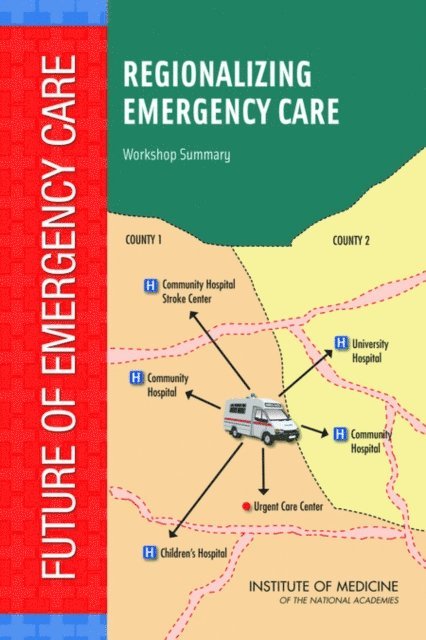
• The role of pediatric emergency services as an integrated component of the overall health system.
• System-wide pediatric emergency care planning, preparedness, coordination,and funding.
• Pediatric training in professional education.
• Research in pediatric emergency care.
Emergency Care for Children is one of three books in the Future of EmergencyCare series. This book will be of particular interest to emergency health careproviders, professional organizations, and policy makers looking to address the pediatric deficiencies within their emergency care systems.

919 kr
Läs direkt efter köp
• The role and impact of the emergency department within the larger hospital and health care system.
• Patient flow and information technology.
• Workforce issues across multiple disciplines.
• Patient safety and the quality and efficiency of emergency care services.
• Basic, clinical, and health services research relevant to emergency care.
• Special challenges of emergency care in rural settings.
Hospital-Based Emergency Care is one of three books in the Future of Emergency Care series. This book will be of particular interest to emergency care providers, professional organizations, and policy makers looking to address the deficiencies in emergency care systems.
735 kr
Läs direkt efter köp
• The evolving role of EMS as an integral component of the overall health care system.
• EMS system planning, preparedness, and coordination at the federal, state, and local levels.
• EMS funding and infrastructure investments.
• EMS workforce trends and professional education.
• EMS research priorities and funding.
Emergency Medical Services is one of three books in the Future of EmergencyCare series. This book will be of particular interest to emergency care providers, professional organizations, and policy makers looking to address the deficiencies in emergency care systems.
802 kr
Läs direkt efter köp
Today, it is not possible to deliver high-quality cancer care without using existing approaches, tools, and resources to address patients'' psychosocial health needs. All patients with cancer and their families should expect and receive cancer care that ensures the provision of appropriate psychosocial health services.
Cancer Care for the Whole Patient recommends actions that oncology providers, health policy makers, educators, health insurers, health planners, researchers and research sponsors, and consumer advocates should undertake to ensure that this standard is met.
735 kr
Läs direkt efter köp
493 kr
Läs direkt efter köp
Unlike many other areas in health care, the practice of oncology presents unique challenges that make assessing and improving value especially complex. First, patients and professionals feel a well-justified sense of urgency to treat for cure, and if cure is not possible, to extend life and reduce the burden of disease. Second, treatments are often both life sparing and highly toxic. Third, distinctive payment structures for cancer medicines are intertwined with practice. Fourth, providers often face tremendous pressure to apply the newest technologies to patients who fail to respond to established treatments, even when the evidence supporting those technologies is incomplete or uncertain, and providers may be reluctant to stop toxic treatments and move to palliation, even at the end of life. Finally, the newest and most novel treatments in oncology are among the most costly in medicine.This volume summarizes the results of a workshop that addressed these issues from multiple perspectives, including those of patients and patient advocates, providers, insurers, health care researchers, federal agencies, and industry. Its broad goal was to describe value in oncology in a complete and nuanced way, to better inform decisions regarding developing, evaluating, prescribing, and paying for cancer therapeutics.
468 kr
Läs direkt efter köp
Clinical research presents health care providers with information on the natural history and clinical presentations of disease as well as diagnostic and treatment options. In today''s healthcare system, patients, physicians, clinicians and family caregivers often lack the sufficient scientific data and evidence they need to determine the best course of treatment for the patients'' medical conditions. Initial National Priorities for Comparative Effectiveness Research(CER) is designed to fill this knowledge gap by assisting patients and healthcare providers across diverse settings in making more informed decisions. In this 2009 report, the Institute of Medicine''s Committee on Comparative Effectiveness Research Prioritization establishes a working definition of CER, develops a priority list of research topics, and identifies the necessary requirements to support a robust and sustainable CER enterprise.
As part of the 2009 American Recovery and Reinvestment Act, Congress appropriated $1.1 billion in federal support of CER, reflecting legislators'' belief that better decisions about the use of health care could improve the public''s health and reduce the cost of care. The Committee on Comparative Effectiveness Research Prioritization was successful in preparing a list 100 top priority CER topics and 10 recommendations for best practices in the field.