Board on Health Sciences Policy – författare
418 kr
Läs direkt efter köp
Investment and innovation in drug research and development (R&D) for highly prevalent chronic diseases has stalled in recent decades, despite half of all Americans living with at least one chronic disease. As a result, prevalent chronic diseases are producing immense health care costs as well as preventable suffering and death. On February 22, March 2, and March 8, 2021, the National Academies of Sciences, Engineering, and Medicine, convened a workshop to discuss barriers to innovation in this space and examine strategies and incentives to support equitable, person-centered drug R&D for prevalent chronic diseases.
951 kr
Skickas
774 kr
Skickas
597 kr
Skickas
621 kr
Skickas
491 kr
Skickas
276 kr
Läs direkt efter köp
276 kr
Läs direkt efter köp
All pharmaceutical products have inherent risks, and their use involves trade-offs between their therapeutic benefits and their risks. However, the public has a limited understanding of the benefits and risks of drugs, and many individuals believe that drugs approved by the U.S. Food and Drug Administration (FDA) carry no risks. The FDA is responsible for evaluating and balancing the potential risks of drugs with their potential benefits. Assessing, managing, and communicating the benefit-risk profile of a pharmaceutical product is a complex and nuanced scientific, political, and sociological challenge. Once the assessment is made, the FDA is then responsible for managing how to communicate these risks and make healthcare decisions based on them.
To explore these issues, the Forum on Drug Discovery, Development, and Translation conducted a public workshop entitled Understanding the Benefits and Risks of Pharmaceuticals, with the broad goals of gaining a better understanding of the current system used to evaluate benefit and risk, and to identify opportunities for improvement. This workshop was held in Washington, D.C., on May 30-31, 2006. The benefit-risk profiles of pharmaceuticals are constantly evolving as new data are collected throughout the life cycle of a drug. Discussions during the workshop focused on the following: (1) premarket assessment, during which clinical trial data are used to assess benefit and risk; (2) communication of that information to prescribing physicians and their patients; (3) healthcare decisions made by prescribing physicians and their patients; and (4) the accumulation of benefit-risk information from postmarketing experience, which feeds back into the other phases. Understanding the Benefits and Risks of Pharmaceuticals: Workshop Summary explains in detail the discussions during this workshop.
276 kr
Läs direkt efter köp
Decades of research have demonstrated that children do not respond to medications in the same way as adults. Differences between children and adults in the overall response to medications are due to profound anatomical, physiological, and developmental differences. Although few would argue that children should receive medications that have not been adequately tested for safety and efficacy, the majority of drugs prescribed for children—50 to 75 percent—have not been tested in pediatric populations. Without adequate data from such testing, prescribing drugs appropriately becomes challenging for clinicians treating children, from infancy through adolescence. Addressing the Barriers to Pediatric Drug Development is the summary of a workshop, held in Washington, D.C. on June 13, 2006, that was organized to identify barriers to the development and testing of drugs for pediatric populations, as well as ways in which the system can be improved to facilitate better treatments for children.
438 kr
Läs direkt efter köp
919 kr
Läs direkt efter köp
Autism spectrum disorders (ASD) constitute a major public health problem, affecting one in every 150 children and their families. Unfortunately, there is little understanding of the causes of ASD, and, despite their broad societal impact, many people believe that the overall research program for autism is incomplete, particularly as it relates to the role of environmental factors. The Institute of Medicine''s Forum on Neuroscience and Nervous System Disorders, in response to a request from the U.S. Secretary of Health and Human Services, hosted a workshop called "Autism and the Environment: Challenges and Opportunities for Research." The focus was on improving the understanding of the ways in which environmental factors such as chemicals, infectious agents, or physiological or psychological stress can affect the development of the brain. Autism and the Environment documents the concerted effort which brought together the key public and private stakeholders to discuss potential ways to improve the understanding of the ways that environmental factors may affect ASD. The presentations and discussions from the workshop that are described in this book identify a number of promising directions for research on the possible role of different environmental agents in the etiology of autism.
621 kr
Skickas
418 kr
Läs direkt efter köp
Biomarkers, or biological markers, are quantitative measurements that offer researchers and clinicians valuable insight into diagnosis, treatment and prognosis for many disorders and diseases. A major goal in neuroscience medical research is establishing biomarkers for disorders of the nervous system. Given the promising potential and necessity for neuroscience biomarkers, the Institute of Medicine Forum on Neuroscience and Nervous System Disorders convened a public workshop and released the workshop summary entitled Neuroscience Biomarkers and Biosignatures: Converging Technologies, Emerging Partnerships. The workshop brought together experts from multiple areas to discuss the most promising and practical arenas in neuroscience in which biomarkers will have the greatest impact. The main objective of the workshop was to identify and discuss biomarker targets that are not currently being aggressively pursued but that could have the greatest near-term impact on the rate at which new treatments are brought forward for psychiatric and neurological disorders.
410 kr
Läs direkt efter köp
As the principal agency regulating food, drugs, medical devices, and biological products used by Americans, the U.S. Food and Drug Administration (FDA) serves one of the most critical consumer protection functions of the federal government. The FDA''s reach is enormous, regulating products that represent roughly 25 percent of all consumer spending in the United States. Since 1992, however, federal funding for the agency has diminished, and the FDA''s Center for Drug Evaluation and Research (CDER) currently relies on the fees it receives from the industry it regulates to fund the majority of its drug regulation functions. Prescription drug safety is receiving heightened press coverage and congressional scrutiny as a result of recent, highly publicized events, such as the recall of Vioxx because of its link to heart attacks, and the link between certain antidepressants (selective serotonin reuptake inhibitors, or SSRIs) and an increased risk of suicidal ideation in children.
To address these concerns, the FDA in 2005 commissioned the Institute of Medicine (IOM) to conduct an independent assessment of the current U.S. drug safety system. In September 2006, the IOM committee released its report—The Future of Drug Safety: Promoting and Protecting the Health of the Public—which included 25 recommendations for improving the system for drug safety review. The committee identified four major vulnerabilities in the U.S. drug safety system: (1) chronic underfunding; (2) organization problems, particularly inadequate integration of pre-and postmarket data review; (3) a range of technical problems related to the insufficient quantity and quality of postmarket data and inadequate capability to systematically monitor the risks and benefits of drugs after marketing; and (4) unclear regulatory authority and insufficiently flexible regulatory tools. Since the IOM report was issued, the FDA has taken a number of steps toward implementing the recommended improvements. Like many government agencies, however, the FDA is financially strained by its existing responsibilities, and fully implementing the recommended improvements to the drug safety system would require significant financial commitments.The IOM report addressed some of the costs associated with its recommendations, but left many unanswered questions about the resources required to fully achieve the envisioned improvements. To better understand the types and magnitude of resources required to achieve the goals of the IOM report, the IOM''s Forum on Drug Discovery, Development, and Translation convened a 1-day symposium in March 2007. Challenges for the FDA: The Future of Drug Safety, Workshop Summary explains the presentations and discussions in seven key areas: addressing the FDA''s resource challenges; strengthening the scientific base of the agency; integrating pre- and postmarket review; enhancing postmarket safety monitoring; conducting confirmatory drug safety and efficacy studies; enhancing the value of clinical trial registration; and enhancing the FDA''s postmarket regulation and enforcement.468 kr

Läs direkt efter köp
In recent years, the costs of new drug development have skyrocketed. The average cost of developing a new approved drug is now estimated to be $1.3 billion (DiMasi and Grabowski, 2007). At the same time, each year fewer new molecular entities (NMEs) are approved. DiMasi and Grabowski report that only 21.5 percent of the candidate drugs that enter phase I clinical testing actually make it to market. In 2007, just 17 novel drugs and 2 novel biologics were approved. In addition to the slowing rate of drug development and approval, recent years have seen a number of drugs withdrawn from the market for safety reasons. According to the Government Accountability Office (GAO), 10 drugs were withdrawn because of safety concerns between 2000 and March 2006 (GAO, 2006). Finding ways to select successful drug candidates earlier in development could save millions or even billions of dollars, reduce the costs of drugs on the market, and increase the number of new drugs with improved safety profiles that are available to patients.
Emerging scientific knowledge and technologies hold the potential to enhance correct decision making for the advancement of candidate drugs. Identification of safety problems is a key reason that new drug development is stalled. Traditional methods for assessing a drug''s safety prior to approval are limited in their ability to detect rare safety problems. Prior to receiving U.S. Food and Drug Administration (FDA) approval, a drug will have been tested in hundreds to thousands of patients. Generally, drugs cannot confidently be linked to safety problems until they have been tested in tens of thousands to hundreds of thousands of people. With current methods, it is unlikely that rare safety problems will be identified prior to approval. Emerging Safety Science: Workshop Summary summarizes the events and presentations of the workshop.585 kr
Läs direkt efter köp
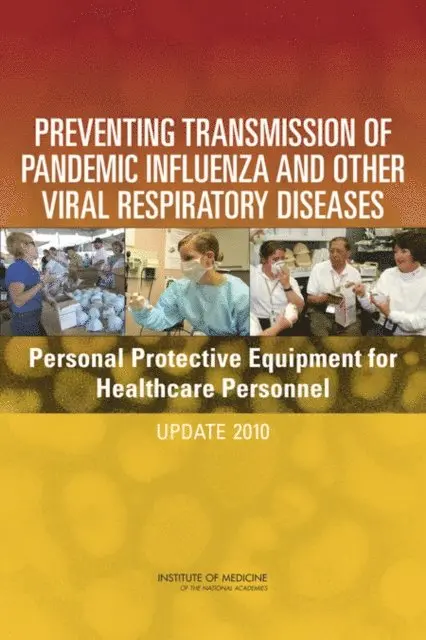
During an influenza pandemic, healthcare workers will be on the front lines delivering care to patients and preventing further spread of the disease. As the nation prepares for pandemic influenza, multiple avenues for protecting the health of the public are being carefully considered, ranging from rapid development of appropriate vaccines to quarantine plans should the need arise for their implementation. One vital aspect of pandemic influenza planning is the use of personal protective equipment (PPE)—the respirators, gowns, gloves, face shields, eye protection, and other equipment that will be used by healthcare workers and others in their day-to-day patient care responsibilities.
However, efforts to appropriately protect healthcare workers from illness or from infecting their families and their patients are greatly hindered by the paucity of data on the transmission of influenza and the challenges associated with training and equipping healthcare workers with effective personal protective equipment. Due to this lack of knowledge on influenza transmission, it is not possible at the present time to definitively inform healthcare workers about what PPE is critical and what level of protection this equipment will provide in a pandemic. The outbreaks of severe acute respiratory syndrome (SARS) in 2003 have underscored the importance of protecting healthcare workers from infectious agents. The surge capacity that will be required to reduce mortality from a pandemic cannot be met if healthcare workers are themselves ill or are absent due to concerns about PPE efficacy. The IOM committee determined that there is an urgent need to address the lack of preparedness regarding effective PPE for use in an influenza pandemic. Preparing for an Influenza Pandemic : Personal Protective Equipment for Healthcare Workers identifies that require expeditious research and policy action: (1) Influenza transmission research should become an immediate and short-term research priority so that effective prevention and control strategies can be developed and refined. The current paucity of knowledge significantly hinders prevention efforts. (2) Employer and employee commitment to worker safety and appropriate use of PPE should be strengthened. Healthcare facilities should establish and promote a culture of safety. (3) An integrated effort is needed to understand the PPE requirements of the worker and to develop and utilize innovative materials and technologies to create the next generation of PPE capable of meeting these needs.619 kr
Läs direkt efter köp
Advancing Nuclear Medicine Through Innovation highlights the exciting emerging opportunities in nuclear medicine, which include assessing the efficacy of new drugs in development, individualizing treatment to the patient, and understanding the biology of human diseases. Health care and pharmaceutical professionals will be most interested in this book''s examination of the challenges the field faces and its recommendations for ways to reduce these impediments.
368 kr
Läs direkt efter köp
Many voluntary health organizations fund translational research. An increasing number of these organizations are looking at venture philanthropy as a critical way to advance their missions of helping patients and working to cure disease.
A wide range of participants gathered on October 3, 2008 at the Beckman Center of the National Academies of Science for a workshop titled "Venture Philanthropy Strategies Used by Patient Organizations to Support Translational Research." Participants with experience in venture philanthropy shared their experiences and lessons learned in order to improve efficiency and effectiveness in translational research.
585 kr
Skickas
393 kr
Läs direkt efter köp
577 kr
Läs direkt efter köp
In the United States, federal responsibility for civilian worker PPT is integral to the mission of the National Institute for Occupational Safety and Health (NIOSH). This book examines the NIOSH Personal Protective Technology Program (PPT Program) and specifically focuses on the relevance and impact of this program in reducing hazardous exposures and improving worker health and safety.
728 kr
Skickas inom 3-6 vardagar
468 kr
Läs direkt efter köp
The process for developing new drug and biologic products is extraordinarily expensive and time-consuming. Although large pharmaceutical companies may be able to afford the cost of development because they can expect a large return on investment, organizations developing drugs to treat rare and neglected diseases are unable to rely on such returns.
On June 23, 2008, the Institute of Medicine''s Forum on Drug Discovery, Development, and Translation held a public workshop, "Breakthrough Business Models: Drug Development for Rare and Neglected Diseases and Individualized Therapies," which sought to explore new and innovative strategies for developing drugs for rare and neglected diseases.
301 kr
Läs direkt efter köp
Neuroscience has made phenomenal advances over the past 50 years and the pace of discovery continues to accelerate. On June 25, 2008, the Institute of Medicine (IOM) Forum on Neuroscience and Nervous System Disorders hosted more than 70 of the leading neuroscientists in the world, for a workshop titled "From Molecules to Minds: Challenges for the 21st Century." The objective of the workshop was to explore a set of common goals or "Grand Challenges" posed by participants that could inspire and rally both the scientific community and the public to consider the possibilities for neuroscience in the 21st century.
The progress of the past in combination with new tools and techniques, such as neuroimaging and molecular biology, has positioned neuroscience on the cusp of even greater transformational progress in our understanding of the brain and how its inner workings result in mental activity.
This workshop summary highlights the important issues and challenges facing the field of neuroscience as presented to those in attendance at the workshop, as well as the subsequent discussion that resulted.
As a result, three overarching Grand Challenges emerged:
How does the brain work and produce mental activity? How does physical activity in the brain give rise to thought, emotion, and behavior? How does the interplay of biology and experience shape our brains and make us who we are today? How do we keep our brains healthy? How do we protect, restore, or enhance the functioning of our brains as we age?426 kr
Läs direkt efter köp
On March 3-4, 2008, the Institute of Medicine (IOM) Forum on Medical and Public Health Preparedness for Catastrophic Events hosted a workshop titled "Medical Countermeasures Dispensing." The overall objective was to discuss a range of solutions to rapidly provide medical countermeasures to protect large numbers of people prior to or during a public health emergency, such as a bioterrorist attack or infectious disease outbreak. The United States is currently unprepared to confront the range of threats it is facing, such as an intentional anthrax release, severe acute respiratory syndrome (SARS), or pandemic influenza, and it must plan aggressively to counteract the threat of these and other future public health emergencies.
Countermeasure dispensing must harness all types of imaginative partnerships between public and private institutions, working together in ways tailored to meet individual community needs. This workshop summary highlights the presentations and subsequent discussion that occurred at the workshop.
276 kr
Läs direkt efter köp
In order to keep the Guidelines up to date, given the rapid pace of scientific developments in the field of stem cell research, the Human Embryonic Stem Cell Research Advisory Committee was established in 2006 with support from The Ellison Medical Foundation, The Greenwall Foundation, and the Howard Hughes Medical Institute.
As it did in 2007, the Committee identified issues that warranted revision, and this book addresses those issues in a second set of amendments. Most importantly, this book addresses new scientific developments in reprogramming of somatic cells to pluripotency by adding a new section and revising other relevant sections of the Guidelines.
552 kr
Läs direkt efter köp
In the realm of health care, privacy protections are needed to preserve patients'' dignity and prevent possible harms. Ten years ago, to address these concerns as well as set guidelines for ethical health research, Congress called for a set of federal standards now known as the HIPAA Privacy Rule.
In its 2009 report, Beyond the HIPAA Privacy Rule: Enhancing Privacy, Improving Health Through Research, the Institute of Medicine''s Committee on Health Research and the Privacy of Health Information concludes that the HIPAA Privacy Rule does not protect privacy as well as it should, and that it impedes important health research.
463 kr
Skickas
276 kr
Läs direkt efter köp
Dual loyalties exist in many medical fields, from occupational health to public health. Military health professionals, as all health professionals, are ethically responsible for their patients'' well-being. In some situations, however, military health professionals can face unique ethical tensions between responsibilities to individual patients and responsibilities to military operations.
This book summarizes the one-day workshop, Military Medical Ethics: Issues Regarding Dual Loyalties, which brought together academic, military, human rights, and health professionals to discuss these ethical challenges. The workshop examined two case studies: decisions regarding returning a servicemember to duty after a closed head injury, and decisions on actions by health professionals regarding a hunger strike by detainees. The workshop also addressed the need for improvements in medical ethics training and outlined steps for organizations to take in supporting better ethical awareness and use of ethical standards.
518 kr
Läs direkt efter köp
During a wide-reaching catastrophic public health emergency or disaster, existing surge capacity plans may not be sufficient to enable health care providers to continue to adhere to normal treatment procedures and follow usual standards of care. This is a particular concern for emergencies that may severely strain resources across a large geographic area, such as a pandemic influenza or the detonation of a nuclear device. Under these circumstances, it may be impossible to provide care according to the standards of care used in non-disaster situations, and, under the most extreme circumstances, it may not even be possible to provide basic life sustaining interventions to all patients who need them. Although recent efforts to address these concerns have accomplished a tremendous amount in just a few years, a great deal remains to be done in even the most advanced plan. This workshop summary highlights the extensive work that is already occurring across the nation. Specifically, the book draws attention to existing federal, state, and local policies and protocols for crisis standards of care; discusses current barriers to increased provider and community engagement; relays examples of existing interstate collaborations; and presents workshop participants'' ideas, comments, concerns, and potential solutions to some of the most difficult challenges.