Board on Life Sciences – författare
717 kr
Skickas
477 kr
Skickas
585 kr
Skickas
491 kr
Skickas
597 kr
Skickas
580 kr
Skickas
491 kr
Skickas
276 kr
Läs direkt efter köp
495 kr
Läs direkt efter köp
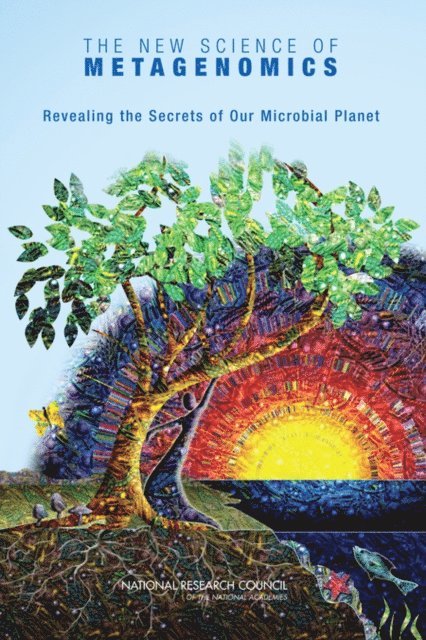
Although we can''t usually see them, microbes are essential for every part of human life—indeed all life on Earth. The emerging field of metagenomics offers a new way of exploring the microbial world that will transform modern microbiology and lead to practical applications in medicine, agriculture, alternative energy, environmental remediation, and many others areas. Metagenomics allows researchers to look at the genomes of all of the microbes in an environment at once, providing a "meta" view of the whole microbial community and the complex interactions within it. It''s a quantum leap beyond traditional research techniques that rely on studying—one at a time—the few microbes that can be grown in the laboratory. At the request of the National Science Foundation, five Institutes of the National Institutes of Health, and the Department of Energy, the National Research Council organized a committee to address the current state of metagenomics and identify obstacles current researchers are facing in order to determine how to best support the field and encourage its success. The New Science of Metagenomics recommends the establishment of a "Global Metagenomics Initiative" comprising a small number of large-scale metagenomics projects as well as many medium- and small-scale projects to advance the technology and develop the standard practices needed to advance the field. The report also addresses database needs, methodological challenges, and the importance of interdisciplinary collaboration in supporting this new field.
414 kr
Läs direkt efter köp
455 kr
Läs direkt efter köp
Protecting buildings and their occupants from biological and chemical attacks to ensure continuous building operations is seen as an urgent need in the Department of Defense, given recent technological advances and the changing threats. Toward this end, the Department of Defense established the Immune Building Program to develop protective systems to deter biological and chemical attacks on military facilities and minimize the impacts of attacks should they occur. At the request of the Defense Threat Reduction Agency, the National Research Council convened a committee to provide guiding principles for protecting buildings from airborne biological or chemical threat agents and outline the variables and options to consider in designing building protection systems. This report addresses such components of building protection as building design and planning strategies; heating, ventilating, and air-conditioning systems; filtration; threat detection and identification technologies; and operational responses. It recommends that building protection systems be designed to accommodate changing building conditions, new technologies, and emerging threats. Although the report''s focus is on protection of military facilities, the guiding principles it offers are applicable to protection of public facilities as well.
325 kr
Läs direkt efter köp
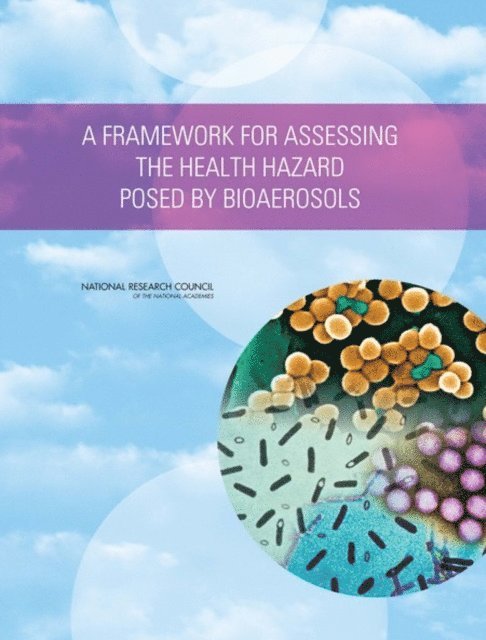
Biological warfare agent (BWA) detectors are designed to provide alerts to military personnel of the presence of dangerous biological agents. Detecting such agents promptly makes it possible to minimize contamination and personnel exposure and initiate early treatment. It is also important, though, that detectors not raise an alarm when the situation does not warrant it.The question considered in this book is whether Agent-Containing Particles per Liter of Air (ACPLA) is an appropriate unit of measure for use in the evaluation of aerosol detectors and whether a better, alternative measure can be developed.The book finds that ACPLA alone cannot determine whether a health threat exists. In order to be useful and comparable across all biological agents and detection systems, measurements must ultimately be related to health hazard.A Framework for Assessing the Health Hazard Posed by Bioaerosols outlines the possibility of a more complex, but more useful measurement framework that makes it possible to evaluate relative hazard by including agent identity and activity, particle size, and infectious dose.
268 kr
Läs direkt efter köp
Minority groups are severely underrepresented in the scientific workforce. To encourage minorities to pursue careers in research, a variety of "intervention programs" have been created at the pre-college, college, and graduate school levels. While there is a belief that these programs often achieve their goals, there is relatively little understanding of the factors that contribute to that success. The Division of Minority Opportunities in Research (MORE) at the National Institute of General Medical Sciences of the National Institutes of Health has established a grant program to support research to better understand the factors that contribute to the success of intervention programs. The MORE Division asked the National Academies to organize a workshop focusing on issues addressed by the grant program. This workshop summary presents examples of previous research on intervention programs, describes ways to formulate effective research questions and conduct research to identify the key elements that lead to successful intervention programs, and outlines ways to foster a community of researchers in this area.
560 kr
Läs direkt efter köp
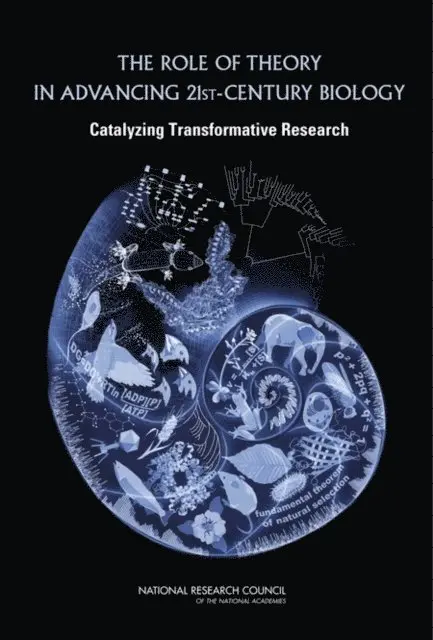
Although its importance is not always recognized, theory is an integral part of all biological research. Biologists'' theoretical and conceptual frameworks inform every step of their research, affecting what experiments they do, what techniques and technologies they develop and use, and how they interpret their data. By examining how theory can help biologists answer questions like "What are the engineering principles of life?" or "How do cells really work?" the report shows how theory synthesizes biological knowledge from the molecular level to the level of whole ecosystems. The book concludes that theory is already an inextricable thread running throughout the practice of biology; but that explicitly giving theory equal status with other components of biological research could help catalyze transformative research that will lead to creative, dynamic, and innovative advances in our understanding of life.
986 kr
Skickas
771 kr
Läs direkt efter köp
The new field of toxicogenomics presents a potentially powerful set of tools to better understand the health effects of exposures to toxicants in the environment. At the request of the National Institute of Environmental Health Sciences, the National Research Council assembled a committee to identify the benefits of toxicogenomics, the challenges to achieving them, and potential approaches to overcoming such challenges. The report concludes that realizing the potential of toxicogenomics to improve public health decisions will require a concerted effort to generate data, make use of existing data, and study data in new ways—an effort requiring funding, interagency coordination, and data management strategies.
487 kr
Läs direkt efter köp
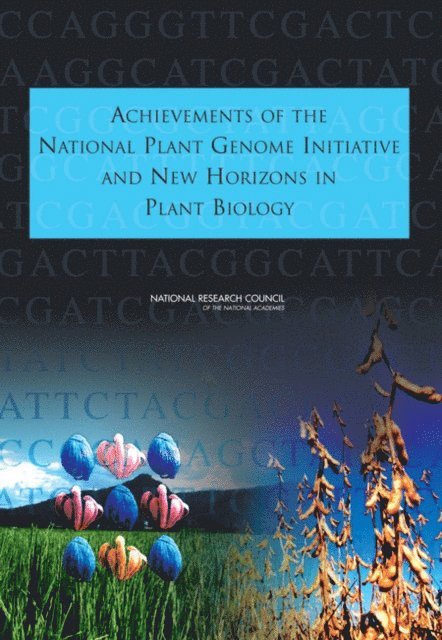
Life on Earth would be impossible without plants. Humans rely on plants for most clothing, furniture, food, as well as for many pharmaceuticals and other products. Plant genome sciences are essential to understanding how plants function and how to develop desirable plant characteristics. For example, plant genomic science can contribute to the development of plants that are drought-resistant, those that require less fertilizer, and those that are optimized for conversion to fuels such as ethanol and biodiesel. The National Plant Genome Initiative (NPGI) is a unique, cross-agency funding enterprise that has been funding and coordinating plant genome research successfully for nine years. Research breakthroughs from NPGI and the National Science Foundation (NSF) Arabidopsis 2010 Project, such as how the plant immune system controls pathogen defense, demonstrate that the plant genome science community is vibrant and capable of driving technological advancement. This book from the National Research Council concludes that these programs should continue so that applied programs on agriculture, bioenergy, and others will always be built on a strong foundation of fundamental plant biology research.
187 kr
Läs direkt efter köp
However, testing biological standoff detection systems is difficult because open-air field tests with BWAs are not permitted under international conventions and because the wide variety of environments in which detectors might be used may affect their performance. This book explores the question of how to determine whether or not a biological standoff detection system fulfills its mission reliably if we cannot conduct open-air field tests with live BWAs.
738 kr
Läs direkt efter köp
495 kr
Läs direkt efter köp
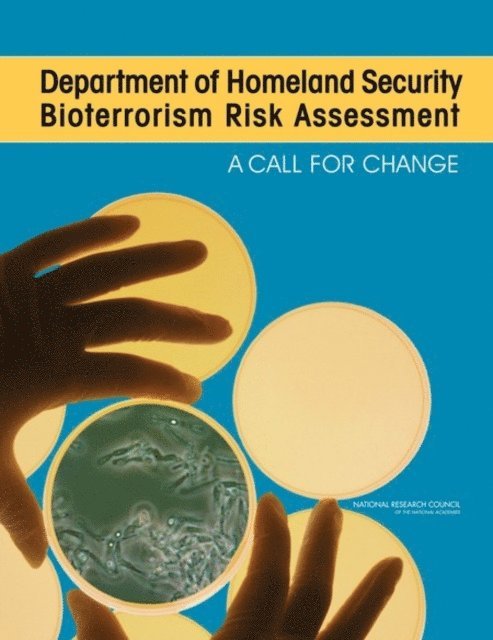
The mission of Department of Homeland Security Bioterrorism Risk Assessment: A Call for Change, the book published in December 2008, is to independently and scientifically review the methodology that led to the 2006 Department of Homeland Security report, Bioterrorism Risk Assessment (BTRA) and provide a foundation for future updates. This book identifies a number of fundamental concerns with the BTRA of 2006, ranging from mathematical and statistical mistakes that have corrupted results, to unnecessarily complicated probability models and models with fidelity far exceeding existing data, to more basic questions about how terrorist behavior should be modeled. Rather than merely criticizing what was done in the BTRA of 2006, this new NRC book consults outside experts and collects a number of proposed alternatives that could improve DHS''s ability to assess potential terrorist behavior as a key element of risk-informed decision making, and it explains these alternatives in the specific context of the BTRA and the bioterrorism threat.
268 kr
Läs direkt efter köp
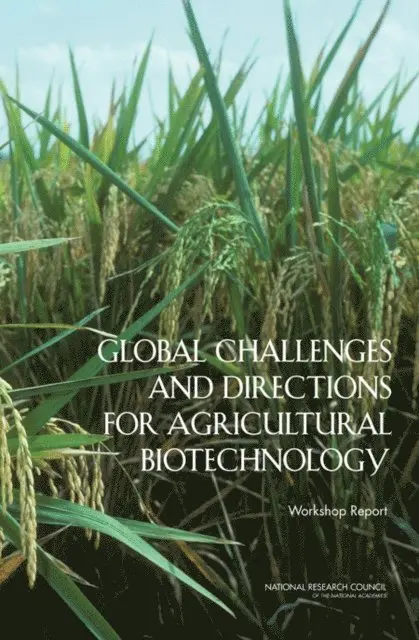
Many developing countries are exploring whether biotechnology has a role in addressing national issues such as food security and environmental remediation, and are considering whether the putative benefits of the technology-for example, enabling greater agricultural productivity and stability in the food supply-outweigh concerns that the technology might pose a danger-to biodiversity, health, and local jobs. Some policy leaders worry that their governments are not prepared to take control of this evolving technology and that introducing it into society would be a risky act. Others have suggested that taking no action carries more risk, given the dire need to produce more food. This book reports on an international workshop held to address these issues. Global Challenges and Directions for Agricultural Biotechnology: Mapping the Course, organized by the National Research Council on October 24-25, 2004, in Washington, DC, focused on the potential applications of biotechnology and what developing countries might consider as they contemplate adopting biotechnology. Presenters at the workshop described applications of biotechnology that are already proving their utility in both developing and developed countries.
276 kr
Läs direkt efter köp
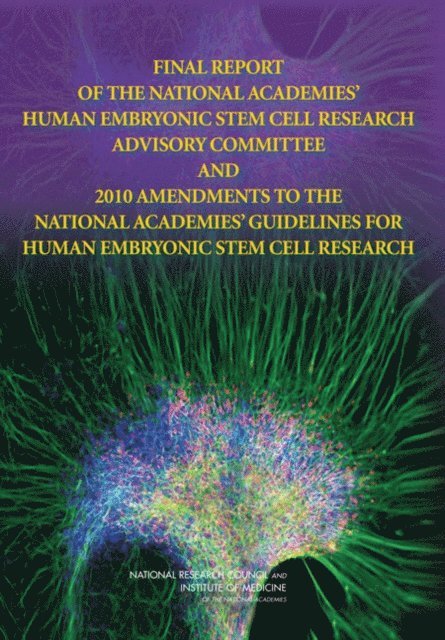
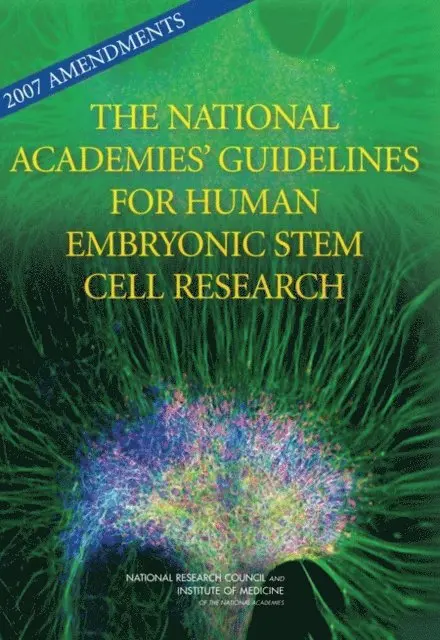
In order to keep the Guidelines up to date, given the rapid pace of scientific developments in the field of stem cell research, the Human Embryonic Stem Cell Research Advisory Committee was established in 2006 with support from The Ellison Medical Foundation, The Greenwall Foundation, and the Howard Hughes Medical Institute.
As it did in 2007, the Committee identified issues that warranted revision, and this book addresses those issues in a second set of amendments. Most importantly, this book addresses new scientific developments in reprogramming of somatic cells to pluripotency by adding a new section and revising other relevant sections of the Guidelines.
1 003 kr
Skickas
1 087 kr
Läs direkt efter köp
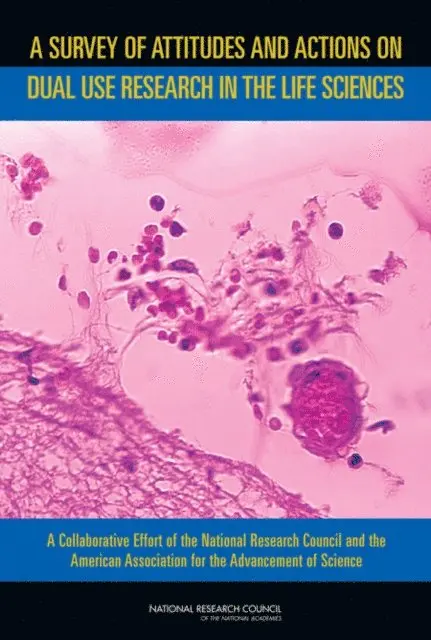
The same technologies that fuel scientific advances also pose potential risks—that the knowledge, tools, and techniques gained through legitimate biotechnology research could be misused to create biological weapons or for bioterrorism. This is often called the dual use dilemma of the life sciences. Yet even research with the greatest potential for misuse may offer significant benefits. Determining how to constrain the danger without harming essential scientific research is critical for national security as well as prosperity and well-being.
This book discusses a 2007 survey of American Association for the Advancement of Science (AAAS) members in the life sciences about their knowledge of dual use issues and attitudes about their responsibilities to help mitigate the risks of misuse of their research.
Overall, the results suggest that there may be considerable support for approaches to oversight that rely on measures that are developed and implemented by the scientific community itself. The responses also suggest that there is a need to clarify the scope of research activities of concern and to provide guidance about what actions scientists can take to reduce the risk that their research will be misused by those with malicious intent.
325 kr
Läs direkt efter köp
The world''s climate is changing, and it will continue to change throughout the 21st century and beyond. Rising temperatures, new precipitation patterns, and other changes are already affecting many aspects of human society and the natural world.In this book, the National Research Council provides a broad overview of the ecological impacts of climate change, and a series of examples of impacts of different kinds. The book was written as a basis for a forthcoming illustrated booklet, designed to provide the public with accurate scientific information on this important subject.
560 kr
Läs direkt efter köp
During the next ten years, colleges of agriculture will be challenged to transform their role in higher education and their relationship to the evolving global food and agricultural enterprise. If successful, agriculture colleges will emerge as an important venue for scholars and stakeholders to address some of the most complex and urgent problems facing society.
Such a transformation could reestablish and sustain the historical position of the college of agriculture as a cornerstone institution in academe, but for that to occur, a rapid and concerted effort by our higher education system is needed to shape their academic focus around the reality of issues that define the world''s systems of food and agriculture and to refashion the way in which they foster knowledge of those complex systems in their students. Although there is no single approach to transforming agricultural education, a commitment to change is imperative.
795 kr
Läs direkt efter köp
Although its importance is not always recognized, theory is an integral part of all biological research. Biologists'' theoretical and conceptual frameworks inform every step of their research, affecting what experiments they do, what techniques and technologies they develop and use, and how they interpret their data. By examining how theory can help biologists answer questions like "What are the engineering principles of life?" or "How do cells really work?" the report shows how theory synthesizes biological knowledge from the molecular level to the level of whole ecosystems. The book concludes that theory is already an inextricable thread running throughout the practice of biology; but that explicitly giving theory equal status with other components of biological research could help catalyze transformative research that will lead to creative, dynamic, and innovative advances in our understanding of life.
698 kr
Läs direkt efter köp
Life on Earth would be impossible without plants. Humans rely on plants for most clothing, furniture, food, as well as for many pharmaceuticals and other products. Plant genome sciences are essential to understanding how plants function and how to develop desirable plant characteristics. For example, plant genomic science can contribute to the development of plants that are drought-resistant, those that require less fertilizer, and those that are optimized for conversion to fuels such as ethanol and biodiesel. The National Plant Genome Initiative (NPGI) is a unique, cross-agency funding enterprise that has been funding and coordinating plant genome research successfully for nine years. Research breakthroughs from NPGI and the National Science Foundation (NSF) Arabidopsis 2010 Project, such as how the plant immune system controls pathogen defense, demonstrate that the plant genome science community is vibrant and capable of driving technological advancement. This book from the National Research Council concludes that these programs should continue so that applied programs on agriculture, bioenergy, and others will always be built on a strong foundation of fundamental plant biology research.
276 kr
Läs direkt efter köp
However, testing biological standoff detection systems is difficult because open-air field tests with BWAs are not permitted under international conventions and because the wide variety of environments in which detectors might be used may affect their performance. This book explores the question of how to determine whether or not a biological standoff detection system fulfills its mission reliably if we cannot conduct open-air field tests with live BWAs.
779 kr
Läs direkt efter köp