Board on Mathematical Sciences and Their Applications – författare
390 kr
Läs direkt efter köp
The stability of the financial system and the potential for systemic events to alter its function have long been critical issues for central bankers and researchers. Recent events suggest that older models of systemic shocks might no longer capture all of the possible paths of such disturbances or account for the increasing complexity of the financial system. To help assess these concerns, the Federal Reserve Bank of New York and the NRC cosponsored a conference that brought together engineers, scientists, economists, and financial market experts to promote better understanding of systemic risk in a variety of fields. The book presents an examination of tools used in ecology and engineering to study systemic collapse in those areas; a review of current trends in economic research on systemic risk, the payments system, and the market of interbank funds; and for context, descriptions of how systemic risk in the financial system affects trading activities.
495 kr
Läs direkt efter köp
The mission of Department of Homeland Security Bioterrorism Risk Assessment: A Call for Change, the book published in December 2008, is to independently and scientifically review the methodology that led to the 2006 Department of Homeland Security report, Bioterrorism Risk Assessment (BTRA) and provide a foundation for future updates. This book identifies a number of fundamental concerns with the BTRA of 2006, ranging from mathematical and statistical mistakes that have corrupted results, to unnecessarily complicated probability models and models with fidelity far exceeding existing data, to more basic questions about how terrorist behavior should be modeled. Rather than merely criticizing what was done in the BTRA of 2006, this new NRC book consults outside experts and collects a number of proposed alternatives that could improve DHS''s ability to assess potential terrorist behavior as a key element of risk-informed decision making, and it explains these alternatives in the specific context of the BTRA and the bioterrorism threat.
268 kr
Läs direkt efter köp
402 kr
Läs direkt efter köp
In 1998, the National Science Foundation (NSF) launched a program of Grants for Vertical Integration of Research and Education in the Mathematical Sciences (VIGRE). These grants were designed for institutions with PhD-granting departments in the mathematical sciences, for the purpose of developing high-quality education programs, at all levels, that are vertically integrated with the research activities of these departments. To date, more than 50 departments at 40 institutions have received VIGRE awards. As requested by NSF, the present volume reviews the goals of the VIGRE program and evaluates how well the program is designed to address those goals. The book considers past and current practices for assessing the VIGRE program; draws tentative conclusions about the program''s achievements based on the data collected to date; and evaluates NSF''s plans for future data-driven assessments. In addition, critical policy and programmatic changes for the program are identified, with recommendations for how to address these changes.
390 kr
Läs direkt efter köp
568 kr
Läs direkt efter köp
In 1998, the National Science Foundation (NSF) launched a program of Grants for Vertical Integration of Research and Education in the Mathematical Sciences (VIGRE). These grants were designed for institutions with PhD-granting departments in the mathematical sciences, for the purpose of developing high-quality education programs, at all levels, that are vertically integrated with the research activities of these departments. To date, more than 50 departments at 40 institutions have received VIGRE awards. As requested by NSF, the present volume reviews the goals of the VIGRE program and evaluates how well the program is designed to address those goals. The book considers past and current practices for assessing the VIGRE program; draws tentative conclusions about the program''s achievements based on the data collected to date; and evaluates NSF''s plans for future data-driven assessments. In addition, critical policy and programmatic changes for the program are identified, with recommendations for how to address these changes.
187 kr
Läs direkt efter köp
The financial reform plans currently under discussion in the United States recognize the need for monitoring and regulating systemic risk in the financial sector. To inform those discussions, the National Research Council held a workshop on November 3, 2009, to identify the major technical challenges to building such a capability. The workshop, summarized in this volume, addressed the following key issues as they relate to systemic risk:
What data and analytical tools are currently available to regulators to address this challenge? What further data-collection and data-analysis capabilities are needed? What specific resource needs are required to accomplish the task? What are the major technical challenges associated with systemic risk regulation? What are various options for building these capabilities?Because every systemic event is unique with respect to its specific pathology—the various triggers and the propagation of effects—the workshop focused on the issues listed above for systemic risk in general rather than for any specific scenario. Thus, by design, the workshop explicitly addressed neither the causes of the current crisis nor policy options for reducing risk, and it attempted to steer clear of some policy issues altogether (such as how to allocate new supervisory responsibilities). More than 40 experts representing diverse perspectives participated in the workshop.
276 kr
Läs direkt efter köp
The financial reform plans currently under discussion in the United States recognize the need for monitoring and regulating systemic risk in the financial sector. To inform those discussions, the National Research Council held a workshop on November 3, 2009, to identify the major technical challenges to building such a capability. The workshop, summarized in this volume, addressed the following key issues as they relate to systemic risk:
What data and analytical tools are currently available to regulators to address this challenge? What further data-collection and data-analysis capabilities are needed? What specific resource needs are required to accomplish the task? What are the major technical challenges associated with systemic risk regulation? What are various options for building these capabilities?Because every systemic event is unique with respect to its specific pathology—the various triggers and the propagation of effects—the workshop focused on the issues listed above for systemic risk in general rather than for any specific scenario. Thus, by design, the workshop explicitly addressed neither the causes of the current crisis nor policy options for reducing risk, and it attempted to steer clear of some policy issues altogether (such as how to allocate new supervisory responsibilities). More than 40 experts representing diverse perspectives participated in the workshop.
393 kr
Läs direkt efter köp
Combustion has provided society with most of its energy needs for millenia, from igniting the fires of cave dwellers to propelling the rockets that traveled to the Moon. Even in the face of climate change and the increasing availability of alternative energy sources, fossil fuels will continue to be used for many decades. However, they will likely become more expensive, and pressure to minimize undesired combustion by-products (pollutants) will likely increase. The trends in the continued use of fossil fuels and likely use of alternative combustion fuels call for more rapid development of improved combustion systems. In January 2009, the Multi-Agency Coordinating Committee on Combustion Research (MACCCR) requested that the National Research Council (NRC) conduct a study of the structure and use of a cyberinfrastructure (CI) for combustion research. The charge to the authoring committee of Transforming Combustion Research through Cyberinfrastructure was to: identify opportunities to improve combustion research through computational infrastructure (CI) and the potential benefits to applications; identify necessary CI elements and evaluate the accessibility, sustainability, and economic models for various approaches; identify CI that is needed for education in combustion science and engineering; identify human, cultural, institutional, and policy challenges and how other fields are addressing them. Transforming Combustion Research through Cyberinfrastructure also estimates the resources needed to provide stable, long-term CI for research in combustion and recommends a plan for enhanced exploitation of CI for combustion research.
633 kr
Läs direkt efter köp
276 kr
Läs direkt efter köp
On April 26-28, 2001, the Board on Mathematical Sciences and Their Applications (BMSA) and the Board on Life Sciences of the National Research Council cosponsored a workshop on the dynamical modeling of complex biomedical systems. The workshop''s goal was to identify some open research questions in the mathematical sciences whose solution would contribute to important unsolved problems in three general areas of the biomedical sciences: disease states, cellular processes, and neuroscience. The workshop drew a diverse group of over 80 researchers, who engaged in lively discussions.
To convey the workshop''s excitement more broadly, and to help more mathematical scientists become familiar with these very fertile interface areas, the BMSA appointed one of its members, George Casella, of the University of Florida, as rapporteur. He developed this summary with the help of two colleagues from his university, Rongling Wu and Sam S. Wu, assisted by Scott Weidman, BMSA director.
This summary represents the viewpoint of its authors only and should not be taken as a consensus report of the BMSA or of the National Research Council.
1 622 kr
Läs direkt efter köp
552 kr
Läs direkt efter köp
The stability of the financial system and the potential for systemic events to alter its function have long been critical issues for central bankers and researchers. Recent events suggest that older models of systemic shocks might no longer capture all of the possible paths of such disturbances or account for the increasing complexity of the financial system. To help assess these concerns, the Federal Reserve Bank of New York and the NRC cosponsored a conference that brought together engineers, scientists, economists, and financial market experts to promote better understanding of systemic risk in a variety of fields. The book presents an examination of tools used in ecology and engineering to study systemic collapse in those areas; a review of current trends in economic research on systemic risk, the payments system, and the market of interbank funds; and for context, descriptions of how systemic risk in the financial system affects trading activities.
536 kr
Läs direkt efter köp
471 kr
Läs direkt efter köp
325 kr
Läs direkt efter köp
Mathematics is the key to opportunity. No longer only the language of science, mathematics is now essential to business, finance, health, and defense. Yet because of the lack of mathematical literacy, many students are not prepared for tomorrow''s jobs. Everybody Counts suggests solutions. Written for everyone concerned about our children''s education, this book discusses why students in this country do not perform well in mathematics and outlines a comprehensive plan for revitalizing mathematics education in America, from kindergarten through college.
single copy, $8.95; 2-9 copies, $7.50 each; 10 or more copies, $6.95 each (no other discounts apply)
714 kr
Läs direkt efter köp
The mission of Department of Homeland Security Bioterrorism Risk Assessment: A Call for Change, the book published in December 2008, is to independently and scientifically review the methodology that led to the 2006 Department of Homeland Security report, Bioterrorism Risk Assessment (BTRA) and provide a foundation for future updates. This book identifies a number of fundamental concerns with the BTRA of 2006, ranging from mathematical and statistical mistakes that have corrupted results, to unnecessarily complicated probability models and models with fidelity far exceeding existing data, to more basic questions about how terrorist behavior should be modeled. Rather than merely criticizing what was done in the BTRA of 2006, this new NRC book consults outside experts and collects a number of proposed alternatives that could improve DHS''s ability to assess potential terrorist behavior as a key element of risk-informed decision making, and it explains these alternatives in the specific context of the BTRA and the bioterrorism threat.
418 kr
Läs direkt efter köp
Combustion has provided society with most of its energy needs for millenia, from igniting the fires of cave dwellers to propelling the rockets that traveled to the Moon. Even in the face of climate change and the increasing availability of alternative energy sources, fossil fuels will continue to be used for many decades. However, they will likely become more expensive, and pressure to minimize undesired combustion by-products (pollutants) will likely increase. The trends in the continued use of fossil fuels and likely use of alternative combustion fuels call for more rapid development of improved combustion systems. In January 2009, the Multi-Agency Coordinating Committee on Combustion Research (MACCCR) requested that the National Research Council (NRC) conduct a study of the structure and use of a cyberinfrastructure (CI) for combustion research. The charge to the authoring committee of Transforming Combustion Research through Cyberinfrastructure was to: identify opportunities to improve combustion research through computational infrastructure (CI) and the potential benefits to applications; identify necessary CI elements and evaluate the accessibility, sustainability, and economic models for various approaches; identify CI that is needed for education in combustion science and engineering; identify human, cultural, institutional, and policy challenges and how other fields are addressing them. Transforming Combustion Research through Cyberinfrastructure also estimates the resources needed to provide stable, long-term CI for research in combustion and recommends a plan for enhanced exploitation of CI for combustion research.
276 kr
Läs direkt efter köp
The mathematical sciences are part of everyday life. Modern communication, transportation, science, engineering, technology, medicine, manufacturing, security, and finance all depend on the mathematical sciences. Fueling Innovation and Discovery describes recent advances in the mathematical sciences and advances enabled by mathematical sciences research. It is geared toward general readers who would like to know more about ongoing advances in the mathematical sciences and how these advances are changing our understanding of the world, creating new technologies, and transforming industries.
Although the mathematical sciences are pervasive, they are often invoked without an explicit awareness of their presence. Prepared as part of the study on the Mathematical Sciences in 2025, a broad assessment of the current state of the mathematical sciences in the United States, Fueling Innovation and Discovery presents mathematical sciences advances in an engaging way. The report describes the contributions that mathematical sciences research has made to advance our understanding of the universe and the human genome. It also explores how the mathematical sciences are contributing to healthcare and national security, and the importance of mathematical knowledge and training to a range of industries, such as information technology and entertainment.
Fueling Innovation and Discovery will be of use to policy makers, researchers, business leaders, students, and others interested in learning more about the deep connections between the mathematical sciences and every other aspect of the modern world. To function well in a technologically advanced society, every educated person should be familiar with multiple aspects of the mathematical sciences.
552 kr
Läs direkt efter köp
Advances in computing hardware and algorithms have dramatically improved the ability to simulate complex processes computationally. Today''s simulation capabilities offer the prospect of addressing questions that in the past could be addressed only by resource-intensive experimentation, if at all. Assessing the Reliability of Complex Models recognizes the ubiquity of uncertainty in computational estimates of reality and the necessity for its quantification.
As computational science and engineering have matured, the process of quantifying or bounding uncertainties in a computational estimate of a physical quality of interest has evolved into a small set of interdependent tasks: verification, validation, and uncertainty of quantification (VVUQ). In recognition of the increasing importance of computational simulation and the increasing need to assess uncertainties in computational results, the National Research Council was asked to study the mathematical foundations of VVUQ and to recommend steps that will ultimately lead to improved processes.
Assessing the Reliability of Complex Models discusses changes in education of professionals and dissemination of information that should enhance the ability of future VVUQ practitioners to improve and properly apply VVUQ methodologies to difficult problems, enhance the ability of VVUQ customers to understand VVUQ results and use them to make informed decisions, and enhance the ability of all VVUQ stakeholders to communicate with each other. This report is an essential resource for all decision and policy makers in the field, students, stakeholders, UQ experts, and VVUQ educators and practitioners.
668 kr
Läs direkt efter köp
The United States is in the midst of a major demographic shift. In the coming decades, people aged 65 and over will make up an increasingly large percentage of the population: The ratio of people aged 65+ to people aged 20-64 will rise by 80%. This shift is happening for two reasons: people are living longer, and many couples are choosing to have fewer children and to have those children somewhat later in life. The resulting demographic shift will present the nation with economic challenges, both to absorb the costs and to leverage the benefits of an aging population.
Aging and the Macroeconomy: Long-Term Implications of an Older Population presents the fundamental factors driving the aging of the U.S. population, as well as its societal implications and likely long-term macroeconomic effects in a global context. The report finds that, while population aging does not pose an insurmountable challenge to the nation, it is imperative that sensible policies are implemented soon to allow companies and households to respond. It offers four practical approaches for preparing resources to support the future consumption of households and for adapting to the new economic landscape.
633 kr
Läs direkt efter köp
The mathematical sciences are part of nearly all aspects of everyday life—the discipline has underpinned such beneficial modern capabilities as Internet search, medical imaging, computer animation, numerical weather predictions, and all types of digital communications. The Mathematical Sciences in 2025 examines the current state of the mathematical sciences and explores the changes needed for the discipline to be in a strong position and able to maximize its contribution to the nation in 2025. It finds the vitality of the discipline excellent and that it contributes in expanding ways to most areas of science and engineering, as well as to the nation as a whole, and recommends that training for future generations of mathematical scientists should be re-assessed in light of the increasingly cross-disciplinary nature of the mathematical sciences. In addition, because of the valuable interplay between ideas and people from all parts of the mathematical sciences, the report emphasizes that universities and the government need to continue to invest in the full spectrum of the mathematical sciences in order for the whole enterprise to continue to flourish long-term.
600 kr
Läs direkt efter köp
Data mining of massive data sets is transforming the way we think about crisis response, marketing, entertainment, cybersecurity and national intelligence. Collections of documents, images, videos, and networks are being thought of not merely as bit strings to be stored, indexed, and retrieved, but as potential sources of discovery and knowledge, requiring sophisticated analysis techniques that go far beyond classical indexing and keyword counting, aiming to find relational and semantic interpretations of the phenomena underlying the data.
Frontiers in Massive Data Analysis examines the frontier of analyzing massive amounts of data, whether in a static database or streaming through a system. Data at that scale—terabytes and petabytes—is increasingly common in science (e.g., particle physics, remote sensing, genomics), Internet commerce, business analytics, national security, communications, and elsewhere. The tools that work to infer knowledge from data at smaller scales do not necessarily work, or work well, at such massive scale. New tools, skills, and approaches are necessary, and this report identifies many of them, plus promising research directions to explore. Frontiers in Massive Data Analysis discusses pitfalls in trying to infer knowledge from massive data, and it characterizes seven major classes of computation that are common in the analysis of massive data. Overall, this report illustrates the cross-disciplinary knowledge—from computer science, statistics, machine learning, and application disciplines—that must be brought to bear to make useful inferences from massive data.
568 kr
Läs direkt efter köp
Like most areas of scholarship, mathematics is a cumulative discipline: new research is reliant on well-organized and well-curated literature. Because of the precise definitions and structures within mathematics, today''s information technologies and machine learning tools provide an opportunity to further organize and enhance discoverability of the mathematics literature in new ways, with the potential to significantly facilitate mathematics research and learning. Opportunities exist to enhance discoverability directly via new technologies and also by using technology to capture important interactions between mathematicians and the literature for later sharing and reuse.
Developing a 21st Century Global Library for Mathematics Research discusses how information about what the mathematical literature contains can be formalized and made easier to express, encode, and explore. Many of the tools necessary to make this information system a reality will require much more than indexing and will instead depend on community input paired with machine learning, where mathematicians'' expertise can fill the gaps of automatization. This report proposes the establishment of an organization; the development of a set of platforms, tools, and services; the deployment of an ongoing applied research program to complement the development work; and the mobilization and coordination of the mathematical community to take the first steps toward these capabilities. The report recommends building on the extensive work done by many dedicated individuals under the rubric of the World Digital Mathematical Library, as well as many other community initiatives. Developing a 21st Century Global Library for Mathematics envisions a combination of machine learning methods and community-based editorial effort that makes a significantly greater portion of the information and knowledge in the global mathematical corpus available to researchers as linked open data through a central organizational entity-referred to in the report as the Digital Mathematics Library. This report describes how such a library might operate - discussing development and research needs, role in facilitating discover and interaction, and establishing partnerships with publishers.
454 kr
Läs direkt efter köp
As the availability of high-throughput data-collection technologies, such as information-sensing mobile devices, remote sensing, internet log records, and wireless sensor networks has grown, science, engineering, and business have rapidly transitioned from striving to develop information from scant data to a situation in which the challenge is now that the amount of information exceeds a human''s ability to examine, let alone absorb, it. Data sets are increasingly complex, and this potentially increases the problems associated with such concerns as missing information and other quality concerns, data heterogeneity, and differing data formats.
The nation''s ability to make use of data depends heavily on the availability of a workforce that is properly trained and ready to tackle high-need areas. Training students to be capable in exploiting big data requires experience with statistical analysis, machine learning, and computational infrastructure that permits the real problems associated with massive data to be revealed and, ultimately, addressed. Analysis of big data requires cross-disciplinary skills, including the ability to make modeling decisions while balancing trade-offs between optimization and approximation, all while being attentive to useful metrics and system robustness. To develop those skills in students, it is important to identify whom to teach, that is, the educational background, experience, and characteristics of a prospective data-science student; what to teach, that is, the technical and practical content that should be taught to the student; and how to teach, that is, the structure and organization of a data-science program.
Training Students to Extract Value from Big Data summarizes a workshop convened in April 2014 by the National Research Council''s Committee on Applied and Theoretical Statistics to explore how best to train students to use big data. The workshop explored the need for training and curricula and coursework that should be included. One impetus for the workshop was the current fragmented view of what is meant by analysis of big data, data analytics, or data science. New graduate programs are introduced regularly, and they have their own notions of what is meant by those terms and, most important, of what students need to know to be proficient in data-intensive work. This report provides a variety of perspectives about those elements and about their integration into courses and curricula.
600 kr
Läs direkt efter köp
The National Marine Fisheries Service (NMFS) is responsible for the stewardship of the nation''s living marine resources and their habitat. As part of this charge, NMFS conducts stock assessments of the abundance and composition of fish stocks in several bodies of water. At present, stock assessments rely heavily on human data-gathering and analysis. Automatic means of fish stock assessments are appealing because they offer the potential to improve efficiency and reduce human workload and perhaps develop higher-fidelity measurements. The use of images and video, when accompanies by appropriate statistical analyses of the inferred data, is of increasing importance for estimating the abundance of species and their age distributions.
Robust Methods for the Analysis of Images and Videos for Fisheries Stock Assessment is the summary of a workshop convened by the National Research Council Committee on Applied and Theoretical Statistics to discuss analysis techniques for images and videos for fisheries stock assessment. Experts from diverse communities shared perspective about the most efficient path toward improved automation of visual information and discussed both near-term and long-term goals that can be achieved through research and development efforts. This report is a record of the presentations and discussions of this event.
811 kr
Läs direkt efter köp
The U.S. population is aging. Social Security projections suggest that between 2013 and 2050, the population aged 65 and over will almost double, from 45 million to 86 million. One key driver of population aging is ongoing increases in life expectancy. Average U.S. life expectancy was 67 years for males and 73 years for females five decades ago; the averages are now 76 and 81, respectively. It has long been the case that better-educated, higher-income people enjoy longer life expectancies than less-educated, lower-income people. The causes include early life conditions, behavioral factors (such as nutrition, exercise, and smoking behaviors), stress, and access to health care services, all of which can vary across education and income.
Our major entitlement programs – Medicare, Medicaid, Social Security, and Supplemental Security Income – have come to deliver disproportionately larger lifetime benefits to higher-income people because, on average, they are increasingly collecting those benefits over more years than others. This report studies the impact the growing gap in life expectancy has on the present value of lifetime benefits that people with higher or lower earnings will receive from major entitlement programs. The analysis presented in The Growing Gap in Life Expectancy by Income goes beyond an examination of the existing literature by providing the first comprehensive estimates of how lifetime benefits are affected by the changing distribution of life expectancy. The report also explores, from a lifetime benefit perspective, how the growing gap in longevity affects traditional policy analyses of reforms to the nation’s leading entitlement programs. This in-depth analysis of the economic impacts of the longevity gap will inform debate and assist decision makers, economists, and researchers.
665 kr
Läs direkt efter köp
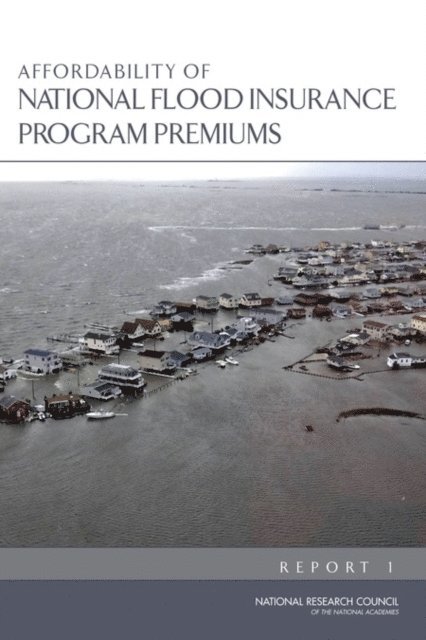
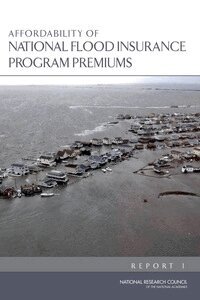
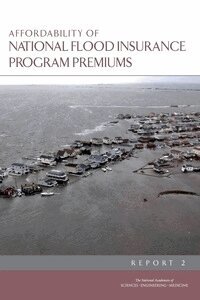
The National Flood Insurance Program (NFIP) is housed within the Federal Emergency Management Agency (FEMA) and offers insurance policies that are marketed and sold through private insurers, but with the risks borne by the U.S. federal government. NFIP''s primary goals are to ensure affordable insurance premiums, secure widespread community participation in the program, and earn premium and fee income that covers claims paid and program expenses over time. In July 2012, the U.S. Congress passed the Biggert-Waters Flood Insurance Reform and Modernization Act (Biggert-Waters 2012), designed to move toward an insurance program with NFIP risk-based premiums that better reflected expected losses from floods at insured properties. This eliminated policies priced at what the NFIP called "pre-FIRM subsidized" and "grandfathered." As Biggert-Waters 2012 went into effect, constituents from multiple communities expressed concerns about the elimination of lower rate classes, arguing that it created a financial burden on policy holders. In response to these concerns Congress passed The Homeowner Flood Insurance Affordability Act of 2014 (HFIAA 2014). The 2014 legislation changed the process by which pre-FIRM subsidized premiums for primary residences would be removed and reinstated grandfathering. As part of that legislation, FEMA must report back to Congress with a draft affordability framework.
Affordability of National Flood Insurance Program Premiums: Report 1 is the first part of a two-part study to provide input as FEMA prepares their draft affordability framework. This report discusses the underlying definitions and methods for an affordability framework and the affordability concept and applications. Affordability of National Flood Insurance Program Premiums gives an overview of the demand for insurance and the history of the NFIP premium setting. The report then describes alternatives for determining when the premium increases resulting from Biggert-Waters 2012 would make flood insurance unaffordable.
568 kr
Läs direkt efter köp
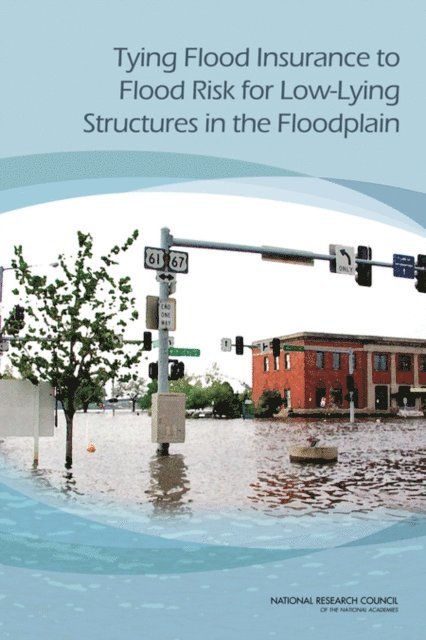
Floods take a heavy toll on society, costing lives, damaging buildings and property, disrupting livelihoods, and sometimes necessitating federal disaster relief, which has risen to record levels in recent years. The National Flood Insurance Program (NFIP) was created in 1968 to reduce the flood risk to individuals and their reliance on federal disaster relief by making federal flood insurance available to residents and businesses if their community adopted floodplain management ordinances and minimum standards for new construction in flood prone areas. Insurance rates for structures built after a flood plain map was adopted by the community were intended to reflect the actual risk of flooding, taking into account the likelihood of inundation, the elevation of the structure, and the relationship of inundation to damage to the structure. Today, rates are subsidized for one-fifth of the NFIP''s 5.5 million policies. Most of these structures are negatively elevated, that is, the elevation of the lowest floor is lower than the NFIP construction standard. Compared to structures built above the base flood elevation, negatively elevated structures are more likely to incur a loss because they are inundated more frequently, and the depths and durations of inundation are greater.
Tying Flood Insurance to Flood Risk for Low-Lying Structures in the Floodplain studies the pricing of negatively elevated structures in the NFIP. This report review current NFIP methods for calculating risk-based premiums for these structures, including risk analysis, flood maps, and engineering data. The report then evaluates alternative approaches for calculating risk-based premiums and discusses engineering hydrologic and property assessment data needs to implement full risk-based premiums. The findings and conclusions of this report will help to improve the accuracy and precision of loss estimates for negatively elevated structures, which in turn will increase the credibility, fairness, and transparency of premiums for policyholders.
714 kr
Läs direkt efter köp
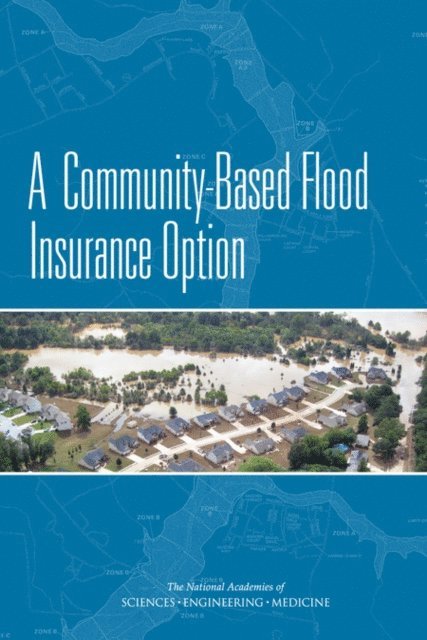
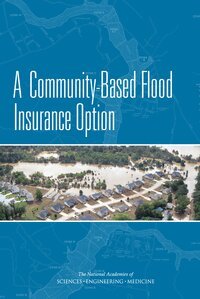
River and coastal floods are among the nation''s most costly natural disasters. One component in the nation''s approach to managing flood risk is availability of flood insurance policies, which are offered on an individual basis primarily through the National Flood Insurance Program (NFIP). Established in 1968, the NFIP is overseen by the Federal Emergency Management Agency (FEMA) and there are about 5.4 million individual policies in the NFIP. The program has experienced a mixture of successes and persistent challenges. Successes include a large number of policy holders, the insurance of approximately $1.3 trillion of property, and the fact that the large majority of policy holders - 80% - pay rates that are risk based. NFIP challenges include large program debt, relatively low rates of purchase in many flood-prone areas, a host of issues regarding affordability of premiums, ensuring that premiums collected cover payouts and administrative fees, and a large number of properties that experience severe repetitive flood losses.
At the request of FEMA, A Community-Based Flood Insurance Option identifies a range of key issues and questions that would merit consideration and further analysis as part of a community-based flood insurance program. As the report describes, the community-based option certainly offers potential benefits, such as the prospect of providing coverage for all (or nearly all) at-risk residents and properties in flood-prone communities. At the same time, many current challenges facing the NFIP may not necessarily be resolved by a community-based approach. This report discusses these and other prominent issues to be considered and further assessed.