Board on Atmospheric Sciences and Climate – författare
648 kr
Skickas
603 kr
Skickas
580 kr
Skickas
552 kr
Läs direkt efter köp
Global change assessments inform decision makers about the scientific underpinnings of a range of environmental issues, such as climate change, stratospheric ozone depletion, and loss of biodiversity. Dozens of assessments have been conducted to date by various U.S. and international groups, many of them influencing public policies, technology development, and research directions. This report analyzes strengths and weaknesses of eight past assessments to inform future efforts. Common elements of effective assessments include strong leadership, extensive engagement with interested and affected parties, a transparent science-policy interface, and well defined communication strategies. The report identifies 11 essential elements of effective assessments and recommends that future assessments include decision support tools that make use of information at the regional and local level where decisions are made.
268 kr
Läs direkt efter köp
This report reviews the U.S. Climate Change Science Program''s new draft assessment product on characterizing and communicating uncertainty information for climate change decision making, one of 21 climate change assessment products that the program is developing to meet the requirements of the 1990 Global Change Research Act. Although the draft assessment is effective in discussing methods of characterizing uncertainty, it falls short in several ways. It is written for researchers involved in assessment efforts and will likely be of use to them, but does not address other key audiences, particularly policymakers, decision-makers, and members of the media and general public. In addition, it does not assess the full range of "best practice approaches" for characterizing, incorporating, and communicating uncertainty. These weaknesses were due in part to a change in the prospectus after the process had begun to include new target audiences and a different scope of work. It will take a substantial revision of the current draft or production of a companion document, both requiring additional authors, to address these issues.
268 kr
Läs direkt efter köp
This National Research Council (NRC) report reviews a draft of the U.S. Climate Change Science Program (CCSP) Synthesis and Assessment Product 3.3, Weather and Climate Extremes in a Changing Climate, the 3rd in a series of 21 CCSP products addressing important topics related to climate change. The NRC report finds that the draft provides a good and thorough assessment of the important issues regarding extreme events over North America and how they may change in the context of a changing climate. The continuity and cohesion among the chapters could be improved by greater coordination among the chapter authorship teams, who should also ensure that the tone and scope of the chapters are consistent with the document''s Abstract and Executive Summary. The authors should strive to consolidate the sections on tropical cyclones; however, the discussion of drought and ecological impacts could be expanded. Overall, the committee finds that the scope, content, and scientific rigor of the current draft provide a solid basis for the final version of Synthesis and Assessment Product 3.3.
438 kr
Läs direkt efter köp
614 kr
Skickas
414 kr
Läs direkt efter köp
The National Oceanic and Atmospheric Administration (NOAA) collects, manages, and disseminates a wide range of climate, weather, ecosystem and other environmental data that are used by scientists, engineers, resource managers, policy makers, and others in the United States and around the world. The increasing volume and diversity of NOAA''s data holdings - which include everything from satellite images of clouds to the stomach contents of fish - and a large number of users present NOAA with substantial data management challenges. NOAA asked the National Research Council to help identify the observations, model output, and other environmental information that must be preserved in perpetuity and made readily accessible, as opposed to data with more limited storage lifetime and accessibility requirements. This report offers nine general principles for effective environmental data management, along with a number of more specific guidelines and examples that explain and illustrate how these principles could be applied at NOAA.
268 kr
Läs direkt efter köp
317 kr
Läs direkt efter köp
This book analyzes what is lacking in the current system, the relevant capabilities of phased array technology, technical challenges, cost issues, and compares possible alternatives. Both specific and overarching recommendations are outlined.
609 kr
Läs direkt efter köp
Detailed weather observations on local and regional levels are essential to a range of needs from forecasting tornadoes to making decisions that affect energy security, public health and safety, transportation, agriculture and all of our economic interests. As technological capabilities have become increasingly affordable, businesses, state and local governments, and individual weather enthusiasts have set up observing systems throughout the United States. However, because there is no national network tying many of these systems together, data collection methods are inconsistent and public accessibility is limited. This book identifies short-term and long-term goals for federal government sponsors and other public and private partners in establishing a coordinated nationwide "network of networks" of weather and climate observations.
602 kr
Läs direkt efter köp
714 kr
Läs direkt efter köp
The climate record for the past 100,000 years clearly indicates that the climate system has undergone periodic—and often extreme—shifts, sometimes in as little as a decade or less. The causes of abrupt climate changes have not been clearly established, but the triggering of events is likely to be the result of multiple natural processes.Abrupt climate changes of the magnitude seen in the past would have far-reaching implications for human society and ecosystems, including major impacts on energy consumption and water supply demands. Could such a change happen again? Are human activities exacerbating the likelihood of abrupt climate change? What are the potential societal consequences of such a change? Abrupt Climate Change: Inevitable Surprises looks at the current scientific evidence and theoretical understanding to describe what is currently known about abrupt climate change, including patterns and magnitudes, mechanisms, and probability of occurrence. It identifies critical knowledge gaps concerning the potential for future abrupt changes, including those aspects of change most important to society and economies, and outlines a research strategy to close those gaps. Based on the best and most current research available, this book surveys the history of climate change and makes a series of specific recommendations for the future.
633 kr
Läs direkt efter köp
The weather on planet Earth is a vital and sometimes fatal force in human affairs.Efforts to control or reduce the harmful impacts of weather go back far in time. Inthis, the latest National Academies'' assessment of weather modification, the committeewas asked to assess the ability of current and proposed weather modificationcapabilities to provide beneficial impacts on water resource management andweather hazard mitigation. It examines new technologies, reviews advances innumerical modeling on the cloud and mesoscale, and considers how improvementsin computer capabilities might be applied to weather modification. Critical Issues inWeather Modification Research examines the status of the science underlying weathermodification in the United States. It calls for a coordinated national research programto answer fundamental questions about basic atmospheric processes and toaddress other issues that are impeding progress in weather modification.
665 kr
Läs direkt efter köp
268 kr
Läs direkt efter köp
899 kr
Skickas inom 3-6 vardagar
584 kr
Läs direkt efter köp
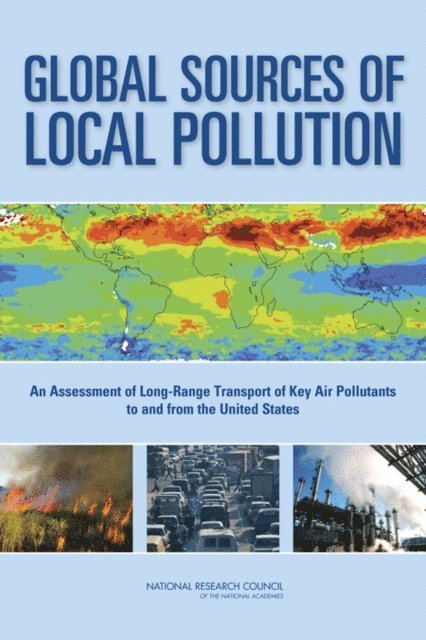
Recent advances in air pollution monitoring and modeling capabilities have made it possible to show that air pollution can be transported long distances and that adverse impacts of emitted pollutants cannot be confined to one country or even one continent. Pollutants from traffic, cooking stoves, and factories emitted half a world away can make the air we inhale today more hazardous for our health. The relative importance of this "imported" pollution is likely to increase, as emissions in developing countries grow, and air quality standards in industrial countries are tightened.Global Sources of Local Pollution examines the impact of the long-range transport of four key air pollutants (ozone, particulate matter, mercury, and persistent organic pollutants) on air quality and pollutant deposition in the United States. It also explores the environmental impacts of U.S. emissions on other parts of the world. The book recommends that the United States work with the international community to develop an integrated system for determining pollution sources and impacts and to design effective response strategies.This book will be useful to international, federal, state, and local policy makers responsible for understanding and managing air pollution and its impacts on human health and well-being.
390 kr
Läs direkt efter köp
374 kr
Läs direkt efter köp
Climate change is occurring. It is very likely caused by the emission of greenhouse gases from human activities, and poses significant risks for a range of human and natural systems. And these emissions continue to increase, which will result in further change and greater risks.
America''s Climate Choices makes the case that the environmental, economic, and humanitarian risks posed by climate change indicate a pressing need for substantial action now to limit the magnitude of climate change and to prepare for adapting to its impacts. Although there is some uncertainty about future risk, acting now will reduce the risks posed by climate change and the pressure to make larger, more rapid, and potentially more expensive reductions later. Most actions taken to reduce vulnerability to climate change impacts are common sense investments that will offer protection against natural climate variations and extreme events. In addition, crucial investment decisions made now about equipment and infrastructure can "lock in" commitments to greenhouse gas emissions for decades to come. Finally, while it may be possible to scale back or reverse many responses to climate change, it is difficult or impossible to "undo" climate change, once manifested.
Current efforts of local, state, and private-sector actors are important, but not likely to yield progress comparable to what could be achieved with the addition of strong federal policies that establish coherent national goals and incentives, and that promote strong U.S. engagement in international-level response efforts. The inherent complexities and uncertainties of climate change are best met by applying an iterative risk management framework and making efforts to significantly reduce greenhouse gas emissions; prepare for adapting to impacts; invest in scientific research, technology development, and information systems; and facilitate engagement between scientific and technical experts and the many types of stakeholders making America''s climate choices.
625 kr
Läs direkt efter köp
Climate change is occurring, is caused largely by human activities, and poses significant risks for—and in many cases is already affecting—a broad range of human and natural systems. The compelling case for these conclusions is provided in Advancing the Science of Climate Change, part of a congressionally requested suite of studies known as America''s Climate Choices. While noting that there is always more to learn and that the scientific process is never closed, the book shows that hypotheses about climate change are supported by multiple lines of evidence and have stood firm in the face of serious debate and careful evaluation of alternative explanations.
As decision makers respond to these risks, the nation''s scientific enterprise can contribute through research that improves understanding of the causes and consequences of climate change and also is useful to decision makers at the local, regional, national, and international levels. The book identifies decisions being made in 12 sectors, ranging from agriculture to transportation, to identify decisions being made in response to climate change.
Advancing the Science of Climate Change calls for a single federal entity or program to coordinate a national, multidisciplinary research effort aimed at improving both understanding and responses to climate change. Seven cross-cutting research themes are identified to support this scientific enterprise. In addition, leaders of federal climate research should redouble efforts to deploy a comprehensive climate observing system, improve climate models and other analytical tools, invest in human capital, and improve linkages between research and decisions by forming partnerships with action-oriented programs.
625 kr
Läs direkt efter köp
Across the United States, impacts of climate change are already evident. Heat waves have become more frequent and intense, cold extremes have become less frequent, and patterns of rainfall are likely changing. The proportion of precipitation that falls as rain rather than snow has increased across the western United States and Arctic sea ice has been reduced significantly. Sea level has been rising faster than at any time in recent history, threatening the natural and built environments on the coasts. Even if emissions of greenhouse gases were substantially reduced now, climate change and its resulting impacts would continue for some time to come.
To date, decisions related to the management and protection of the nation''s people, resources, and infrastructure have been based on records in the recent past, when climate was relatively stable. Adapting to the Impacts of Climate Change, part of the congressionally requested America''s Climate Choices suite of studies, calls for a new paradigm-one that considers a range of possible future climate conditions and impacts that may be well outside the realm of past experience.
Adaptation requires actions from many decision makers in federal, state, tribal, and local governments; the private sector; non-governmental organizations; and community groups. However, current efforts are hampered by a lack of solid information about the benefits, costs, and effectiveness of various adaptation options; climate information on regional and local scales; and a lack of coordination. Adapting to the Impacts of Climate Change calls for a national adaptation strategy that provides needed technical and scientific resources, incentives to begin adaptation planning, guidance across jurisdictions, shared lessons learned, and support of scientific research to expand knowledge of impacts and adaptation.
625 kr
Läs direkt efter köp
Global climate change is one of America''s most significant long-term policy challenges. Human activity—especially the use of fossil fuels, industrial processes, livestock production, waste disposal, and land use change—is affecting global average temperatures, snow and ice cover, sea-level, ocean acidity, growing seasons and precipitation patterns, ecosystems, and human health. Climate-related decisions are being carried out by almost every agency of the federal government, as well as many state and local government leaders and agencies, businesses and individual citizens. Decision makers must contend with the availability and quality of information, the efficacy of proposed solutions, the unanticipated consequences resulting from decisions, the challenge of implementing chosen actions, and must consider how to sustain the action over time and respond to new information. Informing an Effective Response to Climate Change, a volume in the America''s Climate Choices series, describes and assesses different activities, products, strategies, and tools for informing decision makers about climate change and helping them plan and execute effective, integrated responses. It discusses who is making decisions (on the local, state, and national levels), who should be providing information to make decisions, and how that information should be provided. It covers all levels of decision making, including international, state, and individual decision making. While most existing research has focused on the physical aspect of climate change, Informing an Effective Response to Climate Change employs theory and case study to describe the efforts undertaken so far, and to guide the development of future decision-making resources. Informing an Effective Response to Climate Change offers much-needed guidance to those creating public policy and assists in implementing that policy. The information presented in this book will be invaluable to the research community, especially social scientists studying climate change; practitioners of decision-making assistance, including advocacy organizations, non-profits, and government agencies; and college-level teachers and students.
625 kr
Läs direkt efter köp
Climate change, driven by the increasing concentration of greenhouse gases in the atmosphere, poses serious, wide-ranging threats to human societies and natural ecosystems around the world. The largest overall source of greenhouse gas emissions is the burning of fossil fuels. The global atmospheric concentration of carbon dioxide, the dominant greenhouse gas of concern, is increasing by roughly two parts per million per year, and the United States is currently the second-largest contributor to global emissions behind China.
Limiting the Magnitude of Future Climate Change, part of the congressionally requested America''s Climate Choices suite of studies, focuses on the role of the United States in the global effort to reduce greenhouse gas emissions. The book concludes that in order to ensure that all levels of government, the private sector, and millions of households and individuals are contributing to shared national goals, the United States should establish a "budget" that sets a limit on total domestic greenhouse emissions from 2010-2050. Meeting such a budget would require a major departure from business as usual in the way the nation produces and uses energy-and that the nation act now to aggressively deploy all available energy efficiencies and less carbon-intensive technologies and to develop new ones.
With no financial incentives or regulatory pressure, the nation will continue to rely upon and "lock in" carbon-intensive technologies and systems unless a carbon pricing system is established-either cap-and-trade, a system of taxing emissions, or a combination of the two. Complementary policies are also needed to accelerate progress in key areas: developing more efficient, less carbon-intense energy sources in electricity and transportation; advancing full-scale development of new-generation nuclear power, carbon capture, and storage systems; and amending emissions-intensive energy infrastructure. Research and development of new technologies that could help reduce emissions more cost effectively than current options is also strongly recommended.
811 kr
Läs direkt efter köp
Recent advances in air pollution monitoring and modeling capabilities have made it possible to show that air pollution can be transported long distances and that adverse impacts of emitted pollutants cannot be confined to one country or even one continent. Pollutants from traffic, cooking stoves, and factories emitted half a world away can make the air we inhale today more hazardous for our health. The relative importance of this "imported" pollution is likely to increase, as emissions in developing countries grow, and air quality standards in industrial countries are tightened.Global Sources of Local Pollution examines the impact of the long-range transport of four key air pollutants (ozone, particulate matter, mercury, and persistent organic pollutants) on air quality and pollutant deposition in the United States. It also explores the environmental impacts of U.S. emissions on other parts of the world. The book recommends that the United States work with the international community to develop an integrated system for determining pollution sources and impacts and to design effective response strategies.This book will be useful to international, federal, state, and local policy makers responsible for understanding and managing air pollution and its impacts on human health and well-being.
584 kr
Läs direkt efter köp
Emissions of carbon dioxide from the burning of fossil fuels have ushered in a new epoch where human activities will largely determine the evolution of Earth''s climate. Because carbon dioxide in the atmosphere is long lived, it can effectively lock the Earth and future generations into a range of impacts, some of which could become very severe. Emissions reductions decisions made today matter in determining impacts experienced not just over the next few decades, but in the coming centuries and millennia.
According to Climate Stabilization Targets: Emissions, Concentrations, and Impacts Over Decades to Millennia, important policy decisions can be informed by recent advances in climate science that quantify the relationships between increases in carbon dioxide and global warming, related climate changes, and resulting impacts, such as changes in streamflow, wildfires, crop productivity, extreme hot summers, and sea level rise. One way to inform these choices is to consider the projected climate changes and impacts that would occur if greenhouse gases in the atmosphere were stabilized at a particular concentration level. The book quantifies the outcomes of different stabilization targets for greenhouse gas concentrations using analyses and information drawn from the scientific literature. Although it does not recommend or justify any particular stabilization target, it does provide important scientific insights about the relationships among emissions, greenhouse gas concentrations, temperatures, and impacts.
Climate Stabilization Targets emphasizes the importance of 21st century choices regarding long-term climate stabilization. It is a useful resource for scientists, educators and policy makers, among others.
544 kr
Läs direkt efter köp
More accurate forecasts of climate conditions over time periods of weeks to a few years could help people plan agricultural activities, mitigate drought, and manage energy resources, amongst other activities; however, current forecast systems have limited ability on these time- scales. Models for such climate forecasts must take into account complex interactions among the ocean, atmosphere, and land surface. Such processes can be difficult to represent realistically. To improve the quality of forecasts, this book makes recommendations about the development of the tools used in forecasting and about specific research goals for improving understanding of sources of predictability. To improve the accessibility of these forecasts to decision-makers and researchers, this book also suggests best practices to improve how forecasts are made and disseminated.
580 kr
Skickas
374 kr
Läs direkt efter köp
The world''s nations are moving toward agreements that will bind us together in an effort to limit future greenhouse gas emissions. With such agreements will come the need for all nations to make accurate estimates of greenhouse gas emissions and to monitor changes over time. In this context, the present book focuses on the greenhouse gases that result from human activities, have long lifetimes in the atmosphere and thus will change global climate for decades to millennia or more, and are currently included in international agreements. The book devotes considerably more space to CO2 than to the other gases because CO2 is the largest single contributor to global climate change and is thus the focus of many mitigation efforts. Only data in the public domain were considered because public access and transparency are necessary to build trust in a climate treaty. The book concludes that each country could estimate fossil-fuel CO2 emissions accurately enough to support monitoring of a climate treaty. However, current methods are not sufficiently accurate to check these self-reported estimates against independent data or to estimate other greenhouse gas emissions. Strategic investments would, within 5 years, improve reporting of emissions by countries and yield a useful capability for independent verification of greenhouse gas emissions reported by countries.