Climate Research Committee – författare
665 kr
Läs direkt efter köp
268 kr
Läs direkt efter köp
390 kr
Läs direkt efter köp
633 kr
Läs direkt efter köp
During the past decade, scientists have learned much about the complex naturalprocesses that influence climate variability and change, and our ability to modelclimate has increased significantly. We also have begun to better identify those partsof the climate system that are particularly important and not well understood andthat therefore limit our ability to project the future evolution of Earth''s climate. Oneof these critical areas is our understanding of the role of feedbacks in the climate systemand their role in determining climate sensitivity. Feedbacks are processes in theclimate system that can either amplify or dampen the system''s response to changedforcings. This study looks at what is known and not known about climate changefeedbacks and seeks to identify the feedback processes most in need of improvedunderstanding. It identifies key observations needed to monitor and understand climatefeedbacks, discusses ways to evaluate progress in understanding climate feedbacks,recommends ways to improve climate modeling and analysis for climate feedbacksresearch, and identifies priority areas for research.
617 kr
Läs direkt efter köp
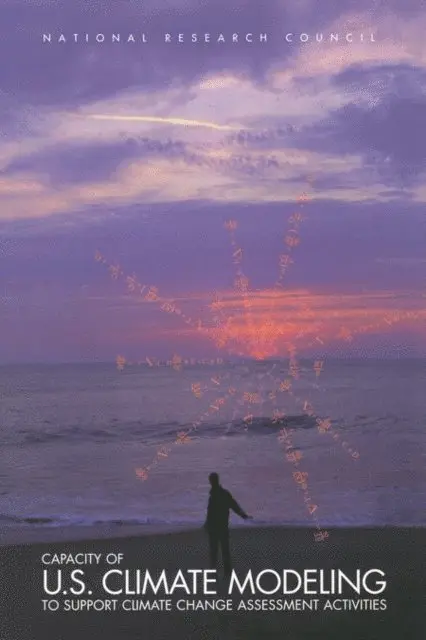
The U.S. government has pending before it the ratification of the Kyoto Protocol, an agreement to limit the emissions of greenhouse gases (GHGs), which is largely based on the threat GHGs pose to the global climate. Such an agreement would have significant economic and national security implications, and therefore any national policy decisions regarding this issue should rely in part on the best possible suite of scenarios from climate models.
The U.S. climate modeling research community is a world leader in intermediate and smaller climate modeling efforts-research that has been instrumental in improving the understanding of specific components of the climate system. Somewhat in contrast, the United States has been less prominent in producing high-end climate modeling results, which have been featured in recent international assessments of the impacts of climate change. The fact that U.S. contributions of these state-of-the-art results have been relatively sparse has prompted a number of prominent climate researchers to question the current organization and support of climate modeling research in the United States, and has led ultimately to this report.
1 947 kr
Läs direkt efter köp
This volume reflects the current state of scientific knowledge about natural climate variability on decade-to-century time scales. It covers a wide range of relevant subjects, including the characteristics of the atmosphere and ocean environments as well as the methods used to describe and analyze them, such as proxy data and numerical models. They clearly demonstrate the range, persistence, and magnitude of climate variability as represented by many different indicators. Not only do natural climate variations have important socioeconomic effects, but they must be better understood before possible anthropogenic effects (from greenhouse gas emissions, for instance) can be evaluated. A topical essay introduces each of the disciplines represented, providing the nonscientist with a perspective on the field and linking the papers to the larger issues in climate research. In its conclusions section, the book evaluates progress in the different areas and makes recommendations for the direction and conduct of future climate research. This book, while consisting of technical papers, is also accessible to the interested layperson.
682 kr
Läs direkt efter köp
390 kr
Läs direkt efter köp
The U.S. Climate Change Science Program (CCSP), established in 2002 to coordinate climate and global change research conducted in the United States and to support decision-making on climate-related issues, is producing twenty-one synthesis and assessment reports that address its research, observation, and decision-support needs. The first report, produced by the National Oceanic and Atmospheric Administration (NOAA) in coordination with other agencies, focuses on understanding reported differences between independently produced data sets of temperature trends for the surface through the lower stratosphere and comparing these data sets to model simulations. To ensure credibility and quality, NOAA asked the National Research Council to conduct an independent review of the report. The committee concluded that the report Temperature Trends in the Lower Atmosphere: Understanding and Reconciling Differences is a good first draft that covers an appropriate range of issues, but that it could be strengthened in a number of ways.
519 kr
Läs direkt efter köp
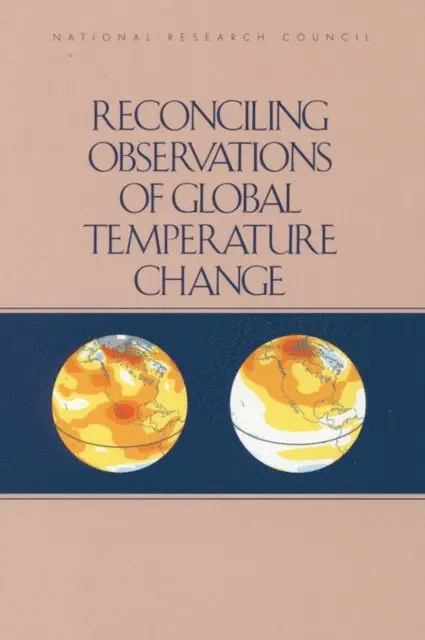
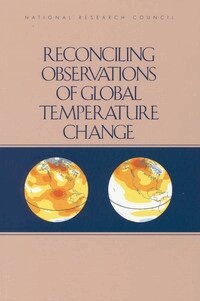
An overall increase in global-mean atmospheric temperatures is predicted to occur in response to human-induced increases in atmospheric concentrations of heat-trapping "greenhouse gases." The most prominent of these gases, carbon dioxide, has increased in concentration by over 30% during the past 200 years, and is expected to continue to increase well into the future. Other changes in atmospheric composition complicate the picture. In particular, increases in the number of small particles (called aerosols) in the atmosphere regionally offset and mask the greenhouse effect, and stratospheric ozone depletion contributes to cooling of the upper troposphere and stratosphere.
Many in the scientific community believe that a distinctive greenhouse-warming signature is evident in surface temperature data for the past few decades. Some, however, are puzzled by the fact that satellite temperature measurements indicate little, if any, warming of the lower to mid-troposphere (the layer extending from the surface up to about 8 km) since such satellite observations first became operational in 1979. The satellite measurements appear to be substantiated by independent trend estimates for this period based on radiosonde data. Some have interpreted this apparent discrepancy between surface and upper air observations as casting doubt on the overall reliability of the surface temperature record, whereas others have concluded that the satellite data (or the algorithms that are being used to convert them into temperatures) must be erroneous. It is also conceivable that temperatures at the earth''s surface and aloft have not tracked each other perfectly because they have responded differently to natural and/or human-induced climate forcing during this particular 20-year period. Whether these differing temperature trends can be reconciled has implications for assessing:
how much the earth has warmed during the past few decades, whether observed changes are in accord with the predicted response to the buildup of greenhouse gases in the atmosphere based on model simulations, and whether the existing atmospheric observing system is adequate for the purposes of monitoring global-mean temperature.This report reassesses the apparent differences between the temperature changes recorded by satellites and the surface thermometer network on the basis of the latest available information. It also offers an informed opinion as to how the different temperature records should be interpreted, and recommends actions designed to reduce the remaining uncertainties in these measurements.
617 kr
Läs direkt efter köp
The 1997 Conference on the World Climate Research Programme to the Third Conference of the Parties of the United Nations Framework Convention on Climate Change concluded that the global capacity to observe the Earth''s climate system is inadequate and is deteriorating worldwide. As a result, the chair of the subcommittee of the U.S. Global Change Research Program (USGCRP) requested a National Research Council study to assess the current status of the climate observing capabilities of the United States. This report focuses on existing observing systems for detection and attribution of climate change, with special emphasis on those systems with long time series.
268 kr
Läs direkt efter köp
438 kr
Skickas
During the past decade, scientists have learned much about the complex naturalprocesses that influence climate variability and change, and our ability to modelclimate has increased significantly. We also have begun to better identify those partsof the climate system that are particularly important and not well understood andthat therefore limit our ability to project the future evolution of Earth''s climate. Oneof these critical areas is our understanding of the role of feedbacks in the climate systemand their role in determining climate sensitivity. Feedbacks are processes in theclimate system that can either amplify or dampen the system''s response to changedforcings. This study looks at what is known and not known about climate changefeedbacks and seeks to identify the feedback processes most in need of improvedunderstanding. It identifies key observations needed to monitor and understand climatefeedbacks, discusses ways to evaluate progress in understanding climate feedbacks,recommends ways to improve climate modeling and analysis for climate feedbacksresearch, and identifies priority areas for research.
463 kr
Läs direkt efter köp
479 kr
Läs direkt efter köp
268 kr
Läs direkt efter köp
The U.S. Climate Change Science Program (CCSP), established in 2002 to coordinate climate and global change research conducted in the United States and to support decision-making on climate-related issues, is producing twenty-one synthesis and assessment reports that address its research, observation, and decision-support needs. The first report, produced by the National Oceanic and Atmospheric Administration (NOAA) in coordination with other agencies, focuses on understanding reported differences between independently produced data sets of temperature trends for the surface through the lower stratosphere and comparing these data sets to model simulations. To ensure credibility and quality, NOAA asked the National Research Council to conduct an independent review of the report. The committee concluded that the report Temperature Trends in the Lower Atmosphere: Understanding and Reconciling Differences is a good first draft that covers an appropriate range of issues, but that it could be strengthened in a number of ways.
1 939 kr
Läs direkt efter köp
This volume reflects the current state of scientific knowledge about natural climate variability on decade-to-century time scales. It covers a wide range of relevant subjects, including the characteristics of the atmosphere and ocean environments as well as the methods used to describe and analyze them, such as proxy data and numerical models. They clearly demonstrate the range, persistence, and magnitude of climate variability as represented by many different indicators. Not only do natural climate variations have important socioeconomic effects, but they must be better understood before possible anthropogenic effects (from greenhouse gas emissions, for instance) can be evaluated. A topical essay introduces each of the disciplines represented, providing the nonscientist with a perspective on the field and linking the papers to the larger issues in climate research. In its conclusions section, the book evaluates progress in the different areas and makes recommendations for the direction and conduct of future climate research. This book, while consisting of technical papers, is also accessible to the interested layperson.
438 kr
Läs direkt efter köp
The 1997 Conference on the World Climate Research Programme to the Third Conference of the Parties of the United Nations Framework Convention on Climate Change concluded that the global capacity to observe the Earth''s climate system is inadequate and is deteriorating worldwide. As a result, the chair of the subcommittee of the U.S. Global Change Research Program (USGCRP) requested a National Research Council study to assess the current status of the climate observing capabilities of the United States. This report focuses on existing observing systems for detection and attribution of climate change, with special emphasis on those systems with long time series.
341 kr
Läs direkt efter köp
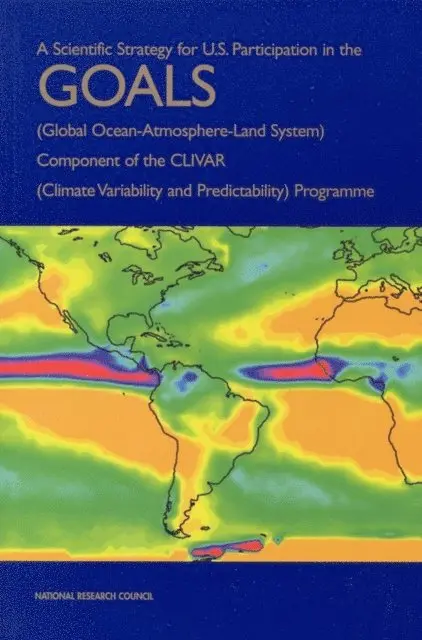
This book lays out a science plan for a major, international, 15-year research program. The past 10 years have seen significant progress in studies of short-term climate variations, in particular for the region of the tropical Pacific Ocean and the El Nino/Southern Oscillation phenomenon. Some forecast skill with lead times as long as a year in advance has already been developed and put to use. The GOALS program plans to capitalize on this progress by expanding efforts on observations and seasonal-to-interannual predictions to the remainder of the tropics and to higher latitudes.
438 kr
Läs direkt efter köp
The U.S. government has pending before it the ratification of the Kyoto Protocol, an agreement to limit the emissions of greenhouse gases (GHGs), which is largely based on the threat GHGs pose to the global climate. Such an agreement would have significant economic and national security implications, and therefore any national policy decisions regarding this issue should rely in part on the best possible suite of scenarios from climate models.
The U.S. climate modeling research community is a world leader in intermediate and smaller climate modeling efforts-research that has been instrumental in improving the understanding of specific components of the climate system. Somewhat in contrast, the United States has been less prominent in producing high-end climate modeling results, which have been featured in recent international assessments of the impacts of climate change. The fact that U.S. contributions of these state-of-the-art results have been relatively sparse has prompted a number of prominent climate researchers to question the current organization and support of climate modeling research in the United States, and has led ultimately to this report.
357 kr
Läs direkt efter köp
An overall increase in global-mean atmospheric temperatures is predicted to occur in response to human-induced increases in atmospheric concentrations of heat-trapping "greenhouse gases." The most prominent of these gases, carbon dioxide, has increased in concentration by over 30% during the past 200 years, and is expected to continue to increase well into the future. Other changes in atmospheric composition complicate the picture. In particular, increases in the number of small particles (called aerosols) in the atmosphere regionally offset and mask the greenhouse effect, and stratospheric ozone depletion contributes to cooling of the upper troposphere and stratosphere.
Many in the scientific community believe that a distinctive greenhouse-warming signature is evident in surface temperature data for the past few decades. Some, however, are puzzled by the fact that satellite temperature measurements indicate little, if any, warming of the lower to mid-troposphere (the layer extending from the surface up to about 8 km) since such satellite observations first became operational in 1979. The satellite measurements appear to be substantiated by independent trend estimates for this period based on radiosonde data. Some have interpreted this apparent discrepancy between surface and upper air observations as casting doubt on the overall reliability of the surface temperature record, whereas others have concluded that the satellite data (or the algorithms that are being used to convert them into temperatures) must be erroneous. It is also conceivable that temperatures at the earth''s surface and aloft have not tracked each other perfectly because they have responded differently to natural and/or human-induced climate forcing during this particular 20-year period. Whether these differing temperature trends can be reconciled has implications for assessing:
how much the earth has warmed during the past few decades, whether observed changes are in accord with the predicted response to the buildup of greenhouse gases in the atmosphere based on model simulations, and whether the existing atmospheric observing system is adequate for the purposes of monitoring global-mean temperature.This report reassesses the apparent differences between the temperature changes recorded by satellites and the surface thermometer network on the basis of the latest available information. It also offers an informed opinion as to how the different temperature records should be interpreted, and recommends actions designed to reduce the remaining uncertainties in these measurements.
1 221 kr
Tillfälligt slut
1 129 kr
Tillfälligt slut
1 301 kr
Tillfälligt slut
1 290 kr
Tillfälligt slut
1 221 kr
Tillfälligt slut
637 kr
Tillfälligt slut
660 kr
Tillfälligt slut
683 kr
Tillfälligt slut
477 kr
Tillfälligt slut
2 240 kr
Tillfälligt slut