Ocean Studies Board – författare
1 290 kr
Skickas
1 255 kr
Skickas
1 473 kr
Skickas
717 kr
Skickas
660 kr
Skickas
660 kr
Skickas
974 kr
Läs direkt efter köp
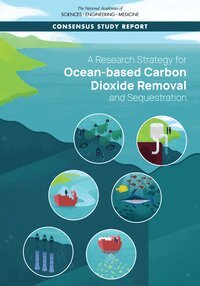
As of 2021, atmospheric carbon dioxide levels have reached historically unprecedented levels, higher than at any time in the past 800,000 years. Worldwide efforts to reduce emissions by creating a more efficient, carbon-free energy system may not be enough to stabilize the climate and avoid the worst impacts of climate change. Carbon dioxide removal (CDR) strategies, which remove and sequester carbon from the atmosphere, likely will be needed to meet global climate goals. The ocean, covering 70% of the Earth''s surface, includes much of the global capacity for natural carbon sequestration; the ocean also holds great potential for uptake and longerterm sequestration of human-produced CO2.
This report builds on previous work from the National Academies to assess what is currently known about the benefits, risks, and potential for responsible scale-up of six specific ocean-based CDR strategies as identified by the sponsor, ClimateWorks Foundation. It describes the research needed to advance understanding of those approaches and address knowledge gaps. The resulting research agenda is meant to provide an improved and unbiased knowledge base for the public, stakeholders, and policymakers to make informed decisions on the next steps for ocean CDR, as part of a larger climate mitigation strategy; it is not meant to lock in or advocate for any particular approach.
877 kr
Skickas
580 kr
Skickas
365 kr
Läs direkt efter köp
487 kr
Läs direkt efter köp
601 kr
Läs direkt efter köp
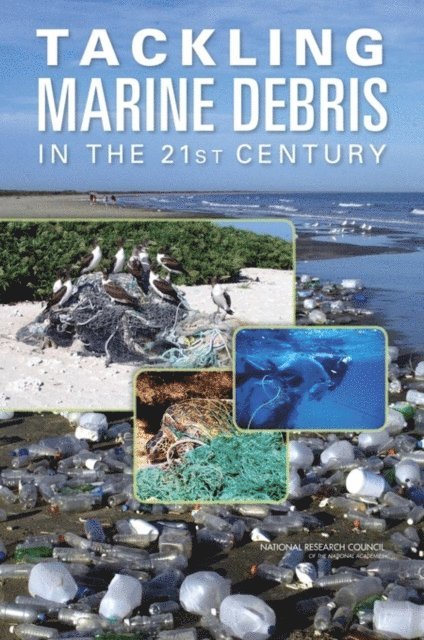
Marine debris from ships and other ocean-based sources-including trash and lost fishing gear-contributes to the spoiling of beaches, fouling of surface waters and the seafloor, and harm to marine animals, among other effects. Unfortunately, international conventions and domestic laws intended to control marine debris have not been successful, in part because the laws, as written, provide little incentive to change behavior. This book identifies ways to reduce waste, improve waste disposal at ports, and strengthen the regulatory framework toward a goal of zero waste discharge into the marine environment. Progress will depend on a commitment to sustained funding and appropriate institutional support.The Interagency Marine Debris Coordinating Committee should, through planning and prioritization, target research to understand the sources, fates, and impacts of marine debris. It should support the establishment of scalable and statistically rigorous protocols that allow monitoring at a variety of temporal and spatial scales. These protocols should contain evaluative metrics that allow assessment of progress in marine debris mitigation. The United States, through leadership in the international arena, should provide technical assistance and support for the establishment of additional monitoring and research programs worldwide.
357 kr
Läs direkt efter köp
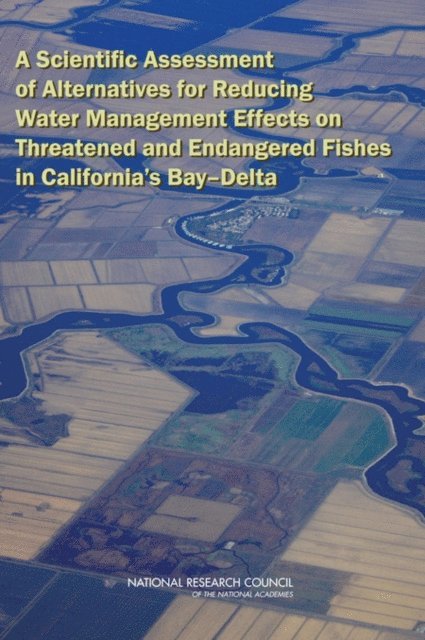
California''s Bay-Delta estuary is a biologically diverse estuarine ecosystem that plays a central role in the distribution of California''s water from the state''s wetter northern regions to its southern, arid, and populous cities and agricultural areas. Recently, the Fish and Wildlife Service and the National Marine Fisheries Service required changes (reasonable and prudent alternatives, or RPAs) in water operations and related actions to avoid jeopardizing the continued existence and potential for recovery of threatened species of fish. Those changes have reduced the amount of water available for other uses, and the tensions that resulted have been exacerbated by recent dry years. The complexity of the problem of the decline of the listed species and the difficulty of identifying viable solutions have led to disagreements, including concerns that some of the actions in the RPAs might be ineffective and might cause harm and economic disruptions to water users, and that some of the actions specified in the RPAs to help one or more of the listed species might harm others. In addition, some have suggested that the agencies might be able to meet their legal obligation to protect species with less economic disruptions to other water users. The National Research Council examines the issue in the present volume to conclude that most of the actions proposed by two federal agencies to protect endangered and threatened fish species through water diversions in the California Bay-Delta are "scientifically justified." But less well-supported by scientific analyses is the basis for the specific environmental triggers that would indicate when to reduce the water diversions required by the actions.
714 kr
Läs direkt efter köp
The climate record for the past 100,000 years clearly indicates that the climate system has undergone periodic—and often extreme—shifts, sometimes in as little as a decade or less. The causes of abrupt climate changes have not been clearly established, but the triggering of events is likely to be the result of multiple natural processes.Abrupt climate changes of the magnitude seen in the past would have far-reaching implications for human society and ecosystems, including major impacts on energy consumption and water supply demands. Could such a change happen again? Are human activities exacerbating the likelihood of abrupt climate change? What are the potential societal consequences of such a change? Abrupt Climate Change: Inevitable Surprises looks at the current scientific evidence and theoretical understanding to describe what is currently known about abrupt climate change, including patterns and magnitudes, mechanisms, and probability of occurrence. It identifies critical knowledge gaps concerning the potential for future abrupt changes, including those aspects of change most important to society and economies, and outlines a research strategy to close those gaps. Based on the best and most current research available, this book surveys the history of climate change and makes a series of specific recommendations for the future.
649 kr
Läs direkt efter köp
Ocean Noise and Marine Mammals reviews sources of noise in the ocean environment, what is known of the responses of marine mammals to acoustic disturbance, and what models exist for describing ocean noise and marine mammal responses. Recommendations are made for future data gathering efforts, studies of marine mammal behavior and physiology, and modeling efforts necessary to determine what the long- and short-term impacts of ocean noise on marine mammals.
633 kr
Läs direkt efter köp
Attention has been drawn to the subject of how ocean noise affects marine mammals by a series of marine mammal strandings, lawsuits, and legislative hearings, and most recently, the report from the U.S. Commission on Ocean Policy. One way to assess the impact of ocean noise is to consider whether it causes changes in animal behavior that are "biologically significant," that is, those that affect an animal''s ability to grow, survive, and reproduce. This report offers a conceptual model designed to clarify which marine mammal behaviors are biologically significant for conservation purposes. The report is intended to help scientists and policymakers interpret provisions of the federal Marine Mammal Protection Act.
552 kr
Läs direkt efter köp
On January 8 and 9, 2009, the Ocean Studies Board of the National Research Council, in response to a request from the Office of Naval Research, hosted the "Oceanography in 2025" workshop. The goal of the workshop was to bring together scientists, engineers, and technologists to explore future directions in oceanography, with an emphasis on physical processes. The focus centered on research and technology needs, trends, and barriers that may impact the field of oceanography over the next 16 years, and highlighted specific areas of interest: submesoscale processes, air-sea interactions, basic and applied research, instrumentation and vehicles, ocean infrastructure, and education.
To guide the white papers and drive discussions, four questions were posed to participants:What research questions could be answered?What will remain unanswered?What new technologies could be developed?How will research be conducted?
795 kr
Läs direkt efter köp
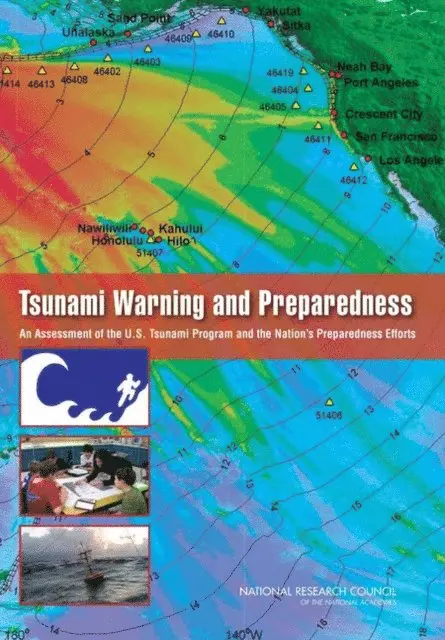
Many coastal areas of the United States are at risk for tsunamis. After the catastrophic 2004 tsunami in the Indian Ocean, legislation was passed to expand U.S. tsunami warning capabilities. Since then, the nation has made progress in several related areas on both the federal and state levels. At the federal level, NOAA has improved the ability to detect and forecast tsunamis by expanding the sensor network. Other federal and state activities to increase tsunami safety include: improvements to tsunami hazard and evacuation maps for many coastal communities; vulnerability assessments of some coastal populations in several states; and new efforts to increase public awareness of the hazard and how to respond.
Tsunami Warning and Preparedness explores the advances made in tsunami detection and preparedness, and identifies the challenges that still remain. The book describes areas of research and development that would improve tsunami education, preparation, and detection, especially with tsunamis that arrive less than an hour after the triggering event. It asserts that seamless coordination between the two Tsunami Warning Centers and clear communications to local officials and the public could create a timely and effective response to coastal communities facing a pending tsuanami.
According to Tsunami Warning and Preparedness, minimizing future losses to the nation from tsunamis requires persistent progress across the broad spectrum of efforts including: risk assessment, public education, government coordination, detection and forecasting, and warning-center operations. The book also suggests designing effective interagency exercises, using professional emergency-management standards to prepare communities, and prioritizing funding based on tsunami risk.
430 kr
Läs direkt efter köp
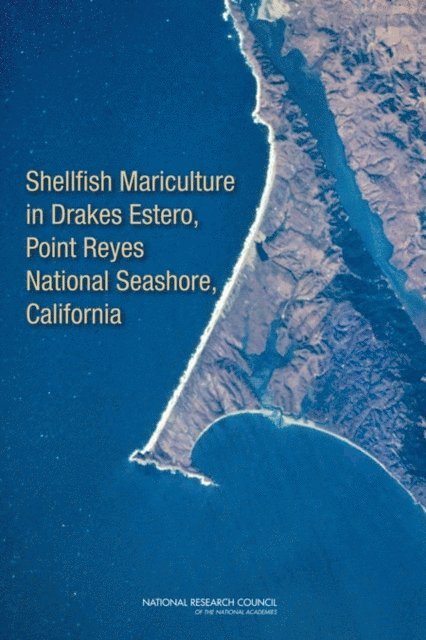
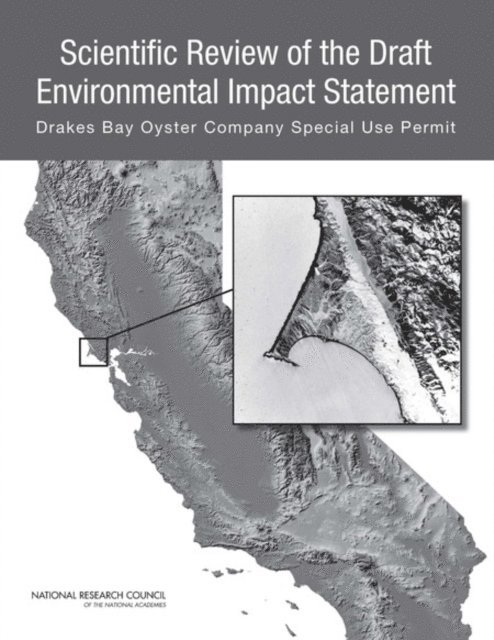
When Drakes Estero, which lies within the Point Reyes National Seashore (PRNS) about 25 miles northwest of San Francisco, California, was designated by Congress in 1976 as Potential Wilderness, it contained a commercial shellfish mariculture operation. Oyster mariculture began in Drakes Estero with the introduction of the nonnative Pacific oyster in 1932, and has been conducted continuously from that date forward. Hence, the cultural history of oyster farming predates the designation of Point Reyes as a National Seashore in 1962. Nevertheless, with the approach of the 2012 expiration date of the current National Park Service (NPS) Reservation of Use and Occupancy (RUO) and Special Use Permit (SUP) that allows Drakes Bay Oyster Company (DBOC) to operate within the estero, NPS has expressed concern over the scope and intensity of impacts of the shellfish culture operations on the estero''s ecosystem. Public debate over whether scientific information justifies closing the oyster farm led to the request for this study to help clarify the scientific issues raised with regard to the shellfish mariculture activities in Drakes Estero.
600 kr
Läs direkt efter köp
When Drakes Estero, which lies within the Point Reyes National Seashore (PRNS) about 25 miles northwest of San Francisco, California, was designated by Congress in 1976 as Potential Wilderness, it contained a commercial shellfish mariculture operation. Oyster mariculture began in Drakes Estero with the introduction of the nonnative Pacific oyster in 1932, and has been conducted continuously from that date forward. Hence, the cultural history of oyster farming predates the designation of Point Reyes as a National Seashore in 1962. Nevertheless, with the approach of the 2012 expiration date of the current National Park Service (NPS) Reservation of Use and Occupancy (RUO) and Special Use Permit (SUP) that allows Drakes Bay Oyster Company (DBOC) to operate within the estero, NPS has expressed concern over the scope and intensity of impacts of the shellfish culture operations on the estero''s ecosystem. Public debate over whether scientific information justifies closing the oyster farm led to the request for this study to help clarify the scientific issues raised with regard to the shellfish mariculture activities in Drakes Estero.
268 kr
Läs direkt efter köp
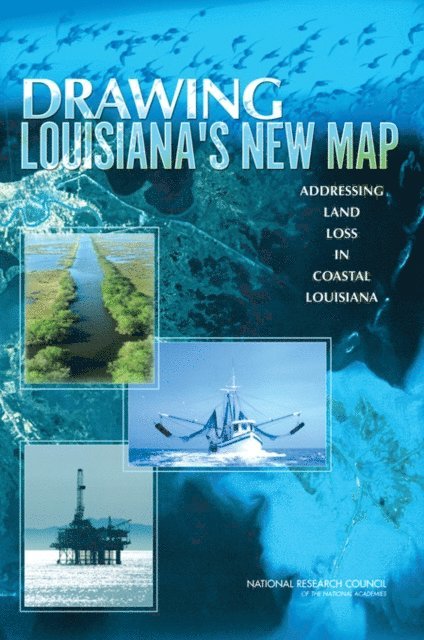
The U.S. Army Corps of Engineers released the Louisiana Coastal Protection and Restoration (LACPR) draft final technical report in March, 2009. In response to federal legislation, the Corps had to analyze hurricane protection, and design and present a full range of measures to protect against a storm equivalent to a category 5 hurricane. The request included measures for flood control, coastal restoration, and hurricane protection, and stipulated close coordination with the State of Louisiana and its appropriate agencies. This is the second and final report from the National Research Council (NRC) Committee on the Review of the Louisiana Coastal Protection and Restoration (LACPR) Program. The committee was charged to review two draft reports from the LACPR team and to assess the hurricane risk reduction framework, alternatives for flood control, storm protection, coastal restoration, and risk analysis. This report presents this committee''s review and advice for improvements of the LACPR March 2009 draft final technical report.
390 kr
Läs direkt efter köp
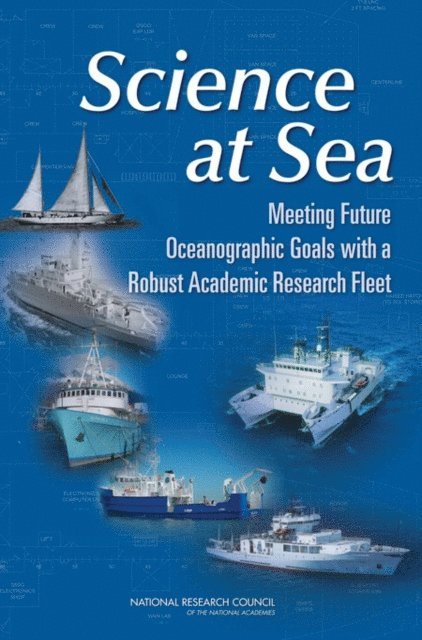
The U.S. academic research fleet is an essential national resource, and it is likely that scientific demands on the fleet will increase. Oceanographers are embracing a host of remote technologies that can facilitate the collection of data, but will continue to require capable, adaptable research vessels for access to the sea for the foreseeable future. Maintaining U.S. leadership in ocean research will require investing in larger and more capable general purpose Global and Regional class ships; involving the scientific community in all phases of ship design and acquisition; and improving coordination between agencies that operate research fleets.
536 kr
Läs direkt efter köp
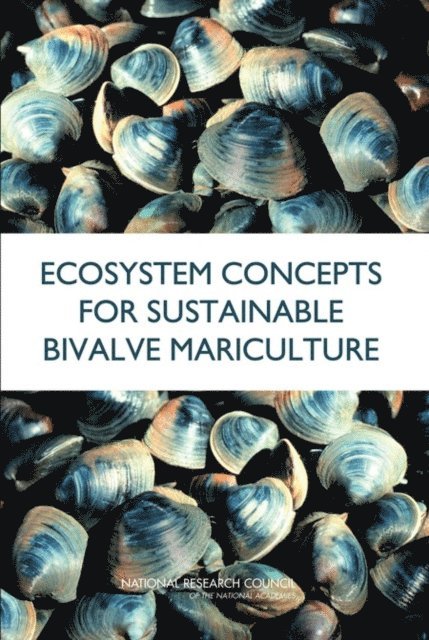
U.S. mariculture production of bivalve molluscs-those cultivated in the marine environment-has roughly doubled over the last 25 years. Although mariculture operations may expand the production of seafood without additional exploitation of wild populations, they still depend upon and affect natural ecosystems and ecosystem services. Every additional animal has an incremental effect arising from food extraction and waste excretion. Increasing domestic seafood production in the United States in an environmentally and socially responsible way will likely require the use of policy tools, such as best management practices (BMPs) and performance standards.
BMPs represent one approach to protecting against undesirable consequences of mariculture. An alternative approach to voluntary or mandatory BMPs is the establishment of performance standards for mariculture. Variability in environmental conditions makes it difficult to develop BMPs that are sufficiently flexible and adaptable to protect ecosystem integrity across a broad range of locations and conditions. An alternative that measures performance in sustaining key indicators of ecosystem state and function may be more effective. Because BMPs address mariculture methods rather than monitoring actual ecosystem responses, they do not guarantee that detrimental ecosystem impacts will be controlled or that unacceptable impact will be avoided.
Ecosystem Concepts for Sustainable Bivalve Mariculture finds that while performance standards can be applied for some broad ecosystem indicators, BMPs may be more appropriate for addressing parameters that change from site to site, such as the species being cultured, different culture methods, and various environmental conditions. This book takes an in-depth look at the environmental, social, and economic issues to present recommendations for sustainable bivalve mariculture.
552 kr
Läs direkt efter köp
The U.S. academic research fleet is an essential national resource, and it is likely that scientific demands on the fleet will increase. Oceanographers are embracing a host of remote technologies that can facilitate the collection of data, but will continue to require capable, adaptable research vessels for access to the sea for the foreseeable future. Maintaining U.S. leadership in ocean research will require investing in larger and more capable general purpose Global and Regional class ships; involving the scientific community in all phases of ship design and acquisition; and improving coordination between agencies that operate research fleets.
779 kr
Läs direkt efter köp
U.S. mariculture production of bivalve molluscs-those cultivated in the marine environment-has roughly doubled over the last 25 years. Although mariculture operations may expand the production of seafood without additional exploitation of wild populations, they still depend upon and affect natural ecosystems and ecosystem services. Every additional animal has an incremental effect arising from food extraction and waste excretion. Increasing domestic seafood production in the United States in an environmentally and socially responsible way will likely require the use of policy tools, such as best management practices (BMPs) and performance standards.
BMPs represent one approach to protecting against undesirable consequences of mariculture. An alternative approach to voluntary or mandatory BMPs is the establishment of performance standards for mariculture. Variability in environmental conditions makes it difficult to develop BMPs that are sufficiently flexible and adaptable to protect ecosystem integrity across a broad range of locations and conditions. An alternative that measures performance in sustaining key indicators of ecosystem state and function may be more effective. Because BMPs address mariculture methods rather than monitoring actual ecosystem responses, they do not guarantee that detrimental ecosystem impacts will be controlled or that unacceptable impact will be avoided.
Ecosystem Concepts for Sustainable Bivalve Mariculture finds that while performance standards can be applied for some broad ecosystem indicators, BMPs may be more appropriate for addressing parameters that change from site to site, such as the species being cultured, different culture methods, and various environmental conditions. This book takes an in-depth look at the environmental, social, and economic issues to present recommendations for sustainable bivalve mariculture.
503 kr
Läs direkt efter köp
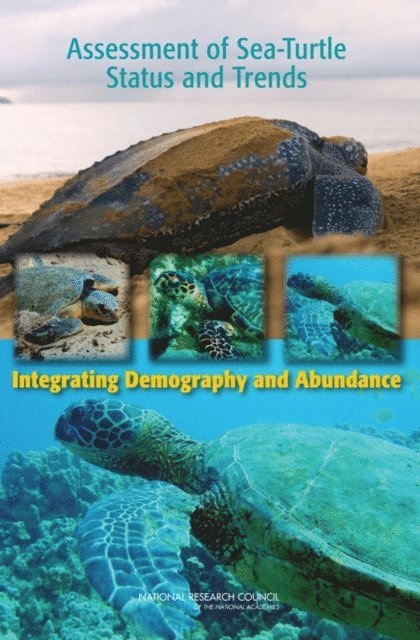
All six species of sea turtles found in U.S. waters are listed as endangered or threatened, but the exact population sizes of these species are unknown due to a lack of key information regarding birth and survival rates. The U.S. Endangered Species Act prohibits the hunting of sea turtles and reduces incidental losses from activities such as shrimp trawling and development on beaches used for nesting. However, current monitoring does not provide enough information on sea turtle populations to evaluate the effectiveness of these protective measures.
Sea Turtle Status and Trends reviews current methods for assessing sea turtle populations and finds that although counts of sea turtles are essential, more detailed information on sea turtle biology, such as survival rates and breeding patterns, is needed to predict and understand changes in populations in order to develop successful management and conservation plans.
398 kr
Läs direkt efter köp
795 kr
Läs direkt efter köp
519 kr
Läs direkt efter köp
California''s Bay-Delta estuary is a biologically diverse estuarine ecosystem that plays a central role in the distribution of California''s water from the state''s wetter northern regions to its southern, arid, and populous cities and agricultural areas. Recently, the Fish and Wildlife Service and the National Marine Fisheries Service required changes (reasonable and prudent alternatives, or RPAs) in water operations and related actions to avoid jeopardizing the continued existence and potential for recovery of threatened species of fish. Those changes have reduced the amount of water available for other uses, and the tensions that resulted have been exacerbated by recent dry years. The complexity of the problem of the decline of the listed species and the difficulty of identifying viable solutions have led to disagreements, including concerns that some of the actions in the RPAs might be ineffective and might cause harm and economic disruptions to water users, and that some of the actions specified in the RPAs to help one or more of the listed species might harm others. In addition, some have suggested that the agencies might be able to meet their legal obligation to protect species with less economic disruptions to other water users. The National Research Council examines the issue in the present volume to conclude that most of the actions proposed by two federal agencies to protect endangered and threatened fish species through water diversions in the California Bay-Delta are "scientifically justified." But less well-supported by scientific analyses is the basis for the specific environmental triggers that would indicate when to reduce the water diversions required by the actions.
714 kr
Läs direkt efter köp
All six species of sea turtles found in U.S. waters are listed as endangered or threatened, but the exact population sizes of these species are unknown due to a lack of key information regarding birth and survival rates. The U.S. Endangered Species Act prohibits the hunting of sea turtles and reduces incidental losses from activities such as shrimp trawling and development on beaches used for nesting. However, current monitoring does not provide enough information on sea turtle populations to evaluate the effectiveness of these protective measures.
Sea Turtle Status and Trends reviews current methods for assessing sea turtle populations and finds that although counts of sea turtles are essential, more detailed information on sea turtle biology, such as survival rates and breeding patterns, is needed to predict and understand changes in populations in order to develop successful management and conservation plans.