Solid State Sciences Committee – författare
Visar alla böcker från författaren Solid State Sciences Committee. Handla med fri frakt och snabb leverans.
24 produkter
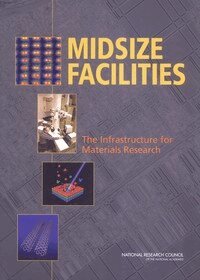
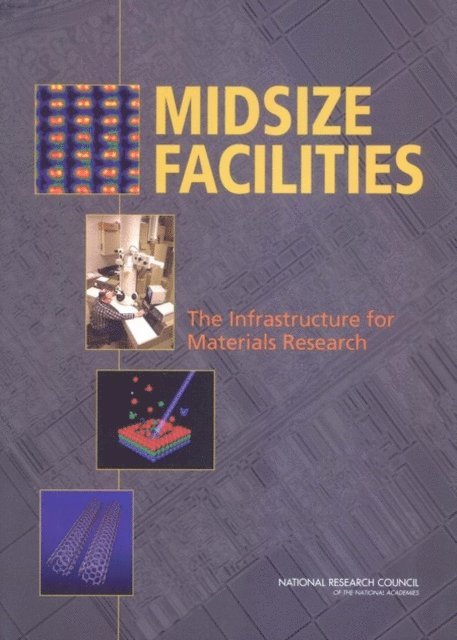
Midsize Facilities
The Infrastructure for Materials Research
Av National Research Council, Division on Engineering and Physical Sciences m. fl.
Häftad, 2006
649 kr
Lägg i varukorg
Most of the instruments now used for materials research are too complex and expensive for individual investigators to own, operate, and maintain them. Consequently, they have become increasingly consolidated into multi-user, small to midsized research facilities, located at many sites around the …
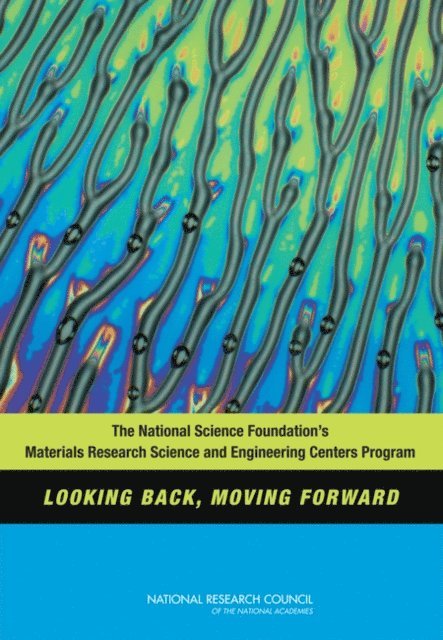
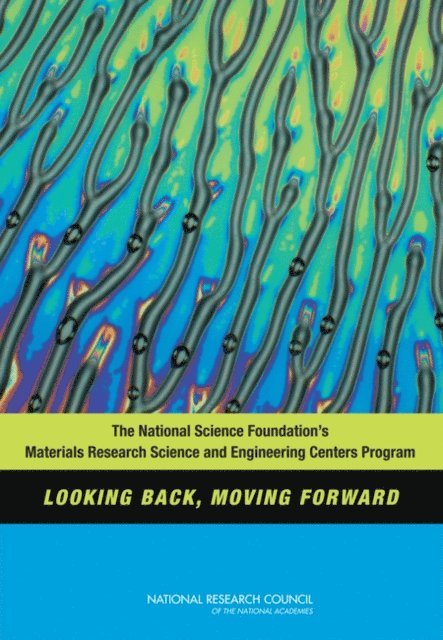
National Science Foundation's Materials Research Science and Engineering Centers Program
Looking Back, Moving Forward
Av MRSEC Impact Assessment Committee, Solid State Sciences Committee m. fl.
E-bok, 2007
684 kr
Lägg i varukorg
The Materials Research Science and Engineering Centers (MRSEC) Impact Assessment Committee was convened by the National Research Council in response to an informal request from the National Science Foundation. Charged to examine the impact of the MRSEC program and to provide guidance for the …
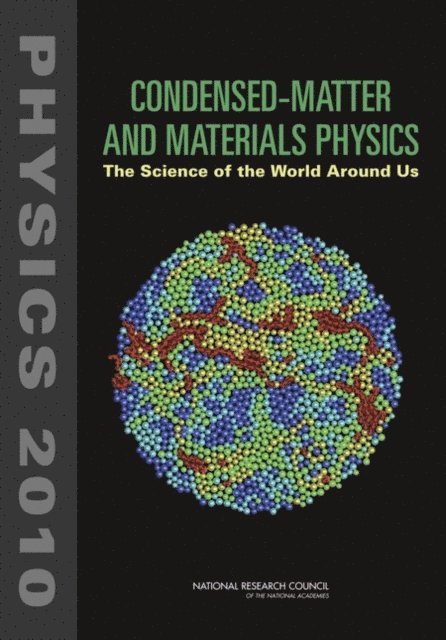
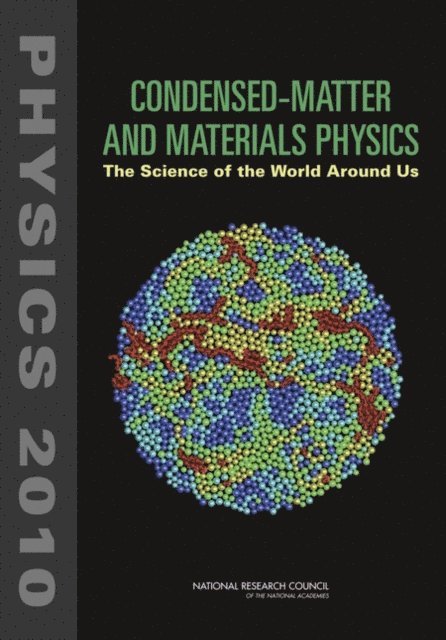
Condensed-Matter and Materials Physics
The Science of the World Around Us
Av Committee on CMMP 2010, Solid State Sciences Committee m. fl.
E-bok, 2007
693 kr
Lägg i varukorg
The development of transistors, the integrated circuit, liquid-crystal displays, and even DVD players can be traced back to fundamental research pioneered in the field of condensed-matter and materials physics (CMPP). The United States has been a leader in the field, but that status is now in …
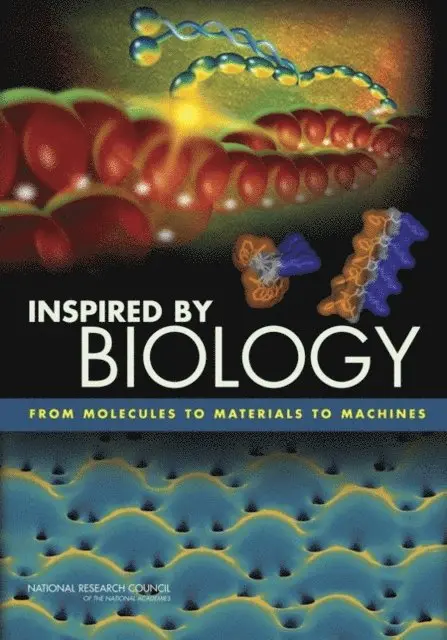
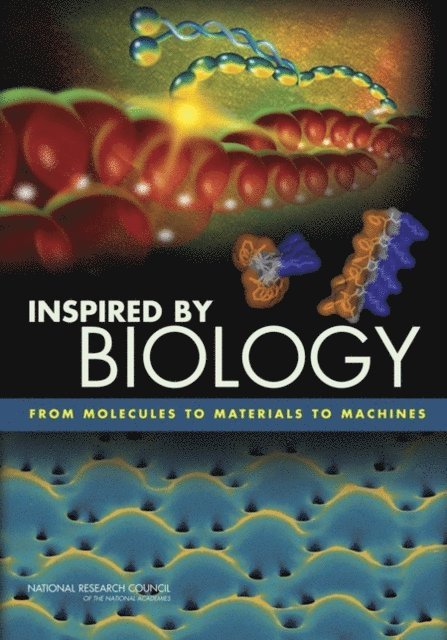
Inspired by Biology
From Molecules to Materials to Machines
Av Committee on Biomolecular Materials and Processes, Solid State Sciences Committee m. fl.
E-bok, 2008
788 kr
Lägg i varukorg
Scientists have long desired to create synthetic systems that function with the precision and efficiency of biological systems. Using new techniques, researchers are now uncovering principles that could allow the creation of synthetic materials that can perform tasks as precise as biological …
Condensed-Matter and Materials Physics
The Science of the World Around Us
Av Committee on CMMP 2010, Solid State Sciences Committee m. fl.
E-bok, 2007
953 kr
Lägg i varukorg
The development of transistors, the integrated circuit, liquid-crystal displays, and even DVD players can be traced back to fundamental research pioneered in the field of condensed-matter and materials physics (CMPP). The United States has been a leader in the field, but that status is now in …
Inspired by Biology
From Molecules to Materials to Machines
Av Committee on Biomolecular Materials and Processes, Solid State Sciences Committee m. fl.
E-bok, 2008
831 kr
Lägg i varukorg
Scientists have long desired to create synthetic systems that function with the precision and efficiency of biological systems. Using new techniques, researchers are now uncovering principles that could allow the creation of synthetic materials that can perform tasks as precise as biological …
Midsize Facilities
The Infrastructure for Materials Research
Av Committee on Smaller Facilities, Solid State Sciences Committee m. fl.
E-bok, 2006
953 kr
Lägg i varukorg
Most of the instruments now used for materials research are too complex and expensive for individual investigators to own, operate, and maintain them. Consequently, they have become increasingly consolidated into multi-user, small to midsized research facilities, located at many sites around the …
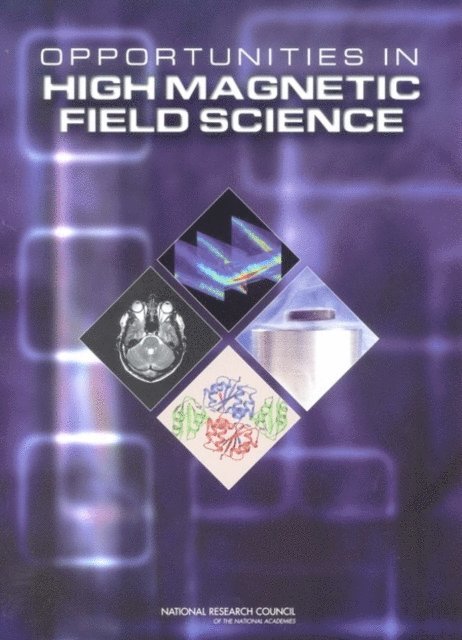
Opportunities in High Magnetic Field Science
Av Committee on Opportunities in High Magnetic Field Science, Solid State Sciences Committee m. fl.
E-bok, 2005
745 kr
Lägg i varukorg
High-field magnets—those that operate at the limits of the mechanical and/or electromagnetic properties of their structural materials—are used as research tools in a variety of scientific disciplines. The study of high magnetic fields themselves is also important in many areas such as astrophysics. …
Materials in a New Era
Proceedings of the 1999 Solid State Sciences Committee Forum
Av Solid State Sciences Committee, and Applications Commission on Physical Sciences, Mathematics m. fl.
E-bok, 1999
407 kr
Lägg i varukorg
The 1999 Solid State Sciences Committee Forum, entitled "Materials in a New Era," was held at the National Academy of Sciences in Washington, D.C., on February 16-17, 1999. The forum was designed to launch the report entitled Condensed-Matter and Materials Physics: Basic Research for Tomorrow ''s …
National Science Foundation's Materials Research Science and Engineering Centers Program
Looking Back, Moving Forward
Av MRSEC Impact Assessment Committee, Solid State Sciences Committee m. fl.
E-bok, 2007
953 kr
Lägg i varukorg
The Materials Research Science and Engineering Centers (MRSEC) Impact Assessment Committee was convened by the National Research Council in response to an informal request from the National Science Foundation. Charged to examine the impact of the MRSEC program and to provide guidance for the …
Materials in a New Era
Proceedings of the 1999 Solid State Sciences Committee Forum
Av Solid State Sciences Committee, and Applications Commission on Physical Sciences, Mathematics m. fl.
E-bok, 1999
286 kr
Lägg i varukorg
The 1999 Solid State Sciences Committee Forum, entitled "Materials in a New Era," was held at the National Academy of Sciences in Washington, D.C., on February 16-17, 1999. The forum was designed to launch the report entitled Condensed-Matter and Materials Physics: Basic Research for Tomorrow ''s …
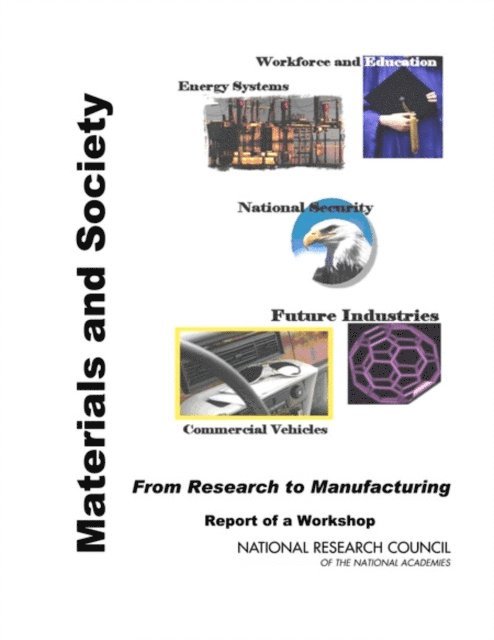
Materials and Society: From Research to Manufacturing
Report of a Workshop
Av Committee on Materials and Society: From Research to Manufacturing, National Materials Advisory Board m. fl.
E-bok, 2003
416 kr
Lägg i varukorg
Opportunities in High Magnetic Field Science
Av Committee on Opportunities in High Magnetic Field Science, Solid State Sciences Committee m. fl.
E-bok, 2005
509 kr
Lägg i varukorg
High-field magnets—those that operate at the limits of the mechanical and/or electromagnetic properties of their structural materials—are used as research tools in a variety of scientific disciplines. The study of high magnetic fields themselves is also important in many areas such as astrophysics. …
Midsize Facilities
The Infrastructure for Materials Research
Av Committee on Smaller Facilities, Solid State Sciences Committee m. fl.
E-bok, 2006
650 kr
Lägg i varukorg
Most of the instruments now used for materials research are too complex and expensive for individual investigators to own, operate, and maintain them. Consequently, they have become increasingly consolidated into multi-user, small to midsized research facilities, located at many sites around the …
Current Status of Neutron-Scattering Research and Facilities in the United States
Av Panel on Neutron Scattering, Solid State Sciences Committee m. fl.
E-bok, 1984
139 kr
Lägg i varukorg
Photonics
Maintaining Competitiveness in the Information Era
Av Panel on Phototonics Science and Technology Assessment, Solid State Sciences Committee m. fl.
E-bok, 1988
200 kr
Lägg i varukorg
Materials Science and Engineering for the 1990s
Maintaining Competitiveness in the Age of Materials
Av Committee on Materials Science and Engineering, Solid State Sciences Committee m. fl.
E-bok, 1989
1100 kr
Lägg i varukorg
Materials science and engineering (MSE) contributes to our everyday lives by making possible technologies ranging from the automobiles we drive to the lasers our physicians use. Materials Science and Engineering for the 1990s charts the impact of MSE on the private and public sectors and identifies …
Biomolecular Self-Assembling Materials
Scientific and Technological Frontiers
Av Panel on Biomolecular Materials, Solid State Sciences Committee m. fl.
E-bok, 1996
468 kr
Lägg i varukorg
Photonics
Maintaining Competitiveness in the Information Era
Av National Research Council, Division on Engineering and Physical Sciences m. fl.
Häftad, 1988
1758 kr
Tillfälligt slut
Biomolecular Self-Assembling Materials
Scientific and Technological Frontiers
Av National Research Council, Division on Engineering and Physical Sciences m. fl.
Häftad, 1996
1376 kr
Tillfälligt slut
Current Status of Neutron-Scattering Research and Facilities in the United States
Av National Research Council, and Applications Commission on Physical Sciences, Mathematics m. fl.
Häftad, 1984
1816 kr
Tillfälligt slut
Materials in a New Era
Proceedings of the 1999 Solid State Sciences Committee Forum
Av National Research Council, Division on Engineering and Physical Sciences m. fl.
Häftad, 1999
1205 kr
Tillfälligt slut
The 1999 Solid State Sciences Committee Forum, entitled "Materials in a New Era," was held at the National Academy of Sciences in Washington, D.C., on February 16-17, 1999. The forum was designed to launch the report entitled Condensed-Matter and Materials Physics: Basic Research for Tomorrow 's …
Materials and Society: From Research to Manufacturing
Report of a Workshop
Av National Research Council, Division on Engineering and Physical Sciences m. fl.
Häftad, 2003
630 kr
Tillfälligt slut
Inspired by Biology
From Molecules to Materials to Machines
Av National Research Council, Division on Earth and Life Studies m. fl.
Häftad, 2008
802 kr
Tillfälligt slut
Scientists have long desired to create synthetic systems that function with the precision and efficiency of biological systems. Using new techniques, researchers are now uncovering principles that could allow the creation of synthetic materials that can perform tasks as precise as biological …