and Applications Commission on Physical Sciences, Mathematics – författare
750 kr
Skickas inom 3-6 vardagar
1 461 kr
Skickas
637 kr
Skickas
1 717 kr
Skickas inom 3-6 vardagar
584 kr
Läs direkt efter köp
Laboratory facilities are complex, technically sophisticated, and mechanically intensive structures that are expensive to build and to maintain. Hundreds of decisions must be made before and during new construction or renovation that will determine how successfully the facility will function when completed and how successfully it can be maintained once put into service.
This book provides guidance on effective approaches for building laboratory facilities in the chemical and biochemical sciences. It contains both basic and laboratory-specific information addressed to the user community—the scientists and administrators who contract with design and construction experts. The book will also be important to the design and construction communities—the architects, laboratory designers, and engineers who will design the facility and the construction personnel who will build it—to help them communicate with the scientific community for whom they build laboratory facilities.
665 kr
Läs direkt efter köp
For a period of history no women worked outside the home. Bust as years have gone by and society has changed, Women are working varying jobs every day. They are, however, underrepresented in some sectors of jobs. This includes women in the engineering and science fields. To matters worse, women do not ascend the career ladder as fast as or as far as men do.
The impact of this and related problems for science, the academic enterprise, the U.S. economy, and global economic competitiveness have been recently examined. The Chemical Sciences Roundtable evaluate that the demographics of the workforce and the implications for science and society vary, depending on the field of science or engineering. The roundtable has organized a workshop, "Women in the Chemical Workforce," to address issues pertinent to the chemical and chemical engineering workforce as a whole, with an emphasis on the advancement of women.
Women in the Chemical Workforce: A Workshop Report to the Chemical Sciences Roundtable includes reports regarding the workshop''s three sessions—Context and Overview, Opportunities for Change, and Conditions for Success—as well as presentations by invited speakers, discussions within breakout groups, oral reports from each group.
649 kr
Läs direkt efter köp
Currently, the Departments of Defense (DOD) and Commerce (DOC) acquire and operate separate polarorbiting environmental satellite systems that collect data needed for military and civil weather forecasting. The National Performance Review (NPR) and subsequent Presidential Decision Directive (PDD), directed the DOD (Air Force) and the DOC (National Oceanic and Atmospheric Administration, NOAA) to establish a converged national weather satellite program that would meet U.S. civil and national security requirements and fulfill international obligations. NASA''s Earth Observing System (EOS), and potentially other NASA programs, were included in the converged program to provide new remote sensing and spacecraft technologies that could improve the operational capabilities of the converged system. The program that followed, called the National Polar-orbiting Operational Environmental Satellite System (NPOESS), combined the follow-on to the DOD''s Defense Meteorological Satellite Program and the DOC''s Polar-orbiting Operational Environmental Satellite (POES) program. The tri-agency Integrated Program Office (IPO) for NPOESS was subsequently established to manage the acquisition and operations of the converged satellite.
Issues in the Integration of Research and Operational Satellite Systems for Climate Research analyzes issues related to the integration of EOS and NPOESS, especially as they affect research and monitoring activities related to Earth''s climate and whether it is changing.
584 kr
Läs direkt efter köp
The 1998 Committee on Space Biology and Medicine (CSBM) report A Strategy for Research in Space Biology and Medicine in the New Century assessed the known and potential effects of spaceflight on biological systems in general and on human physiology, behavior, and performance in particular, and recommended directions for research sponsored over the next decade by the National Aeronautics and Space Administration (NASA). The present follow-up report reviews specifically the overall content of the biomedical research programs supported by NASA in order to assess the extent to which current programs are consistent with recommendations of the Strategy report for biomedical research activities. In general, NASA programs concerned with fundamental gravitational biology are not considered here. The committee also notes that this report does not include an evaluation of NASA''s response to the Strategy report, which had only recently been released at the initiation of this study.
Review of NASA''s Biomedical Research Program summarizes the committee''s findings from its review of (1) NASA''s biomedical research and (2) programmatic issues described in the Strategy report that are relevant to NASA''s ability to implement research recommendations.
694 kr
Läs direkt efter köp
Digital information and networks challenge the core practices of libraries, archives, and all organizations with intensive information management needs in many respects—not only in terms of accommodating digital information and technology, but also through the need to develop new economic and organizational models for managing information. LC21: A Digital Strategy for the Library of Congress discusses these challenges and provides recommendations for moving forward at the Library of Congress, the world''s largest library. Topics covered in LC21 include digital collections, digital preservation, digital cataloging (metadata), strategic planning, human resources, and general management and budgetary issues. The book identifies and elaborates upon a clear theme for the Library of Congress that is applicable more generally: the digital age calls for much more collaboration and cooperation than in the past. LC21 demonstrates that information-intensive organizations will have to change in fundamental ways to survive and prosper in the digital age.
647 kr
Läs direkt efter köp
Graduate Education in the Chemical Sciences is a summary of the December 1999 workshop, "Graduate Education in the Chemical Sciences: Issues for the 21st Century." This workshop discussed the various features of graduate education in chemical science and technology. Using case histories and their individual experiences, speakers examined the current status of graduate education in the chemical sciences, identified problems and opportunities, and discussed possible strategies for improving the system. The discussion was oriented toward the goal of generating graduates who are well prepared to advance the chemical sciences in academia, government, and industry in the next 5 to 10 years.
390 kr
Läs direkt efter köp
Part of an in-depth study of how information technology research and development could more effectively support advances in the use of information technology (IT) in government, Summary of a Workshop on Information Technology Research for Federal Statistics explores IT research opportunities of relevance to the collection, analysis, and dissemination of federal statistics. On February 9 and 10, 1999, participants from a number of communities—IT research, IT research management, federal statistics, and academic statistics—met to identify ways to foster interaction among computing and communications researchers, federal managers, and professionals in specific domains that could lead to collaborative research efforts. By establishing research links between these communities and creating collaborative mechanisms aimed at meeting relevant requirements, this workshop promoted thinking in the computing and communications research community and throughout government about possibilities for advances in technology that will support a variety of digital initiatives by the government.
1 784 kr
Läs direkt efter köp
Network-Centric Naval Forces: A Transition Strategy for Enhancing Operational Capabilities is a study to advise the Department of the Navy regarding its transition strategy to achieve a network-centric naval force through technology application. This report discusses the technical underpinnings needed for a transition to networkcentric forces and capabilities.
617 kr
Läs direkt efter köp
The Department of the Navy strives to maintain, through its Office of Naval Research (ONR), a vigorous science and technology (S&T) program in those areas considered critically important to U.S. naval superiority in the maritime environment, including littoral waters and shore regions. In pursuing its S&T investments in such areas, ONR must ensure that (1) a robust U.S. research capability to work on long-term S&T problems in areas of interest to the Department of the Navy and the Department of Defense is sustained, (2) an adequate supply of new scientists and engineers in these areas is maintained, and (3) S&T products and processes necessary to ensure future superiority in naval warfare are provided. One of the critical areas for the Department of the Navy is undersea weapons.
An Assessment of Undersea Weapons Science and Technology assesses the health of the existing Navy program in undersea weapons, evaluates the Navy''s research effort to develop the capabilities needed for future undersea weapons, identifies non-Navy-sponsored research and development efforts that might facilitate the development of such advanced weapons capabilities, and makes recommendations to focus the Navy''s research program so that it can meet future needs.
471 kr
Läs direkt efter köp
The Helium Privatization Act of 1996 (P.L. 104-273) directs the Department of the Interior to begin liquidating the U.S. Federal Helium Reserve by 2005 in a manner consistent with "minimum market disruption" and at a price given by a formula specified in the act. It also mandates that the Department of the Interior "enter into appropriate arrangements with the National Academy of Sciences to study and report on whether such disposal of helium reserves will have a substantial adverse effect on U.S. scientific, technical, biomedical, or national security interests."
This report is the product of that mandate. To provide context, the committee has examined the helium market and the helium industry as a whole to determine how helium users would be affected under various scenarios for selling the reserve within the act''s constraints.
The Federal Helium Reserve, the Bush Dome reservoir, and the Cliffside facility are mentioned throughout this report. It is important to recognize that they are distinct entities. The Federal Helium Reserve is federally owned crude helium gas that currently resides in the Bush Dome reservoir. The Cliffside facility includes the storage facility on the Bush Dome reservoir and the associated buildings pipeline.
752 kr
Läs direkt efter köp
The flood of information technology (I.T.) products and services entering the market place often obscures the need to nurture the research enterprise. But as I.T. becomes integrated into all aspects of society, the need for research is even greater. And the range of issues that need to be addressed is broader than ever.
This new book highlights the fundamental importance of research to ensure that I.T. meets society''s expanding needs. Against the background of dramatic change in the I.T. landscape, the committee examines four key questions:
Is the scope of I.T. research broad enough—particularly in the arena of large-scale systems—to address government, business, and social applications? Are government and industrial sponsors providing sufficient funding for I.T. research? Is the research net big both big and diverse enough to capture sufficient financial and intellectual resources to advance the field? Are structures and mechanisms for funding and conducting research suited to the new sets of research challenges?652 kr
Läs direkt efter köp
What most of us know as "the Internet" is actually a set of largely autonomous, loosely coordinated communication networks. As the influence of the Internet continues to grow, understanding its real nature is imperative to acting on a wide range of policy issues.
This timely new book explains basic design choices that underlie the Internet''s success, identifies key trends in the evolution of the Internet, evaluates current and prospective technical, operational, and management challenges, and explores the resulting implications for decision makers. The committee-composed of distinguished leaders from both the corporate and academic community-makes recommendations aimed at policy makers, industry, and researchers, going on to discuss a variety of issues:
How the Internet''s constituent parts are interlinked, and how economic and technical factors make maintaining the Internet''s seamless appearance complicated. How the Internet faces scaling challenges as it grows to meet the demands of users in the future. Tensions inherent between open innovation on the Internet and the ability of innovators to capture the commercial value of their breakthroughs. Regulatory issues posed by the Internet''s entry into other sectors, such as telephony.617 kr
Läs direkt efter köp
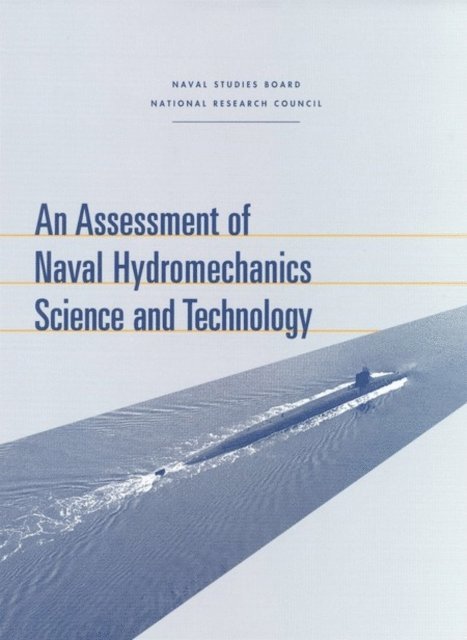
The Department of the Navy maintains a vigorous science and technology (S&T) research program in those areas that are critically important to ensuring U.S. naval superiority in the maritime environment. A number of these areas depend largely on sustained Navy Department investments for their health, strength, and growth. One such area is naval hydromechanics, that is, the study of the hydrodynamic and hydroacoustic performance of Navy ships, submarines, underwater vehicles, and weapons. A fundamental understanding of naval hydromechanics provides direct benefits to naval warfighting capabilities through improvements in the speed, maneuverability, and stealth of naval platforms and weapons.
An Assessment of Naval Hydromechanics Science and Technology is an assessment of S&T research in the area of naval hydromechanics. This report assesses the Navy''s research effort in the area of hydromechanics, identifies non-Navy-sponsored research and development efforts that might facilitate progress in the area, and provides recommendations on how the scope of the Navy''s research program should be focused to meet future objectives.
617 kr
Läs direkt efter köp
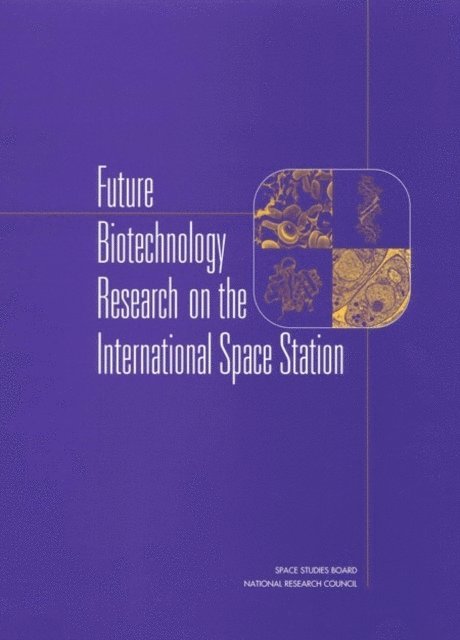
Under current NASA plans, investigations in the area of biotechnology will be a significant component of the life sciences research to be conducted on the International Space Station (ISS). They encompass work on cell science and studies of the use of microgravity to grow high-quality protein crystals. Both these subdisciplines are advancing rapidly in terrestrial laboratories, fueled by federal and industrial research budgets that dwarf those of NASA''s life science program. Forging strong and fruitful connections between the space investigations and laboratory-bench biologists, a continual challenge for NASA'' s life sciences program, is thus of great importance to ensuring the excellence of ISS research.
This report evaluates the plan for NASA''s biotechnology facility on the ISS and the scientific context that surrounds it, and makes recommendations on how the facility can be made more effective. In addition to questions about optimizing the instrumentation, the report addresses strategies for enhancing the scientific impact and improving the outreach to mainstream terrestrial biology. No major redirection of effort is called for, but collectively the specific, targeted changes recommended by the task group would have a major effect on the conduct of biotechnology research in space.
665 kr
Läs direkt efter köp
The third workshop of the Chemical Sciences Roundtable, Research Teams and Partnerships was held in Irvine, California, on May 2-3, 1999. The presentations and discussions at the workshop considered the current status of research partnerships in the chemical sciences and methods to improve the ability to form and maximize such collaborations. This volume presents the results of that workshop.
1 003 kr
Läs direkt efter köp
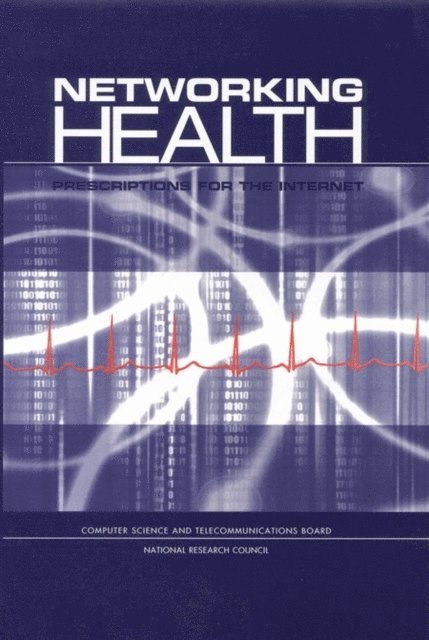
Consumer health websites have garnered considerable media attention, but only begin to scratch the surface of the more pervasive transformations the Internet could bring to health and health care. Networking Health examines ways in which the Internet may become a routine part of health care delivery and payment, public health, health education, and biomedical research. Building upon a series of site visits, this book:
Weighs the role of the Internet versus private networks in uses ranging from the transfer of medical images to providing video-based medical consultations at a distance. Reviews technical challenges in the areas of quality of service, security, reliability, and access, and looks at the potential utility of the next generation of online technologies. Discusses ways health care organizations can use the Internet to support their strategic interests and explores barriers to a broader deployment of the Internet. Recommends steps that private and public sector entities can take to enhance the capabilities of the Internet for health purposes and to prepare health care organizations to adopt new Internet-based applications.390 kr
Läs direkt efter köp
The 1999 Solid State Sciences Committee Forum, entitled "Materials in a New Era," was held at the National Academy of Sciences in Washington, D.C., on February 16-17, 1999. The forum was designed to launch the report entitled Condensed-Matter and Materials Physics: Basic Research for Tomorrow ''s Technology. That report, part of the decadal survey series, Physics in a New Era, reviews some of the outstanding accomplishments in materials research over the last decade. It indicates some emerging areas and conveys the true excitement in the field from a perspective of basic science and potential societal impact.
535 kr
Läs direkt efter köp
This workshop summary was produced in the course of a broader study that is exploring how information technology research can foster new and improved government services, operations, and interactions with citizens. This workshop summary examines how this technology can contribute to more-effective response and recovery efforts to crises such as natural disasters or terrorist attacks, as well as to mitigation and preparedness in order to reduce the impact of these events.
519 kr
Läs direkt efter köp
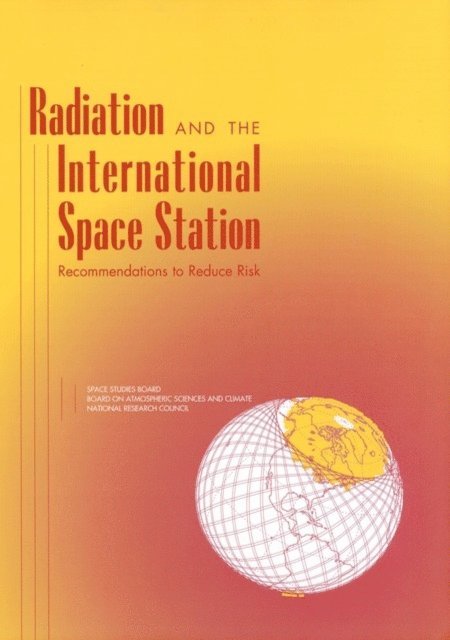
A major objective of the International Space Station is learning how to cope with the inherent risks of human spaceflight—how to live and work in space for extended periods. The construction of the station itself provides the first opportunity for doing so. Prominent among the challenges associated with ISS construction is the large amount of time that astronauts will be spending doing extravehicular activity (EVA), or "space walks." EVAs from the space shuttle have been extraordinarily successful, most notably the on-orbit repair of the Hubble Space Telescope. But the number of hours of EVA for ISS construction exceeds that of the Hubble repair mission by orders of magnitude. Furthermore, the ISS orbit has nearly twice the inclination to Earth''s equator as Hubble''s orbit, so it spends part of every 90-minute circumnavigation at high latitudes, where Earth''s magnetic field is less effective at shielding impinging radiation. This means that astronauts sweeping through these regions will be considerably more vulnerable to dangerous doses of energetic particles from a sudden solar eruption.
Radiation and the International Space Station estimates that the likelihood of having a potentially dangerous solar event during an EVA is indeed very high. This report recommends steps that can be taken immediately, and over the next several years, to provide adequate warning so that the astronauts can be directed to take protective cover inside the ISS or shuttle. The near-term actions include programmatic and operational ways to take advantage of the multiagency assets that currently monitor and forecast space weather, and ways to improve the in situ measurements and the predictive power of current models.
617 kr
Läs direkt efter köp
The Committee on Developing a Federal Materials Facilities Strategy was appointed by the National Research Council (NRC) in response to a request by the federal agencies involved in funding and operating multidisciplinary user facilities for research with synchrotron radiation, neutrons, and high magnetic fields. Starting in August 1996, a series of conversations and meetings was held among NRC staff and officials from the National Science Foundation, the Department of Energy, the National Institute of Standards and Technology (Department of Commerce), and the National Institutes of Health. The agencies were concerned that facilities originally developed to support research in materials science were increasingly used by scientists from other fields—particularly the biological sciences—whose research was supported by agencies other than those responsible for the facilities. This trend, together with the introduction of several new, large user facilities in the last decade, led the agencies to seek advice on the possible need for interagency cooperation in the management of these federal research facilities.
584 kr
Läs direkt efter köp
New legal approaches, such as the European Union''s 1996 Directive on the Legal Protection of Databases, and other legal initiatives now being considered in the United States at the federal and state level, are threatening to compromise public access to scientific and technical data available through computerized databases. Lawmakers are struggling to strike an appropriate balance between the rights of database rights holders, who are concerned about possible commercial misappropriation of their products, and public-interest users of the data such as researchers, educators, and libraries.
A Question of Balance examines this balancing act. The committee concludes that because database rights holders already enjoy significant legal, technical, and market-based protections, the need for statutory protection has not been sufficiently substantiated. Nevertheless, although the committee opposes the creation of any strong new protective measures, it recognizes that some additional limits against wholesale misappropriation of databases may be necessary. In particular, a new, properly scoped and focused U.S. statute might provide a reasonable alternative to the European Union''s highly protectionistic database directive. Such legislation could then serve as a legal model for an international treaty in this area. The book recommends a number of guiding principles for such possible legislation, as well as related policy actions for the administration.
284 kr
Läs direkt efter köp
The surface transportation system is vital to our nation''s economy, defense, and quality of life. Because threats against the system have hitherto been perceived as minor, little attention has been paid to its security. But the world is changing, as highlighted by dramatic incidents such as the terrorist chemical attack on the Tokyo subway in 1995. As a consequence, security concerns are now attracting more attention—appropriately so, for the threat is real, and responding to it is hard. Although the surface transportation system is remarkably resilient, it is also open and decentralized, making a security response challenging. Research and development can contribute to that response in important ways.
Some important themes emerge from analysis of this strategy. First, a dual-use approach, in which security objectives are furthered at the same time as other transportation goals, can encourage the implementation of security technologies and processes. Second, modeling could be used more to develop a better understanding of the scope of the security problem. Third, DOT can play an important role in developing and disseminating information about best practices that use existing technologies and processes, including low-technology alternatives. Finally, security should be considered as part of a broader picture, not a wholly new and different problem but one that is similar and closely connected to the transportation community''s previous experience in responding to accidents, natural disasters, and hazardous materials.
682 kr
Läs direkt efter köp
How small can a free-living organism be? On the surface, this question is straightforward-in principle, the smallest cells can be identified and measured. But understanding what factors determine this lower limit, and addressing the host of other questions that follow on from this knowledge, require a fundamental understanding of the chemistry and ecology of cellular life. The recent report of evidence for life in a martian meteorite and the prospect of searching for biological signatures in intelligently chosen samples from Mars and elsewhere bring a new immediacy to such questions. How do we recognize the morphological or chemical remnants of life in rocks deposited 4 billion years ago on another planet? Are the empirical limits on cell size identified by observation on Earth applicable to life wherever it may occur, or is minimum size a function of the particular chemistry of an individual planetary surface?
These questions formed the focus of a workshop on the size limits of very small organisms, organized by the Steering .Group for the Workshop on Size Limits of Very Small Microorganisms and held on October 22 and 23, 1998. Eighteen invited panelists, representing fields ranging from cell biology and molecular genetics to paleontology and mineralogy, joined with an almost equal number of other participants in a wide-ranging exploration of minimum cell size and the challenge of interpreting micro- and nano-scale features of sedimentary rocks found on Earth or elsewhere in the solar system. This document contains the proceedings of that workshop. It includes position papers presented by the individual panelists, arranged by panel, along with a summary, for each of the four sessions, of extensive roundtable discussions that involved the panelists as well as other workshop participants.
974 kr
Läs direkt efter köp
Imagine sending a magazine article to 10 friends-making photocopies, putting them in envelopes, adding postage, and mailing them. Now consider how much easier it is to send that article to those 10 friends as an attachment to e-mail. Or to post the article on your own site on the World Wide Web.
The ease of modifying or copying digitized material and the proliferation of computer networking have raised fundamental questions about copyright and patent—intellectual property protections rooted in the U.S. Constitution. Hailed for quick and convenient access to a world of material, the Internet also poses serious economic issues for those who create and market that material. If people can so easily send music on the Internet for free, for example, who will pay for music?
This book presents the multiple facets of digitized intellectual property, defining terms, identifying key issues, and exploring alternatives. It follows the complex threads of law, business, incentives to creators, the American tradition of access to information, the international context, and the nature of human behavior. Technology is explored for its ability to transfer content and its potential to protect intellectual property rights. The book proposes research and policy recommendations as well as principles for policymaking.
892 kr
Läs direkt efter köp
The frontier represented by the near solar system confronts humanity with intriguing challenges and opportunities. With the inception of the Human Exploration and Development of Space (HEDS) enterprise in 1995, NASA has acknowledged the opportunities and has accepted the very significant challenges.
Microgravity Research in Support of Technologies for the Human Exploration and Development of Space and Planetary Bodies was commissioned by NASA to assist it in coordinating the scientific information relevant to anticipating, identifying, and solving the technical problems that must be addressed throughout the HEDS program over the coming decades. This report assesses scientific and related technological issues facing NASA''s Human Exploration and Development of Space endeavor, looking specifically at mission enabling and enhancing technologies which, for development, require an improved understanding of fluid and material behavior in a reduced gravity environment.
617 kr
Läs direkt efter köp
Since its discovery in 1610, Europa—one of Jupiter''s four large moons—has been an object of interest to astronomers and planetary scientists. Much of this interest stems from observations made by NASA''s Voyager and Galileo spacecraft and from Earth-based telescopes indicating that Europa''s surface is quite young, with very little evidence of cratering, and made principally of water ice.
More recently, theoretical models of the jovian system and Europa have suggested that tidal heating may have resulted in the existence of liquid water, and perhaps an ocean, beneath Europa''s surface. NASA''s ongoing Galileo mission has profoundly expanded our understanding of Europa and the dynamics of the jovian system, and may allow us to constrain theoretical models of Europa''s subsurface structure.
Meanwhile, since the time of the Voyagers, there has been a revolution in our understanding of the limits of life on Earth. Life has been detected thriving in environments previously thought to be untenable—around hydrothermal vent systems on the seafloor, deep underground in basaltic rocks, and within polar ice. Elsewhere in the solar system, including on Europa, environments thought to be compatible with life as we know it on Earth are now considered possible, or even probable. Spacecraft missions are being planned that may be capable of proving their existence.
Against this background, the Space Studies Board charged its Committee on Planetary and Lunar Exploration (COMPLEX) to perform a comprehensive study to assess current knowledge about Europa, outline a strategy for future spacecraft missions to Europa, and identify opportunities for complementary Earth-based studies of Europa. (See the preface for a full statement of the charge.)