Committee on Solar-Terrestrial Research – författare
Visar alla böcker från författaren Committee on Solar-Terrestrial Research. Handla med fri frakt och snabb leverans.
5 produkter
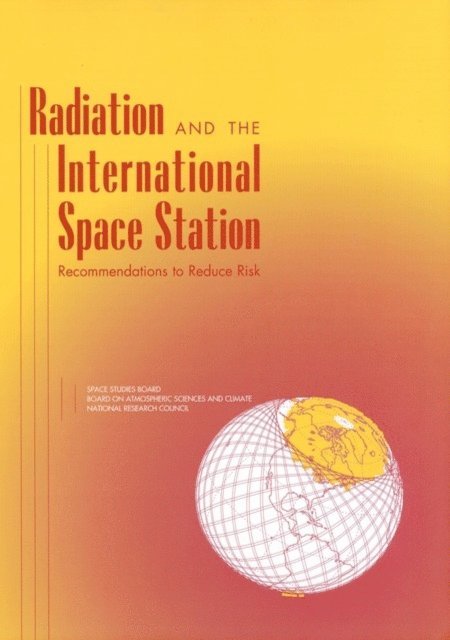
Radiation and the International Space Station
Recommendations to Reduce Risk
Av Committee on Solar and Space Physics, Committee on Solar-Terrestrial Research m. fl.
E-bok, 2000
554 kr
Lägg i varukorg
A major objective of the International Space Station is learning how to cope with the inherent risks of human spaceflight—how to live and work in space for extended periods. The construction of the station itself provides the first opportunity for doing so. Prominent among the challenges associated …
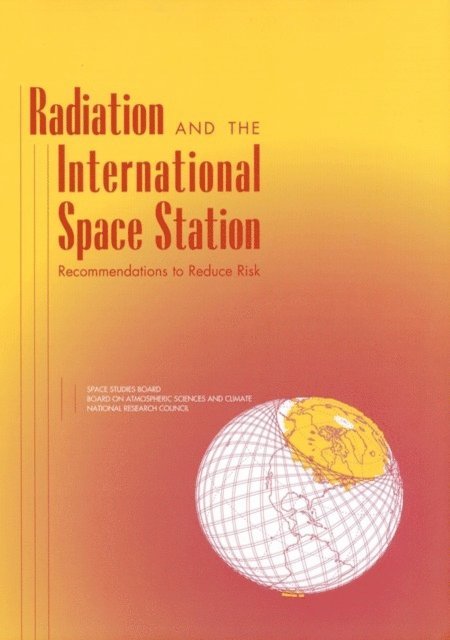
Radiation and the International Space Station
Recommendations to Reduce Risk
Av Committee on Solar and Space Physics, Committee on Solar-Terrestrial Research m. fl.
E-bok, 2000
381 kr
Lägg i varukorg
A major objective of the International Space Station is learning how to cope with the inherent risks of human spaceflight—how to live and work in space for extended periods. The construction of the station itself provides the first opportunity for doing so. Prominent among the challenges associated …
Space Physics Paradox
Why Has Increased Funding Been Accompanied by Decreased Effectiveness in the Conduct of Space Physics Research?
Av Committee on Solar-Terrestrial Research, Board on Atmospheric Sciences and Climate m. fl.
E-bok, 1994
390 kr
Lägg i varukorg
This book investigates and analyzes several disturbing trends in government support for space physics research over the past decade. The authors identify funding and management problems that thwart cost efficiency within this discipline, and suggest possible solutions. The volume also has broader …
Space Physics Paradox
Why Has Increased Funding Been Accompanied by Decreased Effectiveness in the Conduct of Space Physics Research?
Av National Research Council, Division on Engineering and Physical Sciences m. fl.
Häftad, 1994
1303 kr
Tillfälligt slut
This book investigates and analyzes several disturbing trends in government support for space physics research over the past decade. The authors identify funding and management problems that thwart cost efficiency within this discipline, and suggest possible solutions. The volume also has broader …
Radiation and the International Space Station
Recommendations to Reduce Risk
Av National Research Council, and Resources Commission on Geosciences, Environment m. fl.
Häftad, 2000
1275 kr
Tillfälligt slut
A major objective of the International Space Station is learning how to cope with the inherent risks of human spaceflight--how to live and work in space for extended periods. The construction of the station itself provides the first opportunity for doing so. Prominent among the challenges …