Computer Science and Telecommunications Board – författare
Visar alla böcker från författaren Computer Science and Telecommunications Board. Handla med fri frakt och snabb leverans.
294 produkter
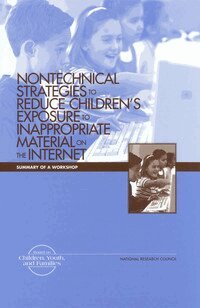
Nontechnical Strategies to Reduce Children's Exposure to Inappropriate Material on the Internet
Summary of a Workshop
Av Institute of Medicine, National Research Council m. fl.
Häftad, 2001
587 kr
Lägg i varukorg
In response to a mandate from Congress in conjunction with the Protection of Children from Sexual Predators Act of 1998, the Computer Science and Telecommunications Board and the Board on Children, Youth, and Families of the National Research Council and the Institute of Medicine established a …
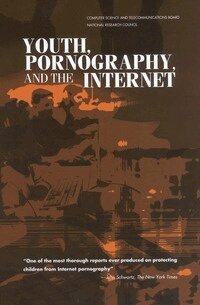
Youth, Pornography, and the Internet
Av National Research Council, Computer Science and Telecommunications Board m. fl.
Häftad, 2002
815 kr
Lägg i varukorg
The Internet has changed the way we access the world. This is especially true for kids, who soak up new technologies like eager little sponges. They have access to an enormous array of material, including educational links, sports info, chat roomsa "and, unfortunately, pornography. But we must …
Innovation in Information Technology
Av National Research Council, Division on Engineering and Physical Sciences m. fl.
Häftad, 2003
751 kr
Lägg i varukorg
Progress in information technology (IT) has been remarkable, but the best truly is yet to come: the power of IT as a human enabler is just beginning to be realized. Whether the nation builds on this momentum or plateaus prematurely depends on today's decisions about fundamental research in computer …
Summary of a Forum on Spectrum Management Policy Reform
Av National Research Council, Computer Science and Telecommunications Board m. fl.
Häftad, 2004
512 kr
Lägg i varukorg
In 2003, the Department of Commercea (TM)s Spectrum Policy Initiative was established with the objective of promoting a more efficient and beneficial use of the spectrum. As part of that Initiative, a series of public forums about spectrum management policy was held. The Computer Science and …
Computer Science
Reflections on the Field, Reflections from the Field
Av National Research Council, Division on Engineering and Physical Sciences m. fl.
Häftad, 2004
700 kr
Lägg i varukorg
Computer Science: Reflections on the Field, Reflections from the Field provides a concise characterization of key ideas that lie at the core of computer science (CS) research. The book offers a description of CS research recognizing the richness and diversity of the field. It brings together two …
Radio Frequency Identification Technologies
A Workshop Summary
Av National Research Council, Division on Engineering and Physical Sciences m. fl.
Häftad, 2004
523 kr
Lägg i varukorg
Radio Frequency Identification (RFID) technology is gaining rapid acceptance as a means to track a wide array of manufactured objects. Currently, RFID technologies have shown promise in transportation (e.g., smart fare cards) and commerce (e.g., inventory control) for a variety of uses and are …
Asking the Right Questions About Electronic Voting
Av National Research Council, Division on Engineering and Physical Sciences m. fl.
Häftad, 2006
660 kr
Lägg i varukorg
Many election officials look to electronic voting systems as a means for improving their ability to more effectively conduct and administer elections. At the same time, many information technologists and activists have raised important concerns regarding the security of such systems. Policy makers …
Summary of a Workshop on Software-Intensive Systems and Uncertainty at Scale
Av Committee on Advancing Software-Intensive Systems Producibility, Computer Science and Telecommunications Board m. fl.
E-bok, 2007
295 kr
Lägg i varukorg
The growing scale and complexity of software-intensive systems are introducing fundamental new challenges of uncertainty and scale that are particularly demanding for defense systems. To assist in meeting these challenges, the Department of Defense asked the NRC to assess the nature of U.S. …
State Voter Registration Databases
Immediate Actions and Future Improvements: Interim Report
Av Committee on State Voter Registration Databases, Computer Science and Telecommunications Board m. fl.
E-bok, 2008
286 kr
Lägg i varukorg
The Help America Vote Act of 2002 requires the states to develop a single, computerized voter registration data base (VRD) that is defined, maintained, and administered at the state level. To help the states with this task, the U.S. Election Assistance Commission asked the NRC to organize a series …
Assessing the Impacts of Changes in the Information Technology R&D Ecosystem
Retaining Leadership in an Increasingly Global Environment
Av Committee on Assessing the Impacts of Changes in the Information Technology Research and Development Ecosystem, Computer Science and Telecommunications Board m. fl.
E-bok, 2009
625 kr
Lägg i varukorg
The U.S. information technology (IT) research and development (R&D) ecosystem was the envy of the world in 1995. However, this position of leadership is not a birthright, and it is now under pressure. In recent years, the rapid globalization of markets, labor pools, and capital flows have …
Protecting Individual Privacy in the Struggle Against Terrorists
A Framework for Program Assessment
Av National Research Council, Division on Engineering and Physical Sciences m. fl.
Häftad, 2008
863 kr
Lägg i varukorg
All U.S. agencies with counterterrorism programs that collect or "mine" personal data -- such as phone records or Web sites visited -- should be required to evaluate the programs' effectiveness, lawfulness, and impacts on privacy. A framework is offered that agencies can use to evaluate such …
Protecting Individual Privacy in the Struggle Against Terrorists
A Framework for Program Assessment
Av Committee on Technical and Privacy Dimensions of Information for Terrorism Prevention and Other National Goals, Committee on Law and Justice m. fl.
E-bok, 2008
650 kr
Lägg i varukorg
All U.S. agencies with counterterrorism programs that collect or "mine" personal data—such as phone records or Web sites visited—should be required to evaluate the programs'' effectiveness, lawfulness, and impacts on privacy. A framework is offered that agencies can use to evaluate such …
Engaging Privacy and Information Technology in a Digital Age
Av Committee on Privacy in the Information Age, Computer Science and Telecommunications Board m. fl.
E-bok, 2007
813 kr
Lägg i varukorg
Privacy is a growing concern in the United States and around the world. The spread of the Internet and the seemingly boundaryless options for collecting, saving, sharing, and comparing information trigger consumer worries. Online practices of business and government agencies may present new ways to …
Protecting Individual Privacy in the Struggle Against Terrorists
A Framework for Program Assessment
Av Committee on Technical and Privacy Dimensions of Information for Terrorism Prevention and Other National Goals, Committee on Law and Justice m. fl.
E-bok, 2008
925 kr
Lägg i varukorg
All U.S. agencies with counterterrorism programs that collect or "mine" personal data—such as phone records or Web sites visited—should be required to evaluate the programs'' effectiveness, lawfulness, and impacts on privacy. A framework is offered that agencies can use to evaluate such …
Technology, Policy, Law, and Ethics Regarding U.S. Acquisition and Use of Cyberattack Capabilities
Av Committee on Offensive Information Warfare, Computer Science and Telecommunications Board m. fl.
E-bok, 2009
650 kr
Lägg i varukorg
The United States is increasingly dependent on information and information technology for both civilian and military purposes, as are many other nations. Although there is a substantial literature on the potential impact of a cyberattack on the societal infrastructure of the United States, little …
Biometric Recognition
Challenges and Opportunities
Av Whither Biometrics Committee, Computer Science and Telecommunications Board m. fl.
E-bok, 2010
555 kr
Lägg i varukorg
Biometric recognition—the automated recognition of individuals based on their behavioral and biological characteristic—is promoted as a way to help identify terrorists, provide better control of access to physical facilities and financial accounts, and increase the efficiency of access to services …
Improving State Voter Registration Databases
Final Report
Av National Research Council, Division on Engineering and Physical Sciences m. fl.
Häftad, 2010
688 kr
Lägg i varukorg
Improving State Voter Registration Databases outlines several actions that are needed to help make voter registration databases capable of sharing information within state agencies and across state lines. These include short-term changes to improve education, dissemination of information, and …
Improving State Voter Registration Databases
Final Report
Av Committee on State Voter Registration Databases, Computer Science and Telecommunications Board m. fl.
E-bok, 2010
424 kr
Lägg i varukorg
Improving State Voter Registration Databases outlines several actions that are needed to help make voter registration databases capable of sharing information within state agencies and across state lines. These include short-term changes to improve education, dissemination of information, and …
Achieving Effective Acquisition of Information Technology in the Department of Defense
Av Committee on Improving Processes and Policies for the Acquisition and Test of Information Technologies in the Department of Defense, Computer Science and Telecommunications Board m. fl.
E-bok, 2010
511 kr
Lägg i varukorg
In the military, information technology (IT) has enabled profound advances in weapons systems and the management and operation of the defense enterprise. A significant portion of the Department of Defense (DOD) budget is spent on capabilities acquired as commercial IT commodities, developmental IT …
Report of a Workshop on the Scope and Nature of Computational Thinking
Av Committee for the Workshops on Computational Thinking, Computer Science and Telecommunications Board m. fl.
E-bok, 2010
379 kr
Lägg i varukorg
Report of a Workshop on the Scope and Nature of Computational Thinking presents a number of perspectives on the definition and applicability of computational thinking. For example, one idea expressed during the workshop is that computational thinking is a fundamental analytical skill that everyone …
Improving State Voter Registration Databases
Final Report
Av Committee on State Voter Registration Databases, Computer Science and Telecommunications Board m. fl.
E-bok, 2010
605 kr
Lägg i varukorg
Improving State Voter Registration Databases outlines several actions that are needed to help make voter registration databases capable of sharing information within state agencies and across state lines. These include short-term changes to improve education, dissemination of information, and …
Report of a Workshop on the Scope and Nature of Computational Thinking
Av Committee for the Workshops on Computational Thinking, Computer Science and Telecommunications Board m. fl.
E-bok, 2010
556 kr
Lägg i varukorg
Report of a Workshop on the Scope and Nature of Computational Thinking presents a number of perspectives on the definition and applicability of computational thinking. For example, one idea expressed during the workshop is that computational thinking is a fundamental analytical skill that everyone …
Computational Technology for Effective Health Care
Immediate Steps and Strategic Directions
Av Committee on Engaging the Computer Science Research Community in Health Care Informatics, Computer Science and Telecommunications Board m. fl.
E-bok, 2009
681 kr
Lägg i varukorg
Despite a strong commitment to delivering quality health care, persistent problems involving medical errors and ineffective treatment continue to plague the industry. Many of these problems are the consequence of poor information and technology (IT) capabilities, and most importantly, the lack …
Achieving Effective Acquisition of Information Technology in the Department of Defense
Av Committee on Improving Processes and Policies for the Acquisition and Test of Information Technologies in the Department of Defense, Computer Science and Telecommunications Board m. fl.
E-bok, 2010
712 kr
Lägg i varukorg
In the military, information technology (IT) has enabled profound advances in weapons systems and the management and operation of the defense enterprise. A significant portion of the Department of Defense (DOD) budget is spent on capabilities acquired as commercial IT commodities, developmental IT …
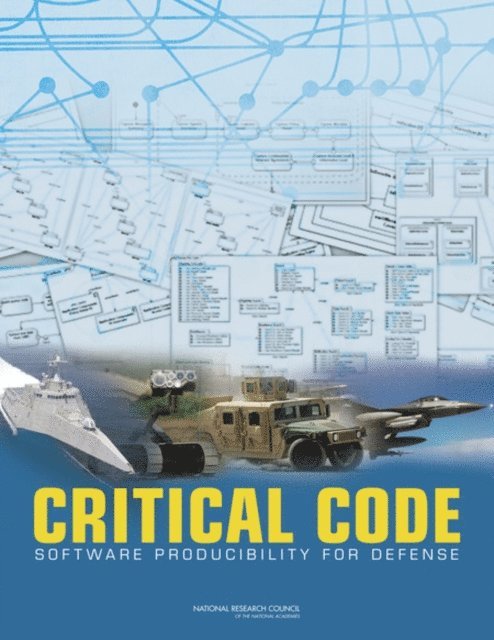
Critical Code
Software Producibility for Defense
Av Committee for Advancing Software-Intensive Systems Producibility, Computer Science and Telecommunications Board m. fl.
E-bok, 2010
468 kr
Lägg i varukorg
Critical Code contemplates Department of Defense (DoD) needs and priorities for software research and suggests a research agenda and related actions. Building on two prior books— Summary of a Workshop on Software Intensive Systems and Uncertainty at Scale and Preliminary Observations on DoD …
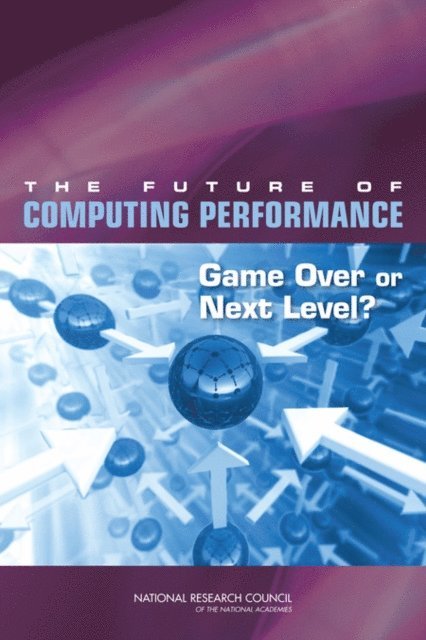
Future of Computing Performance
Game Over or Next Level?
Av National Research Council, Division on Engineering and Physical Sciences m. fl.
Häftad, 2011
485 kr
Lägg i varukorg
The end of dramatic exponential growth in single-processor performance marks the end of the dominance of the single microprocessor in computing. The era of sequential computing must give way to a new era in which parallelism is at the forefront. Although important scientific and engineering …
Future of Computing Performance
Game Over or Next Level?
Av Committee on Sustaining Growth in Computing Performance, Computer Science and Telecommunications Board m. fl.
E-bok, 2011
500 kr
Lägg i varukorg
The end of dramatic exponential growth in single-processor performance marks the end of the dominance of the single microprocessor in computing. The era of sequential computing must give way to a new era in which parallelism is at the forefront. Although important scientific and engineering …
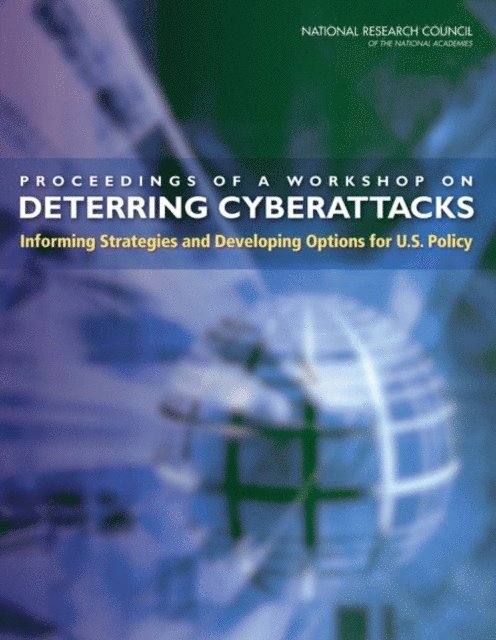
Proceedings of a Workshop on Deterring Cyberattacks
Informing Strategies and Developing Options for U.S. Policy
Av Committee on Deterring Cyberattacks: Informing Strategies and Developing Options for U.S. Policy, Computer Science and Telecommunications Board m. fl.
E-bok, 2010
1048 kr
Lägg i varukorg
In a world of increasing dependence on information technology, the prevention of cyberattacks on a nation''s important computer and communications systems and networks is a problem that looms large. Given the demonstrated limitations of passive cybersecurity defense measures, it is natural to …
Toward Better Usability, Security, and Privacy of Information Technology
Report of a Workshop
Av and Privacy of Computer Systems Steering Committee on the Usability, Security, Computer Science and Telecommunications Board m. fl.
E-bok, 2010
295 kr
Lägg i varukorg
Despite many advances, security and privacy often remain too complex for individuals or enterprises to manage effectively or to use conveniently. Security is hard for users, administrators, and developers to understand, making it all too easy to use, configure, or operate systems in ways that are …
Toward Better Usability, Security, and Privacy of Information Technology
Report of a Workshop
Av and Privacy of Computer Systems Steering Committee on the Usability, Security, Computer Science and Telecommunications Board m. fl.
E-bok, 2010
428 kr
Lägg i varukorg
Despite many advances, security and privacy often remain too complex for individuals or enterprises to manage effectively or to use conveniently. Security is hard for users, administrators, and developers to understand, making it all too easy to use, configure, or operate systems in ways that are …