Committee on Law and Justice – författare
935 kr
Skickas
344 kr
Läs direkt efter köp
Every day, about 1,600 people are released from prisons in the United States. Of these 600,000 new releasees every year, about 480,000 are subject to parole or some other kind of postrelease supervision. Prison releasees represent a challenge, both to themselves and to the communities to which they return. Will the releasees see parole as an opportunity to be reintegrated into society, with jobs and homes and supportive families and friends? Or will they commit new crimes or violate the terms of their parole contracts? If so, will they be returned to prison or placed under more stringent community supervision? Will the communities to which they return see them as people to be reintegrated or people to be avoided? And, the institution of parole itself is challenged with three different functions: to facilitate reintegration for parolees who are ready for rehabilitation; to deter crime; and to apprehend those parolees who commit new crimes and return them to prison.
In recent decades, policy makers, researchers, and program administrators have focused almost exclusively on "recidivism," which is essentially the failure of releasees to refrain from crime or stay out of prison. In contrast, for this study the National Institute of Justice (NIJ) of the U.S. Department of Justice asked the National Research Council to focus on "desistance," which broadly covers continued absence of criminal activity and requires reintegration into society. Specifically, the committee was asked (1) to consider the current state of parole practices, new and emerging models of community supervision, and what is necessary for successful reentry and (2) to provide a research agenda on the effects of community supervision on desistance from criminal activity, adherence to conditions of parole, and successful reentry into the community. To carry out its charge, the committee organized and held a workshop focused on traditional and new models of community supervision, the empirical underpinnings of such models, and the infrastructure necessary to support successful reentry. Parole, Desistance from Crime, and Community Integration also reviews the literature on desistance from crime, community supervision, and the evaluation research on selected types of intervention.601 kr
Läs direkt efter köp
It is easy to underestimate how little was known about crimes and victims before the findings of the National Crime Victimization Survey (NCVS) became common wisdom. In the late 1960s, knowledge of crimes and their victims came largely from reports filed by local police agencies as part of the Federal Bureau of Investigation''s (FBI) Uniform Crime Reporting (UCR) system, as well as from studies of the files held by individual police departments. Criminologists understood that there existed a "dark figure" of crime consisting of events not reported to the police. However, over the course of the last decade, the effectiveness of the NCVS has been undermined by the demands of conducting an increasingly expensive survey in an effectively flat-line budgetary environment. Surveying Victims: Options for Conducting the National Crime Victimization Survey, reviews the programs of the Bureau of Justice Statistics (BJS.) Specifically, it explores alternative options for conducting the NCVS, which is the largest BJS program. This book describes various design possibilities and their implications relative to three basic goals; flexibility, in terms of both content and analysis; utility for gathering information on crimes that are not well reported to police; and small-domain estimation, including providing information on states or localities. This book finds that, as currently configured and funded, the NCVS is not achieving and cannot achieve BJS''s mandated goal to "collect and analyze data that will serve as a continuous indication of the incidence and attributes of crime." Accordingly, Surveying Victims recommends that BJS be afforded the budgetary resources necessary to generate accurate measure of victimization.
738 kr
Läs direkt efter köp
609 kr
Läs direkt efter köp
All U.S. agencies with counterterrorism programs that collect or "mine" personal data—such as phone records or Web sites visited—should be required to evaluate the programs'' effectiveness, lawfulness, and impacts on privacy. A framework is offered that agencies can use to evaluate such information-based programs, both classified and unclassified. The book urges Congress to re-examine existing privacy law to assess how privacy can be protected in current and future programs and recommends that any individuals harmed by violations of privacy be given a meaningful form of redress.
Two specific technologies are examined: data mining and behavioral surveillance. Regarding data mining, the book concludes that although these methods have been useful in the private sector for spotting consumer fraud, they are less helpful for counterterrorism because so little is known about what patterns indicate terrorist activity. Regarding behavioral surveillance in a counterterrorist context, the book concludes that although research and development on certain aspects of this topic are warranted, there is no scientific consensus on whether these techniques are ready for operational use at all in counterterrorism.
674 kr
Läs direkt efter köp
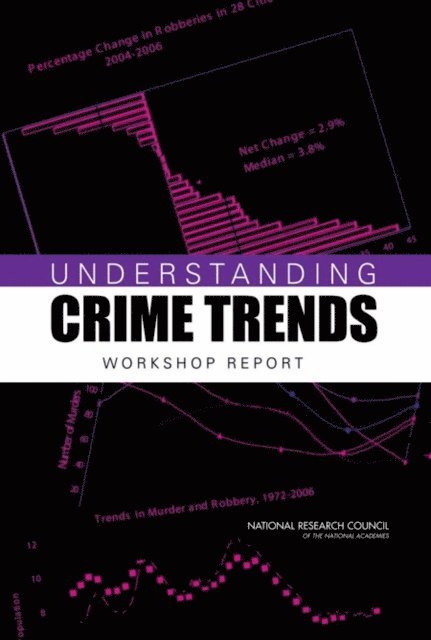
Changes over time in the levels and patterns of crime have significant consequences that affect not only the criminal justice system but also other critical policy sectors. Yet compared with such areas as health status, housing, and employment, the nation lacks timely information and comprehensive research on crime trends.Descriptive information and explanatory research on crime trends across the nation that are not only accurate, but also timely, are pressing needs in the nation''s crime-control efforts. In April 2007, the National Research Council held a two-day workshop to address key substantive and methodological issues underlying the study of crime trends and to lay the groundwork for a proposed multiyear NRC panel study of these issues. Six papers were commissioned from leading researchers and discussed at the workshop by experts in sociology, criminology, law, economics, and statistics. The authors revised their papers based on the discussants'' comments, and the papers were then reviewed again externally. The six final workshop papers are the basis of this volume, which represents some of the most serious thinking and research on crime trends currently available.
735 kr
Läs direkt efter köp
For years proposals for gun control and the ownership of firearms have been among the most contentious issues in American politics. For public authorities to make reasonable decisions on these matters, they must take into account facts about the relationship between guns and violence as well as conflicting constitutional claims and divided public opinion. In performing these tasks, legislators need adequate data and research to judge both the effects of firearms on violence and the effects of different violence control policies.
Readers of the research literature on firearms may sometimes find themselves unable to distinguish scholarship from advocacy. Given the importance of this issue, there is a pressing need for a clear and unbiased assessment of the existing portfolio of data and research. Firearms and Violence uses conventional standards of science to examine three major themes - firearms and violence, the quality of research, and the quality of data available. The book assesses the strengths and limitations of current databases, examining current research studies on firearm use and the efforts to reduce unjustified firearm use and suggests ways in which they can be improved.
811 kr
Läs direkt efter köp
892 kr
Läs direkt efter köp
All U.S. agencies with counterterrorism programs that collect or "mine" personal data—such as phone records or Web sites visited—should be required to evaluate the programs'' effectiveness, lawfulness, and impacts on privacy. A framework is offered that agencies can use to evaluate such information-based programs, both classified and unclassified. The book urges Congress to re-examine existing privacy law to assess how privacy can be protected in current and future programs and recommends that any individuals harmed by violations of privacy be given a meaningful form of redress.
Two specific technologies are examined: data mining and behavioral surveillance. Regarding data mining, the book concludes that although these methods have been useful in the private sector for spotting consumer fraud, they are less helpful for counterterrorism because so little is known about what patterns indicate terrorist activity. Regarding behavioral surveillance in a counterterrorist context, the book concludes that although research and development on certain aspects of this topic are warranted, there is no scientific consensus on whether these techniques are ready for operational use at all in counterterrorism.
933 kr
Läs direkt efter köp
The Bureau of Justice Statistics (BJS) of the U.S. Department of Justice is one of the smallest of the U.S. principal statistical agencies but shoulders one of the most expansive and detailed legal mandates among those agencies. Ensuring the Quality, Credibility, and Relevance of U.S. Justice Statistics examines the full range of BJS programs and suggests priorities for data collection.BJS''s data collection portfolio is a solid body of work, well justified by public information needs or legal requirements and a commendable effort to meet its broad mandate given less-than-commensurate fiscal resources. The book identifies some major gaps in the substantive coverage of BJS data, but notes that filling those gaps would require increased and sustained support in terms of staff and fiscal resources.In suggesting strategic goals for BJS, the book argues that the bureau''s foremost goal should be to establish and maintain a strong position of independence. To avoid structural or political interference in BJS work, the report suggests changing the administrative placement of BJS within the Justice Department and making the BJS directorship a fixed-term appointment.In its thirtieth year, BJS can look back on a solid body of accomplishment; this book suggests further directions for improvement to give the nation the justice statistics—and the BJS—that it deserves.
974 kr
Läs direkt efter köp
Changes over time in the levels and patterns of crime have significant consequences that affect not only the criminal justice system but also other critical policy sectors. Yet compared with such areas as health status, housing, and employment, the nation lacks timely information and comprehensive research on crime trends.Descriptive information and explanatory research on crime trends across the nation that are not only accurate, but also timely, are pressing needs in the nation''s crime-control efforts. In April 2007, the National Research Council held a two-day workshop to address key substantive and methodological issues underlying the study of crime trends and to lay the groundwork for a proposed multiyear NRC panel study of these issues. Six papers were commissioned from leading researchers and discussed at the workshop by experts in sociology, criminology, law, economics, and statistics. The authors revised their papers based on the discussants'' comments, and the papers were then reviewed again externally. The six final workshop papers are the basis of this volume, which represents some of the most serious thinking and research on crime trends currently available.
1 055 kr
Läs direkt efter köp
The Bureau of Justice Statistics (BJS) of the U.S. Department of Justice is one of the smallest of the U.S. principal statistical agencies but shoulders one of the most expansive and detailed legal mandates among those agencies. Ensuring the Quality, Credibility, and Relevance of U.S. Justice Statistics examines the full range of BJS programs and suggests priorities for data collection.BJS''s data collection portfolio is a solid body of work, well justified by public information needs or legal requirements and a commendable effort to meet its broad mandate given less-than-commensurate fiscal resources. The book identifies some major gaps in the substantive coverage of BJS data, but notes that filling those gaps would require increased and sustained support in terms of staff and fiscal resources.In suggesting strategic goals for BJS, the book argues that the bureau''s foremost goal should be to establish and maintain a strong position of independence. To avoid structural or political interference in BJS work, the report suggests changing the administrative placement of BJS within the Justice Department and making the BJS directorship a fixed-term appointment.In its thirtieth year, BJS can look back on a solid body of accomplishment; this book suggests further directions for improvement to give the nation the justice statistics—and the BJS—that it deserves.
844 kr
Läs direkt efter köp
The National Institute of Justice (NIJ) is the nation''s primary resource for advancing scientific research, development, and evaluation on crime and crime control and the administration of justice in the United States. Headed by a presidentially appointed director, it is one of the major units in the Office of Justice Programs (OJP) of the U.S. Department of Justice. Under its authorizing legislation, NIJ awards grants and contracts to a variety of public and private organizations and individuals.At the request of NIJ, Strengthening the National Institute of Justice assesses the operations and quality of the full range of its programs. These include social science research, science and technology research and development, capacity building, and technology assistance. The book concludes that a federal research institute such as NIJ is vital to the nation''s continuing efforts to control crime and administer justice. No other federal, state, local, or private organization can do what NIJ was created to do. Forty years ago, Congress envisioned a science agency dedicated to building knowledge to support crime prevention and control by developing a wide range of techniques for dealing with individual offenders, identifying injustices and biases in the administration of justice, and supporting more basic and operational research on crime and the criminal justice system and the involvement of the community in crime control efforts. As the embodiment of that vision, NIJ has accomplished a great deal. It has succeeded in developing a body of knowledge on such important topics as hot spots policing, violence against women, the role of firearms and drugs in crime, drug courts, and forensic DNA analysis. It has helped build the crime and justice research infrastructure. It has also widely disseminated the results of its research programs to help guide practice and policy. But its efforts have been severely hampered by a lack of independence, authority, and discretionary resources to carry out its mission.
630 kr
Skickas inom 3-6 vardagar
410 kr
Läs direkt efter köp
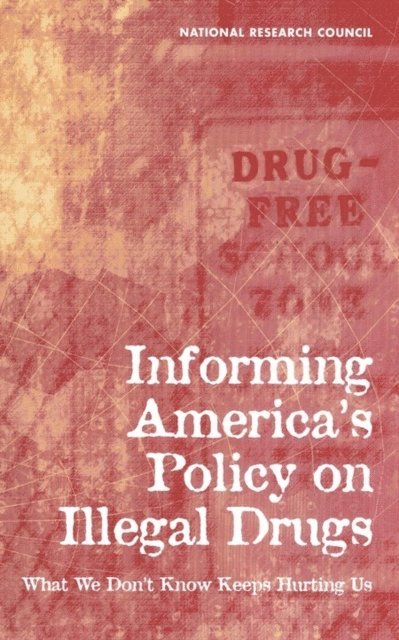
Despite efforts to reduce drug consumption in the United States over the past 35 years, drugs are just as cheap and available as they have ever been. Cocaine, heroin, and methamphetamines continue to cause great harm in the country, particularly in minority communities in the major cities. Marijuana use remains a part of adolescent development for about half of the country''s young people, although there is controversy about the extent of its harm.Given the persistence of drug demand in the face of lengthy and expensive efforts to control the markets, the National Institute of Justice asked the National Research Council to undertake a study of current research on the demand for drugs in order to help better focus national efforts to reduce that demand. This study complements the 2003 book, Informing America''s Policy on Illegal Drugs by giving more attention to the sources of demand and assessing the potential of demand-side interventions to make a substantial difference to the nation''s drug problems. Understanding the Demand for Illegal Drugs therefore focuses tightly on demand models in the field of economics and evaluates the data needs for advancing this relatively undeveloped area of investigation.
585 kr
Läs direkt efter köp
Despite efforts to reduce drug consumption in the United States over the past 35 years, drugs are just as cheap and available as they have ever been. Cocaine, heroin, and methamphetamines continue to cause great harm in the country, particularly in minority communities in the major cities. Marijuana use remains a part of adolescent development for about half of the country''s young people, although there is controversy about the extent of its harm.Given the persistence of drug demand in the face of lengthy and expensive efforts to control the markets, the National Institute of Justice asked the National Research Council to undertake a study of current research on the demand for drugs in order to help better focus national efforts to reduce that demand. This study complements the 2003 book, Informing America''s Policy on Illegal Drugs by giving more attention to the sources of demand and assessing the potential of demand-side interventions to make a substantial difference to the nation''s drug problems. Understanding the Demand for Illegal Drugs therefore focuses tightly on demand models in the field of economics and evaluates the data needs for advancing this relatively undeveloped area of investigation.
1 217 kr
Läs direkt efter köp
The National Institute of Justice (NIJ) is the nation''s primary resource for advancing scientific research, development, and evaluation on crime and crime control and the administration of justice in the United States. Headed by a presidentially appointed director, it is one of the major units in the Office of Justice Programs (OJP) of the U.S. Department of Justice. Under its authorizing legislation, NIJ awards grants and contracts to a variety of public and private organizations and individuals.At the request of NIJ, Strengthening the National Institute of Justice assesses the operations and quality of the full range of its programs. These include social science research, science and technology research and development, capacity building, and technology assistance. The book concludes that a federal research institute such as NIJ is vital to the nation''s continuing efforts to control crime and administer justice. No other federal, state, local, or private organization can do what NIJ was created to do. Forty years ago, Congress envisioned a science agency dedicated to building knowledge to support crime prevention and control by developing a wide range of techniques for dealing with individual offenders, identifying injustices and biases in the administration of justice, and supporting more basic and operational research on crime and the criminal justice system and the involvement of the community in crime control efforts. As the embodiment of that vision, NIJ has accomplished a great deal. It has succeeded in developing a body of knowledge on such important topics as hot spots policing, violence against women, the role of firearms and drugs in crime, drug courts, and forensic DNA analysis. It has helped build the crime and justice research infrastructure. It has also widely disseminated the results of its research programs to help guide practice and policy. But its efforts have been severely hampered by a lack of independence, authority, and discretionary resources to carry out its mission.
448 kr
Läs direkt efter köp
652 kr
Läs direkt efter köp
This report expands on the work of an earlier National Research Council panelwhose report, Understanding Violence Against Women, was published in 1996. Thereport is based on the presentations and deliberations of a workshop convened inJanuary 2002, at the request of Congress, to develop a detailed research agendaon violence against women. While some of the research recommendations in theearlier report have been funded and carried out, the workshop demonstrated thatimportant gaps remain. For example, prevalence and incidence data are still inadequateto measure trends or to reveal whether interventions being designed underfederal programs are, in fact, working. Among its primary recommendations, thecommittee underscored the importance of strengthening the data and researchinfrastructure in this area, especially the need for better prevalence data and longitudinaldata to determine the causes of violent victimization of women and the impactof interventions.
584 kr
Läs direkt efter köp
714 kr
Läs direkt efter köp
Fairness and Effectiveness in Policing explores police work in the new century. It replaces myths with research findings and provides recommendations for updated policy and practices to guide it. The book provides answers to the most basic questions: What do police do? It reviews how police work is organized, explores the expanding responsibilities of police, examines the increasing diversity among police employees, and discusses the complex interactions between officers and citizens. It also addresses such topics as community policing, use of force, racial profiling, and evaluates the success of common police techniques, such as focusing on crime "hot spots." It goes on to look at the issue of legitimacy—how the public gets information about police work, and how police are viewed by different groups, and how police can gain community trust.
Fairness and Effectiveness in Policing will be important to anyone concerned about police work: policy makers, administrators, educators, police supervisors and officers, journalists, and interested citizens.
602 kr
Läs direkt efter köp
The shooting at Columbine High School riveted national attention on violence in the nation''s schools. This dramatic example signaled an implicit and growing fear that these events would continue to occur—and even escalate in scale and severity.
How do we make sense of the tragedy of a school shooting or even draw objective conclusions from these incidents? Deadly Lessons is the outcome of the National Research Council''s unique effort to glean lessons from six case studies of lethal student violence. These are powerful stories of parents and teachers and troubled youths, presenting the tragic complexity of the young shooter''s social and personal circumstances in rich detail.
The cases point to possible causes of violence and suggest where interventions may be most effective. Readers will come away with a better understanding of the potential threat, how violence might be prevented, and how healing might be promoted in affected communities.
For each case study, Deadly Lessons relates events leading up to the violence, provides quotes from personal interviews about the incident, and explores the impact on the community. The case studies center on:
Two separate incidents in East New York in which three students were killed and a teacher was seriously wounded. A shooting on the south side of Chicago in which one youth was killed and two wounded. A shooting into a prayer group at a Kentucky high school in which three students were killed. The killing of four students and a teacher and the wounding of 10 others at an Arkansas middle school. The shooting of a popular science teacher by a teenager in Edinboro, Pennsylvania. A suspected copycat of Columbine in which six students were wounded in Georgia.For everyone who puzzles over these terrible incidents, Deadly Lessons offers a fresh perspective on the most fundamental of questions: Why?
390 kr
Läs direkt efter köp
This workshop arose out of the efforts of the Committee on Law and Justice to assist the National Institute of Justice in identifying gaps in the overall research portfolio on crime and justice. It was designed to develop ideas about the kinds of knowledge needed to gain a better understanding of the prosecution function and to discuss the past and future role of social science in advancing our understanding of modern prosecution practice. The Committee on Law and Justice was able to bring together senior scholars who have been working on this subject as well as current or former chief prosecutors, judges, and senior officials from the U.S. Department of Justice to share their perspectives. Workshop participants mapped out basic data needs, discussed the need to know more about recent innovations such as community prosecution, and discussed areas where one would expect to see changes that have not occurred. The resulting report summarizes these discussions and makes useful suggestions for learning more about prosecution.
665 kr
Läs direkt efter köp
Although violent crime in the United States has declined over the past five years, certain groups appear to remain at disproportionately high risk for violent victimization. In the United States, people with developmental disabilities—such as mental retardation, autism, cerebral palsy, epilepsy, and severe learning disabilities may be included in this group. While the scientific evidence is scanty, a handful of studies from the United States, Canada, Australia, and Great Britain consistently find high rates of violence and abuse affecting people with these kinds of disabilities.
A number of social and demographic trends are converging that may worsen the situation considerably over the next several years. The prevalence of developmental disabilities has increased in low-income populations, due to a number of factors, such as poor prenatal nutrition, lack of access to health care or better perinatal care for some fragile babies, and increases in child abuse and substance abuse during pregnancy. For example, a recent report of the California State Council on Developmental Disabilities found that during the past decade, while the state population increased by 20 percent, the number of persons with developmental disabilities in California increased by 52 percent and the population segment with mild mental retardation doubled. Because of a growing concern among parents and advocates regarding possible high rates of crime victimization among persons with developmental disabilities, Congress, through the Crime Victims with Disabilities Awareness Act of 1998, requested that the National Research Council of the National Academy of Sciences conduct a study to increase knowledge and information about crimes against individuals with developmental disabilities that will be useful in developing new strategies to reduce the incidence of crimes against those individuals. Crime Victims with Developmental Disabilities summarizes the workshop and addresses the following issues: (1) the nature and extent of crimes against individuals with developmental disabilities; (2) the risk factors associated with victimization of individuals with developmental disabilities; (3) the manner in which the justice system responds to crimes against individuals with disabilities; and (4) the means by which states may establish and maintain a centralized computer database on the incidence of crimes against individuals with disabilities within a state.1 086 kr
Läs direkt efter köp
617 kr
Läs direkt efter köp
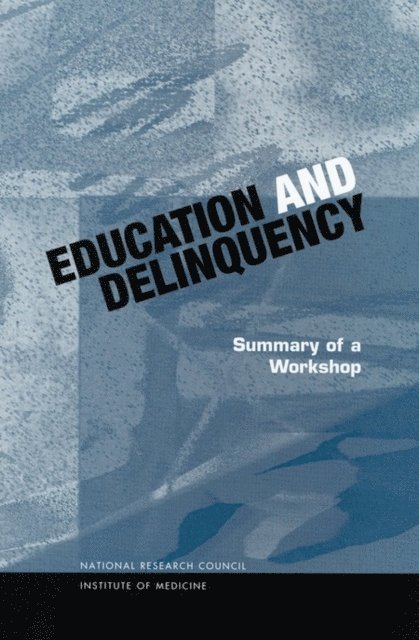
The Panel on Juvenile Crime: Prevention, Treatment, and Control convened a workshop on October 2, 1998, to explore issues related to educational performance, school climate, school practices, learning, student motivation and commitment to school, and their relationship to delinquency. The workshop was designed to bring together researchers and practitioners with a broad range of perspectives on the relationship between such specific issues as school safety and academic achievement and the development of delinquent behavior.
Education and Delinquency reviews recent research findings, identifies gaps in knowledge and promising areas of future research, and discusses the need for program evaluation and the integration of empirical research findings into program design.
649 kr
Läs direkt efter köp
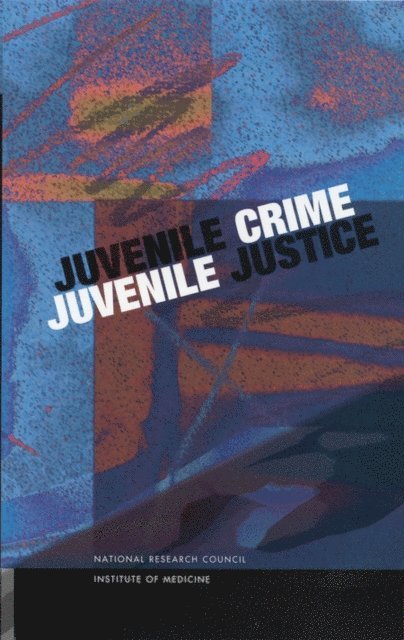
Even though youth crime rates have fallen since the mid-1990s, public fear and political rhetoric over the issue have heightened. The Columbine shootings and other sensational incidents add to the furor. Often overlooked are the underlying problems of child poverty, social disadvantage, and the pitfalls inherent to adolescent decisionmaking that contribute to youth crime. From a policy standpoint, adolescent offenders are caught in the crossfire between nurturance of youth and punishment of criminals, between rehabilitation and "get tough" pronouncements. In the midst of this emotional debate, the National Research Council''s Panel on Juvenile Crime steps forward with an authoritative review of the best available data and analysis. Juvenile Crime, Juvenile Justice presents recommendations for addressing the many aspects of America''s youth crime problem.
This timely release discusses patterns and trends in crimes by children and adolescents—trends revealed by arrest data, victim reports, and other sources; youth crime within general crime; and race and sex disparities. The book explores desistance—the probability that delinquency or criminal activities decrease with age—and evaluates different approaches to predicting future crime rates.
Why do young people turn to delinquency? Juvenile Crime, Juvenile Justice presents what we know and what we urgently need to find out about contributing factors, ranging from prenatal care, differences in temperament, and family influences to the role of peer relationships, the impact of the school policies toward delinquency, and the broader influences of the neighborhood and community. Equally important, this book examines a range of solutions:
Prevention and intervention efforts directed to individuals, peer groups, and families, as well as day care-, school- and community-based initiatives. Intervention within the juvenile justice system. Role of the police. Processing and detention of youth offenders. Transferring youths to the adult judicial system. Residential placement of juveniles.The book includes background on the American juvenile court system, useful comparisons with the juvenile justice systems of other nations, and other important information for assessing this problem.
802 kr
Läs direkt efter köp
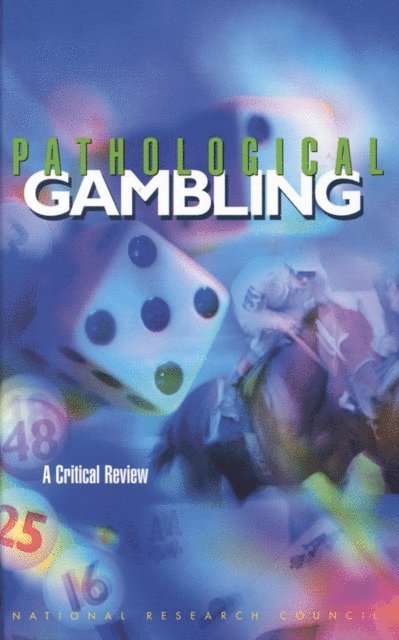
As states have moved from merely tolerating gambling to running their own games, as communities have increasingly turned to gambling for an economic boost, important questions arise. Has the new age of gambling increased the proportion of pathological or problem gamblers in the U.S. population? Where is the threshold between "social betting" and pathology? Is there a real threat to our families, communities, and the larger society? Pathological Gambling explores America''s experience of gambling, examining:
The diverse and frequently controversial issues surrounding the definition of pathological gambling. Its co-occurrence with disorders such as alcoholism, drug abuse, and depression. Its social characteristics and economic consequences, both good and bad, for communities. The role of video gaming, Internet gambling, and other technologies in the development of gambling problems. Treatment approaches and their effectiveness, from Gambler''s Anonymous to cognitive therapy to pharmacology.This book provides the most up-to-date information available on the prevalence of pathological and problem gambling in the United States, including a look at populations that may have a particular vulnerability to gambling: women, adolescents, and minority populations. Its describes the effects of problem gambling on families, friendships, employment, finances, and propensity to crime.
How do pathological gamblers perceive and misperceive randomness and chance? What are the causal pathways to pathological gambling? What do genetics, brain imaging, and other studies tell us about the biology of gambling? Is there a bit of sensation-seeking in all of us? Who needs treatment? What do we know about the effectiveness of different policies for dealing with pathological gambling? The book reviews the available facts and frames the intriguing questions yet to be answered.
Pathological Gambling will be the odds-on favorite for anyone interested in gambling in America: policymakers, public officials, economics and social researchers, treatment professionals, and concerned gamblers and their families.
892 kr
Läs direkt efter köp
It is easy to underestimate how little was known about crimes and victims before the findings of the National Crime Victimization Survey (NCVS) became common wisdom. In the late 1960s, knowledge of crimes and their victims came largely from reports filed by local police agencies as part of the Federal Bureau of Investigation''s (FBI) Uniform Crime Reporting (UCR) system, as well as from studies of the files held by individual police departments. Criminologists understood that there existed a "dark figure" of crime consisting of events not reported to the police. However, over the course of the last decade, the effectiveness of the NCVS has been undermined by the demands of conducting an increasingly expensive survey in an effectively flat-line budgetary environment. Surveying Victims: Options for Conducting the National Crime Victimization Survey, reviews the programs of the Bureau of Justice Statistics (BJS.) Specifically, it explores alternative options for conducting the NCVS, which is the largest BJS program. This book describes various design possibilities and their implications relative to three basic goals; flexibility, in terms of both content and analysis; utility for gathering information on crimes that are not well reported to police; and small-domain estimation, including providing information on states or localities. This book finds that, as currently configured and funded, the NCVS is not achieving and cannot achieve BJS''s mandated goal to "collect and analyze data that will serve as a continuous indication of the incidence and attributes of crime." Accordingly, Surveying Victims recommends that BJS be afforded the budgetary resources necessary to generate accurate measure of victimization.
493 kr
Läs direkt efter köp
Every day, about 1,600 people are released from prisons in the United States. Of these 600,000 new releasees every year, about 480,000 are subject to parole or some other kind of postrelease supervision. Prison releasees represent a challenge, both to themselves and to the communities to which they return. Will the releasees see parole as an opportunity to be reintegrated into society, with jobs and homes and supportive families and friends? Or will they commit new crimes or violate the terms of their parole contracts? If so, will they be returned to prison or placed under more stringent community supervision? Will the communities to which they return see them as people to be reintegrated or people to be avoided? And, the institution of parole itself is challenged with three different functions: to facilitate reintegration for parolees who are ready for rehabilitation; to deter crime; and to apprehend those parolees who commit new crimes and return them to prison.
In recent decades, policy makers, researchers, and program administrators have focused almost exclusively on "recidivism," which is essentially the failure of releasees to refrain from crime or stay out of prison. In contrast, for this study the National Institute of Justice (NIJ) of the U.S. Department of Justice asked the National Research Council to focus on "desistance," which broadly covers continued absence of criminal activity and requires reintegration into society. Specifically, the committee was asked (1) to consider the current state of parole practices, new and emerging models of community supervision, and what is necessary for successful reentry and (2) to provide a research agenda on the effects of community supervision on desistance from criminal activity, adherence to conditions of parole, and successful reentry into the community. To carry out its charge, the committee organized and held a workshop focused on traditional and new models of community supervision, the empirical underpinnings of such models, and the infrastructure necessary to support successful reentry. Parole, Desistance from Crime, and Community Integration also reviews the literature on desistance from crime, community supervision, and the evaluation research on selected types of intervention.