Panel to Review the Programs of the Bureau of Justice Statistics – författare
622 kr
Läs direkt efter köp
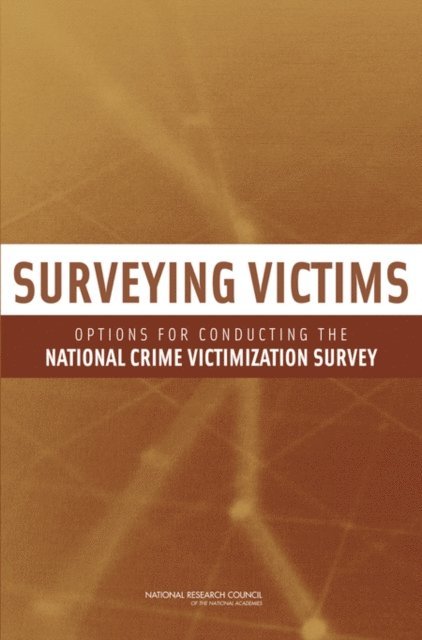
It is easy to underestimate how little was known about crimes and victims before the findings of the National Crime Victimization Survey (NCVS) became common wisdom. In the late 1960s, knowledge of crimes and their victims came largely from reports filed by local police agencies as part of the Federal Bureau of Investigation''s (FBI) Uniform Crime Reporting (UCR) system, as well as from studies of the files held by individual police departments. Criminologists understood that there existed a "dark figure" of crime consisting of events not reported to the police. However, over the course of the last decade, the effectiveness of the NCVS has been undermined by the demands of conducting an increasingly expensive survey in an effectively flat-line budgetary environment. Surveying Victims: Options for Conducting the National Crime Victimization Survey, reviews the programs of the Bureau of Justice Statistics (BJS.) Specifically, it explores alternative options for conducting the NCVS, which is the largest BJS program. This book describes various design possibilities and their implications relative to three basic goals; flexibility, in terms of both content and analysis; utility for gathering information on crimes that are not well reported to police; and small-domain estimation, including providing information on states or localities. This book finds that, as currently configured and funded, the NCVS is not achieving and cannot achieve BJS''s mandated goal to "collect and analyze data that will serve as a continuous indication of the incidence and attributes of crime." Accordingly, Surveying Victims recommends that BJS be afforded the budgetary resources necessary to generate accurate measure of victimization.
933 kr
Läs direkt efter köp
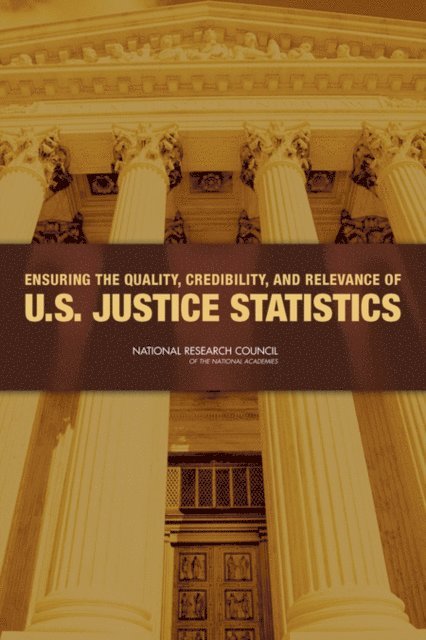
The Bureau of Justice Statistics (BJS) of the U.S. Department of Justice is one of the smallest of the U.S. principal statistical agencies but shoulders one of the most expansive and detailed legal mandates among those agencies. Ensuring the Quality, Credibility, and Relevance of U.S. Justice Statistics examines the full range of BJS programs and suggests priorities for data collection.BJS''s data collection portfolio is a solid body of work, well justified by public information needs or legal requirements and a commendable effort to meet its broad mandate given less-than-commensurate fiscal resources. The book identifies some major gaps in the substantive coverage of BJS data, but notes that filling those gaps would require increased and sustained support in terms of staff and fiscal resources.In suggesting strategic goals for BJS, the book argues that the bureau''s foremost goal should be to establish and maintain a strong position of independence. To avoid structural or political interference in BJS work, the report suggests changing the administrative placement of BJS within the Justice Department and making the BJS directorship a fixed-term appointment.In its thirtieth year, BJS can look back on a solid body of accomplishment; this book suggests further directions for improvement to give the nation the justice statistics—and the BJS—that it deserves.
1 093 kr
Läs direkt efter köp
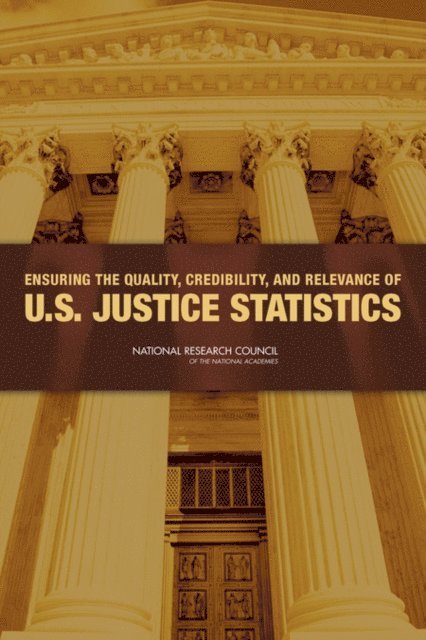
The Bureau of Justice Statistics (BJS) of the U.S. Department of Justice is one of the smallest of the U.S. principal statistical agencies but shoulders one of the most expansive and detailed legal mandates among those agencies. Ensuring the Quality, Credibility, and Relevance of U.S. Justice Statistics examines the full range of BJS programs and suggests priorities for data collection.BJS''s data collection portfolio is a solid body of work, well justified by public information needs or legal requirements and a commendable effort to meet its broad mandate given less-than-commensurate fiscal resources. The book identifies some major gaps in the substantive coverage of BJS data, but notes that filling those gaps would require increased and sustained support in terms of staff and fiscal resources.In suggesting strategic goals for BJS, the book argues that the bureau''s foremost goal should be to establish and maintain a strong position of independence. To avoid structural or political interference in BJS work, the report suggests changing the administrative placement of BJS within the Justice Department and making the BJS directorship a fixed-term appointment.In its thirtieth year, BJS can look back on a solid body of accomplishment; this book suggests further directions for improvement to give the nation the justice statistics—and the BJS—that it deserves.
892 kr
Läs direkt efter köp
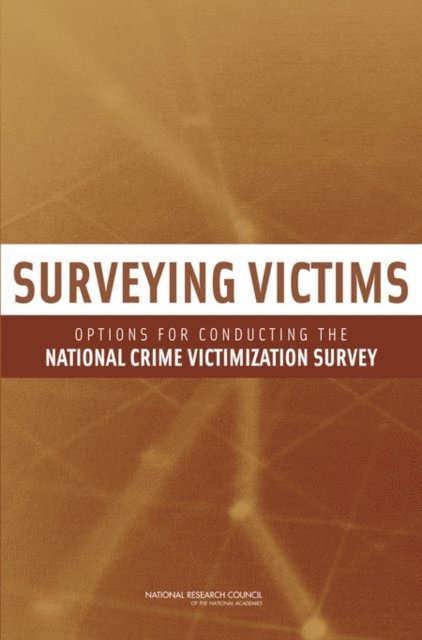
It is easy to underestimate how little was known about crimes and victims before the findings of the National Crime Victimization Survey (NCVS) became common wisdom. In the late 1960s, knowledge of crimes and their victims came largely from reports filed by local police agencies as part of the Federal Bureau of Investigation''s (FBI) Uniform Crime Reporting (UCR) system, as well as from studies of the files held by individual police departments. Criminologists understood that there existed a "dark figure" of crime consisting of events not reported to the police. However, over the course of the last decade, the effectiveness of the NCVS has been undermined by the demands of conducting an increasingly expensive survey in an effectively flat-line budgetary environment. Surveying Victims: Options for Conducting the National Crime Victimization Survey, reviews the programs of the Bureau of Justice Statistics (BJS.) Specifically, it explores alternative options for conducting the NCVS, which is the largest BJS program. This book describes various design possibilities and their implications relative to three basic goals; flexibility, in terms of both content and analysis; utility for gathering information on crimes that are not well reported to police; and small-domain estimation, including providing information on states or localities. This book finds that, as currently configured and funded, the NCVS is not achieving and cannot achieve BJS''s mandated goal to "collect and analyze data that will serve as a continuous indication of the incidence and attributes of crime." Accordingly, Surveying Victims recommends that BJS be afforded the budgetary resources necessary to generate accurate measure of victimization.
814 kr
Tillfälligt slut
880 kr
Tillfälligt slut