Board on Physics and Astronomy – författare
1 335 kr
Skickas
637 kr
Skickas
809 kr
Skickas
641 kr
Läs direkt efter köp
The Materials Research Science and Engineering Centers (MRSEC) Impact Assessment Committee was convened by the National Research Council in response to an informal request from the National Science Foundation. Charged to examine the impact of the MRSEC program and to provide guidance for the future, the committee included experts from across materials research as well as several from outside the field. The committee developed a general methodology to examine the MRSEC centers and after extensive research and analysis, came to the following conclusions. MRSEC center awards continue to be in great demand. The intense competition within the community for them indicates a strong perceived value. Using more quantitative measures, the committee examined the performance and impact of MRSEC activities over the past decade in the areas of research, facilities, education and outreach, and industrial collaboration and technology transfer. The MRSEC program has had important impacts of the same high standard of quality as those of other multi-investigator or individual-investigator programs. Although the committee was largely unable to attribute observed impacts uniquely to the MRSEC program, MRSECs generally mobilize efforts that would not have occurred otherwise. Because of an observed decline in the effectiveness of the centers, the committee recommended a restructuring the MRSEC program to allow more efficient use and leveraging of resources. The new program should fully invest in centers of excellence as well as in stand-alone teams of researchers to allow tighter focus on key strengths of the program. In its report, the committee outlines one potential vision for how this might be accomplished in a revenue-neutral fashion.
649 kr
Läs direkt efter köp
528 kr
Läs direkt efter köp
"Beyond Einstein science" is a term that applies to a set of new scientific challenges at the intersection of physics and astrophysics. Observations of the cosmos now have the potential to extend our basic physical laws beyond where 20th-century research left them. Such observations can provide stringent new tests of Einstein''s general theory of relativity, indicate how to extend the Standard Model of elementary-particle physics, and—if direct measurements of gravitational waves were to be made—give astrophysics an entirely new way of observing the universe.
In 2003, NASA, working with the astronomy and astrophysics communities, prepared a research roadmap entitled Beyond Einstein: From the Big Bang to Black Holes. This roadmap proposed that NASA undertake space missions in five areas in order to study dark energy, black holes, gravitational radiation, and the inflation of the early universe, to test Einstein''s theory of gravitation. This study assesses the five proposed Beyond Einstein mission areas to determine potential scientific impact and technical readiness. Each mission is explored in great detail to aid decisions by NASA regarding both the ordering of the remaining missions and the investment strategy for future technology development within the Beyond Einstein Program.
738 kr
Läs direkt efter köp
268 kr
Läs direkt efter köp
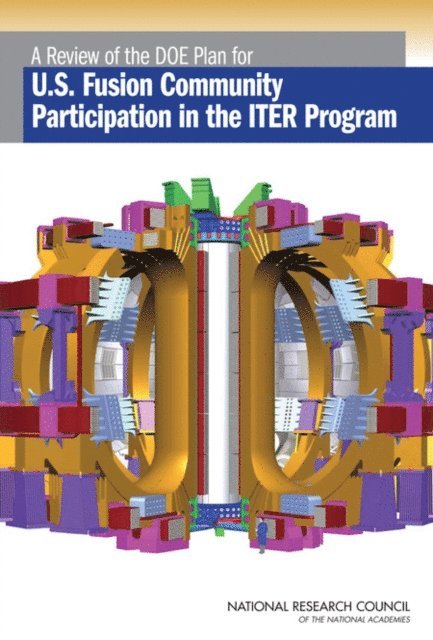
ITER presents the United States and its international partners with the opportunity to explore new and exciting frontiers of plasma science while bringing the promise of fusion energy closer to reality. The ITER project has garnered the commitment and will draw on the scientific potential of seven international partners, China, the European Union, India, Japan, the Republic of Korea, Russia, and the United States, countries that represent more than half of the world''s population. The success of ITER will depend on each partner''s ability to fully engage itself in the scientific and technological challenges posed by advancing our understanding of fusion.
In this book, the National Research Council assesses the current U.S. Department of Energy (DOE) plan for U.S. fusion community participation in ITER, evaluates the plan''s elements, and recommends appropriate goals, procedures, and metrics for consideration in the future development of the plan.
349 kr
Läs direkt efter köp
This book presents a scientific assessment of free-electron-laser technology for naval applications. The charge from the Office of Naval Research was to assess whether the desired performance capabilities are achievable or whether fundamental limitations will prevent them from being realized.The present study identifies the highest-priority scientific and technical issues that must be resolved along the development path to achieve a megawatt-class free-electron laser. In accordance with the charge, the committee considered (and briefly describes) trade-offs between free-electron lasers and other types of lasers and weapon systems to show the advantages free-electron lasers offer over other types of systems for naval applications as well as their drawbacks. The primary advantages of free-electron lasers are associated with their energy delivery at the speed of light, selectable wavelength, and all-electric nature, while the trade-offs for free-electron lasers are their size, complexity, and relative robustness. Also, Despite the significant technical progress made in the development of high-average-power free-electron lasers, difficult technical challenges remain to be addressed in order to advance from present capability to megawatt-class power levels.


892 kr
Läs direkt efter köp
779 kr
Läs direkt efter köp
544 kr
Läs direkt efter köp
For much of the past 60 years, the U.S. research community dominated the discovery of new crystalline materials and the growth of large single crystals, placing the country at the forefront of fundamental advances in condensed-matter sciences and fueling the development of many of the new technologies at the core of U.S. economic growth. The opportunities offered by future developments in this field remain as promising as the achievements of the past. However, the past 20 years have seen a substantial deterioration in the United States'' capability to pursue those opportunities at a time when several European and Asian countries have significantly increased investments in developing their own capacities in these areas. This book seeks both to set out the challenges and opportunities facing those who discover new crystalline materials and grow large crystals and to chart a way for the United States to reinvigorate its efforts and thereby return to a position of leadership in this field.
657 kr
Läs direkt efter köp
Radio observations of the cosmos are gathered by geoscientists using complex earth-orbiting satellites and ground-based equipment, and by radio astronomers using large ground-based radio telescopes. Signals from natural radio emissions are extremely weak, and the equipment used to measure them is becoming ever-more sophisticated and sensitive. The radio spectrum is also being used by radiating, or "active," services, ranging from aircraft radars to rapidly expanding consumer services such as cellular telephones and wireless internet. These valuable active services transmit radio waves and thereby potentially interfere with the receive-only, or "passive," scientific services. Transmitters for the active services create an artificial "electronic fog" which can cause confusion, and, in severe cases, totally blinds the passive receivers. Both the active and the passive services are increasing their use of the spectrum, and so the potential for interference, already strong, is also increasing. This book addresses the tension between the active services'' demand for greater spectrum use and the passive users'' need for quiet spectrum. The included recommendations provide a pathway for putting in place the regulatory mechanisms and associated supporting research activities necessary to meet the demands of both users.
779 kr
Läs direkt efter köp
For much of the past 60 years, the U.S. research community dominated the discovery of new crystalline materials and the growth of large single crystals, placing the country at the forefront of fundamental advances in condensed-matter sciences and fueling the development of many of the new technologies at the core of U.S. economic growth. The opportunities offered by future developments in this field remain as promising as the achievements of the past. However, the past 20 years have seen a substantial deterioration in the United States'' capability to pursue those opportunities at a time when several European and Asian countries have significantly increased investments in developing their own capacities in these areas. This book seeks both to set out the challenges and opportunities facing those who discover new crystalline materials and grow large crystals and to chart a way for the United States to reinvigorate its efforts and thereby return to a position of leadership in this field.
398 kr
Läs direkt efter köp
Traditionally, the natural sciences have been divided into two branches: the biological sciences and the physical sciences. Today, an increasing number of scientists are addressing problems lying at the intersection of the two. These problems are most often biological in nature, but examining them through the lens of the physical sciences can yield exciting results and opportunities. For example, one area producing effective cross-discipline research opportunities centers on the dynamics of systems. Equilibrium, multistability, and stochastic behavior—concepts familiar to physicists and chemists—are now being used to tackle issues associated with living systems such as adaptation, feedback, and emergent behavior.Research at the Intersection of the Physical and Life Sciences discusses how some of the most important scientific and societal challenges can be addressed, at least in part, by collaborative research that lies at the intersection of traditional disciplines, including biology, chemistry, and physics. This book describes how some of the mysteries of the biological world are being addressed using tools and techniques developed in the physical sciences, and identifies five areas of potentially transformative research. Work in these areas would have significant impact in both research and society at large by expanding our understanding of the physical world and by revealing new opportunities for advancing public health, technology, and stewardship of the environment.This book recommends several ways to accelerate such cross-discipline research. Many of these recommendations are directed toward those administering the faculties and resources of our great research institutions—and the stewards of our research funders, making this book an excellent resource for academic and research institutions, scientists, universities, and federal and private funding agencies.
430 kr
Läs direkt efter köp
Helium has long been the subject of public policy deliberation and management, largely because of its many strategic uses and its unusual source-it is a derived product of natural gas and its market has several anomalous characteristics. Shortly after sources of helium were discovered at the beginning of the last century, the U.S. government recognized helium''s potential importance to the nation''s interests and placed its production and availability under strict governmental control. In the 1960s, helium''s strategic value in cold war efforts was reflected in policies that resulted in the accumulation of a large reserve of helium owned by the federal government. The latest manifestation of public policy is expressed in the Helium Privatization Act of 1996 (1996 12 Act), which directs that substantially all of the helium accumulated as a result of those earlier policies be sold off by 2015 at prices sufficient to repay the federal government for its outlays associated with the helium program. The present volume assesses whether the interests of the United States have been well served by the 1996 Act and, in particular, whether selling off the helium reserve has had any adverse effect on U.S. scientific, technical, biomedical, and national security users of helium.
1 136 kr
Läs direkt efter köp
Radio observations of the cosmos are gathered by geoscientists using complex earth-orbiting satellites and ground-based equipment, and by radio astronomers using large ground-based radio telescopes. Signals from natural radio emissions are extremely weak, and the equipment used to measure them is becoming ever-more sophisticated and sensitive. The radio spectrum is also being used by radiating, or "active," services, ranging from aircraft radars to rapidly expanding consumer services such as cellular telephones and wireless internet. These valuable active services transmit radio waves and thereby potentially interfere with the receive-only, or "passive," scientific services. Transmitters for the active services create an artificial "electronic fog" which can cause confusion, and, in severe cases, totally blinds the passive receivers. Both the active and the passive services are increasing their use of the spectrum, and so the potential for interference, already strong, is also increasing. This book addresses the tension between the active services'' demand for greater spectrum use and the passive users'' need for quiet spectrum. The included recommendations provide a pathway for putting in place the regulatory mechanisms and associated supporting research activities necessary to meet the demands of both users.
584 kr
Läs direkt efter köp
Traditionally, the natural sciences have been divided into two branches: the biological sciences and the physical sciences. Today, an increasing number of scientists are addressing problems lying at the intersection of the two. These problems are most often biological in nature, but examining them through the lens of the physical sciences can yield exciting results and opportunities. For example, one area producing effective cross-discipline research opportunities centers on the dynamics of systems. Equilibrium, multistability, and stochastic behavior—concepts familiar to physicists and chemists—are now being used to tackle issues associated with living systems such as adaptation, feedback, and emergent behavior.Research at the Intersection of the Physical and Life Sciences discusses how some of the most important scientific and societal challenges can be addressed, at least in part, by collaborative research that lies at the intersection of traditional disciplines, including biology, chemistry, and physics. This book describes how some of the mysteries of the biological world are being addressed using tools and techniques developed in the physical sciences, and identifies five areas of potentially transformative research. Work in these areas would have significant impact in both research and society at large by expanding our understanding of the physical world and by revealing new opportunities for advancing public health, technology, and stewardship of the environment.This book recommends several ways to accelerate such cross-discipline research. Many of these recommendations are directed toward those administering the faculties and resources of our great research institutions—and the stewards of our research funders, making this book an excellent resource for academic and research institutions, scientists, universities, and federal and private funding agencies.
617 kr
Läs direkt efter köp
Helium has long been the subject of public policy deliberation and management, largely because of its many strategic uses and its unusual source-it is a derived product of natural gas and its market has several anomalous characteristics. Shortly after sources of helium were discovered at the beginning of the last century, the U.S. government recognized helium''s potential importance to the nation''s interests and placed its production and availability under strict governmental control. In the 1960s, helium''s strategic value in cold war efforts was reflected in policies that resulted in the accumulation of a large reserve of helium owned by the federal government. The latest manifestation of public policy is expressed in the Helium Privatization Act of 1996 (1996 12 Act), which directs that substantially all of the helium accumulated as a result of those earlier policies be sold off by 2015 at prices sufficient to repay the federal government for its outlays associated with the helium program. The present volume assesses whether the interests of the United States have been well served by the 1996 Act and, in particular, whether selling off the helium reserve has had any adverse effect on U.S. scientific, technical, biomedical, and national security users of helium.
503 kr
Läs direkt efter köp
Driven by discoveries, and enabled by leaps in technology and imagination, our understanding of the universe has changed dramatically during the course of the last few decades. The fields of astronomy and astrophysics are making new connections to physics, chemistry, biology, and computer science. Based on a broad and comprehensive survey of scientific opportunities, infrastructure, and organization in a national and international context, New Worlds, New Horizons in Astronomy and Astrophysics outlines a plan for ground- and space- based astronomy and astrophysics for the decade of the 2010''s.
Realizing these scientific opportunities is contingent upon maintaining and strengthening the foundations of the research enterprise including technological development, theory, computation and data handling, laboratory experiments, and human resources. New Worlds, New Horizons in Astronomy and Astrophysics proposes enhancing innovative but moderate-cost programs in space and on the ground that will enable the community to respond rapidly and flexibly to new scientific discoveries. The book recommends beginning construction on survey telescopes in space and on the ground to investigate the nature of dark energy, as well as the next generation of large ground-based giant optical telescopes and a new class of space-based gravitational observatory to observe the merging of distant black holes and precisely test theories of gravity.
New Worlds, New Horizons in Astronomy and Astrophysics recommends a balanced and executable program that will support research surrounding the most profound questions about the cosmos. The discoveries ahead will facilitate the search for habitable planets, shed light on dark energy and dark matter, and aid our understanding of the history of the universe and how the earliest stars and galaxies formed. The book is a useful resource for agencies supporting the field of astronomy and astrophysics, the Congressional committees with jurisdiction over those agencies, the scientific community, and the public.
690 kr
Läs direkt efter köp
Every 10 years the National Research Council releases a survey of astronomy and astrophysics outlining priorities for the coming decade. The most recent survey, titled New Worlds, New Horizons in Astronomy and Astrophysics, provides overall priorities and recommendations for the field as a whole based on a broad and comprehensive examination of scientific opportunities, infrastructure, and organization in a national and international context.
Panel Reports—New Worlds, New Horizons in Astronomy and Astrophysics is a collection of reports, each of which addresses a key sub-area of the field, prepared by specialists in that subarea, and each of which played an important role in setting overall priorities for the field. The collection, published in a single volume, includes the reports of the following panels:
Cosmology and Fundamental Physics Galaxies Across Cosmic Time The Galactic Neighborhood Stars and Stellar Evolution Planetary Systems and Star Formation Electromagnetic Observations from Space Optical and Infrared Astronomy from the Ground Particle Astrophysics and Gravitation Radio, Millimeter, and Submillimeter Astronomy from the GroundThe Committee for a Decadal Survey of Astronomy and Astrophysics synthesized these reports in the preparation of its prioritized recommendations for the field as a whole. These reports provide additional depth and detail in each of their respective areas. Taken together, they form an essential companion volume to New Worlds, New Horizons: A Decadal Survey of Astronomy and Astrophysics. The book of panel reports will be useful to managers of programs of research in the field of astronomy and astrophysics, the Congressional committees with jurisdiction over the agencies supporting this research, the scientific community, and the public.
682 kr
Läs direkt efter köp
714 kr
Läs direkt efter köp
892 kr
Läs direkt efter köp
698 kr
Läs direkt efter köp
811 kr
Läs direkt efter köp
Significant advances have been made in fusion science, and a point has been reachedwhen we need to decide if the United States is ready to begin a burning plasmaexperiment. A burning plasma—in which at least 50 percent of the energy to drivethe fusion reaction is generated internally—is an essential step to reach the goal offusion power generation. The Burning Plasma Assessment Committee was formed toprovide advice on this decision. The committee concluded that there is high confidencein the readiness to proceed with the burning plasma step. The InternationalThermonuclear Experimental Reactor (ITER), with the United States as a significantpartner, was the best choice. Once a commitment to ITER is made, fulfilling it shouldbecome the highest priority of the U.S. fusion research program. A funding trajectoryis required that both captures the benefits of joining ITER and retains a strong scientificfocus on the long-range goals of the program. Addition of the ITER project willrequire that the content, scope, and level of U.S. fusion activity be defined by programbalancing through a priority-setting process initiated by the Office of FusionEnergy Science.
698 kr
Läs direkt efter köp
649 kr
Läs direkt efter köp
Physics in a New Era is the final report of the NRC''s six-volume decadal physics survey. The book reviews the frontiers of physics research, examines the role of physics in our society, and makes recommendations designed to strengthen physics and its ability to serve important needs such as national security, the economy, information technology, and education.
1 136 kr
Läs direkt efter köp
Advances made by physicists in understanding matter, space, and time and by astronomers in understanding the universe as a whole have closely intertwined the question being asked about the universe at its two extremes—the very large and the very small. This report identifies 11 key questions that have a good chance to be answered in the next decade. It urges that a new research strategy be created that brings to bear the techniques of both astronomy and sub-atomic physics in a cross-disciplinary way to address these questions. The report presents seven recommendations to facilitate the necessary research and development coordination. These recommendations identify key priorities for future scientific projects critical for realizing these scientific opportunities.
471 kr
Läs direkt efter köp
The Helium Privatization Act of 1996 (P.L. 104-273) directs the Department of the Interior to begin liquidating the U.S. Federal Helium Reserve by 2005 in a manner consistent with "minimum market disruption" and at a price given by a formula specified in the act. It also mandates that the Department of the Interior "enter into appropriate arrangements with the National Academy of Sciences to study and report on whether such disposal of helium reserves will have a substantial adverse effect on U.S. scientific, technical, biomedical, or national security interests."
This report is the product of that mandate. To provide context, the committee has examined the helium market and the helium industry as a whole to determine how helium users would be affected under various scenarios for selling the reserve within the act''s constraints.
The Federal Helium Reserve, the Bush Dome reservoir, and the Cliffside facility are mentioned throughout this report. It is important to recognize that they are distinct entities. The Federal Helium Reserve is federally owned crude helium gas that currently resides in the Bush Dome reservoir. The Cliffside facility includes the storage facility on the Bush Dome reservoir and the associated buildings pipeline.