Plasma Science Committee – författare
268 kr
Läs direkt efter köp
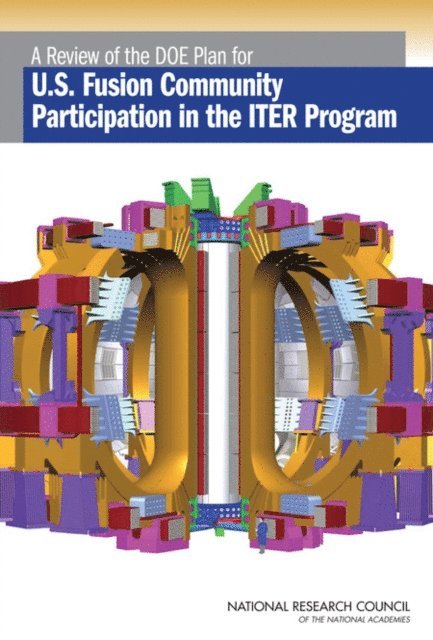
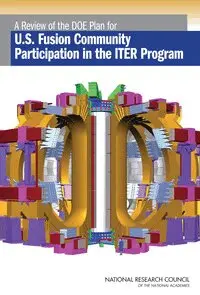
ITER presents the United States and its international partners with the opportunity to explore new and exciting frontiers of plasma science while bringing the promise of fusion energy closer to reality. The ITER project has garnered the commitment and will draw on the scientific potential of seven international partners, China, the European Union, India, Japan, the Republic of Korea, Russia, and the United States, countries that represent more than half of the world''s population. The success of ITER will depend on each partner''s ability to fully engage itself in the scientific and technological challenges posed by advancing our understanding of fusion.
In this book, the National Research Council assesses the current U.S. Department of Energy (DOE) plan for U.S. fusion community participation in ITER, evaluates the plan''s elements, and recommends appropriate goals, procedures, and metrics for consideration in the future development of the plan.
682 kr
Läs direkt efter köp
811 kr
Läs direkt efter köp
Significant advances have been made in fusion science, and a point has been reachedwhen we need to decide if the United States is ready to begin a burning plasmaexperiment. A burning plasma—in which at least 50 percent of the energy to drivethe fusion reaction is generated internally—is an essential step to reach the goal offusion power generation. The Burning Plasma Assessment Committee was formed toprovide advice on this decision. The committee concluded that there is high confidencein the readiness to proceed with the burning plasma step. The InternationalThermonuclear Experimental Reactor (ITER), with the United States as a significantpartner, was the best choice. Once a commitment to ITER is made, fulfilling it shouldbecome the highest priority of the U.S. fusion research program. A funding trajectoryis required that both captures the benefits of joining ITER and retains a strong scientificfocus on the long-range goals of the program. Addition of the ITER project willrequire that the content, scope, and level of U.S. fusion activity be defined by programbalancing through a priority-setting process initiated by the Office of FusionEnergy Science.
698 kr
Läs direkt efter köp
892 kr
Läs direkt efter köp
Plasma science is the study of ionized states of matter. This book discusses the field''s potential contributions to society and recommends actions that would optimize those contributions. It includes an assessment of the field''s scientific and technological status as well as a discussion of broad themes such as fundamental plasma experiments, theoretical and computational plasma research, and plasma science education.
390 kr
Läs direkt efter köp
ITER presents the United States and its international partners with the opportunity to explore new and exciting frontiers of plasma science while bringing the promise of fusion energy closer to reality. The ITER project has garnered the commitment and will draw on the scientific potential of seven international partners, China, the European Union, India, Japan, the Republic of Korea, Russia, and the United States, countries that represent more than half of the world''s population. The success of ITER will depend on each partner''s ability to fully engage itself in the scientific and technological challenges posed by advancing our understanding of fusion.
In this book, the National Research Council assesses the current U.S. Department of Energy (DOE) plan for U.S. fusion community participation in ITER, evaluates the plan''s elements, and recommends appropriate goals, procedures, and metrics for consideration in the future development of the plan.
536 kr
Läs direkt efter köp
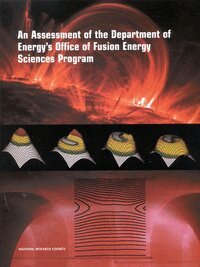
The purpose of this assessment of the fusion energy sciences program of the Department of Energy''s (DOE''s) Office of Science is to evaluate the quality of the research program and to provide guidance for the future program strategy aimed at strengthening the research component of the program. The committee focused its review of the fusion program on magnetic confinement, or magnetic fusion energy (MFE), and touched only briefly on inertial fusion energy (IFE), because MFE-relevant research accounts for roughly 95 percent of the funding in the Office of Science''s fusion program. Unless otherwise noted, all references to fusion in this report should be assumed to refer to magnetic fusion.
Fusion research carried out in the United States under the sponsorship of the Office of Fusion Energy Sciences (OFES) has made remarkable strides over the years and recently passed several important milestones. For example, weakly burning plasmas with temperatures greatly exceeding those on the surface of the Sun have been created and diagnosed. Significant progress has been made in understanding and controlling instabilities and turbulence in plasma fusion experiments, thereby facilitating improved plasma confinement—remotely controlling turbulence in a 100-million-degree medium is a premier scientific achievement by any measure. Theory and modeling are now able to provide useful insights into instabilities and to guide experiments. Experiments and associated diagnostics are now able to extract enough information about the processes occurring in high-temperature plasmas to guide further developments in theory and modeling. Many of the major experimental and theoretical tools that have been developed are now converging to produce a qualitative change in the program''s approach to scientific discovery.
The U.S. program has traditionally been an important source of innovation and discovery for the international fusion energy effort. The goal of understanding at a fundamental level the physical processes governing observed plasma behavior has been a distinguishing feature of the program.
382 kr
Läs direkt efter köp
The purpose of this assessment of the fusion energy sciences program of the Department of Energy''s (DOE''s) Office of Science is to evaluate the quality of the research program and to provide guidance for the future program strategy aimed at strengthening the research component of the program. The committee focused its review of the fusion program on magnetic confinement, or magnetic fusion energy (MFE), and touched only briefly on inertial fusion energy (IFE), because MFE-relevant research accounts for roughly 95 percent of the funding in the Office of Science''s fusion program. Unless otherwise noted, all references to fusion in this report should be assumed to refer to magnetic fusion.
Fusion research carried out in the United States under the sponsorship of the Office of Fusion Energy Sciences (OFES) has made remarkable strides over the years and recently passed several important milestones. For example, weakly burning plasmas with temperatures greatly exceeding those on the surface of the Sun have been created and diagnosed. Significant progress has been made in understanding and controlling instabilities and turbulence in plasma fusion experiments, thereby facilitating improved plasma confinement—remotely controlling turbulence in a 100-million-degree medium is a premier scientific achievement by any measure. Theory and modeling are now able to provide useful insights into instabilities and to guide experiments. Experiments and associated diagnostics are now able to extract enough information about the processes occurring in high-temperature plasmas to guide further developments in theory and modeling. Many of the major experimental and theoretical tools that have been developed are now converging to produce a qualitative change in the program''s approach to scientific discovery.
The U.S. program has traditionally been an important source of innovation and discovery for the international fusion energy effort. The goal of understanding at a fundamental level the physical processes governing observed plasma behavior has been a distinguishing feature of the program.
487 kr
Läs direkt efter köp
584 kr
Läs direkt efter köp
Significant advances have been made in fusion science, and a point has been reachedwhen we need to decide if the United States is ready to begin a burning plasmaexperiment. A burning plasma—in which at least 50 percent of the energy to drivethe fusion reaction is generated internally—is an essential step to reach the goal offusion power generation. The Burning Plasma Assessment Committee was formed toprovide advice on this decision. The committee concluded that there is high confidencein the readiness to proceed with the burning plasma step. The InternationalThermonuclear Experimental Reactor (ITER), with the United States as a significantpartner, was the best choice. Once a commitment to ITER is made, fulfilling it shouldbecome the highest priority of the U.S. fusion research program. A funding trajectoryis required that both captures the benefits of joining ITER and retains a strong scientificfocus on the long-range goals of the program. Addition of the ITER project willrequire that the content, scope, and level of U.S. fusion activity be defined by programbalancing through a priority-setting process initiated by the Office of FusionEnergy Science.
763 kr
Läs direkt efter köp
Plasma science is the study of ionized states of matter. This book discusses the field''s potential contributions to society and recommends actions that would optimize those contributions. It includes an assessment of the field''s scientific and technological status as well as a discussion of broad themes such as fundamental plasma experiments, theoretical and computational plasma research, and plasma science education.
390 kr
Läs direkt efter köp
Plasma processing of materials is a critical technology to several of the largest manufacturing industries in the world—electronics, aerospace, automotive, steel, biomedical, and toxic waste management. This book describes the relationship between plasma processes and the many industrial applications, examines in detail plasma processing in the electronics industry, highlights the scientific foundation underlying this technology, and discusses education issues in this multidisciplinary field.
The committee recommends a coordinated, focused, and well-funded research program in this area that involves the university, federal laboratory, and industrial sectors of the community. It also points out that because plasma processing is an integral part of the infrastructure of so many American industries, it is important for both the economy and the national security that America maintain a strong leadership role in this technology.
1 221 kr
Tillfälligt slut
1 451 kr
Tillfälligt slut
580 kr
Tillfälligt slut
683 kr
Tillfälligt slut
809 kr
Tillfälligt slut
760 kr
Tillfälligt slut
477 kr
Tillfälligt slut