Forum on Neuroscience and Nervous System Disorders – författare
Visar alla böcker från författaren Forum on Neuroscience and Nervous System Disorders. Handla med fri frakt och snabb leverans.
78 produkter
Approaches to Address Unmet Research Needs in Traumatic Brain Injury Among Older Adults
Proceedings of a Workshop
Av and Medicine National Academies of Sciences, Engineering, Health and Medicine Division m. fl.
Häftad, 2025
395 kr
Lägg i varukorg
Although traumatic brain injury (TBI) is a major cause of disability for adults over the age of 65, knowledge gaps and clinically relevant differences in TBI injury, recovery, and outcomes in this age group limit evidence-based care guidance. The National Academies organized a public workshop in …
Approaches to Address Unmet Research Needs in Traumatic Brain Injury Among Older Adults
Proceedings of a Workshop
Av and Independence Forum on Aging, Disability, Forum on Traumatic Brain Injury m. fl.
E-bok, 2025
321 kr
Lägg i varukorg
Although traumatic brain injury (TBI) is a major cause of disability for adults over the age of 65, knowledge gaps and clinically relevant differences in TBI injury, recovery, and outcomes in this age group limit evidence-based care guidance. The National Academies organized a public workshop in …
Autism and the Environment
Challenges and Opportunities for Research: Workshop Proceedings
Av Forum on Neuroscience and Nervous System Disorders, Board on Health Sciences Policy m. fl.
E-bok, 2008
981 kr
Lägg i varukorg
Autism spectrum disorders (ASD) constitute a major public health problem, affecting one in every 150 children and their families. Unfortunately, there is little understanding of the causes of ASD, and, despite their broad societal impact, many people believe that the overall research program for …
Neuroscience Biomarkers and Biosignatures
Converging Technologies, Emerging Partnerships: Workshop Summary
Av Institute of Medicine, Board on Health Sciences Policy m. fl.
Häftad, 2008
662 kr
Lägg i varukorg
Biomarkers, or biological markers, are quantitative measurements that offer researchers and clinicians valuable insight into diagnosis, treatment and prognosis for many disorders and diseases. A major goal in neuroscience medical research is establishing biomarkers for disorders of the nervous …
Neuroscience Biomarkers and Biosignatures
Converging Technologies, Emerging Partnerships: Workshop Summary
Av Forum on Neuroscience and Nervous System Disorders, Board on Health Sciences Policy m. fl.
E-bok, 2008
446 kr
Lägg i varukorg
Biomarkers, or biological markers, are quantitative measurements that offer researchers and clinicians valuable insight into diagnosis, treatment and prognosis for many disorders and diseases. A major goal in neuroscience medical research is establishing biomarkers for disorders of the nervous …
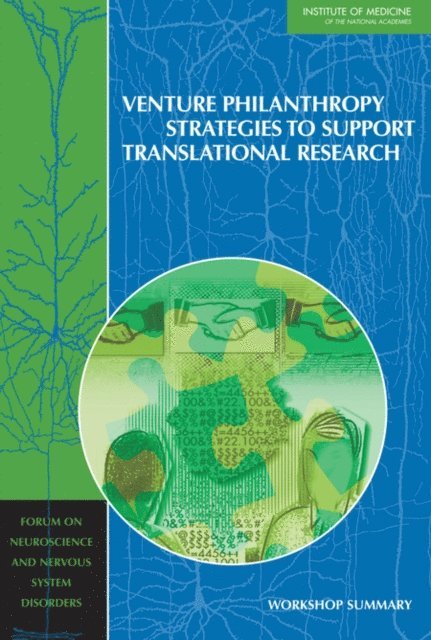
Venture Philanthropy Strategies to Support Translational Research
Workshop Summary
Av Forum on Neuroscience and Nervous System Disorders, Board on Health Sciences Policy m. fl.
E-bok, 2009
393 kr
Lägg i varukorg
Many voluntary health organizations fund translational research. An increasing number of these organizations are looking at venture philanthropy as a critical way to advance their missions of helping patients and working to cure disease. A wide range of participants gathered on October 3, 2008 at …
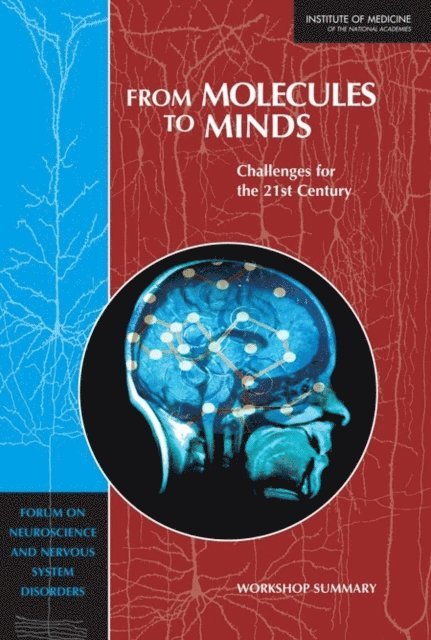
From Molecules to Minds
Challenges for the 21st Century: Workshop Summary
Av Forum on Neuroscience and Nervous System Disorders, Board on Health Sciences Policy m. fl.
E-bok, 2008
314 kr
Lägg i varukorg
Neuroscience has made phenomenal advances over the past 50 years and the pace of discovery continues to accelerate. On June 25, 2008, the Institute of Medicine (IOM) Forum on Neuroscience and Nervous System Disorders hosted more than 70 of the leading neuroscientists in the world, for a workshop …
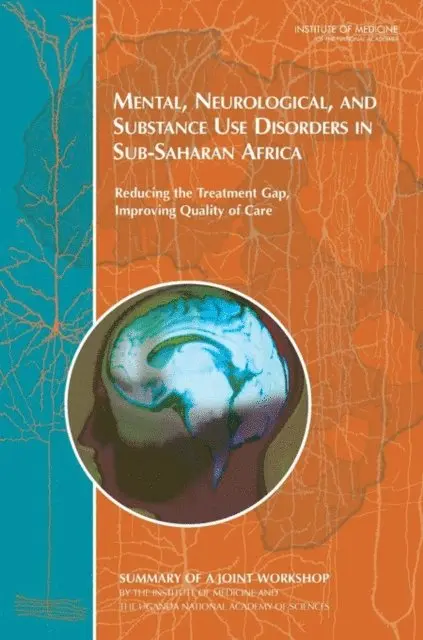
Mental, Neurological, and Substance Use Disorders in Sub-Saharan Africa
Reducing the Treatment Gap, Improving Quality of Care: Summary of a Joint Workshop by the Institute of Medicine and the Uganda National Academy of Sciences
Av Forum on Neuroscience and Nervous System Disorders, Board on Health Sciences Policy m. fl.
E-bok, 2010
464 kr
Lägg i varukorg
Millions of people in sub-Saharan Africa suffer from mental, neurological, and substance use (MNS) disorders, and most do not have the resources to obtain treatment. The Uganda National Academy of Sciences and the Institute of Medicine hosted a workshop to discuss the state of care for MNS …
CNS Clinical Trials
Suicidality and Data Collection: Workshop Summary
Av Institute of Medicine, Board on Health Sciences Policy m. fl.
Häftad, 2010
448 kr
Lägg i varukorg
The Food and Drug Administration (FDA) now requires that all clinical trials for drugs that affect the central nervous system--including psychiatric drugs--are assessed for whether that drug might cause suicidal ideation or behavior. The Institute of Medicine's (IOM) Forum on Neuroscience and …
CNS Clinical Trials
Suicidality and Data Collection: Workshop Summary
Av Forum on Neuroscience and Nervous System Disorders, Board on Health Sciences Policy m. fl.
E-bok, 2010
295 kr
Lägg i varukorg
The Food and Drug Administration (FDA) now requires that all clinical trials for drugs that affect the central nervous system—including psychiatric drugs—are assessed for whether that drug might cause suicidal ideation or behavior. The Institute of Medicine''s (IOM) Forum on Neuroscience and …
Sex Differences and Implications for Translational Neuroscience Research
Workshop Summary
Av Institute of Medicine, Board on Health Sciences Policy m. fl.
Häftad, 2011
377 kr
Lägg i varukorg
Biological differences between the sexes influence not only individual health but also public health, biomedical research, and health care. The Institute of Medicine held a workshop March 8-9, 2010, to discuss sex differences and their implications for translational neuroscience research, which …
Sex Differences and Implications for Translational Neuroscience Research
Workshop Summary
Av Forum on Neuroscience and Nervous System Disorders, Board on Health Sciences Policy m. fl.
E-bok, 2011
402 kr
Lägg i varukorg
Biological differences between the sexes influence not only individual health but also public health, biomedical research, and health care. The Institute of Medicine held a workshop March 8-9, 2010, to discuss sex differences and their implications for translational neuroscience research, which …
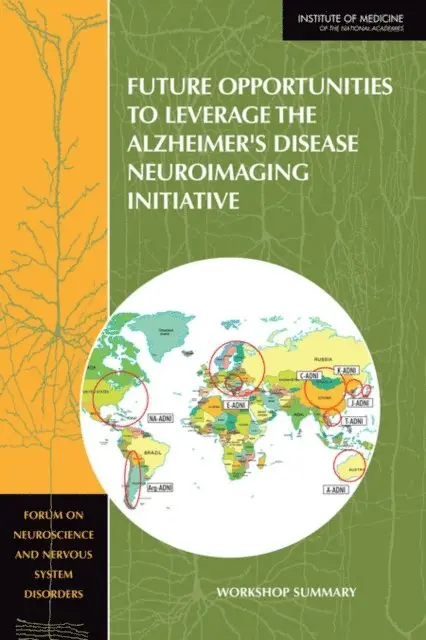
Future Opportunities to Leverage the Alzheimer's Disease Neuroimaging Initiative
Workshop Summary
Av Forum on Neuroscience and Nervous System Disorders, Board on Health Sciences Policy m. fl.
E-bok, 2011
206 kr
Lägg i varukorg
Nearly 5.3 million Americans are living with Alzheimer''s disease, and 26.6 million people are affected worldwide. The Alzheimer''s Disease Neuroimaging Initiative (ADNI), a public-private partnership, provides a publicly available, international database of clinical and imaging data to foster …
Venture Philanthropy Strategies to Support Translational Research
Workshop Summary
Av Forum on Neuroscience and Nervous System Disorders, Board on Health Sciences Policy m. fl.
E-bok, 2009
571 kr
Lägg i varukorg
Many voluntary health organizations fund translational research. An increasing number of these organizations are looking at venture philanthropy as a critical way to advance their missions of helping patients and working to cure disease. A wide range of participants gathered on October 3, 2008 at …
Neuroscience Biomarkers and Biosignatures
Converging Technologies, Emerging Partnerships: Workshop Summary
Av Forum on Neuroscience and Nervous System Disorders, Board on Health Sciences Policy m. fl.
E-bok, 2008
642 kr
Lägg i varukorg
Biomarkers, or biological markers, are quantitative measurements that offer researchers and clinicians valuable insight into diagnosis, treatment and prognosis for many disorders and diseases. A major goal in neuroscience medical research is establishing biomarkers for disorders of the nervous …
From Molecules to Minds
Challenges for the 21st Century: Workshop Summary
Av Forum on Neuroscience and Nervous System Disorders, Board on Health Sciences Policy m. fl.
E-bok, 2008
464 kr
Lägg i varukorg
Neuroscience has made phenomenal advances over the past 50 years and the pace of discovery continues to accelerate. On June 25, 2008, the Institute of Medicine (IOM) Forum on Neuroscience and Nervous System Disorders hosted more than 70 of the leading neuroscientists in the world, for a workshop …
Mental, Neurological, and Substance Use Disorders in Sub-Saharan Africa
Reducing the Treatment Gap, Improving Quality of Care: Summary of a Joint Workshop by the Institute of Medicine and the Uganda National Academy of Sciences
Av Forum on Neuroscience and Nervous System Disorders, Board on Health Sciences Policy m. fl.
E-bok, 2010
641 kr
Lägg i varukorg
Millions of people in sub-Saharan Africa suffer from mental, neurological, and substance use (MNS) disorders, and most do not have the resources to obtain treatment. The Uganda National Academy of Sciences and the Institute of Medicine hosted a workshop to discuss the state of care for MNS …
CNS Clinical Trials
Suicidality and Data Collection: Workshop Summary
Av Forum on Neuroscience and Nervous System Disorders, Board on Health Sciences Policy m. fl.
E-bok, 2010
303 kr
Lägg i varukorg
The Food and Drug Administration (FDA) now requires that all clinical trials for drugs that affect the central nervous system—including psychiatric drugs—are assessed for whether that drug might cause suicidal ideation or behavior. The Institute of Medicine''s (IOM) Forum on Neuroscience and …
Future Opportunities to Leverage the Alzheimer's Disease Neuroimaging Initiative
Workshop Summary
Av Forum on Neuroscience and Nervous System Disorders, Board on Health Sciences Policy m. fl.
E-bok, 2011
303 kr
Lägg i varukorg
Nearly 5.3 million Americans are living with Alzheimer''s disease, and 26.6 million people are affected worldwide. The Alzheimer''s Disease Neuroimaging Initiative (ADNI), a public-private partnership, provides a publicly available, international database of clinical and imaging data to foster …
Sex Differences and Implications for Translational Neuroscience Research
Workshop Summary
Av Forum on Neuroscience and Nervous System Disorders, Board on Health Sciences Policy m. fl.
E-bok, 2011
571 kr
Lägg i varukorg
Biological differences between the sexes influence not only individual health but also public health, biomedical research, and health care. The Institute of Medicine held a workshop March 8-9, 2010, to discuss sex differences and their implications for translational neuroscience research, which …
Glutamate-Related Biomarkers in Drug Development for Disorders of the Nervous System
Workshop Summary
Av Forum on Neuroscience and Nervous System Disorders, Board on Health Sciences Policy m. fl.
E-bok, 2011
295 kr
Lägg i varukorg
Glutamate is the most pervasive neurotransmitter in the central nervous system (CNS). Despite this fact, no validated biological markers, or biomarkers, currently exist for measuring glutamate pathology in CNS disorders or injuries. Glutamate dysfunction has been associated with an extensive range …
Glutamate-Related Biomarkers in Drug Development for Disorders of the Nervous System
Workshop Summary
Av Forum on Neuroscience and Nervous System Disorders, Board on Health Sciences Policy m. fl.
E-bok, 2011
303 kr
Lägg i varukorg
Glutamate is the most pervasive neurotransmitter in the central nervous system (CNS). Despite this fact, no validated biological markers, or biomarkers, currently exist for measuring glutamate pathology in CNS disorders or injuries. Glutamate dysfunction has been associated with an extensive range …
International Animal Research Regulations
Impact on Neuroscience Research: Workshop Summary
Av National Research Council, Institute of Medicine m. fl.
Häftad, 2012
337 kr
Lägg i varukorg
Animals are widely used in neuroscience research to explore biological mechanisms of nervous system function, to identify the genetic basis of disease states, and to provide models of human disorders and diseases for the development of new treatments. To ensure the humane care and use of animals, …
International Animal Research Regulations
Impact on Neuroscience Research: Workshop Summary
Av Forum on Neuroscience and Nervous System Disorders, Board on Health Sciences Policy m. fl.
E-bok, 2012
485 kr
Lägg i varukorg
Animals are widely used in neuroscience research to explore biological mechanisms of nervous system function, to identify the genetic basis of disease states, and to provide models of human disorders and diseases for the development of new treatments. To ensure the humane care and use of animals, …
Sex Differences in Brain Disorders
Emerging Transcriptomic Evidence: Proceedings of a Workshop
Av Forum on Neuroscience and Nervous System Disorders, Board on Health Sciences Policy m. fl.
E-bok, 2021
646 kr
Lägg i varukorg
Accumulating evidence gathered over the past three decades has demonstrated a biological basis for differences between men and women with respect to clinical features and treatment responses to several neuropsychiatric, neurodevelopmental, and neurodegenerative disorders. Dramatic sex differences …
Improving the Utility and Translation of Animal Models for Nervous System Disorders
Workshop Summary
Av Forum on Neuroscience and Nervous System Disorders, Board on Health Sciences Policy m. fl.
E-bok, 2013
554 kr
Lägg i varukorg
Nervous system diseases and disorders are highly prevalent and substantially contribute to the overall disease burden. Despite significant information provided by the use of animal models in the understanding of the biology of nervous system disorders and the development of therapeutics; …
Sharing Clinical Research Data
Workshop Summary
Av and Translation Forum on Drug Discovery, Development, Forum on Neuroscience and Nervous System Disorders m. fl.
E-bok, 2013
589 kr
Lägg i varukorg
Pharmaceutical companies, academic researchers, and government agencies such as the Food and Drug Administration and the National Institutes of Health all possess large quantities of clinical research data. If these data were shared more widely within and across sectors, the resulting research …
From Molecular Insights to Patient Stratification for Neurological and Psychiatric Disorders
Proceedings of a Workshop
Av and Medicine National Academies of Sciences, Engineering, Health and Medicine Division m. fl.
Häftad, 2022
247 kr
Lägg i varukorg
While significant progress has been seen in fields such as cardiovascular medicine and cancer in improving patient stratification and developing targeted drugs based on genetic findings, progress continues to lag for neuropsychiatric disorders. To address this issue, the National Academies of …
From Molecular Insights to Patient Stratification for Neurological and Psychiatric Disorders
Proceedings of a Workshop
Av Forum on Neuroscience and Nervous System Disorders, Board on Health Sciences Policy m. fl.
E-bok, 2022
367 kr
Lägg i varukorg
While significant progress has been seen in fields such as cardiovascular medicine and cancer in improving patient stratification and developing targeted drugs based on genetic findings, progress continues to lag for neuropsychiatric disorders. To address this issue, the National Academies of …
Neurodegeneration
Exploring Commonalities Across Diseases: Workshop Summary
Av Forum on Neuroscience and Nervous System Disorders, Board on Health Sciences Policy m. fl.
E-bok, 2013
642 kr
Lägg i varukorg
Neurodegeneration: Exploring Commonalities Across Diseases is the summary of a workshop hosted by the Institute of Medicine\''s (IOM\''s) Forum on Neuroscience and Nervous System Disorders in Spring 2012 to explore commonalities across neurodegenerative diseases such as Alzheimer''s disease, …