and Translation Forum on Drug Discovery, Development – författare
418 kr
Läs direkt efter köp
Investment and innovation in drug research and development (R&D) for highly prevalent chronic diseases has stalled in recent decades, despite half of all Americans living with at least one chronic disease. As a result, prevalent chronic diseases are producing immense health care costs as well as preventable suffering and death. On February 22, March 2, and March 8, 2021, the National Academies of Sciences, Engineering, and Medicine, convened a workshop to discuss barriers to innovation in this space and examine strategies and incentives to support equitable, person-centered drug R&D for prevalent chronic diseases.
276 kr
Läs direkt efter köp
All pharmaceutical products have inherent risks, and their use involves trade-offs between their therapeutic benefits and their risks. However, the public has a limited understanding of the benefits and risks of drugs, and many individuals believe that drugs approved by the U.S. Food and Drug Administration (FDA) carry no risks. The FDA is responsible for evaluating and balancing the potential risks of drugs with their potential benefits. Assessing, managing, and communicating the benefit-risk profile of a pharmaceutical product is a complex and nuanced scientific, political, and sociological challenge. Once the assessment is made, the FDA is then responsible for managing how to communicate these risks and make healthcare decisions based on them.
To explore these issues, the Forum on Drug Discovery, Development, and Translation conducted a public workshop entitled Understanding the Benefits and Risks of Pharmaceuticals, with the broad goals of gaining a better understanding of the current system used to evaluate benefit and risk, and to identify opportunities for improvement. This workshop was held in Washington, D.C., on May 30-31, 2006. The benefit-risk profiles of pharmaceuticals are constantly evolving as new data are collected throughout the life cycle of a drug. Discussions during the workshop focused on the following: (1) premarket assessment, during which clinical trial data are used to assess benefit and risk; (2) communication of that information to prescribing physicians and their patients; (3) healthcare decisions made by prescribing physicians and their patients; and (4) the accumulation of benefit-risk information from postmarketing experience, which feeds back into the other phases. Understanding the Benefits and Risks of Pharmaceuticals: Workshop Summary explains in detail the discussions during this workshop.
276 kr
Läs direkt efter köp
Decades of research have demonstrated that children do not respond to medications in the same way as adults. Differences between children and adults in the overall response to medications are due to profound anatomical, physiological, and developmental differences. Although few would argue that children should receive medications that have not been adequately tested for safety and efficacy, the majority of drugs prescribed for children—50 to 75 percent—have not been tested in pediatric populations. Without adequate data from such testing, prescribing drugs appropriately becomes challenging for clinicians treating children, from infancy through adolescence. Addressing the Barriers to Pediatric Drug Development is the summary of a workshop, held in Washington, D.C. on June 13, 2006, that was organized to identify barriers to the development and testing of drugs for pediatric populations, as well as ways in which the system can be improved to facilitate better treatments for children.
410 kr
Läs direkt efter köp
As the principal agency regulating food, drugs, medical devices, and biological products used by Americans, the U.S. Food and Drug Administration (FDA) serves one of the most critical consumer protection functions of the federal government. The FDA''s reach is enormous, regulating products that represent roughly 25 percent of all consumer spending in the United States. Since 1992, however, federal funding for the agency has diminished, and the FDA''s Center for Drug Evaluation and Research (CDER) currently relies on the fees it receives from the industry it regulates to fund the majority of its drug regulation functions. Prescription drug safety is receiving heightened press coverage and congressional scrutiny as a result of recent, highly publicized events, such as the recall of Vioxx because of its link to heart attacks, and the link between certain antidepressants (selective serotonin reuptake inhibitors, or SSRIs) and an increased risk of suicidal ideation in children.
To address these concerns, the FDA in 2005 commissioned the Institute of Medicine (IOM) to conduct an independent assessment of the current U.S. drug safety system. In September 2006, the IOM committee released its report—The Future of Drug Safety: Promoting and Protecting the Health of the Public—which included 25 recommendations for improving the system for drug safety review. The committee identified four major vulnerabilities in the U.S. drug safety system: (1) chronic underfunding; (2) organization problems, particularly inadequate integration of pre-and postmarket data review; (3) a range of technical problems related to the insufficient quantity and quality of postmarket data and inadequate capability to systematically monitor the risks and benefits of drugs after marketing; and (4) unclear regulatory authority and insufficiently flexible regulatory tools. Since the IOM report was issued, the FDA has taken a number of steps toward implementing the recommended improvements. Like many government agencies, however, the FDA is financially strained by its existing responsibilities, and fully implementing the recommended improvements to the drug safety system would require significant financial commitments.The IOM report addressed some of the costs associated with its recommendations, but left many unanswered questions about the resources required to fully achieve the envisioned improvements. To better understand the types and magnitude of resources required to achieve the goals of the IOM report, the IOM''s Forum on Drug Discovery, Development, and Translation convened a 1-day symposium in March 2007. Challenges for the FDA: The Future of Drug Safety, Workshop Summary explains the presentations and discussions in seven key areas: addressing the FDA''s resource challenges; strengthening the scientific base of the agency; integrating pre- and postmarket review; enhancing postmarket safety monitoring; conducting confirmatory drug safety and efficacy studies; enhancing the value of clinical trial registration; and enhancing the FDA''s postmarket regulation and enforcement.468 kr
Läs direkt efter köp
In recent years, the costs of new drug development have skyrocketed. The average cost of developing a new approved drug is now estimated to be $1.3 billion (DiMasi and Grabowski, 2007). At the same time, each year fewer new molecular entities (NMEs) are approved. DiMasi and Grabowski report that only 21.5 percent of the candidate drugs that enter phase I clinical testing actually make it to market. In 2007, just 17 novel drugs and 2 novel biologics were approved. In addition to the slowing rate of drug development and approval, recent years have seen a number of drugs withdrawn from the market for safety reasons. According to the Government Accountability Office (GAO), 10 drugs were withdrawn because of safety concerns between 2000 and March 2006 (GAO, 2006). Finding ways to select successful drug candidates earlier in development could save millions or even billions of dollars, reduce the costs of drugs on the market, and increase the number of new drugs with improved safety profiles that are available to patients.
Emerging scientific knowledge and technologies hold the potential to enhance correct decision making for the advancement of candidate drugs. Identification of safety problems is a key reason that new drug development is stalled. Traditional methods for assessing a drug''s safety prior to approval are limited in their ability to detect rare safety problems. Prior to receiving U.S. Food and Drug Administration (FDA) approval, a drug will have been tested in hundreds to thousands of patients. Generally, drugs cannot confidently be linked to safety problems until they have been tested in tens of thousands to hundreds of thousands of people. With current methods, it is unlikely that rare safety problems will be identified prior to approval. Emerging Safety Science: Workshop Summary summarizes the events and presentations of the workshop.728 kr
Skickas inom 3-6 vardagar
468 kr
Läs direkt efter köp
The process for developing new drug and biologic products is extraordinarily expensive and time-consuming. Although large pharmaceutical companies may be able to afford the cost of development because they can expect a large return on investment, organizations developing drugs to treat rare and neglected diseases are unable to rely on such returns.
On June 23, 2008, the Institute of Medicine''s Forum on Drug Discovery, Development, and Translation held a public workshop, "Breakthrough Business Models: Drug Development for Rare and Neglected Diseases and Individualized Therapies," which sought to explore new and innovative strategies for developing drugs for rare and neglected diseases.
276 kr
Läs direkt efter köp
Biomarkers can be defined as indicators of any biologic state, and they are central to the future of medicine. As the cost of developing drugs has risen in recent years, reducing the number of new drugs approved for use, biomarker development may be a way to cut costs, enhance safety, and provide a more focused and rational pathway to drug development.
On October 24, 2008, the IOM''s Forum on Drug Discovery, Development, and Translation held "Assessing and Accelerating Development of Biomarkers for Drug Safety," a one-day workshop, summarized in this volume, on the value of biomarkers in helping to determine drug safety during development.
401 kr
Läs direkt efter köp
Biomarkers can be defined as indicators of any biologic state, and they are central to the future of medicine. As the cost of developing drugs has risen in recent years, reducing the number of new drugs approved for use, biomarker development may be a way to cut costs, enhance safety, and provide a more focused and rational pathway to drug development.
On October 24, 2008, the IOM''s Forum on Drug Discovery, Development, and Translation held "Assessing and Accelerating Development of Biomarkers for Drug Safety," a one-day workshop, summarized in this volume, on the value of biomarkers in helping to determine drug safety during development.
544 kr
Läs direkt efter köp
During public health emergencies such as pandemic influenza outbreaks or terrorist attacks, effective vaccines, drugs, diagnostics, and other medical countermeasures are essential to protecting national security and the public''s well-being. The Public Health Emergency Medical Countermeasures Enterprise (PHEMCE)—a partnership among federal, state, and local governments; industry; and academia—is at the forefront of the effort to develop and manufacture these countermeasures. However, despite the PHEMCE''s many successes, there are still serious challenges to overcome. Government-funded medical research is not always focused on countermeasures for the most serious potential threats, and it is difficult to engage pharmaceutical and biotechnology companies to develop and manufacture medical countermeasures that have a limited commercial market. At the request of the Secretary of the U.S. Department of Health and Human Services and the Assistant Secretary for Preparedness and Response, the IOM held a workshop February 22-24, 2010, to address challenges facing the PHEMCE. Workshop participants discussed federal policies and procedures affecting the research, development, and approval of medical countermeasures and explored opportunities to improve the process and protect Americans'' safety and health.
468 kr
Läs direkt efter köp
An ideal health care system relies on efficiently generating timely, accurate evidence to deliver on its promise of diminishing the divide between clinical practice and research. There are growing indications, however, that the current health care system and the clinical research that guides medical decisions in the United States falls far short of this vision. The process of generating medical evidence through clinical trials in the United States is expensive and lengthy, includes a number of regulatory hurdles, and is based on a limited infrastructure. The link between clinical research and medical progress is also frequently misunderstood or unsupported by both patients and providers. The focus of clinical research changes as diseases emerge and new treatments create cures for old conditions. As diseases evolve, the ultimate goal remains to speed new and improved medical treatments to patients throughout the world. To keep pace with rapidly changing health care demands, clinical research resources need to be organized and on hand to address the numerous health care questions that continually emerge. Improving the overall capacity of the clinical research enterprise will depend on ensuring that there is an adequate infrastructure in place to support the investigators who conduct research, the patients with real diseases who volunteer to participate in experimental research, and the institutions that organize and carry out the trials.To address these issues and better understand the current state of clinical research in the United States, the Institute of Medicine''s (IOM) Forum on Drug Discovery, Development, and Translation held a 2-day workshop entitled Transforming Clinical Research in the United States. The workshop, summarized in this volume, laid the foundation for a broader initiative of the Forum addressing different aspects of clinical research. Future Forum plans include further examining regulatory, administrative, and structural barriers to the effective conduct of clinical research; developing a vision for a stable, continuously funded clinical research infrastructure in the United States; and considering strategies and collaborative activities to facilitate more robust public engagement in the clinical research enterprise.
802 kr
Läs direkt efter köp
During public health emergencies such as pandemic influenza outbreaks or terrorist attacks, effective vaccines, drugs, diagnostics, and other medical countermeasures are essential to protecting national security and the public''s well-being. The Public Health Emergency Medical Countermeasures Enterprise (PHEMCE)—a partnership among federal, state, and local governments; industry; and academia—is at the forefront of the effort to develop and manufacture these countermeasures. However, despite the PHEMCE''s many successes, there are still serious challenges to overcome. Government-funded medical research is not always focused on countermeasures for the most serious potential threats, and it is difficult to engage pharmaceutical and biotechnology companies to develop and manufacture medical countermeasures that have a limited commercial market. At the request of the Secretary of the U.S. Department of Health and Human Services and the Assistant Secretary for Preparedness and Response, the IOM held a workshop February 22-24, 2010, to address challenges facing the PHEMCE. Workshop participants discussed federal policies and procedures affecting the research, development, and approval of medical countermeasures and explored opportunities to improve the process and protect Americans'' safety and health.
276 kr
Läs direkt efter köp
The Food and Drug Administration (FDA) is tasked with ensuring the safety and effectiveness of medicine. FDA''s science base must be strong enough to make certain that regulatory decisions are based on the best scientific evidence. The IOM held a public workshop on February 26, 2010, to examine the state of regulatory science and to consider approaches for enhancing it.
432 kr
Skickas
460 kr
Läs direkt efter köp
368 kr
Läs direkt efter köp
Today, scores of companies, primarily in the United States and Europe, are offering whole genome scanning services directly to the public. The proliferation of these companies and the services they offer demonstrate a public appetite for this information and where the future of genetics may be headed; they also demonstrate the need for serious discussion about the regulatory environment, patient privacy, and other policy implications of direct-to-consumer (DTC) genetic testing. Rapid advances in genetic research already have begun to transform clinical practice and our understanding of disease progression. Existing research has revealed a genetic basis or component for numerous diseases, including Parkinson''s disease, Alzheimer''s disease, diabetes, heart disease, and several forms of cancer. The availability of the human genome sequence and the HapMap, plummeting costs of high-throughput screening, and increasingly sophisticated computational analyses have led to an explosion of discoveries of linkages between patterns of genetic variation and disease susceptibility. While this research is by no means a straight path toward better public health, improved knowledge of the genetic linkages has the potential to change fundamentally the way health professionals and public health practitioners approach the prevention and treatment of disease. Realizing this potential will require greater sophistication in the interpretation of genetic tests, new training for physicians and other diagnosticians, and new approaches to communicating findings to the public. As this rapidly growing field matures, all of these questions require attention from a variety of perspectives. To discuss some of the foregoing issues, several units of the National Academies held a workshop on August 31 and September 1, 2009, to bring together a still-developing community of professionals from a variety of relevant disciplines, to educate the public and policy-makers about this emerging field, and to identify issues for future study. The meeting featured several invited presentations and discussions on the many technical, legal, policy, and ethical questions that such DTC testing raises, including: (1) overview of the current state of knowledge and the future research trajectory; (2) shared genes and emerging issues in privacy; (3) the regulatory framework; and (4) education of the public and the medical community.
485 kr
Läs direkt efter köp
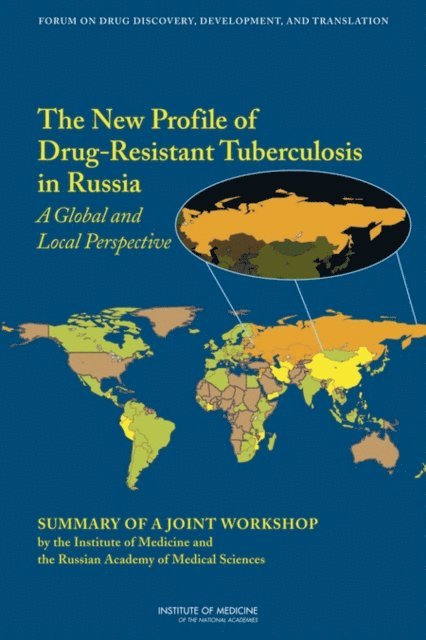
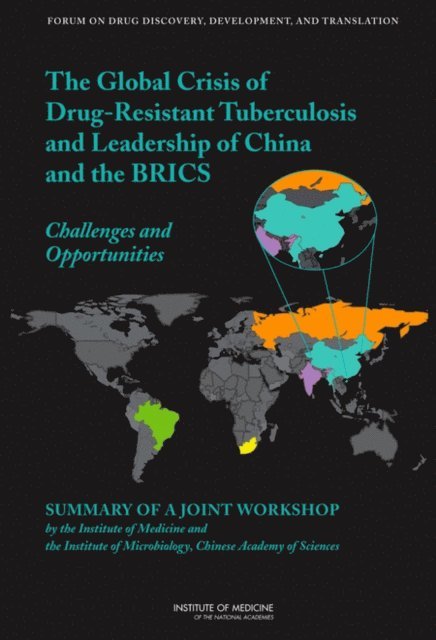
An estimated 2 billion people, one third of the global population, are infected with Mycobacterium tuberculosis, the bacterium that causes tuberculosis. Spread through the air, this infectious disease killed 1.7 million in 2009, and is the leading killer of people with HIV. Tuberculosis (TB) is also a disease of poverty—the vast majority of tuberculosis deaths occur in the developing world. Exacerbating the devastation caused by TB is the growing threat of drug-resistant forms of the disease in many parts of the world.
Drug-resistant tuberculosis presents a number of significant challenges in terms of controlling its spread, diagnosing patients quickly and accurately, and using drugs to treat patients effectively. In Russia in recent decades, the rise of these strains of TB, resistant to standard antibiotic treatment, has been exacerbated by the occurrence of social, political, and economic upheavals. The Institute of Medicine (IOM) Forum on Drug Discovery, Development, and Translation, in conjunction with the Russian Academy of Medical Sciences held a workshop to discuss ways to fight the growing threat of drug-resistant TB. The New Profile of Drug-Resistant Tuberculosis in Russia: A Global and Local Perspective: Summary of a Joint Workshop presents information from experts on the nature of this threat and how it can be addressed by exploring various treatment and diagnostic options.
668 kr
Läs direkt efter köp
An ideal health care system relies on efficiently generating timely, accurate evidence to deliver on its promise of diminishing the divide between clinical practice and research. There are growing indications, however, that the current health care system and the clinical research that guides medical decisions in the United States falls far short of this vision. The process of generating medical evidence through clinical trials in the United States is expensive and lengthy, includes a number of regulatory hurdles, and is based on a limited infrastructure. The link between clinical research and medical progress is also frequently misunderstood or unsupported by both patients and providers. The focus of clinical research changes as diseases emerge and new treatments create cures for old conditions. As diseases evolve, the ultimate goal remains to speed new and improved medical treatments to patients throughout the world. To keep pace with rapidly changing health care demands, clinical research resources need to be organized and on hand to address the numerous health care questions that continually emerge. Improving the overall capacity of the clinical research enterprise will depend on ensuring that there is an adequate infrastructure in place to support the investigators who conduct research, the patients with real diseases who volunteer to participate in experimental research, and the institutions that organize and carry out the trials.To address these issues and better understand the current state of clinical research in the United States, the Institute of Medicine''s (IOM) Forum on Drug Discovery, Development, and Translation held a 2-day workshop entitled Transforming Clinical Research in the United States. The workshop, summarized in this volume, laid the foundation for a broader initiative of the Forum addressing different aspects of clinical research. Future Forum plans include further examining regulatory, administrative, and structural barriers to the effective conduct of clinical research; developing a vision for a stable, continuously funded clinical research infrastructure in the United States; and considering strategies and collaborative activities to facilitate more robust public engagement in the clinical research enterprise.
668 kr
Läs direkt efter köp
The process for developing new drug and biologic products is extraordinarily expensive and time-consuming. Although large pharmaceutical companies may be able to afford the cost of development because they can expect a large return on investment, organizations developing drugs to treat rare and neglected diseases are unable to rely on such returns.
On June 23, 2008, the Institute of Medicine''s Forum on Drug Discovery, Development, and Translation held a public workshop, "Breakthrough Business Models: Drug Development for Rare and Neglected Diseases and Individualized Therapies," which sought to explore new and innovative strategies for developing drugs for rare and neglected diseases.
668 kr
Läs direkt efter köp
In recent years, the costs of new drug development have skyrocketed. The average cost of developing a new approved drug is now estimated to be $1.3 billion (DiMasi and Grabowski, 2007). At the same time, each year fewer new molecular entities (NMEs) are approved. DiMasi and Grabowski report that only 21.5 percent of the candidate drugs that enter phase I clinical testing actually make it to market. In 2007, just 17 novel drugs and 2 novel biologics were approved. In addition to the slowing rate of drug development and approval, recent years have seen a number of drugs withdrawn from the market for safety reasons. According to the Government Accountability Office (GAO), 10 drugs were withdrawn because of safety concerns between 2000 and March 2006 (GAO, 2006). Finding ways to select successful drug candidates earlier in development could save millions or even billions of dollars, reduce the costs of drugs on the market, and increase the number of new drugs with improved safety profiles that are available to patients.
Emerging scientific knowledge and technologies hold the potential to enhance correct decision making for the advancement of candidate drugs. Identification of safety problems is a key reason that new drug development is stalled. Traditional methods for assessing a drug''s safety prior to approval are limited in their ability to detect rare safety problems. Prior to receiving U.S. Food and Drug Administration (FDA) approval, a drug will have been tested in hundreds to thousands of patients. Generally, drugs cannot confidently be linked to safety problems until they have been tested in tens of thousands to hundreds of thousands of people. With current methods, it is unlikely that rare safety problems will be identified prior to approval. Emerging Safety Science: Workshop Summary summarizes the events and presentations of the workshop.401 kr
Läs direkt efter köp
Decades of research have demonstrated that children do not respond to medications in the same way as adults. Differences between children and adults in the overall response to medications are due to profound anatomical, physiological, and developmental differences. Although few would argue that children should receive medications that have not been adequately tested for safety and efficacy, the majority of drugs prescribed for children—50 to 75 percent—have not been tested in pediatric populations. Without adequate data from such testing, prescribing drugs appropriately becomes challenging for clinicians treating children, from infancy through adolescence. Addressing the Barriers to Pediatric Drug Development is the summary of a workshop, held in Washington, D.C. on June 13, 2006, that was organized to identify barriers to the development and testing of drugs for pediatric populations, as well as ways in which the system can be improved to facilitate better treatments for children.
602 kr
Läs direkt efter köp
As the principal agency regulating food, drugs, medical devices, and biological products used by Americans, the U.S. Food and Drug Administration (FDA) serves one of the most critical consumer protection functions of the federal government. The FDA''s reach is enormous, regulating products that represent roughly 25 percent of all consumer spending in the United States. Since 1992, however, federal funding for the agency has diminished, and the FDA''s Center for Drug Evaluation and Research (CDER) currently relies on the fees it receives from the industry it regulates to fund the majority of its drug regulation functions. Prescription drug safety is receiving heightened press coverage and congressional scrutiny as a result of recent, highly publicized events, such as the recall of Vioxx because of its link to heart attacks, and the link between certain antidepressants (selective serotonin reuptake inhibitors, or SSRIs) and an increased risk of suicidal ideation in children.
To address these concerns, the FDA in 2005 commissioned the Institute of Medicine (IOM) to conduct an independent assessment of the current U.S. drug safety system. In September 2006, the IOM committee released its report—The Future of Drug Safety: Promoting and Protecting the Health of the Public—which included 25 recommendations for improving the system for drug safety review. The committee identified four major vulnerabilities in the U.S. drug safety system: (1) chronic underfunding; (2) organization problems, particularly inadequate integration of pre-and postmarket data review; (3) a range of technical problems related to the insufficient quantity and quality of postmarket data and inadequate capability to systematically monitor the risks and benefits of drugs after marketing; and (4) unclear regulatory authority and insufficiently flexible regulatory tools. Since the IOM report was issued, the FDA has taken a number of steps toward implementing the recommended improvements. Like many government agencies, however, the FDA is financially strained by its existing responsibilities, and fully implementing the recommended improvements to the drug safety system would require significant financial commitments.The IOM report addressed some of the costs associated with its recommendations, but left many unanswered questions about the resources required to fully achieve the envisioned improvements. To better understand the types and magnitude of resources required to achieve the goals of the IOM report, the IOM''s Forum on Drug Discovery, Development, and Translation convened a 1-day symposium in March 2007. Challenges for the FDA: The Future of Drug Safety, Workshop Summary explains the presentations and discussions in seven key areas: addressing the FDA''s resource challenges; strengthening the scientific base of the agency; integrating pre- and postmarket review; enhancing postmarket safety monitoring; conducting confirmatory drug safety and efficacy studies; enhancing the value of clinical trial registration; and enhancing the FDA''s postmarket regulation and enforcement.401 kr
Läs direkt efter köp
All pharmaceutical products have inherent risks, and their use involves trade-offs between their therapeutic benefits and their risks. However, the public has a limited understanding of the benefits and risks of drugs, and many individuals believe that drugs approved by the U.S. Food and Drug Administration (FDA) carry no risks. The FDA is responsible for evaluating and balancing the potential risks of drugs with their potential benefits. Assessing, managing, and communicating the benefit-risk profile of a pharmaceutical product is a complex and nuanced scientific, political, and sociological challenge. Once the assessment is made, the FDA is then responsible for managing how to communicate these risks and make healthcare decisions based on them.
To explore these issues, the Forum on Drug Discovery, Development, and Translation conducted a public workshop entitled Understanding the Benefits and Risks of Pharmaceuticals, with the broad goals of gaining a better understanding of the current system used to evaluate benefit and risk, and to identify opportunities for improvement. This workshop was held in Washington, D.C., on May 30-31, 2006. The benefit-risk profiles of pharmaceuticals are constantly evolving as new data are collected throughout the life cycle of a drug. Discussions during the workshop focused on the following: (1) premarket assessment, during which clinical trial data are used to assess benefit and risk; (2) communication of that information to prescribing physicians and their patients; (3) healthcare decisions made by prescribing physicians and their patients; and (4) the accumulation of benefit-risk information from postmarketing experience, which feeds back into the other phases. Understanding the Benefits and Risks of Pharmaceuticals: Workshop Summary explains in detail the discussions during this workshop.
401 kr
Läs direkt efter köp
Recent concerns about the unexpected adverse effects of marketed drugs, such as COX-2 (cyclooxygenase-2) inhibitors or specific statins, raise concerns not only about reporting these events during premarket studies, but also about the responsibility for ongoing surveillance of drugs once they are on the market. Sometimes serious adverse drug reactions are fully appreciated only after a drug has been on the market for years. Therefore, when a drug is approved and released to the market, large numbers of patients will be exposed before all the potential adverse effects have been identified and thoroughly studied. Currently, there is no clearly defined process for addressing safety questions about drugs after premarketing research has occurred.In November 2005, the Institute of Medicine''s Forum on Drug Discovery, Development, and Translation convened a workshop to explore issues associated with the reporting of ADEs. The workshop addressed the following questions: How can ADEs be effectively identified, particularly when the adverse effects are rare? How can the direct, causal effects of drugs be distinguished from simple associations? How can health-care professionals and their patients'' aid in the identification of drug-related adverse events? How can knowledge of ADEs be more effectively used in clinical practice?Adverse Drug Event Reporting reviews current sources of information on adverse drug events, including the FDA''s MedWatch program and the AERS, institutional review boards, and the CMS. This report considers the ways that consumers and advocacy groups can be involved in reporting adverse events, and discusses drug interactions, problems with current databases for capturing and evaluating interactions, and difficulties in communicating information about adverse drug interactions. This report also describes new requirements for information contained on drug labels and how labels can be used to communicate information about risks and drug interactions to consumers and practitioners.
535 kr
Läs direkt efter köp
Today, scores of companies, primarily in the United States and Europe, are offering whole genome scanning services directly to the public. The proliferation of these companies and the services they offer demonstrate a public appetite for this information and where the future of genetics may be headed; they also demonstrate the need for serious discussion about the regulatory environment, patient privacy, and other policy implications of direct-to-consumer (DTC) genetic testing. Rapid advances in genetic research already have begun to transform clinical practice and our understanding of disease progression. Existing research has revealed a genetic basis or component for numerous diseases, including Parkinson''s disease, Alzheimer''s disease, diabetes, heart disease, and several forms of cancer. The availability of the human genome sequence and the HapMap, plummeting costs of high-throughput screening, and increasingly sophisticated computational analyses have led to an explosion of discoveries of linkages between patterns of genetic variation and disease susceptibility. While this research is by no means a straight path toward better public health, improved knowledge of the genetic linkages has the potential to change fundamentally the way health professionals and public health practitioners approach the prevention and treatment of disease. Realizing this potential will require greater sophistication in the interpretation of genetic tests, new training for physicians and other diagnosticians, and new approaches to communicating findings to the public. As this rapidly growing field matures, all of these questions require attention from a variety of perspectives. To discuss some of the foregoing issues, several units of the National Academies held a workshop on August 31 and September 1, 2009, to bring together a still-developing community of professionals from a variety of relevant disciplines, to educate the public and policy-makers about this emerging field, and to identify issues for future study. The meeting featured several invited presentations and discussions on the many technical, legal, policy, and ethical questions that such DTC testing raises, including: (1) overview of the current state of knowledge and the future research trajectory; (2) shared genes and emerging issues in privacy; (3) the regulatory framework; and (4) education of the public and the medical community.
401 kr
Läs direkt efter köp
The Food and Drug Administration (FDA) is tasked with ensuring the safety and effectiveness of medicine. FDA''s science base must be strong enough to make certain that regulatory decisions are based on the best scientific evidence. The IOM held a public workshop on February 26, 2010, to examine the state of regulatory science and to consider approaches for enhancing it.
652 kr
Läs direkt efter köp
576 kr
Läs direkt efter köp
Whether or not the United States has safe and effective medical countermeasures—such as vaccines, drugs, and diagnostic tools—available for use during a disaster can mean the difference between life and death for many Americans. The Food and Drug Administration (FDA) and the scientific community at large could benefit from improved scientific tools and analytic techniques to undertake the complex scientific evaluation and decision making needed to make essential medical countermeasures available. At the request of FDA, the Institute of Medicine (IOM) held a workshop to examine methods to improve the development, evaluation, approval, and regulation of medical countermeasures.
During public health emergencies such as influenza or chemical, biological, radiological/nuclear (CBRN) attacks, safe and effective vaccines, treatments, and other medical countermeasures are essential to protecting national security and the well being of the public. Advancing Regulatory Science for Medical Countermeasure Development examines current medical countermeasures, and investigates the future of research and development in this area. Convened on March 29-30, 2011, this workshop identified regulatory science tools and methods that are available or under development, as well as major gaps in currently available regulatory science tools.
Advancing Regulatory Science for Medical Countermeasure Development is a valuable resource for federal agencies including the Food and Drug Administration (FDA), the Department of Health and Human Services (HHS), the Department of Defense (DoD), as well as health professionals, and public and private health organizations.
600 kr
Läs direkt efter köp
Whether or not the United States has safe and effective medical countermeasures—such as vaccines, drugs, and diagnostic tools—available for use during a disaster can mean the difference between life and death for many Americans. The Food and Drug Administration (FDA) and the scientific community at large could benefit from improved scientific tools and analytic techniques to undertake the complex scientific evaluation and decision making needed to make essential medical countermeasures available. At the request of FDA, the Institute of Medicine (IOM) held a workshop to examine methods to improve the development, evaluation, approval, and regulation of medical countermeasures.
During public health emergencies such as influenza or chemical, biological, radiological/nuclear (CBRN) attacks, safe and effective vaccines, treatments, and other medical countermeasures are essential to protecting national security and the well being of the public. Advancing Regulatory Science for Medical Countermeasure Development examines current medical countermeasures, and investigates the future of research and development in this area. Convened on March 29-30, 2011, this workshop identified regulatory science tools and methods that are available or under development, as well as major gaps in currently available regulatory science tools.
Advancing Regulatory Science for Medical Countermeasure Development is a valuable resource for federal agencies including the Food and Drug Administration (FDA), the Department of Health and Human Services (HHS), the Department of Defense (DoD), as well as health professionals, and public and private health organizations.
552 kr
Läs direkt efter köp
Clinical trials provide essential information needed to turn basic medical research findings into patient treatments. New treatments must be studied in large numbers of humans to find out whether they are effective and to assess any harm that may arise from treatment. There is growing recognition among many stakeholders that the U.S. clinical trials enterprise is unable to keep pace with the national demand for research results. The IOM, along with the Mount Sinai School of Medicine, held a workshop June 27-28, 2011, to engage stakeholders and experts in a discussion about possible solutions to improve public engagement in clinical trials.