and Independence Forum on Aging, Disability – författare
301 kr
Läs direkt efter köp
623 kr
Skickas inom 3-6 vardagar
552 kr
Läs direkt efter köp
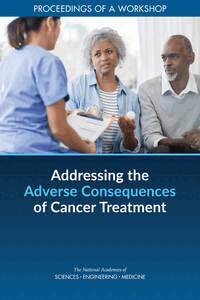
Cancer treatment can lead to an array of significant short- and long-term physical, psychosocial, and socioeconomic consequences for patients and their families. To examine the opportunities to prevent and mitigate the adverse effects of cancer treatment, the National Academies of Sciences, Engineering, and Medicine hosted a virtual workshop, Addressing the Adverse Consequences of Cancer Treatment, in November 2020. This workshop was convened by the Academies'' National Cancer Policy Forum in collaboration with the Forum on Aging, Disability, and Independence. Workshop presentations and discussions described the range of adverse effects that patients with cancer may experience across the life course, and highlighted potential strategies to improve quality of life for cancer survivors and their families.
557 kr
Skickas inom 3-6 vardagar
485 kr
Läs direkt efter köp
The Institute of Medicine (IOM) and the National Research Council (NRC) have had prominent roles in discussions of aging, disability, and technology for decades. In 1978, Aging and Medical Education (IOM, 1978) raised national awareness of the challenges to physicians posed by the aging of the U.S. population. Thirty years later, Retooling for an Aging America highlighted concerns for the entire health care workforce in view of the aging of the population, including the role of technology in caring for older populations. The 1988 report The Aging Population in the 21st Century examined social, economic, and demographic changes among older adults, as well as many health-related topics: health promotion and disease prevention; quality of life; health care system financing and use; and the quality of care— especially long-term care. In 1991, the landmark report Disability in America laid out a national agenda to prevent disability and improve the lives of people with disabling conditions. The 1997 report Enabling America: Assessing the Role of Rehabilitation Science and Engineering examined the knowledge base of rehabilitation science and engineering and proposed ways to translate scientific findings into interventions that produce better health. And the 2007 report The Future of Disability in America examined progress made since the earlier reports and looked at continuing barriers that limit the independence, productivity, and participation in community life of people with disabilities.
All these reports were produced by committees appointed in accordance with guidelines of the National Academies and met multiples times to compile and review evidence, reach consensus on conclusions and recommendations, draft a report of the committee, and then modify that draft report in response to comments from outside reviewers. The IOM and NRC have also held several workshops related to aging, disability, and technology and published summary reports, such as Technology for Adaptive Aging and Grand Challenges of Our Aging Society. The IOM and NRC also convene groups that take a different approach to issues of pressing national and international importance. Often known as forums or roundtables, these groups meet regularly to foster dialogue and confront issues of mutual interest and concern among a broad range of stakeholders. They can convene workshops, initiate cooperative projects among members, commission independently authored articles, and generate ideas for independent consensus studies.
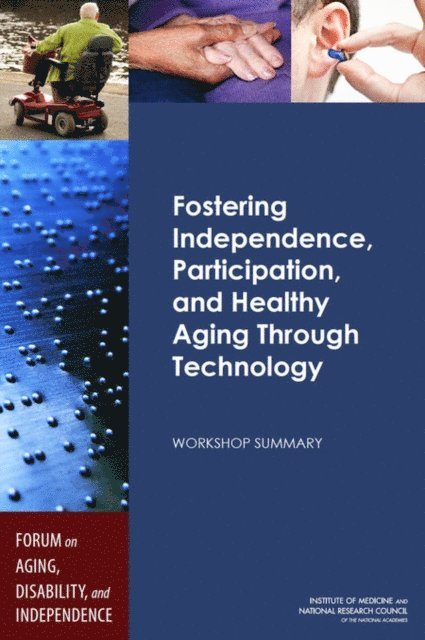
In 2012 the IOM and NRC joined together to establish the Forum on Aging, Disability, and Independence to provide a neutral venue for broad-ranging discussions among the many stakeholders involved with aging and disability. The goals of the forum are to highlight areas in which the coordination of the aging and disability networks is strong, examine the challenges involved in aligning the aging and disability networks, explore new approaches for resolving problem areas, elevate the visibility and broaden the perspectives of stakeholders, and set the stage for future policy actions. Forum sponsors and members include federal agencies, health professional associations, private sector businesses, academics, and consumers. Fostering Independence, Participation, and Healthy Aging Through Technology summarizes this workshop.
518 kr
Läs direkt efter köp
Financing Long-Term Services and Supports for Individuals with Disabilities and Older Adults is the summary of a workshop convened in June 2013 by the Forum on Aging, Disability, and Independence of the Institute of Medicine and the National Research Council to examine the financing of long-term services and supports for working-age individuals with disabilities and among individuals who are developing disabilities as they age. The workshop covered both older adults who acquire disabilities and younger adults with disabilities who may acquire additional impairments as they age, the target population of the Forum''s work. The challenges associated with financing long-term services and supports for people with disabilities impacts all age groups. While there are important differences between the characteristics of programs developed for different age groups, and specific populations may have different needs, this workshop addressed the financing sources for long-term services and supports in general, noting specific differences as appropriate.
The financing of long-term services and supports has become a major issue in the United States. These are the services and supports that individuals with disabilities, chronic conditions, and functional impairments need in order to live independently, such as assistance with eating, bathing, and dressing. Long-term services and supports do not include the medical or nursing services required to manage health conditions that may be responsible for a disabling condition. At least 11 million adults ages 18 and over receive long-term services and supports. Only a little more than half of them - 57 percent - are ages 65 or older. One study found that about 6 percent of people turning 65 in 2005 could expect to have expenses of more than $100,000 for long-term services and supports. Financing Long-Term Services and Supports for Individuals with Disabilities and Older Adults discusses the scope and trends of current sources of financing for long-term services and supports for working-age individuals with disabilities and older adults aging into disability, including income supports and personal savings. This report considers the role of families, business, and government in financing long-term services and supports and discusses implications of and opportunities for current and innovative approaches.
361 kr
Skickas
535 kr
Läs direkt efter köp
Being able to communicate is a cornerstone of healthy aging. People need to make themselves understood and to understand others to remain cognitively and socially engaged with families, friends, and other individuals. When they are unable to communicate, people with hearing impairments can become socially isolated, and social isolation can be an important driver of morbidity and mortality in older adults. Despite the critical importance of communication, many older adults have hearing loss that interferes with their social interactions and enjoyment of life. People may turn up the volume on their televisions or stereos, miss words in a conversation, go to fewer public places where it is difficult to hear, or worry about missing an alarm or notification. In other cases, hearing loss is much more severe, and people may retreat into a hard-to-reach shell. Yet fewer than one in seven older Americans with hearing loss use hearing aids, despite rapidly advancing technologies and innovative approaches to hearing health care. In addition, there may not be an adequate number of professionals trained to address the growing need for hearing health care for older adults. Further, Medicare does not cover routine hearing exams, hearing aids, or exams for fitting hearing aids, which can be prohibitively expensive for many older adults.
Hearing Loss and Healthy Aging is the summary of a workshop convened by the Forum on Aging, Disability, and Independence in January 2014 on age-related hearing loss. Researchers, advocates, policy makers, entrepreneurs, regulators, and others discussed this pressing social and public health issue. This report examines the ways in which age-related hearing loss affects healthy aging, and how the spectrum of public and private stakeholders can work together to address hearing loss in older adults as a public health issue.
668 kr
Läs direkt efter köp
Individuals with disabilities, chronic conditions, and functional impairments need a range of services and supports to keep living independently. However, there often is not a strong link between medical care provided in the home and the necessary social services and supports for independent living. Home health agencies and others are rising to the challenges of meeting the needs and demands of these populations to stay at home by exploring alternative models of care and payment approaches, the best use of their workforces, and technologies that can enhance independent living. All of these challenges and opportunities lead to the consideration of how home health care fits into the future health care system overall.
On September 30 and October 1, 2014, the Institute of Medicine and the National Research Council convened a public workshop on the future of home health care. The workshop brought together a spectrum of public and private stakeholders and thought leaders to improve understanding of the current role of Medicare home health care in supporting aging in place and in helping high-risk, chronically ill, and disabled Americans receive health care in their communities. Through presentations and discussion, participants explored the evolving role of Medicare home health care in caring for Americans in the future, including how to integrate Medicare home health care into new models for the delivery of care and the future health care marketplace. The workshop also considered the key policy reforms and investments in workforces, technologies, and research needed to leverage the value of home health care to support older Americans, and research priorities that can help clarify the value of home health care. This summary captures important points raised by the individual speakers and workshop participants.
649 kr
Läs direkt efter köp
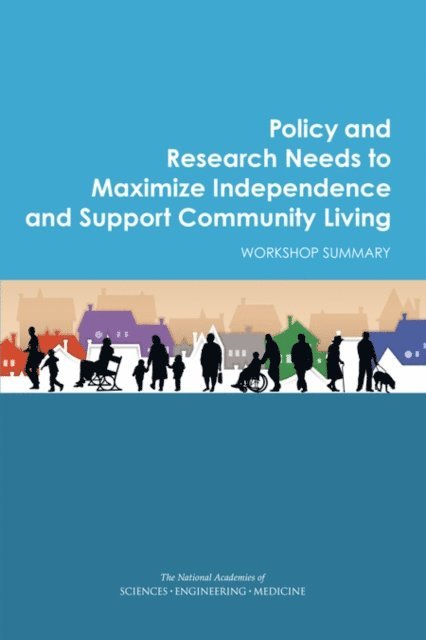
Living independently and participating in one''s community are priorities for many people. In many regions across the United States, there are programs that support and enable people with disabilities and older adults to live where they choose and with whom they choose and to participate fully in their communities. Tremendous progress has been made. However, in many cases, the programs themselves – and access to them – vary not only between states but also within states. Many programs are small, and even when they prove to be successful they are still not scaled up to meet the needs of the many people who would benefit from them. The challenges can include insufficient workforce, insufficient funding, and lack of evidence demonstrating effectiveness or value.
To get a better understanding of the policies needed to maximize independence and support community living and of the research needed to support implementation of those policies, the National Academies of Sciences, Engineering, and Medicine convened a public workshop in October 2015. Participants explored policies in place that promote independence and community living for older adults and people with physical disabilities, and identified policies and gaps in policies that can be barriers to independence and the research needed to support changing those policies. This report summarizes the presentations and discussions from the workshop.
408 kr
Skickas
618 kr
Läs direkt efter köp
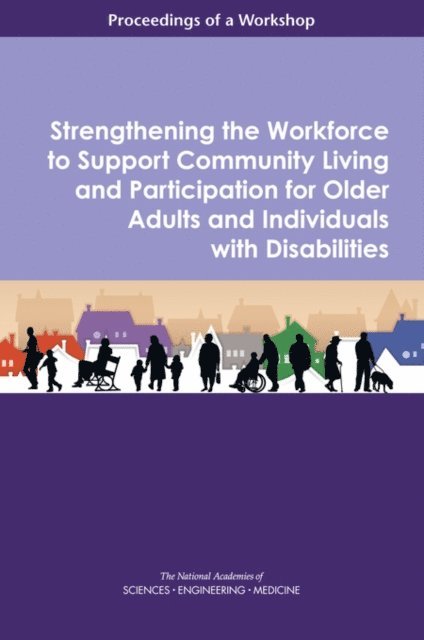
As the demographics of the United States shift toward a population that is made up of an increasing percentage of older adults and people with disabilities, the workforce that supports and enables these individuals is also shifting to meet the demands of this population. For many older adults and people with disabilities, their priorities include maximizing their independence, living in their own homes, and participating in their communities. In order to meet this population''s demands, the workforce is adapting by modifying its training, by determining how to coordinate among the range of different professionals who might play a role in supporting any one older adult or individual with disabilities, and by identifying the ways in which technology might be helpful.
To better understand how the increasing demand for supports and services will affect the nation''s workforce, the National Academies of Sciences, Engineering, and Medicine convened a public workshop in June 2016, in Washington, DC. Participants aimed to identify how the health care workforce can be strengthened to support both community living and community participation for adults with disabilities and older adults. This publication summarizes the presentations and discussions from the workshop.
602 kr
Läs direkt efter köp
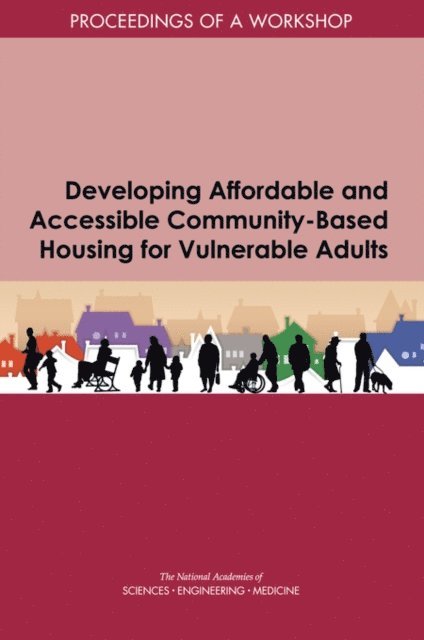
Accessible and affordable housing can enable community living, maximize independence, and promote health for vulnerable populations. However, the United States faces a shortage of affordable and accessible housing for low-income older adults and individuals living with disabilities. This shortage is expected to grow over the coming years given the population shifts leading to greater numbers of older adults and of individuals living with disabilities.
Housing is a social determinant of health and has direct effects on health outcomes, but this relationship has not been thoroughly investigated. In December 2016, the National Academies of Sciences, Engineering, and Medicine convened a public workshop to better understand the importance of affordable and accessible housing for older adults and people with disabilities, the barriers to providing this housing, the design principles for making housing accessible for these individuals, and the features of programs and policies that successfully provide affordable and accessible housing that supports community living for older adults and people with disabilities. This publication summarizes the presentations and discussions from the workshop.
715 kr
Skickas inom 3-6 vardagar
652 kr
Läs direkt efter köp
Many different groups of people are subject to stereotypes. Positive stereotypes (e.g., "older and wiser") may provide a benefit to the relevant groups. However, negative stereotypes of aging and of disability continue to persist and, in some cases, remain socially acceptable. Research has shown that when exposed to negative images of aging, older persons demonstrate poor physical and cognitive performance and function, while those who are exposed to positive images of aging (or who have positive self-perceptions of aging) demonstrate better performance and function. Furthermore, an individual''s expectations about and perceptions of aging can predict future health outcomes. To better understand how stereotypes affect older adults and individuals with disabilities, the National Academies of Sciences, Engineering, and Medicine, with support from AARP, convened a public workshop on October 10, 2017. This publication summarizes the presentations and discussions from the workshop.
552 kr
Läs direkt efter köp
There is a void in evidence-based information for making informed decisions on how to optimize care for older adults, particularly those 80 years and over. Because older adults are vastly underrepresented in clinical trials, there is a dearth of information about the appropriate use of drugs in this population. Yet older adults have higher rates of comorbidities and simultaneous use of multiple medications than the general population, and are the majority users of many medications. Additionally, age-related physiological and pathological changes, particularly for adults 80 years of age and older, can lead to significant differences in the pharmacokinetics (PK)2 and pharmacodynamics (PD)3 of a given drug compared to the general population.
On August 5 and 6, 2020, the National Academies of Sciences, Engineering, and Medicine hosted a workshop titled Drug Research and Development for Adults Across the Older Age Span. The workshop was designed to examine the challenges and opportunities in drug research and development for older adult populations, explore barriers that impede safety and efficacy studies in these populations, and share lessons learned for better understanding clinical pharmacology for populations over age 65. This publication summarizes the presentation and discussion of the workshop.
351 kr
Läs direkt efter köp
To examine the potential role of companion animals as sentinels of relevant, shared environmental exposures that may affect human aging and cancer, the National Cancer Policy Forum held a workshop in collaboration with the Forum on Aging, Disability, and Independence and the Standing Committee on the Use of Emerging Science for Environmental Health Decisions to explore this promising and underutilized pathway for research. Presentations and panel discussions covered the current state of the science and pathways for accelerating research, along with opportunities and challenges for using this novel translational approach to exposure science to advance human health. This Proceedings of a Workshop outlines the presentations and discussions that occurred during the workshop.
386 kr
Skickas inom 3-6 vardagar
318 kr
Läs direkt efter köp
The National Academies Roundtable on Quality Care for People with Serious Illness, National Cancer Policy Forum, and Forum on Aging, Disability and Independence hosted a workshop that examined opportunities to better support family caregiving for people with cancer or other serious illnesses. This workshop built upon previous work, including the 2016 consensus report Families Caring for an Aging America. This Proceedings of a Workshop summarizes the discussions held during the workshop, which focused on: strategies to better capture, understand, and act on family caregiver input and experience; research gaps and opportunities to guide caregiving for patients with serious illnesses; potential policy and practice opportunities to advance family-centered care for serious illness; and opportunities to embed a health equity focus across family caregiving research, policy, and practice.
318 kr
Läs direkt efter köp
Existing systems are not prepared to provide the mental health care services needed by the growing population of older adults. The National Academies Forum on Mental Health and Substance Use Disorders hosted a public workshop in May 2023 to highlight the current state of mental health care for older adults, outline the challenges they face, and explore potential long-term strategies and solutions for addressing unmet mental health needs. Discussions emphasized information about wellness and prevention, social determinants of health in aging populations, the impact of workforce shortages and gaps, the need for supportive healthy communities, and strategies to promote positive mental health.This publication summarizes the presentations and discussion of the workshop.
208 kr
Tillfälligt slut
349 kr
Tillfälligt slut
444 kr
Tillfälligt slut
444 kr
Tillfälligt slut
397 kr
Tillfälligt slut
361 kr
Tillfälligt slut
231 kr
Tillfälligt slut
208 kr
Tillfälligt slut