Board on Earth Sciences and Resources – författare
1 290 kr
Skickas
591 kr
Skickas
637 kr
Skickas
717 kr
Skickas
438 kr
Läs direkt efter köp
720 kr
Skickas inom 3-6 vardagar
560 kr
Läs direkt efter köp
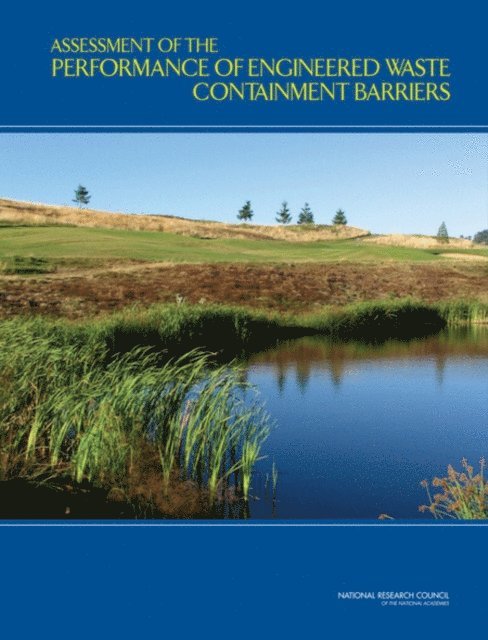
Assessment of the Performance of Engineered Waste Containment Barriers assesses the performance of waste containment barriers to date. Existing data suggest that waste containment systems with liners and covers, when constructed and maintained in accordance with current regulations, are performing well thus far. However, they have not been in existence long enough to assess long-term (postclosure) performance, which may extend for hundreds of years. The book makes recommendations on how to improve future assessments and increase confidence in predictions of barrier system performance which will be of interest to policy makers, environmental interest groups, industrial waste producers, and industrial waste management industry.
660 kr
Skickas
463 kr
Läs direkt efter köp
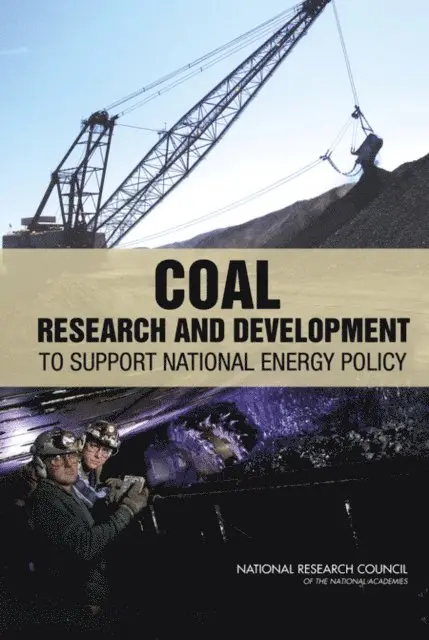
Coal focuses on the research and development needs and priorities in the areas of coal resource and reserve assessments, coal mining and processing, transportation of coal and coal products, and coal utilization.
641 kr
Läs direkt efter köp
National Land Parcel Data looks at the current status of land parcel data in the United States. The book concludes that nationally integrated land parcel data is necessary, feasible, and affordable. It provides recommendations for establishing a practical framework for sustained intergovernmental coordination and funding required to overcome the remaining challenges and move forward.
438 kr
Läs direkt efter köp
Remote sensing data and models from the National Aeronautics and Space Administration (NASA) are the basis for a wide spectrum of scientific research endeavors and are key inputs to many public and private services. The NASA Applied Sciences Program (ASP) and its precursors have been tasked with ensuring the extension of NASA Earth observation data and associated research into practical applications for society through external partnerships. With approximately five years having elapsed under the current ASP structure, and a growing government-wide emphasis on societal benefits in its Earth observing programs, NASA and the ASP leadership asked the National Research Council to assess ASP''s approach in extending NASA research results to practical, societal applications. The report recommends that ASP partnerships should focus not only federal agencies but alsoon direct engagement of the broader community of users. The report also recommends that ASP enhance communication and feedback mechanisms with its partners, with the end users and beneficiaries of NASA data and research, and with the NASA organization.
487 kr
Läs direkt efter köp
Comprehensive and authoritative baseline geospatial data content is crucial to the nation and to the U.S. Geological Survey (USGS). The USGS founded its Center of Excellence for Geospatial Information Science (CEGIS) in 2006 to develop and distribute national geospatial data assets in a fast-moving information technology environment. In order to fulfill this mission, the USGS asked the National Research Council to assess current GIScience capabilities at the USGS, identify current and future needs for GIScience capabilities, recommend strategies for strengthening these capabilities and for collaborating with others to maximize research productivity, and make recommendations regarding the most effective research areas for CEGIS to pursue. With an initial focus on improving the capabilities of The National Map, the report recommends three priority research areas for CEGIS: information access and dissemination, data integration, and data models, and further identifies research topics within these areas that CEGIS should pursue. To address these research topics, CEGIS needs a sustainable research management process that involves a portfolio of collaborative research that balances short and long term goals.
487 kr
Läs direkt efter köp
666 kr
Skickas
487 kr
Läs direkt efter köp
649 kr
Läs direkt efter köp
Assessment of the Performance of Engineered Waste Containment Barriers assesses the performance of waste containment barriers to date. Existing data suggest that waste containment systems with liners and covers, when constructed and maintained in accordance with current regulations, are performing well thus far. However, they have not been in existence long enough to assess long-term (postclosure) performance, which may extend for hundreds of years. The book makes recommendations on how to improve future assessments and increase confidence in predictions of barrier system performance which will be of interest to policy makers, environmental interest groups, industrial waste producers, and industrial waste management industry.
649 kr
Läs direkt efter köp
Coal focuses on the research and development needs and priorities in the areas of coal resource and reserve assessments, coal mining and processing, transportation of coal and coal products, and coal utilization.
698 kr
Läs direkt efter köp
665 kr
Läs direkt efter köp
479 kr
Läs direkt efter köp
During geologic spans of time, Earth''s shifting tectonic plates, atmosphere, freezing water, thawing ice, flowing rivers, and evolving life have shaped Earth''s surface features. The resulting hills, mountains, valleys, and plains shelter ecosystems that interact with all life and provide a record of Earth surface processes that extend back through Earth''s history. Despite rapidly growing scientific knowledge of Earth surface interactions, and the increasing availability of new monitoring technologies, there is still little understanding of how these processes generate and degrade landscapes.Landscapes on the Edge identifies nine grand challenges in this emerging field of study and proposes four high-priority research initiatives. The book poses questions about how our planet''s past can tell us about its future, how landscapes record climate and tectonics, and how Earth surface science can contribute to developing a sustainable living surface for future generations.
325 kr
Läs direkt efter köp
Social Network Analysis (SNA) is the identification of the relationships and attributes of members, key actors, and groups that social networks comprise. The National Research Council, at the request of the Department of Homeland Security, held a two-day workshop on the use of SNA for the purpose of building community disaster resilience. The workshop, summarized in this volume, was designed to provide guidance to the DHS on a potential research agenda that would increase the effectiveness of SNA for improving community disaster resilience. The workshop explored the state of the art in SNA and its applications in the identification, construction, and strengthening of networks within U.S. communities. Workshop participants discussed current work in SNA focused on characterizing networks; the theories, principles and research applicable to the design or strengthening of networks; the gaps in knowledge that prevent the application of SNA to the construction of networks; and research areas that could fill those gaps. Elements of a research agenda to support the design, development, and implementation of social networks for the specific purpose of strengthening community resilience against natural and human-made disasters were discussed.
471 kr
Läs direkt efter köp
Social Network Analysis (SNA) is the identification of the relationships and attributes of members, key actors, and groups that social networks comprise. The National Research Council, at the request of the Department of Homeland Security, held a two-day workshop on the use of SNA for the purpose of building community disaster resilience. The workshop, summarized in this volume, was designed to provide guidance to the DHS on a potential research agenda that would increase the effectiveness of SNA for improving community disaster resilience. The workshop explored the state of the art in SNA and its applications in the identification, construction, and strengthening of networks within U.S. communities. Workshop participants discussed current work in SNA focused on characterizing networks; the theories, principles and research applicable to the design or strengthening of networks; the gaps in knowledge that prevent the application of SNA to the construction of networks; and research areas that could fill those gaps. Elements of a research agenda to support the design, development, and implementation of social networks for the specific purpose of strengthening community resilience against natural and human-made disasters were discussed.
643 kr
Skickas inom 3-6 vardagar
406 kr
Läs direkt efter köp
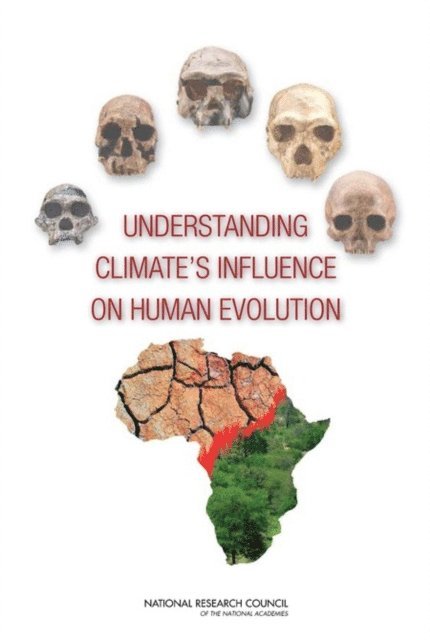
The hominin fossil record documents a history of critical evolutionary events that have ultimately shaped and defined what it means to be human, including the origins of bipedalism; the emergence of our genus Homo; the first use of stone tools; increases in brain size; and the emergence of Homo sapiens, tools, and culture. The Earth''s geological record suggests that some evolutionary events were coincident with substantial changes in African and Eurasian climate, raising the possibility that critical junctures in human evolution and behavioral development may have been affected by the environmental characteristics of the areas where hominins evolved. Understanding Climate''s Change on Human Evolution explores the opportunities of using scientific research to improve our understanding of how climate may have helped shape our species.Improved climate records for specific regions will be required before it is possible to evaluate how critical resources for hominins, especially water and vegetation, would have been distributed on the landscape during key intervals of hominin history. Existing records contain substantial temporal gaps. The book''s initiatives are presented in two major research themes: first, determining the impacts of climate change and climate variability on human evolution and dispersal; and second, integrating climate modeling, environmental records, and biotic responses.Understanding Climate''s Change on Human Evolution suggests a new scientific program for international climate and human evolution studies that involve an exploration initiative to locate new fossil sites and to broaden the geographic and temporal sampling of the fossil and archeological record; a comprehensive and integrative scientific drilling program in lakes, lake bed outcrops, and ocean basins surrounding the regions where hominins evolved and a major investment in climate modeling experiments for key time intervals and regions that are critical to understanding human evolution.
543 kr
Läs direkt efter köp
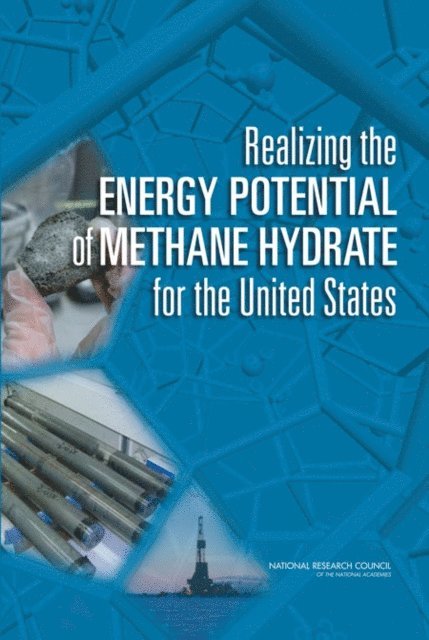
Natural gas, composed mostly of methane, is the cleanest of all the fossil fuels, emitting 25-50% less carbon dioxide than either oil or coal for each unit of energy produced. In recent years, natural gas supplied approximately 20-25% of all energy consumed in the United States. Methane hydrate is a potentially enormous and as yet untapped source of methane. The Department of Energy''s Methane Hydrate Research and Development Program has been tasked since 2000 to implement and coordinate a national methane hydrate research effort to stimulate the development of knowledge and technology necessary for commercial production of methane from methane hydrate in a safe and environmentally responsible way. Realizing the Energy Potential of Methane Hydrate for the United States evaluates the program''s research projects and management processes since its congressional re-authorization in 2005, and presents recommendations for its future research and development initiatives.
751 kr
Skickas
536 kr
Läs direkt efter köp
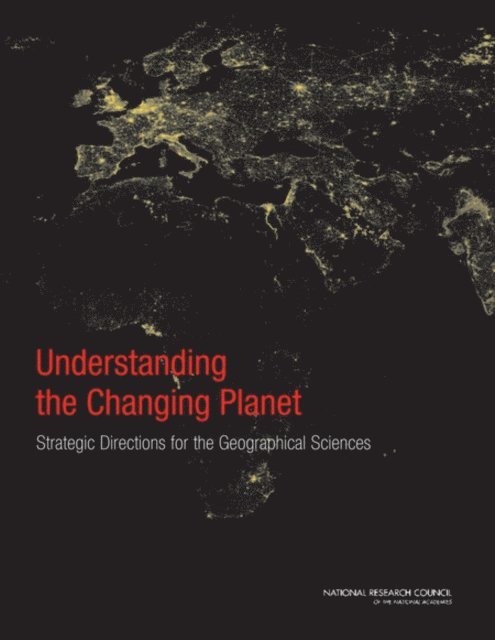
From the oceans to continental heartlands, human activities have altered the physical characteristics of Earth''s surface. With Earth''s population projected to peak at 8 to 12 billion people by 2050 and the additional stress of climate change, it is more important than ever to understand how and where these changes are happening. Innovation in the geographical sciences has the potential to advance knowledge of place-based environmental change, sustainability, and the impacts of a rapidly changing economy and society. Understanding the Changing Planet outlines eleven strategic directions to focus research and leverage new technologies to harness the potential that the geographical sciences offer.
477 kr
Skickas
268 kr
Läs direkt efter köp
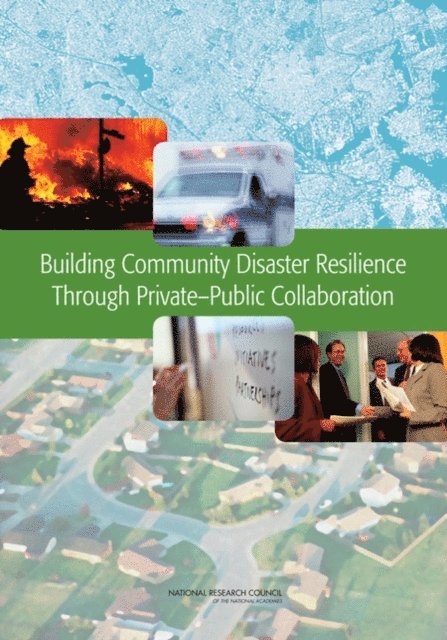
The terrorist attacks of September 11, 2001 (9/11) on the United States prompted a rethinking of how the United States prepares for disasters. Federal policy documents written since 9/11 have stressed that the private and public sectors share equal responsibility for the security of the nation''s critical infrastructure and key assets. Private sector entities have a role in the safety, security, and resilience of the communities in which they operate. Incentivizing the private sector to expend resources on community efforts remains challenging. Disasters in the United States since 9/11 (e.g., Hurricane Katrina in 2005) indicate that the nation has not yet been successful in making its communities resilient to disaster.In this book, the National Research Council assesses the current states of the art and practice in private-public sector collaboration dedicated to strengthening community disaster resilience.
584 kr
Läs direkt efter köp
The hominin fossil record documents a history of critical evolutionary events that have ultimately shaped and defined what it means to be human, including the origins of bipedalism; the emergence of our genus Homo; the first use of stone tools; increases in brain size; and the emergence of Homo sapiens, tools, and culture. The Earth''s geological record suggests that some evolutionary events were coincident with substantial changes in African and Eurasian climate, raising the possibility that critical junctures in human evolution and behavioral development may have been affected by the environmental characteristics of the areas where hominins evolved. Understanding Climate''s Change on Human Evolution explores the opportunities of using scientific research to improve our understanding of how climate may have helped shape our species.Improved climate records for specific regions will be required before it is possible to evaluate how critical resources for hominins, especially water and vegetation, would have been distributed on the landscape during key intervals of hominin history. Existing records contain substantial temporal gaps. The book''s initiatives are presented in two major research themes: first, determining the impacts of climate change and climate variability on human evolution and dispersal; and second, integrating climate modeling, environmental records, and biotic responses.Understanding Climate''s Change on Human Evolution suggests a new scientific program for international climate and human evolution studies that involve an exploration initiative to locate new fossil sites and to broaden the geographic and temporal sampling of the fossil and archeological record; a comprehensive and integrative scientific drilling program in lakes, lake bed outcrops, and ocean basins surrounding the regions where hominins evolved and a major investment in climate modeling experiments for key time intervals and regions that are critical to understanding human evolution.