Conor Casey – författare
Visar alla böcker från författaren Conor Casey. Handla med fri frakt och snabb leverans.
2 produkter
2 produkter
1 437 kr
Kommande
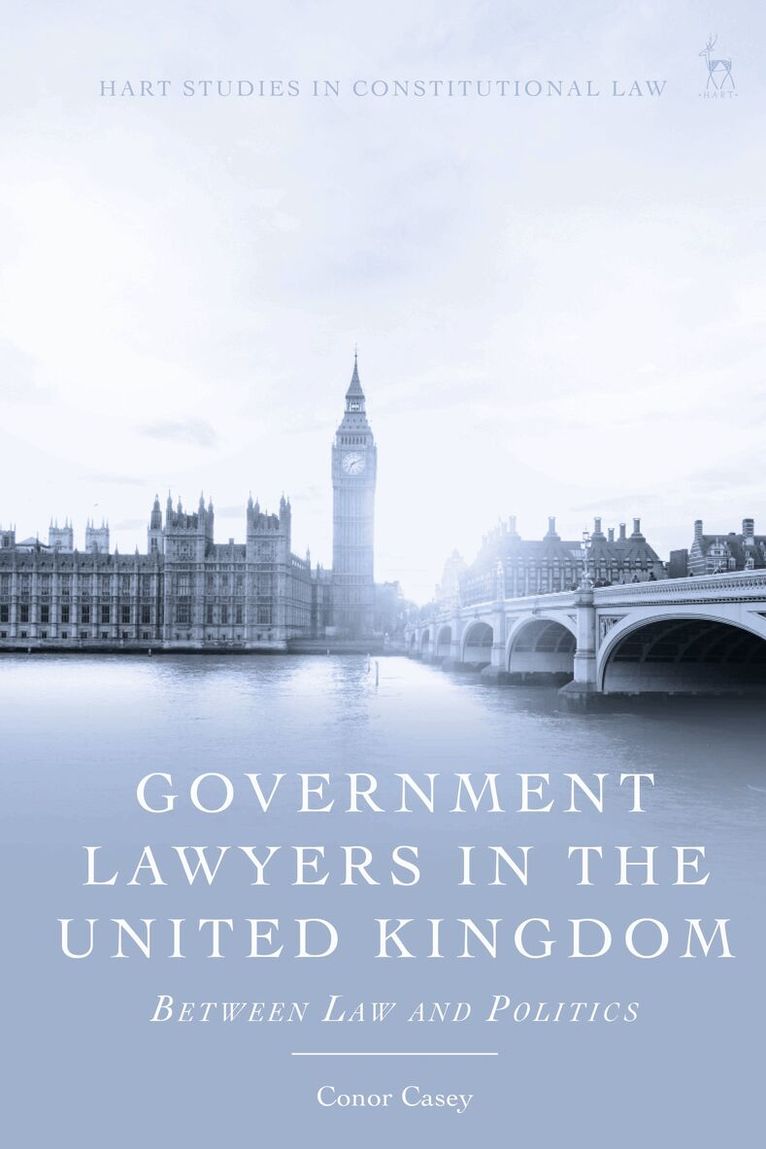
This book details and evaluates the role of government lawyers in the UK’s constitutional order.It traces the multifaceted, influential, but understudied role of government lawyers in the making of law and policy in the UK. It offers an account of the functions of, and relationships between, the different ensemble of actors that provide legal advice and services to the Government. Actors the book studies include the Government Legal Department, Office of Parliamentary Counsel, the Legal Directorate of the Foreign and Commonwealth Office, and the Law Officers. The book also examines the important role played in the provision of legal services by panels of external legal advisors drawn from the Bar, with special attention being given to the First Treasury Counsel. It offers a fine-grained account of the mechanics and processes that structure the work of these actors, including how legal advice is sought and formulated, the standards, principles, and norms that govern how legal risk is assessed and presented to Ministers, and the decision-making hierarchy for determining which legal opinion takes precedence.The book also critically assesses how government lawyers contribute to good governance and play a very valuable role in the constitutional order. The book argues government lawyers help ensure respect for the rule of law is deeply embedded in the policymaking process while also facilitating the executive’s capacity to govern for the public good, by maintaining a deep institutional commitment to providing constructive and solutions-based legal advice.
902 kr
Skickas inom 7-10 vardagar
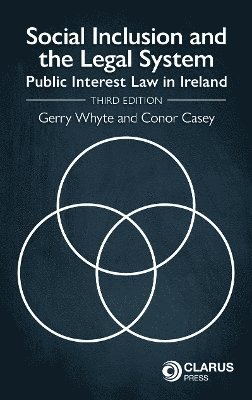
Focusing initially on the use of public interest litigation, the authors defend the constitutional and political legitimacy of such litigation, arguing that one can infer a commitment to social inclusion from the text of the Constitution and that where the political system has failed to address the needs of marginalized groups, the most appropriate agency for policing that constitutional norm is the judiciary. New material in this context explores the state’s possible legal duty to refrain from action that could impoverish an individual, considers how the constitutional right to protection of the person might be used to promote social inclusion and takes account of recent Supreme Court decisions on the interpretation of the Constitution and, in particular, on the recognition of derived constitutional rights.The authors also examine of efficacy of public interest litigation in protecting the interests of certain groups of children, members of the Traveller community, social welfare claimants and litigants seeking free legal aid. A new chapter also evaluates the use of litigation to protect those who are homeless or threatened with homelessness.In the final section of the book, the authors examine the role of the law generally in tackling social exclusion. They examine different models of legal aid and conclude that while the legal system is not capable of generating radical change in society, the strategic model of legal aid is capable of achieving limited but none the less worthwhile social reforms.