
CoppA(c)lia Kahn – författare
793 kr
Läs direkt efter köp
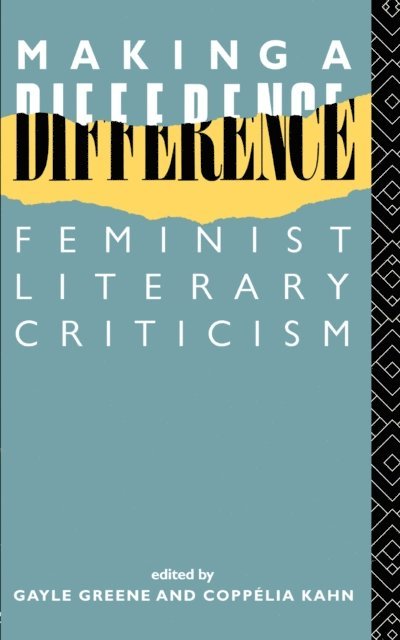
Feminist scholarship employs gender as a fundamental organizing category of human experience, holding two related premises: men and women have different perceptions or experiences in the same contexts, the male perspective having been dominant in fields of knowledge; and that gender is not a natural fact but a social construct, a subject to study in any humanistic discipline. This challenging collection of essays by prominent feminist literary critics offers a comprehensive introduction to modes of critical practice being used to trace the construction of gender in literature. The collection provides an invaluable overview of current femionist critical thinking. Its essays address a wide range of topics: the rerlevance of gender scholarship in the social sciences to literary criticism; the tradition of women''s literature and its relation to the canon; the politics of language; French theories of the feminine; psychoanalysis and feminism; feminist criticism of writing by lesbians and black women; the relationship between female subjectivity, class, and sexuality; feminist readings of the canon.
793 kr
Läs direkt efter köp
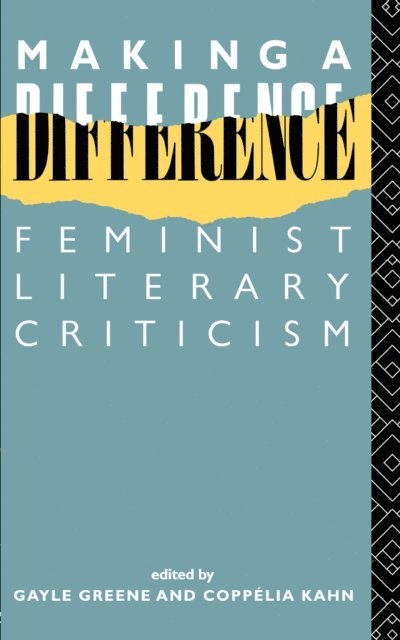
Feminist scholarship employs gender as a fundamental organizing category of human experience, holding two related premises: men and women have different perceptions or experiences in the same contexts, the male perspective having been dominant in fields of knowledge; and that gender is not a natural fact but a social construct, a subject to study in any humanistic discipline. This challenging collection of essays by prominent feminist literary critics offers a comprehensive introduction to modes of critical practice being used to trace the construction of gender in literature. The collection provides an invaluable overview of current femionist critical thinking. Its essays address a wide range of topics: the rerlevance of gender scholarship in the social sciences to literary criticism; the tradition of women''s literature and its relation to the canon; the politics of language; French theories of the feminine; psychoanalysis and feminism; feminist criticism of writing by lesbians and black women; the relationship between female subjectivity, class, and sexuality; feminist readings of the canon.
619 kr
Läs direkt efter köp
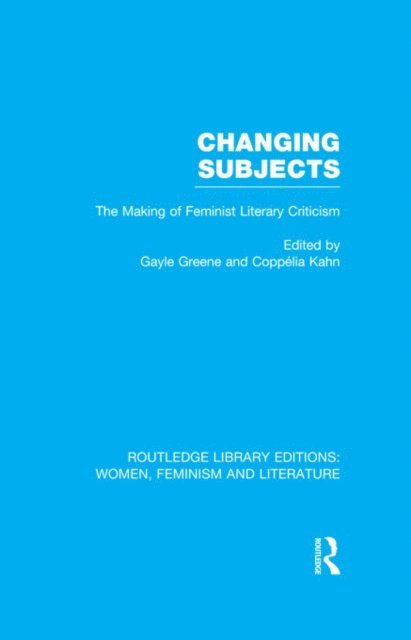
These twenty autobiographical essays by eminent feminist literary critics explore the process by which women scholars became feminist scholars, articulating the connections between the personal and political in their lives and work. They describe the experiences that radicalised women within academia and without, as students, professors, scholars, political activists, women. From these diverse histories a collective history emerges of the development of feminism as an intellectual and social movement, as a heuristic tool, as the redefinition of knowledge and power.
This book presents a history of the field through the eyes of those who have created it. Offering a spectrum of experiences and critical positions that engage with current debates in feminism, it will be valuable to teachers and students of feminist theory, women’s studies, and the history of the women’s movement. It will interest female writers and scholars in all disciplines and anyone who cares about feminism and its future.
619 kr
Läs direkt efter köp
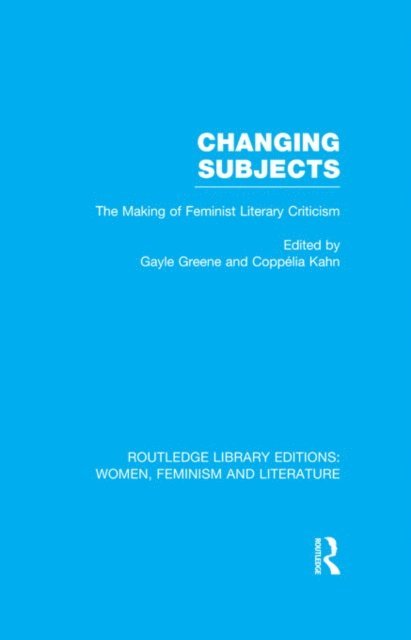
These twenty autobiographical essays by eminent feminist literary critics explore the process by which women scholars became feminist scholars, articulating the connections between the personal and political in their lives and work. They describe the experiences that radicalised women within academia and without, as students, professors, scholars, political activists, women. From these diverse histories a collective history emerges of the development of feminism as an intellectual and social movement, as a heuristic tool, as the redefinition of knowledge and power.
This book presents a history of the field through the eyes of those who have created it. Offering a spectrum of experiences and critical positions that engage with current debates in feminism, it will be valuable to teachers and students of feminist theory, women’s studies, and the history of the women’s movement. It will interest female writers and scholars in all disciplines and anyone who cares about feminism and its future.