Courtney Nimura - Böcker
Visar alla böcker från författaren Courtney Nimura. Handla med fri frakt och snabb leverans.
3 produkter
3 produkter
Del 254 - Proceedings of the British Academy
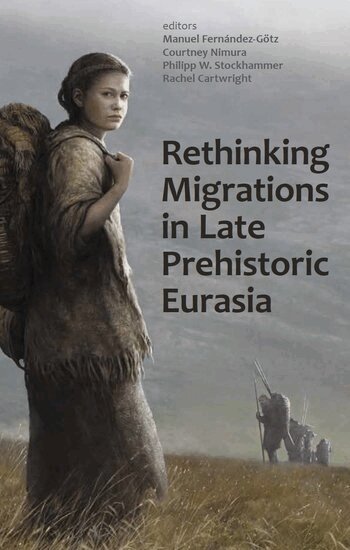
Rethinking Migrations in Late Prehistoric Eurasia
Inbunden, Engelska, 2022
1 424 kr
Skickas inom 7-10 vardagar
Migrations constitute one of the most defining features of human history from the very beginning to the present. In recent years, the increasing application of ancient DNA and isotope studies has been revolutionising our understanding of past population movements, although the interpretation of the results is often still controversial. Rethinking Migrations in Late Prehistoric Eurasia provides an insight into cutting-edge research on late prehistoric migrations in Eurasia, integrating different strands of evidence and emphasising the need for combining bioarchaeological analyses with a solid theoretical and methodological background. The 15 chapters within the book range from the 3rd to the 1st millennia BC, with a geographical scope extending from Atlantic Europe to Central Asia. Case studies include a reassessment of large-scale migrations, but also high-resolution studies from micro-regions. Overall, the results offered in the volume reveal the extraordinary diversity of migrations in ancient Eurasia and the ways in which archaeology can contribute to wider discussions on past and present mobility.
534 kr
Tillfälligt slut
Scandinavia is home to prolific and varied rock art images among which the ship motif is prominent. Because of this, the rock art of Scandinavia has often been interpreted in terms of social ritual, cosmology, and religion associated with the maritime sphere. This comprehensive review is based on the creation of a Scandinavia-wide GIS database for prehistoric rock art and re-examines theoretical approaches and interpretations, in particular with regard to the significance of the ship and its relationship to a maritime landscape Discussion focuses on material agency as a means to understanding the role of rock art within society. Two main theories are developed. The first is that the sea was fundamental to the purpose and meaning of rock art, especially in the Bronze Age and, therefore, that sea-level/shoreline changes would have inspired a renegotiation of the relationship between the rock art sites and their intended purpose. The fundamental question posed is: would such changes to the landscape have affected the purpose and meaning of rock art for the communities that made and used these sites? Various theories from within and outside of archaeology are drawn on to examine environmental change and analyse the rock art, led to second theory: that the purpose of rock art might have been altered to have an effect on the disappearing sea. The general theory that rock art would have been affected by environmental change was discussed in tandem with existing interpretations of the meaning and purpose of rock art. Imbuing rock art with agency means that it could be intertwined in an active web of relations involving maritime landscapes, shoreline displacement and communities. Though created in stone and fixed in time and place, rock art images have propagated belief systems that would have changed over time as they were re-carved, abandoned and used by different groups of inhabitants. In the thousands of years rock art was created, it is likely that shoreline displacement would have inspired a renegotiation of the purpose and meaning of the imagery situated alongside the Scandinavian seas. This journey through a prehistoric Scandinavian landscape will lead us into a world of ancient beliefs and traditions revolving around this extraordinary art form.
658 kr
Skickas
Since early discoveries of so-called Celtic Art during the 19th century, archaeologists have mused on the origins of this major art tradition, which emerged in Europe around 500 BC. Classical influence has often been cited as the main impetus for this new and distinctive way of decorating, but although Classical and Celtic Art share certain motifs, many of the design principles behind the two styles differ fundamentally. Instead, the idea that Celtic Art shares its essential forms and themes of transformation and animism with Iron Age art from across northern Eurasia has recently gained currency, partly thanks to a move away from the study of motifs in prehistoric art and towards considerations of the contexts in which they appear. This volume explores Iron Age art at different scales and specifically considers the long-distance connections, mutual influences and shared ‘ways of seeing’ that link Celtic Art to other art traditions across northern Eurasia. It brings together 13 papers on varied subjects such as animal and human imagery, technologies of production and the design theory behind Iron Age art, balancing pan-Eurasian scale commentary with regional and site scale studies and detailed analyses of individual objects, as well as introductory and summary papers. This multi-scalar approach allows connections to be made across wide geographical areas, whilst maintaining the detail required to carry out sensitive studies of objects.