C.R. Boxer – författare
Visar alla böcker från författaren C.R. Boxer. Handla med fri frakt och snabb leverans.
11 produkter
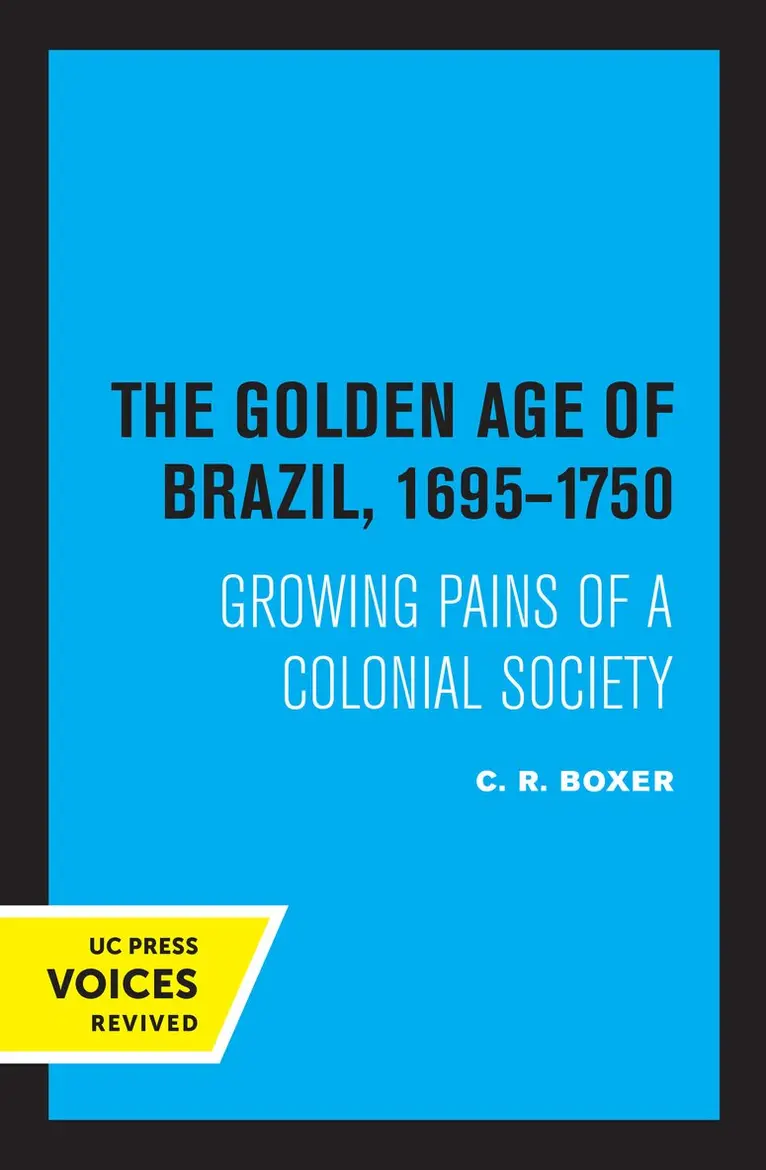
Golden Age of Brazil 1695-1750
Growing Pains of a Colonial Society
Av C.R. Boxer
Häftad, 1962
632 kr
Lägg i varukorg
In The Golden Age of Brazil, 1695–1750, historian C. R. Boxer explores one of the most dynamic yet turbulent periods in the Portuguese empire. With the discovery of vast gold reserves in Minas Gerais, Brazil became a cornerstone of Portugal’s Atlantic world, transforming its economy, society, and …
Golden Age of Brazil 1695-1750
Growing Pains of a Colonial Society
Av C.R. Boxer
E-bok, 1962
446 kr
Lägg i varukorg
This title is part of UC Press's Voices Revived program, which commemorates University of California Press’s mission to seek out and cultivate the brightest minds and give them voice, reach, and impact. Drawing on a backlist dating to 1893, Voices Revived makes high-quality, peer-reviewed …
Golden Age of Brazil 1695-1750
Growing Pains of a Colonial Society
Av C.R. Boxer
Inbunden, 1962
838 kr
Lägg i varukorg
In The Golden Age of Brazil, 1695–1750, historian C. R. Boxer explores one of the most dynamic yet turbulent periods in the Portuguese empire. With the discovery of vast gold reserves in Minas Gerais, Brazil became a cornerstone of Portugal’s Atlantic world, transforming its economy, society, and …
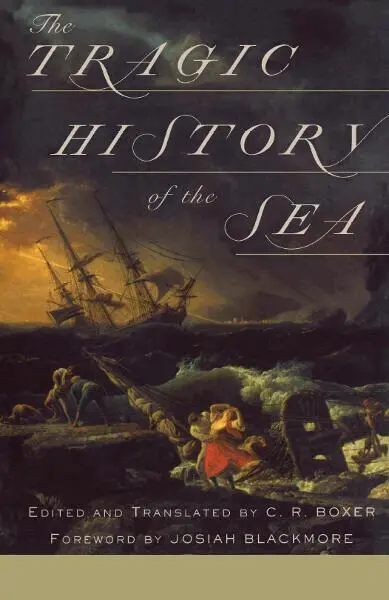
Tragic History of the Sea
Av C.R. Boxer
Häftad, 2001
310 kr
Lägg i varukorg
Compelling stories of shipwreck, adventure, and death on the high seas, now back in print.The sixteenth and seventeenth centuries were a time of great colonial expansion, marked by a mercantile frenzy of ships carrying merchants, aristocrats, missionaries, sailors, Inquisitors, botanists, and …
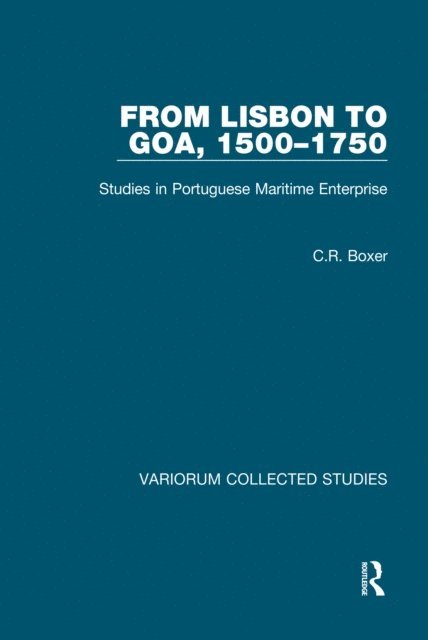
From Lisbon to Goa, 1500-1750
Studies in Portuguese Maritime Enterprise
Av C.R. Boxer
Inbunden, 1984
2200 kr
Lägg i varukorg
These articles deal with the functioning, and malfunctioning, of the Carreira da India, the round voyages made between Portugal and its possessions in India that began after Vasco da Gama had opened up the route round the Cape of Good Hope in 1497-99. On such voyages was the Portuguese colonial …
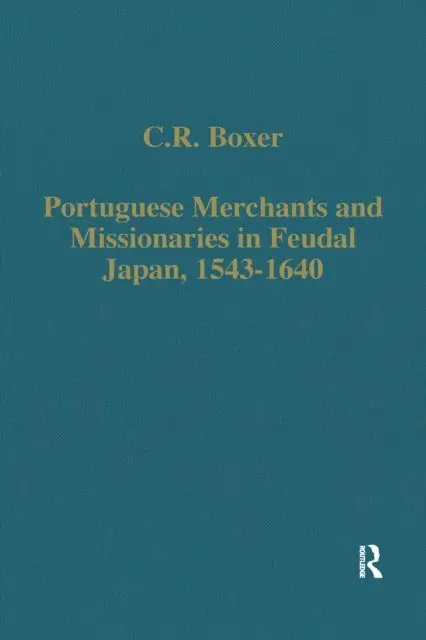
Portuguese Merchants and Missionaries in Feudal Japan, 1543-1640
Av C.R. Boxer
Inbunden, 1986
2590 kr
Lägg i varukorg
The relationship between God and Mammon forms a recurring theme in this volume, the third collection of Professor Boxer's articles to be published by Variorum. The previous two traced the Portuguese expansion through the Indian Ocean to South-East Asia, and in this one he moves on further, to the …
Dutch Merchants and Mariners in Asia, 1602–1795
Av C.R. Boxer
Inbunden, 1988
2590 kr
Lägg i varukorg
Although later than the Portuguese in reaching the coasts of Asia, the Dutch became in the 17th and 18th centuries the most important of the European nations engaged in the Asian trade - in terms both of the quantity and value of the cargoes shipped, and the number of ports involved. In those …
From Lisbon to Goa, 1500-1750
Studies in Portuguese Maritime Enterprise
Av C.R. Boxer
E-bok, 2024
1052 kr
Lägg i varukorg
These articles deal with the functioning, and malfunctioning, of the Carreira da India, the round voyages made between Portugal and its possessions in India that began after Vasco da Gama had opened up the route round the Cape of Good Hope in 1497-99. On such voyages was the Portuguese colonial …
Dutch Merchants and Mariners in Asia, 1602-1795
Av C.R. Boxer
E-bok, 2024
1030 kr
Lägg i varukorg
Although later than the Portuguese in reaching the coasts of Asia, the Dutch became in the 17th and 18th centuries the most important of the European nations engaged in the Asian trade - in terms both of the quantity and value of the cargoes shipped, and the number of ports involved. In those …
Portuguese Merchants and Missionaries in Feudal Japan, 1543-1640
Av C.R. Boxer
E-bok, 2024
1022 kr
Lägg i varukorg
The relationship between God and Mammon forms a recurring theme in this volume, the third collection of Professor Boxer''s articles to be published by Variorum. The previous two traced the Portuguese expansion through the Indian Ocean to South-East Asia, and in this one he moves on further, to the …
From Lisbon to Goa, 1500-1750
Studies in Portuguese Maritime Enterprise
Av C.R. Boxer
E-bok, 2024
1022 kr
Lägg i varukorg
These articles deal with the functioning, and malfunctioning, of the Carreira da India, the round voyages made between Portugal and its possessions in India that began after Vasco da Gama had opened up the route round the Cape of Good Hope in 1497-99. On such voyages was the Portuguese colonial …