Craig Carlyle Etcheson - Böcker
Visar alla böcker från författaren Craig Carlyle Etcheson. Handla med fri frakt och snabb leverans.
2 produkter
2 produkter
695 kr
Skickas inom 10-15 vardagar
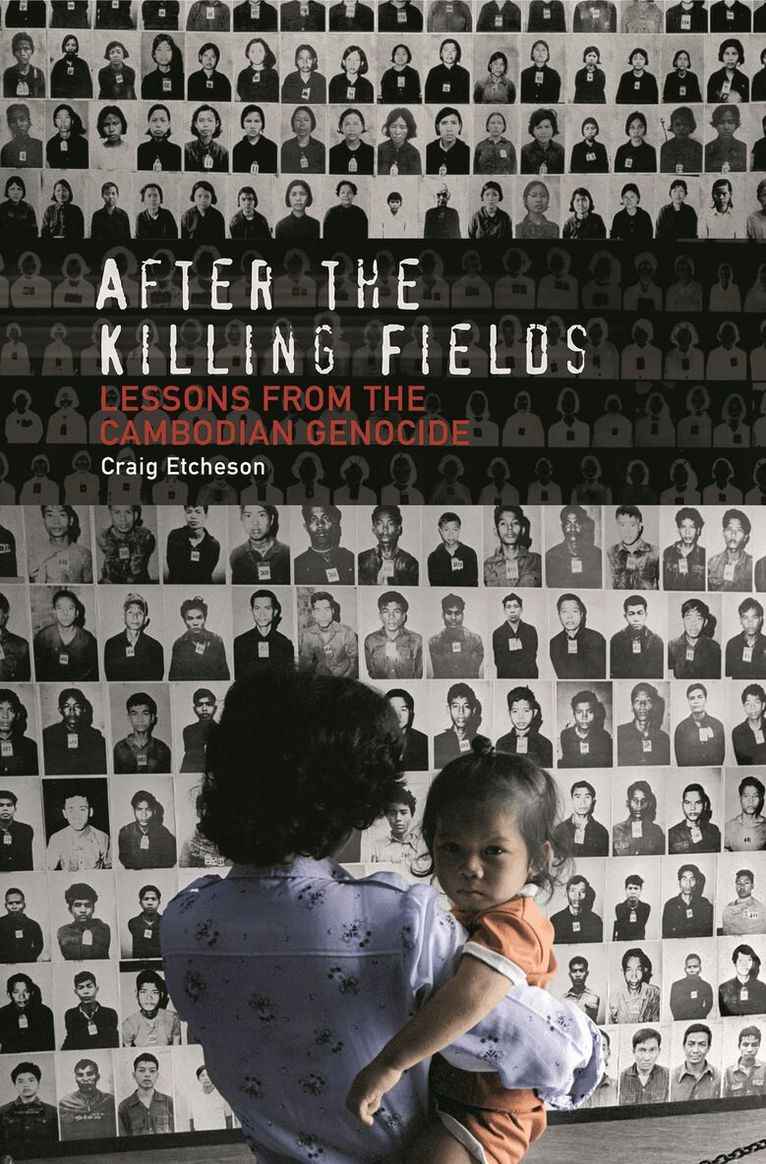
For 25 years, Cambodia's Khmer Rouge have avoided responsibility for their crimes against humanity. For 30 long years, from the late 1960s to the late 1990s, the Cambodian people suffered from a war that has no name. Arguing that this series of hostilities, which included both civil and external war, amounted to one long conflict—The Thirty Years War—Craig Etcheson demonstrates that there was one constant, churning presence that drove that conflict: the Khmer Rouge. New findings demonstrate that the death toll was approximately 2.2 million people—about half a million more than commonly believed. Detailing the struggle of coming to terms with what happened in Cambodia, Etcheson concludes that real justice is not merely elusive but may, in fact, be impossible for crimes on the scale of genocide.This book details the work of a unique partnership, Yale University's Cambodian Genocide Program, which laid the evidentiary basis for the forthcoming Khmer Rouge tribunal and also played a key role in the international advocacy necessary for the tribunal's creation. It presents the information collected through the Mass Grave Mapping Project of the Documentation Center of Cambodia and reveals that the pattern of killing was relatively uniform throughout the country. Despite regular denial of knowledge of the mass killing among the surviving leadership of the Khmer Rouge, Etcheson demonstrates that they were not only aware of it, but that they personally managed and directed the killing.
1 009 kr
Skickas inom 10-15 vardagar
For most of the twentieth century, social scientists have attempted to understand the causes of military competition. From this struggle has evolved the Richardson Tradition of Arms Race Analysis, a distinct body of scientific literature that uses a variety of mathematical techniques and theoretical ideas to solve the puzzle of what drives military interaction among nations. Etcheson explores this intellectual journey and projects the paths along which the Richardson Tradition must go if it is to obtain its objective: understanding and control of potentially unnecessary organized social violence.Arms Race Theory examines thoroughly the literature of the Richardson Tradition, from the writings of Lewis Fry Richardson through the most recent attempts of his students to resolve the fundamental questions about interaction in arms races. Etcheson documents the application of the procedures of positive physical science to social problems and identifies the reasons why Richardson and his students have been frustrated in their efforts. According to the author, students of the Richardson Tradition adhere to an atomistic and reductionist perspective that denies the relevance of human values and intentions. He focuses on the idea of strategy as a gateway to an understanding of the social causes of arms accumulation. Etcheson prepares the way for a new phase in the Richardson Tradition by identifying new theoretical foci and methodological techniques. His analysis, coupled with the most comprehensive bibliography of the literature of the Richardson Tradition currently available, is a significant contribution to the growing body of scholarship in peace research and international relations theory.