Curie Virág - Böcker
Visar alla böcker från författaren Curie Virág. Handla med fri frakt och snabb leverans.
3 produkter
3 produkter
1 391 kr
Skickas inom 5-8 vardagar
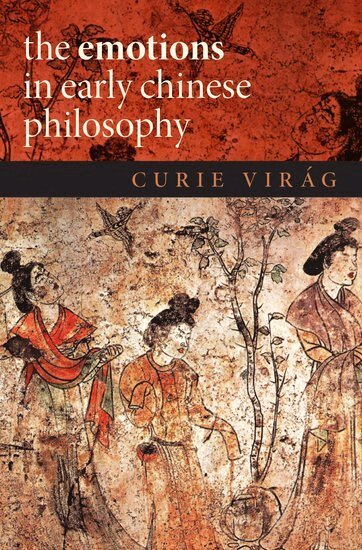
In China, the debate over the moral status of emotions began around the 4th century BCE, when early philosophers first began to invoke psychological categories such as the mind (xin), human nature (xing), and emotions (qing) to explain the sources of ethical authority and the foundations of our knowledge about the world. Although some thinkers during this period proposed that human emotions and desires were temporary physiological disturbances in the mind caused by the impact of things in the world, this was not the account that would eventually gain currency. The consensus among those thinkers who would come to be recognized as the foundational figures of the Confucian and Daoist philosophical traditions was that the emotions represented the underlying, dispositional constitution of a person, and that they embodied the patterned workings of the cosmos itself. This book sets out to explain why the emotions were such a central preoccupation among early thinkers, and what was at stake in the entire discussion, situating the entire debate within developments in thinking about the self, the cosmos, and the political order. It shows that the mainstream account of emotions as patterned reality emerged as part of a major conceptual shift towards the recognition of natural reality as intelligible, orderly and coherent. And that the idea that all human beings possessed a shared, underlying, dispositional nature, was itself one of the consequences of this idea. The mainstream account of emotions thus played a crucial role in summoning the very idea of the human being as a universal category -- an idea that would be of particular interest during the subsequent period of empire -- and in establishing the cognitive and practical agency of human beings.
In the Mind, in the Body, in the World
Emotions in Early China and Ancient Greece
Inbunden, Engelska, 2024
1 064 kr
Skickas inom 5-8 vardagar
This volume of newly commissioned essays marks a collaborative effort among scholars of ancient Greece and early China to investigate discourses of emotions in ancient philosophy, medicine, and literature from c. 5th century BCE-2nd century CE. The aim is to bring scholars working in the two ancient traditions together to explore ways in which cross-cultural and cross-disciplinary investigation might be deployed to advance our understanding of the emotions in these ancient societies, and ultimately, to confront and challenge certain long-standing modern approaches to emotions. The volume not only highlights the diverse ways in which emotions have been portrayed and discussed in different geographical and cultural contexts, but also interrogates the concepts through which writers and thinkers in the past experienced and thought about the emotions. The book takes emotions not as natural givens, but as aspects of human experience and conceptualization whose significance can be properly assessed only within the practices, discourses, and institutions of particular societies. The volume addresses a wide range of topics, such as equanimity and impassivity in Daoism and Stoic thought; therapies of emotions in Greco-Roman and early Chinese medicine and philosophy; the cultivation of emotions in relation to perception, attention, and appraisal in Mengzi and the Stoics; the workings of emotion in Aristotle's moral psychology; models of embodiment in canonical ancient medical texts; the ethics and politics of respect, fear, and awe across time, space and genre; and the social function and expression of contempt in Greek literature. In fostering engagement across traditions and disciplines, the volume seeks to make substantive contributions to existing research in the history and philosophy of emotions, as well as the cross-cultural and global study of emotions.
2 682 kr
Kommande
This book brings together scholars working in eleven different classical traditions – Greek, Chinese, Latin, Hebrew, Sanskrit, Arabic, Pali, Hittite, Egyptian, Japanese and Sumerian – to investigate how major texts in these traditions conceptualized, mapped and categorized the sentiments, attitudes and states we think of as emotion. This volume is distinctive in its focus on foundational questions concerning the categorization and conceptualization of emotion. It is also unique in its degree of collaboration among scholars working in different disciplines and in a vast range of ancient traditions. This book aims to build on the resources of these traditions to make an intervention in how we might think about emotions today.