Cydney Alexis - Böcker
Visar alla böcker från författaren Cydney Alexis. Handla med fri frakt och snabb leverans.
3 produkter
3 produkter
605 kr
Kommande
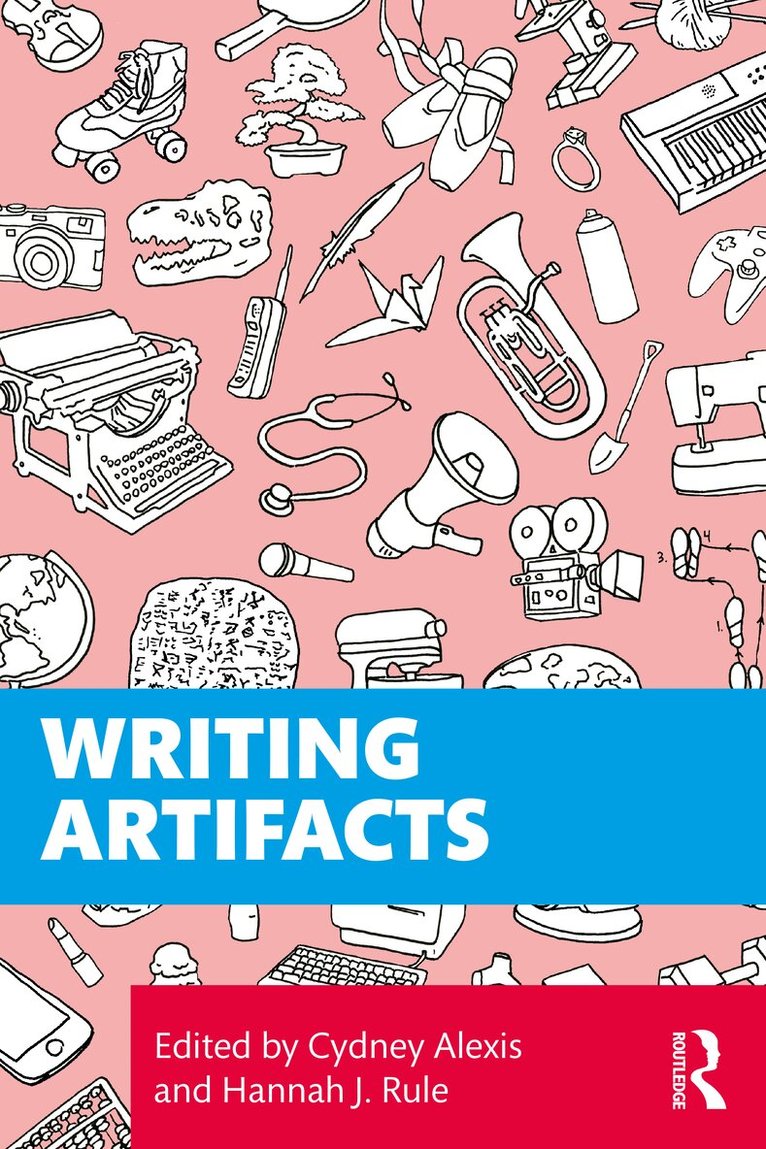
This book is an interdisciplinary collection of concise investigations into everyday artifacts that matter to writers and writing.With the collection’s 31 contributors and through the lens of material culture studies, the editors make a case that the study of writing is the study of artifacts. Each chapter centers on a distinct artifact, including an 1899 course notebook, the delete key, the graffiti spray can, indigenous paper, the Ouija board, and a retirement home noticeboard, as a means of exploring what each says about writing culture and writing lives. Together, the chapters show that, even if at first we don’t understand how or why, the artifacts that populate our lives deserve close attention. The close attention paid to artifacts in this book demonstrates both the particularity of possessions (this Ouija board or my delete key) and their universality, as so many people’s experiences with writing depend on similar possessions. In this way, each represents a moment in writing’s story and timeline, while also living in many stories and timelines, begging for artifactual study. While readers will easily recognize some artifacts in this book as writing artifacts, others illustrate how ‘writing’ must be understood expansively, to capture the range of symbolic human expression and mirror the complex ways writing is experienced in people’s lives, beyond the moment of inscription.An accessible, cross-disciplinary archive of contemporary and historical writing artifacts that matter to writing practice, this book will be of interest to writers of all kinds, as well as students and scholars of writing in fields including Writing and Literacy Studies, Material and Popular Culture, Rhetoric, History, and Communication Studies.
2 176 kr
Kommande
This book is an interdisciplinary collection of concise investigations into everyday artifacts that matter to writers and writing.With the collection’s 31 contributors and through the lens of material culture studies, the editors make a case that the study of writing is the study of artifacts. Each chapter centers on a distinct artifact, including an 1899 course notebook, the delete key, the graffiti spray can, indigenous paper, the Ouija board, and a retirement home noticeboard, as a means of exploring what each says about writing culture and writing lives. Together, the chapters show that, even if at first we don’t understand how or why, the artifacts that populate our lives deserve close attention. The close attention paid to artifacts in this book demonstrates both the particularity of possessions (this Ouija board or my delete key) and their universality, as so many people’s experiences with writing depend on similar possessions. In this way, each represents a moment in writing’s story and timeline, while also living in many stories and timelines, begging for artifactual study. While readers will easily recognize some artifacts in this book as writing artifacts, others illustrate how ‘writing’ must be understood expansively, to capture the range of symbolic human expression and mirror the complex ways writing is experienced in people’s lives, beyond the moment of inscription.An accessible, cross-disciplinary archive of contemporary and historical writing artifacts that matter to writing practice, this book will be of interest to writers of all kinds, as well as students and scholars of writing in fields including Writing and Literacy Studies, Material and Popular Culture, Rhetoric, History, and Communication Studies.
461 kr
Skickas inom 5-8 vardagar
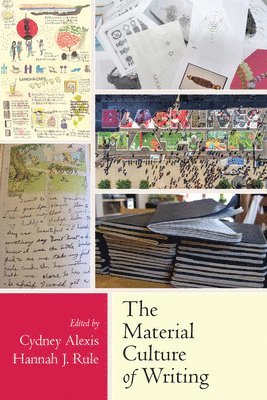
The Material Culture of Writing opens up avenues for understanding writing through scholarship in material culture studies. Contributors to this volume each interrogate an object, set of objects, or writing environment to reveal the sociomaterial contexts from which writing emerges. The artifacts studied are both contemporary and historical, including ink, a Victorian hotel visitors’ book, Moleskine notebooks, museum conservators’ files, an early twentieth-century baby book, and a college campus makerspace. Close study of such artifacts not only enriches understanding of what counts as writing but also offers up the potential for rich current and historical inquiry into writing artifacts and environments. The collection features scholars across the disciplines—such as art, art history, English, museum studies, and writing studies—who work as teachers, historians, museum curators/conservators, and faculty. Each chapter features methods and questions from contributors’ own disciplines while at the same time speaking to writing studies’ interest in writers, writing identity, and writing practice. The authors in this volume also work with a variety of methodologies, including literary analysis, archival research, and qualitative research, providing models for the types of research possible using a material culture studies framework. The collection is organized into three sections—Writing Identity, Writing Work, Writing Genre—each with a contextualizing introduction from the editors that introduces the chapters themselves and imagines possible directions for writing studies research facilitated by material culture studies. The Material Culture of Writing serves as an accessible introduction to work in material culture studies for writing studies scholars, graduate students, and undergraduates, especially as it makes a distinctive contribution to writing studies in its material culture studies approach. Because of the interdisciplinarity of material culture studies and this volume’s contributors, this collection will appeal to a wide range of scholars and readers, including those interested in writing studies, the history of the book, print culture, genre studies, archival methods, and authorship studies. Contributors: Cydney Alexis, Debby Andrews, Diane Ehrenpreis, Keri Epps, Desirée Henderson, Kevin James, Jenny Krichevsky, Anne Mackay, Emilie Merrigan, Laura R. Micciche, Hannah J. Rule, Kate Smith