D. Lamb - Böcker
Visar alla böcker från författaren D. Lamb. Handla med fri frakt och snabb leverans.
3 produkter
3 produkter
554 kr
Skickas inom 10-15 vardagar
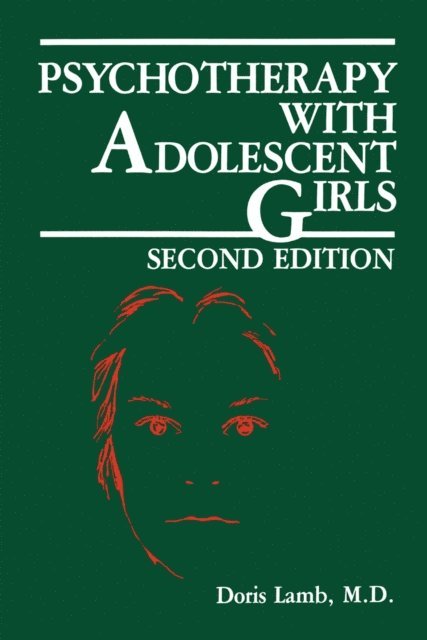
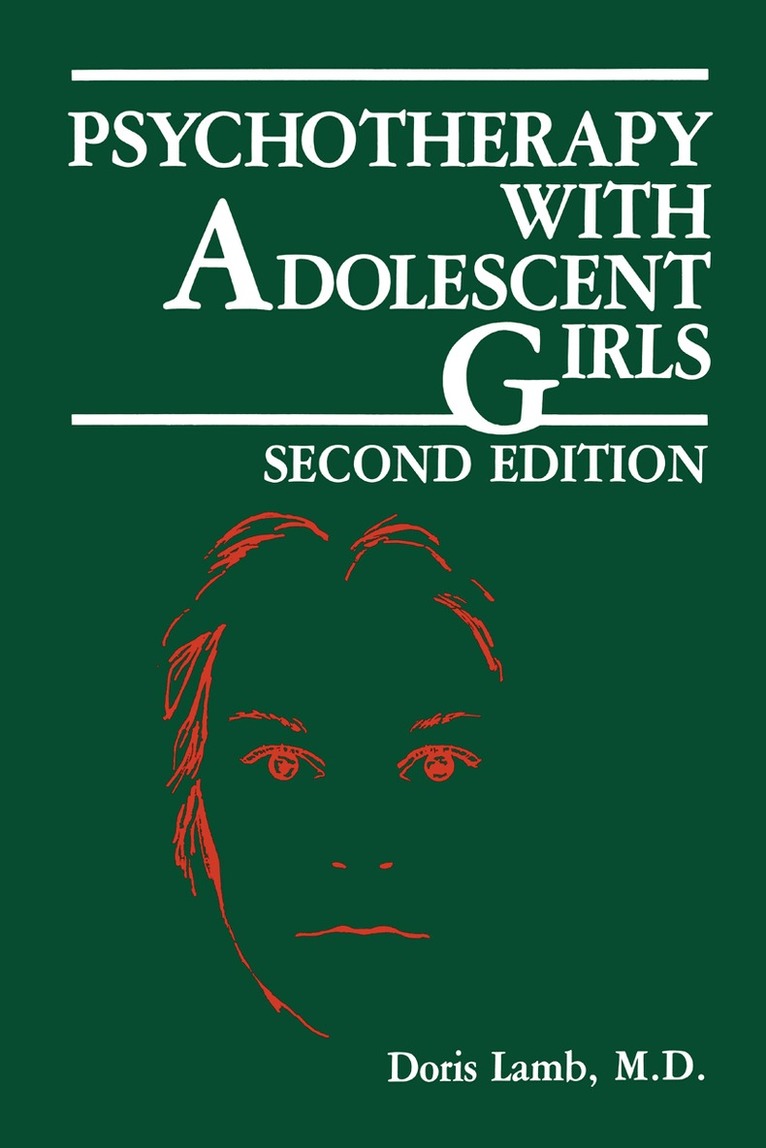
When I was getting my medical and psychiatric training in the late 1950s and early 1960s, the model of normal and deviant adolescent development was the white male. This was not surprising, since for every clinical or psychological study of adolescent girls done during the past 2 decades, there were seven studies on adolescent males. This tremendous discrepancy in actual clinical and research data between male and female adolescents led to the following myths: (1) Female adolescents are different only biologically from their male peers; they have similar psychosocial problems; (2) Adolescent girls have not been studied because their problems are not worth studying; (3) Studying adolescent girls might be dangerous to either the patient or therapist, or to both. In relation to the third myth, male psychotherapists were told that they should not treat female adolescent patients because erotic inter play could develop, which would be harmful to the patient and per haps impossible to resolve. Many clinics in the United States had a rule that young adolescent girls could not be treated by male therapists. It was thus difficult for girls to obtain treatment-for most therapists were males. It also intensified the feelings among parents, teachers, v vi Foreword community leaders, and the girls themselves that perhaps female adolescents were not worth treating.
1 069 kr
Skickas inom 10-15 vardagar
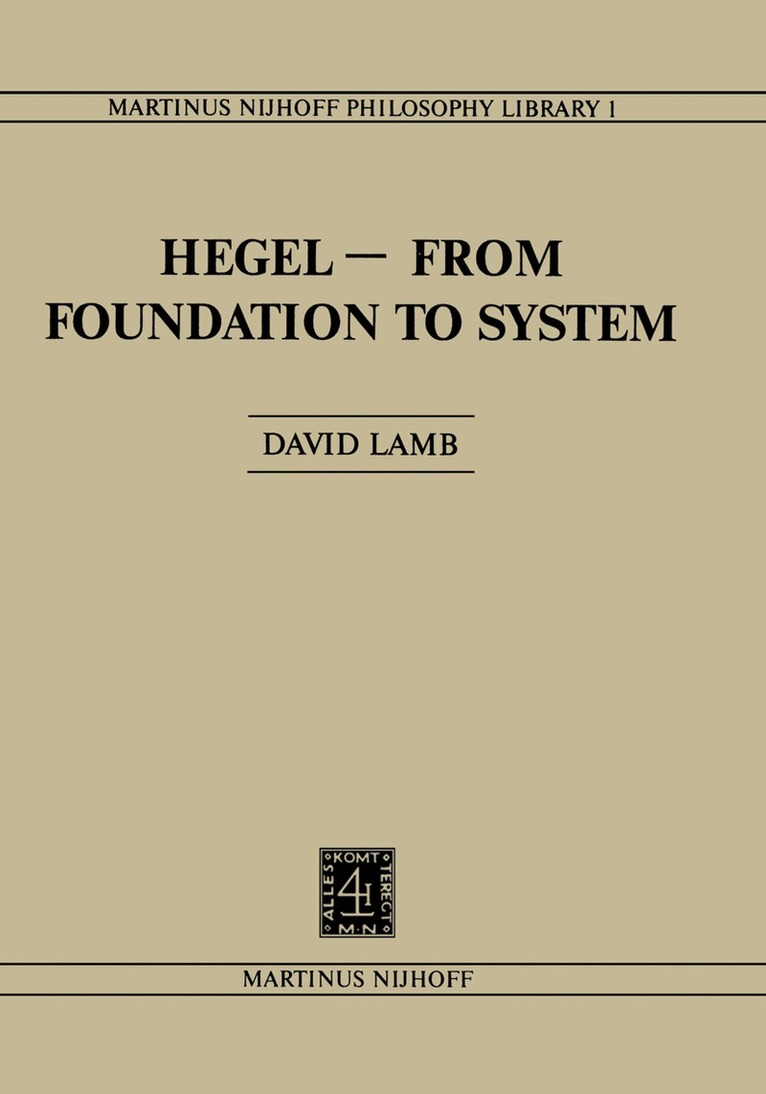
One of the guiding thoughts throughout this work is that G. W. F. Hegel is the philosopher of the modern age, that subsequent phil osophers, whether or not they have read his works, must take their stand in relation to Hegel. My purpose is not only to present Hegel, but to show that his influence has been felt for some time, even though his presence has not been explicitly acknowledged. In spite of a recent revival in Heglian scholarship, the history of philosophy in the English-speaking world is generally obscured by a period of darkness between Kant and the early inquiries of Russell and Frege. A place is assigned to Mill and Bentham, but even today very few Anglo-Saxon philosophers would be prepared to recognise Marx as a philosopher, although it is widely held that Marx was in some way influenced by Hegel, which is probably a good reason for not paying too much attention to the latter. At best, an understand ing of Hegel is relevant to an understanding of Marx, but it is not considered that Hegel made a significant contribution to the main stream of Western philosophy from Descartes onwards, and it is assumed that he is of little relevance to the 'linguistic revolution' pioneered by Wittgenstein, Ryle, and Austin.
1 069 kr
Skickas inom 10-15 vardagar
One of the guiding thoughts throughout this work is that G. W. F. Hegel is the philosopher of the modern age, that subsequent phil osophers, whether or not they have read his works, must take their stand in relation to Hegel. My purpose is not only to present Hegel, but to show that his influence has been felt for some time, even though his presence has not been explicitly acknowledged. In spite of a recent revival in Heglian scholarship, the history of philosophy in the English-speaking world is generally obscured by a period of darkness between Kant and the early inquiries of Russell and Frege. A place is assigned to Mill and Bentham, but even today very few Anglo-Saxon philosophers would be prepared to recognise Marx as a philosopher, although it is widely held that Marx was in some way influenced by Hegel, which is probably a good reason for not paying too much attention to the latter. At best, an understand ing of Hegel is relevant to an understanding of Marx, but it is not considered that Hegel made a significant contribution to the main stream of Western philosophy from Descartes onwards, and it is assumed that he is of little relevance to the 'linguistic revolution' pioneered by Wittgenstein, Ryle, and Austin.