D. Prasad – författare
Visar alla böcker från författaren D. Prasad. Handla med fri frakt och snabb leverans.
5 produkter
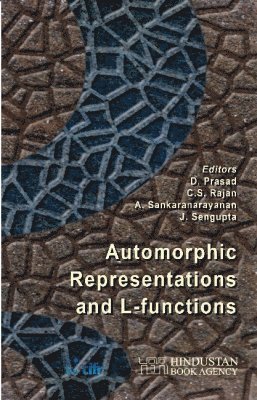
Automorphic Representations and L-functions
Av D. Prasad, C. S. Rajan m. fl.
Inbunden, 2013
1687 kr
Lägg i varukorg
This volume contains the proceedings of the International Colloquium on Representations and L-functions organized by the Tata Institute of Fundamental Research in January 2012, one of a series of colloquia that began in 1956. It covers a wide spectrum of mathematics, including classifications of …
Water Quality Management for Sustainable Agriculture
Av D. Prasad, Satya Kumar
E-bok, 2016
3833 kr
Lägg i varukorg
The book traces the links between nutrient, pesticide, and irrigation water use in agricultural production and the effects on water quality and pinpoints the most promising ways to improve both input management and water qualit>c This publication seeks to contribute to exploring current issues in …
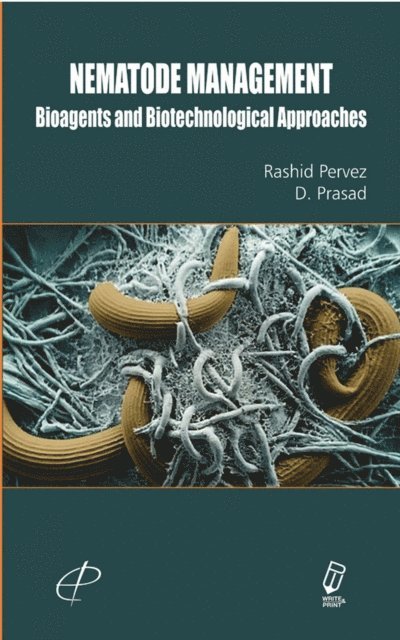
Nematode Management Bioagents And Biotechnological Approaches
E-bok, 2019
3819 kr
Lägg i varukorg
The book Nematode Management: Bioagents and Biotechnological Approaches carries 16 chapters viz., Biology of plant parasitic nematodes and its importance in management; Plant resistance in nematode management; Resistant genes in vegetables infesting nematode management; Precision farming …
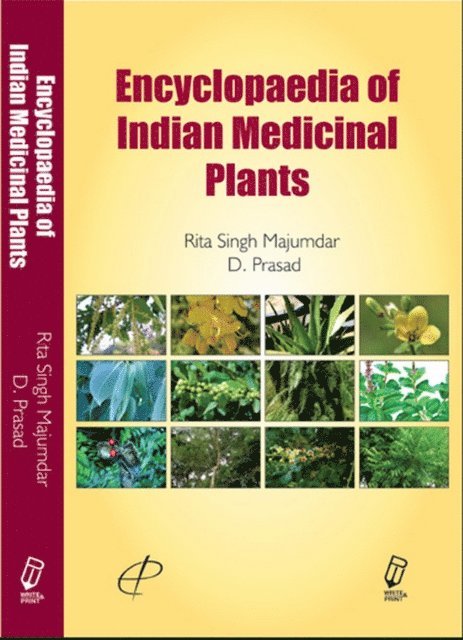
Encyclopaedia of Indian Medicinal Plants
Av D. Prasad, Rita Singh Majumdar
E-bok, 2019
13749 kr
Lägg i varukorg
India is a country known for ancient scripts, the number system, invention of zero and vedas. Medicines in india are used by about 60 per cent of the world's population. These are not only used for primary health care not just in rural areas in developing countries, but also in developed countries …