Dale Purves - Böcker
Visar alla böcker från författaren Dale Purves. Handla med fri frakt och snabb leverans.
13 produkter
13 produkter
719 kr
Skickas inom 10-15 vardagar
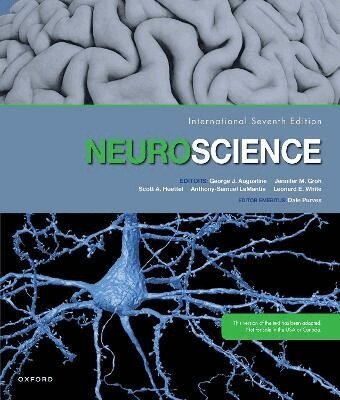
For over 25 years, Neuroscience has been the most comprehensive and clearly written neuroscience textbook on the market. This level of excellence continues in the Seventh Edition, with a balance of animal, human, and clinical studies that discuss the dynamic field of neuroscience from cellular signaling to cognitive function. New learning objectives, and more concise sections make the content even more accessible than before.Neuroscience provides a bridge between the undergraduate and medical school worlds. It brings the relevance of neuroscience to both those exploring careers in the field as undergraduates and those developing core neuroscience understanding for medical school. It accomplishes this by presenting a balance of animal, human, and clinical studies that discuss the dynamic field of neuroscience from cellular signaling to cognitive function.Neuroscience, Seventh Edition, is available with Oxford Insight. Oxford Insight pairs best-in-class OUP content with curated media resources, activities, and gradable assessment, in a guided learning environment that delivers performance analytics, drives student engagement, and improves student outcomes.
850 kr
Skickas inom 5-8 vardagar
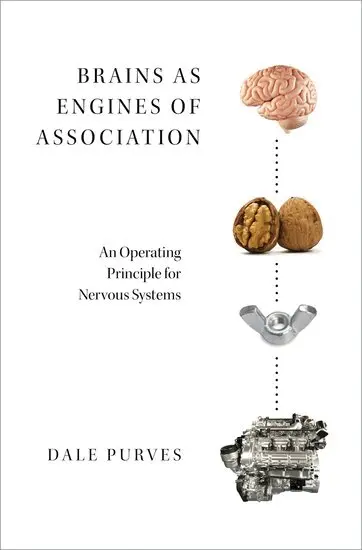
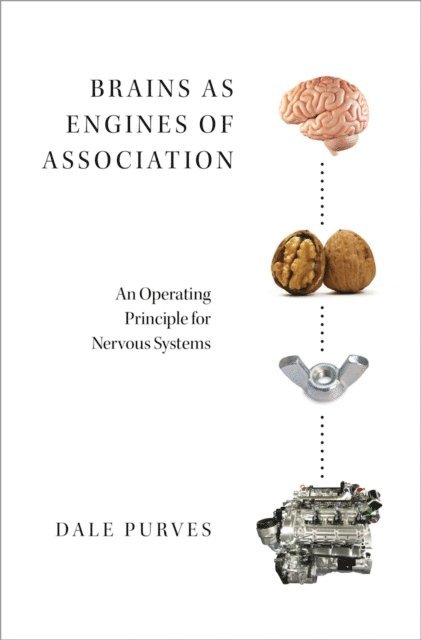
Brains as Engines of Association tackles a fundamental question in neuroscience: what is the operating principle of the human brain? While a similar question has been asked and answered for virtually every other human organ during the last few centuries, how the brain operates has remained a central challenge in biology. Based on evidence derived from vision, audition, speech and music--much of it based on the author's own work over the last twenty years--Brains as Engines of Association argues that brains operate wholly on the basis of trial and error experience, encoded in neural circuitry over evolutionary and individual time. This concept of neural function runs counter to current concepts that view the brain as a computing machine, and research programs based on the idea that the only way to answer such questions is by reconstructing the connectivity of brains in their entirety. This view also implies that the best way to understand the details of brain function is to recapitulate their history using artificial neural networks. While this viewpoint has received support in the last few years from work showing that computers can win complex games, the brain plays a much more complex game--the "game" of biological survival--which Purves concludes is based on trial-and-error experience.
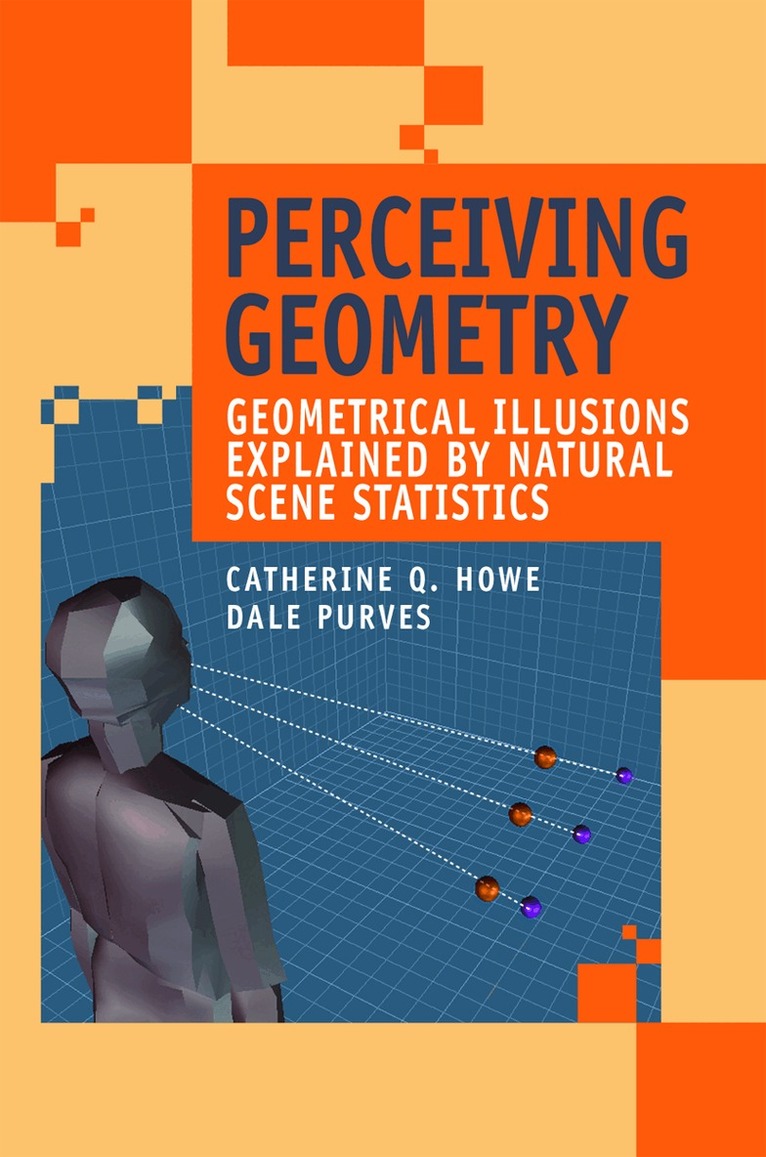
Perceiving Geometry
Geometrical Illusions Explained by Natural Scene Statistics
Inbunden, Engelska, 2005
1 095 kr
Skickas inom 10-15 vardagar
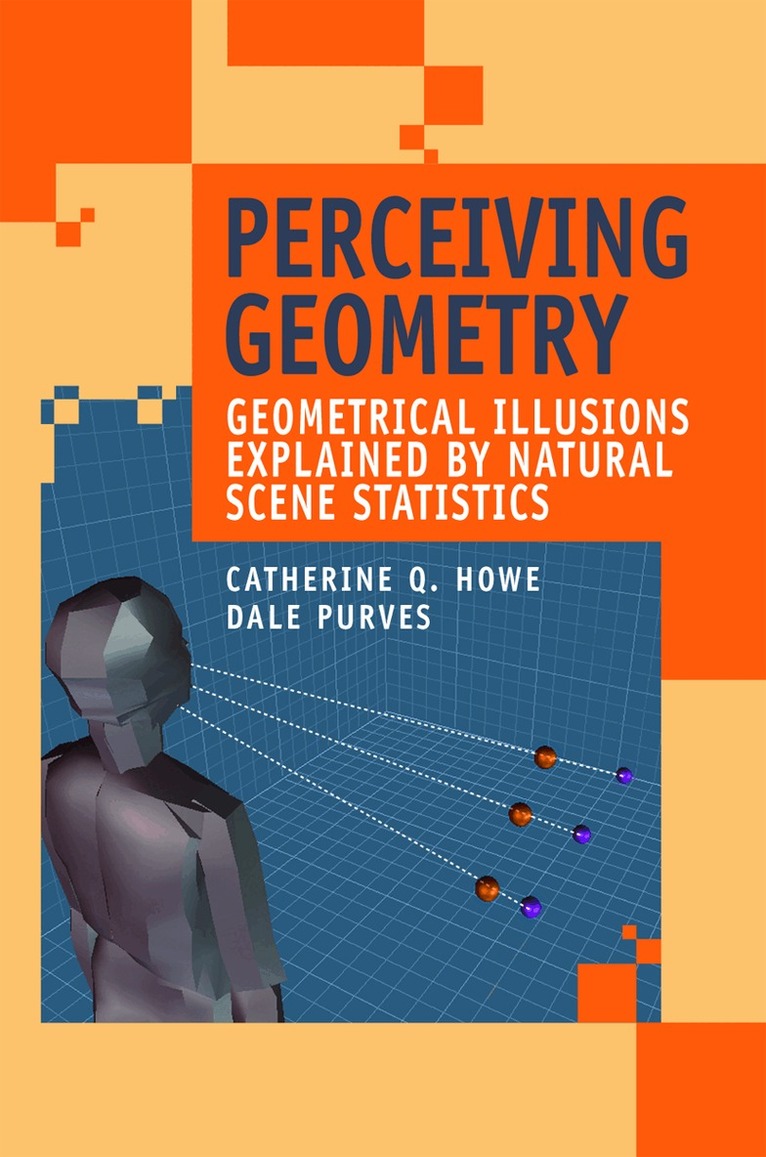
During the last few centuries, natural philosophers, and more recently vision scientists, have recognized that a fundamental problem in biological vision is that the sources underlying visual stimuli are unknowable in any direct sense, because of the inherent ambiguity of the stimuli that impinge on sensory receptors. The light that reaches the eye from any scene conflates the contributions of reflectance, illumination, transmittance, and subsidiary factors that affect these primary physical parameters. Spatial properties such as the size, distance and orientation of physical objects are also conflated in light stimuli. As a result, the provenance of light reaching the eye at any moment is uncertain. This quandary is referred to as the inverse optics problem. This book considers the evidence that the human visual system solves this problem by incorporating past human experience of what retinal images have typically corresponded to in the real world.
442 kr
Skickas inom 7-10 vardagar
Understanding the role of neural activity in the development of the brain has been a major concern of many modern neurobiologists. The reason is plain enough: since the world influences the brain by means of action potentials and synaptic potentials, activity must be the chief cause of the neural changes wrought by experience. This 1994 volume explores the hypothesis that neural activity generated by experience modulates the ongoing growth of the brain during maturation, thus sculpting in each of us a unique nervous system according to the events of our early life. Brain growth is considered at a macroscopic level by examining brain maps and their modular substructure, and at a cellular level by investigating the neuronal interactions that influence the formation and maintenance of these structures. The ways that experience influences the maturation of the brain at both macroscopic and microscopic levels are described, and the conventional wisdom is re-examined.
384 kr
Skickas inom 10-15 vardagar
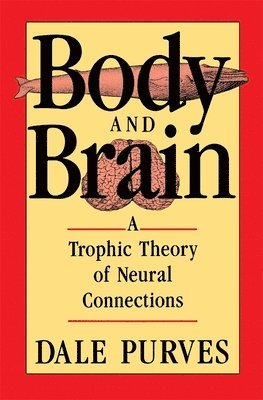
The major goal of developmental neurobiology is to understand how the nervous system is put together. A central theme that has emerged from research in this field over the last several decades is the crucial role of trophic interactions in neural assembly, and indeed throughout an animal's life. Trophic—which means nutritive—refers to long-term interdependencies between nerve cells and the cells they innervate.The theory of trophic effects presented in this book offers an explanation of how the vertebrate nervous system is related to—and regulated by—the body it serves. The theory rationalizes the nervous system's accommodation, throughout life, to the changing size and form of the body it tenants, indicating the way connections between nerve cells change in response to stimuli as diverse as growth, injury, experience, and natural selection.Dale Purves, a leading neurobiologist best known for his work on the formation and maintenance of synaptic connections, presents this theory within the historical setting of earlier ideas about neural organization—from Weiss's theory of functional reorganization to the chemoaffinity theory championed by Sperry. In addition to illuminating eighty years of work on trophic interactions, this book asks its own compelling questions: Are trophic interactions characteristic of all animals or only of those with complex nervous systems? Are trophic interactions related to learning? What does the trophic theory of neural connections imply about the currently fashionable view that the nervous system operates according to Darwinian principles?Purves lays the theoretical foundation for practical exploration of trophic interactions as they apply to neural connections, a pursuit that will help us understand how our own nervous systems generate change. The ideas in this book not only enrich neurobiology but also convey the profound relevance of neuroscience to other fields of life science.
290 kr
Skickas inom 7-10 vardagar
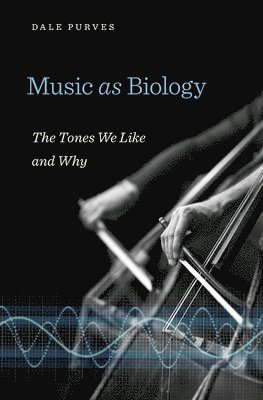
The universality of musical tones has long fascinated philosophers, scientists, musicians, and ordinary listeners. Why do human beings worldwide find some tone combinations consonant and others dissonant? Why do we make music using only a small number of scales out of the billions that are possible? Why do differently organized scales elicit different emotions? Why are there so few notes in scales? In Music as Biology, Dale Purves argues that biology offers answers to these and other questions on which conventional music theory is silent.When people and animals vocalize, they generate tonal sounds—periodic pressure changes at the ear which, when combined, can be heard as melodies and harmonies. Human beings have evolved a sense of tonality, Purves explains, because of the behavioral advantages that arise from recognizing and attending to human voices. The result is subjective responses to tone combinations that are best understood in terms of their contribution to biological success over evolutionary and individual history. Purves summarizes evidence that the intervals defining Western and other scales are those with the greatest collective similarity to the human voice; that major and minor scales are heard as happy or sad because they mimic the subdued and excited speech of these emotional states; and that the character of a culture’s speech influences the tonal palette of its traditional music.Rethinking music theory in biological terms offers a new approach to centuries-long debates about the organization and impact of music.
2 653 kr
Skickas inom 10-15 vardagar
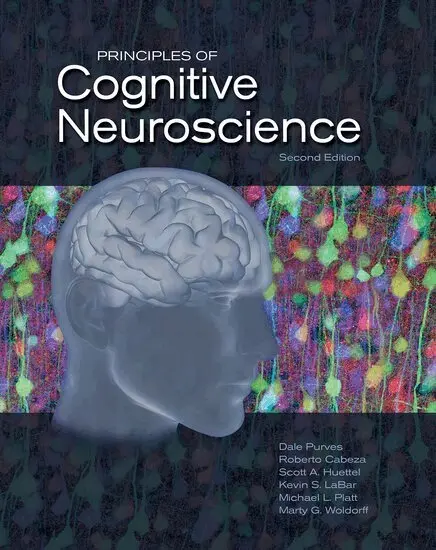
Published by Sinauer Associates, an imprint of Oxford University Press. The new and rapidly evolving field of cognitive neuroscience brings together cognitive psychology and neuroscience, drawing conceptual and technical elements from both these traditional disciplines. This union has been motivated by the exciting possibility of better understanding complex human brain functions that have puzzled thinkers for centuries. The emergence of cognitive neuroscience as a discipline in its own right over the last two decades is thus an expression of what many see as the next logical step for both neuroscience and cognitive psychology, driven by powerful new methods for studying the human brain.Principles of Cognitive Neuroscience, introduced in 2008, was written to inform readers at all levels about the growing canon of cognitive neuroscience, and to make clear the many challenges that remain to be solved. Now, in this Second Edition, the authors--all leaders in the field--offer what is in essence a completely new book:* The 28 chapters of the original edition have been condensed and combined to 15 chapters for the new edition.* The condensation makes the topics covered easier to assimilate, and better suited to presentation in a single-semester course.* Each chapter has been updated to address the latest developments in the field, including expanded coverage of genetics, evolution, and neural development.* Introductory Boxes in each chapter take up an especially interesting issue to better capture readers' attention.* An appendix reviews the major features of human neuroanatomy and basic aspects of neural signaling.As before, this edition includes an extensive glossary of key terms. And, with every copy, we offer a fully upgraded version of Sylvius 4 Online, which includes an interactive tutorial on human neuroanatomy as well as a magnetic resonance imaging atlas of the human brain.
1 884 kr
Skickas
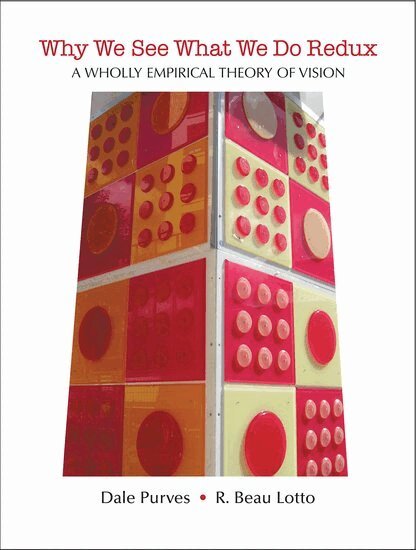
Published by Sinauer Associates, an imprint of Oxford University Press. The First Edition of this provocative book reviewed a broad range of evidence leading to the conclusion that the visual system does not reveal the physical world by an analysis of retinal images and their representation by the visual system. Rather, what we see is based on the history of the species and the individual as a means of contending with the inherent uncertainty of light stimuli. It follows that visual perceptions are reflexive manifestations of past behavioral success rather than the result of a logical processing of present stimuli.These ideas were met with considerable skepticism. To quote from the preface of this new edition:"Although the ideas and evidence about the genesis of what we see in the First Edition were appreciated in some quarters, the reception in others was distinctly cool. Given the opinion of some critics that the wholly empirical concept of vision we proposed was either unbelievable or incomprehensible, we felt duty bound to try again. Our objective was, and remains, to present a different and seemingly inevitable framework for understanding perception and its underlying neural mechanisms. We hope this new edition will encourage more readers to consider this concept of vision and its implications for interpreting, modeling, and ultimately understanding the structure and function of the human visual system."This refinement and expansion of the argument in the First Edition, supported with much new evidence gathered over the last seven years, has far-reaching consequences not only for understanding vision but brain function generally.The book is written in a way that is understandable by individuals with little or no background in neuroscience, with chapter introductions and summaries that make the overall argument easy to follow. The book includes over 400 bibliographic citations, a complete glossary, and a primer on the organization of the visual system as an appendix.
Perceiving Geometry
Geometrical Illusions Explained by Natural Scene Statistics
Häftad, Engelska, 2010
1 095 kr
Skickas inom 10-15 vardagar
During the last few centuries, natural philosophers, and more recently vision scientists, have recognized that a fundamental problem in biological vision is that the sources underlying visual stimuli are unknowable in any direct sense, because of the inherent ambiguity of the stimuli that impinge on sensory receptors. The light that reaches the eye from any scene conflates the contributions of reflectance, illumination, transmittance, and subsidiary factors that affect these primary physical parameters. Spatial properties such as the size, distance and orientation of physical objects are also conflated in light stimuli. As a result, the provenance of light reaching the eye at any moment is uncertain. This quandary is referred to as the inverse optics problem. This book considers the evidence that the human visual system solves this problem by incorporating past human experience of what retinal images have typically corresponded to in the real world.
2 457 kr
Skickas inom 5-8 vardagar
Neuroscience, 6th Edition is intended primarily for medical, premedical, and undergraduate students. The book's length and accessibility of its writing are a successful combination that has proven to work equally well for medical students and in undergraduate neuroscience courses. Being both comprehensive and authoritative, the book is also appropriate for graduate and professional use.
1 275 kr
Skickas inom 10-15 vardagar
This book examines what seems to be the basic challenge in neuroscience today: understanding how experience generated by the human brain is related to the physical world we live in.
852 kr
Skickas inom 10-15 vardagar
This book examines what seems to be the basic challenge in neuroscience today: understanding how experience generated by the human brain is related to the physical world we live in.
846 kr
Skickas inom 10-15 vardagar
Dieses Buch untersucht die scheinbar grundlegende Herausforderung in der Neurowissenschaft von heute: zu verstehen, wie die vom menschlichen Gehirn erzeugte Erfahrung mit der physischen Welt, in der wir leben, in Beziehung steht. Die 25 kurzen Kapitel präsentieren das Argument und die Beweise, dass Gehirne dieses Problem auf einer rein trial-and-error-Basis angehen.Das Ziel ist es, Neurowissenschaftler, Informatiker, Philosophen und andere interessierte Leser dazu anzuregen, dieses Konzept der neuronalen Funktion und seine Implikationen zu hinterfragen. Eine der Schlussfolgerungen ist dabei, dass Gehirne nicht „rechnen“.