254 kr
Läs direkt efter köp
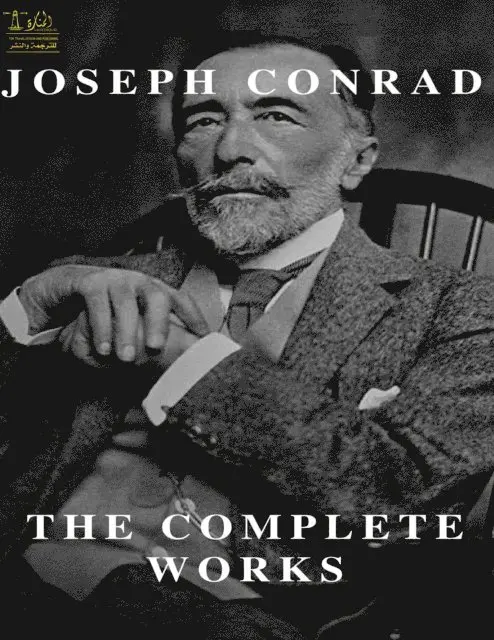
Joseph Conrad (December 3, 1857- August 3, 1924) was a Polish-born British novelist.
Some of his Works have been labelled romantic, although Conrad's romanticism is tempered with irony and a fine sense of man's capacity for self-deception. Many critics have placed him as a forerunner of modernism.
Conrad was born Jozef Teodor Konrad Korzeniowski in Berdyczow (Berdychiv), then Poland under Russian rule, now Ukraine. His father, an aristocrat, writer, and translator, was arrested by the Russian authorities in Warsaw for his activities in support of the 1863 insurrection, and was exiled to Siberia. His mother died of tuberculosis in 1865, as did his father four years later in Krakow, leaving Conrad orphaned at the age of eleven.
He was placed in the care of his uncle, a more cautious figure than either of his parents, who nevertheless allowed Conrad to travel to Marseille and begin his career as a seaman at the age of 17. Conrad lived an adventurous life, becoming involved in gunrunning and political conspiracy, which he later fictionalized in his novel The Arrow Of Gold. In 1878, after a failed attempt at suicide, Conrad took service on his first British ship. He learned English before the age of 21, and gained both his Master Mariner's certificate and British citizenship in 1886. He first arrived in England at the port of Lowestoft, Suffolk, and lived later in London and near Canterbury, Kent.
In 1894, at the age of 36, he left the sea to become an English author. His first novel, Under Western Eyes are among the first modern novels to treat the subjects of terrorism and espionage.
His literary work bridges the gap between the realist literary Tradition of writers such as Charles Dickens and the emergent modernist schools of writing. Interestingly, he despised Dostoevsky, and Russian writers as a rule, possibly due to his political inclinations, making an exception only for Ivan Turgenev. Conrad is now best known for the novella Heart Of Darkness, which has been seen as a scathing indictment of colonialism. Chinua Achebe, however, has argued that Conrad's language and imagery is inescapably racist. Some would claim that these can both be true.
Despite this choice, Conrad's assumption of a British identity was complex. Conrad's writing, at least, was never inherently 'English', but is rather littered with figures who cross national borders, de-stabilize accepted identities, and embrace the heterogeneity of global cultures -- all this despite the occasional ideological misgiving that have since provoked accusations of racism and pro-imperialism. Conrad's career in the maritime industry took him across seas to numerous continents, and his travels across a globalized world provided him with a huge reservoir of experience upon which he drew when he turned to his writing career in the second half of his life, from the 1890s until he died in 1924. Conrad's novels, short stories and novellas are set in locations as various as South America, the Belgian Congo, Russia, London, and Singapore, and many never move beyond the deck of the ship upon which his characters are enrolled. However, it is interesting to note that Conrad's two careers, maritime and literary, never really overlapped -- Conrad only started writing after he had almost entirely given up his practical job, and once an established author, he never worked on board a ship again.