Daniel Diez Couch – författare
Visar alla böcker från författaren Daniel Diez Couch. Handla med fri frakt och snabb leverans.
3 produkter
3 produkter
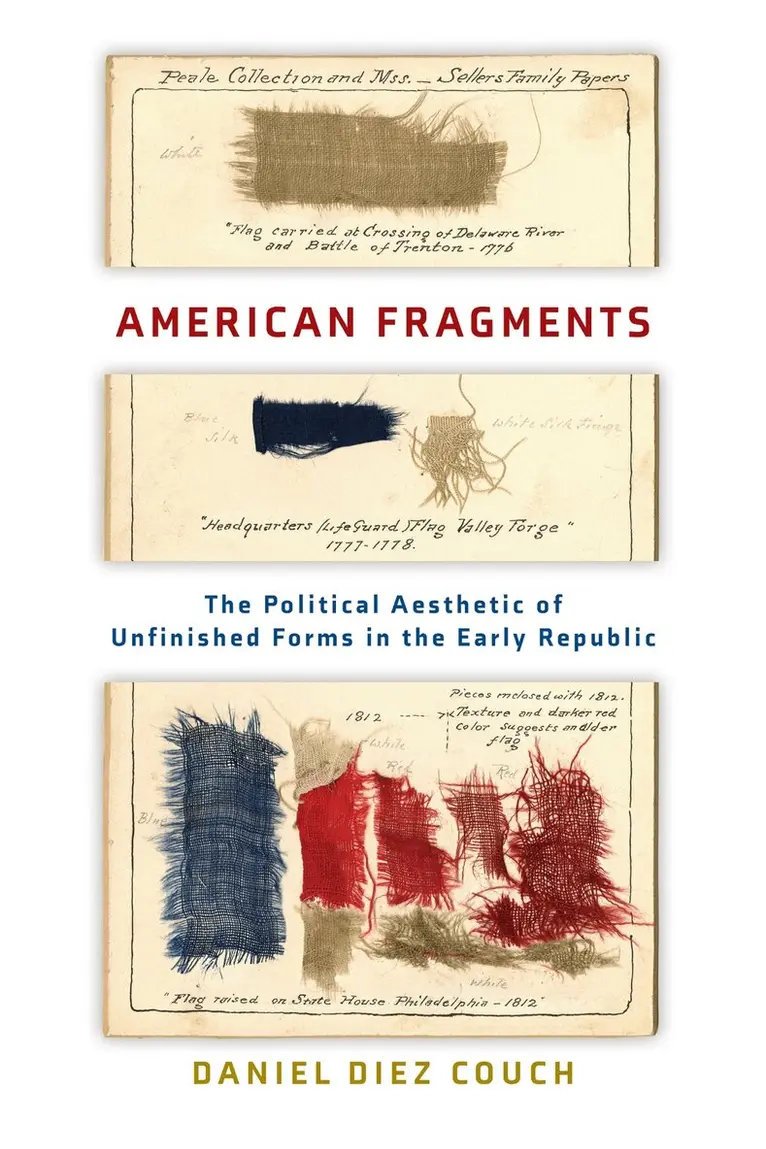
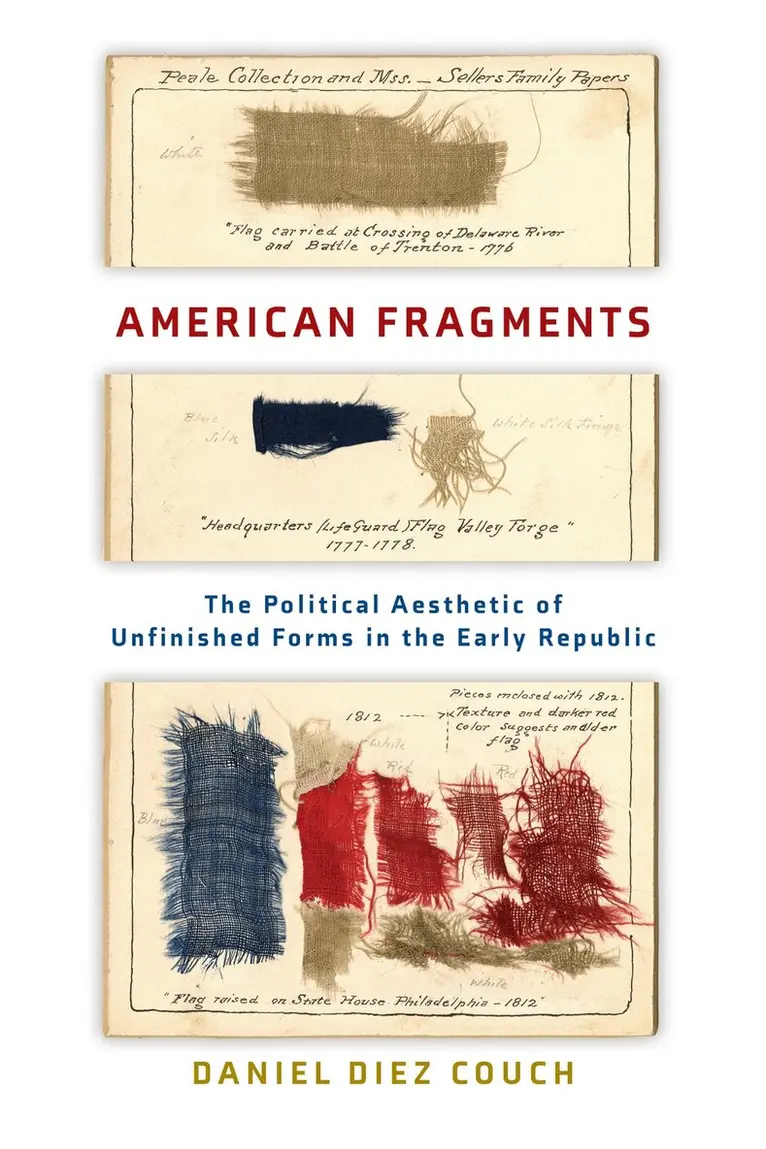
American Fragments
The Political Aesthetic of Unfinished Forms in the Early Republic
Inbunden, Engelska, 2022
857 kr
Skickas inom 7-10 vardagar
In the years between the independence of the colonies from Britain and the start of the Jacksonian age, American readers consumed an enormous number of literary texts called "fragments." American Fragments recovers this archive of the romantic period to raise a set of pressing questions about the relationship between aesthetic and national realities: What kind of artistic creation was a fragment?, And how and why did deliberately unfinished writing emerge alongside a country that was itself still unfinished?Through discussions of eighteenth-century transatlantic aesthetics, the Revolutionary War, seduction novels, religious culture, and the construction of authorship, Daniel Diez Couch argues that the literary fragment was used as a means of representing individuals who did not fit neatly into the social fabric of the nation: beggars, prostitutes, veterans, and other ostracized figures. These individuals did not have a secure place in designs for the country's future, yet writers wielded the artistic form of the fragment as an apparatus for surveying their disputed positionality. Time and again, fragments asked what kind of identity marginalized individuals had, and how fictionalized versions of their life stories influenced the sociopolitical circumstances of the emergent nation. In their most progressive moments, the writers of fragments depicted their subjects as being "in process," opting for a fluid version of the self instead of the bounded and coherent one typically hailed as the liberal individual.Traversing aesthetics, political philosophy, material culture, and history, American Fragments gives new life to a literary form that at once played a significant role in the print ecology of the early republic, and that endures in the works of modernist and postmodernist writers and artists.
736 kr
Skickas inom 7-10 vardagar
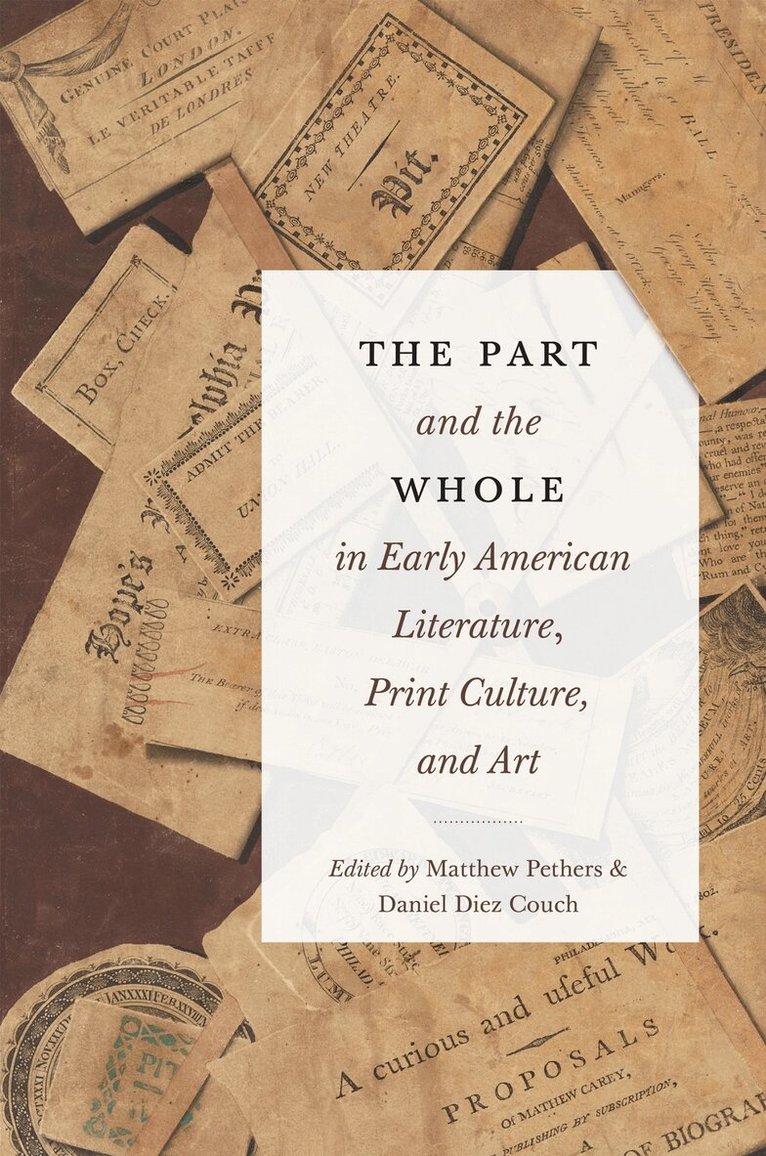
The essays in this pathbreaking collection consider the significance of varied early American fragmentary genres and practices-from diaries and poetry, to almanacs and commonplace books, to sermons and lists, to Indigenous ruins and other material shards and fragments-often overlooked by critics in a scholarly privileging of the “whole.” Contributors from literary studies, book history, and visual culture discuss a host of canonical and non-canonical figures, from Edward Taylor and Washington Irving to Mary Rowlandson and Sarah Kemble Knight, offering insight into the many intellectual, ideological, and material variations of “form” that populated the early American cultural landscape. As these essays reveal, the casting of the fragmentary as aesthetically eccentric or incomplete was a way of reckoning with concerns about the related fragmentation of nation, society, and self. For a contemporary audience, they offer new ways to think about the inevitable gaps and absences in our cultural and historical archive.
1 827 kr
Skickas inom 7-10 vardagar
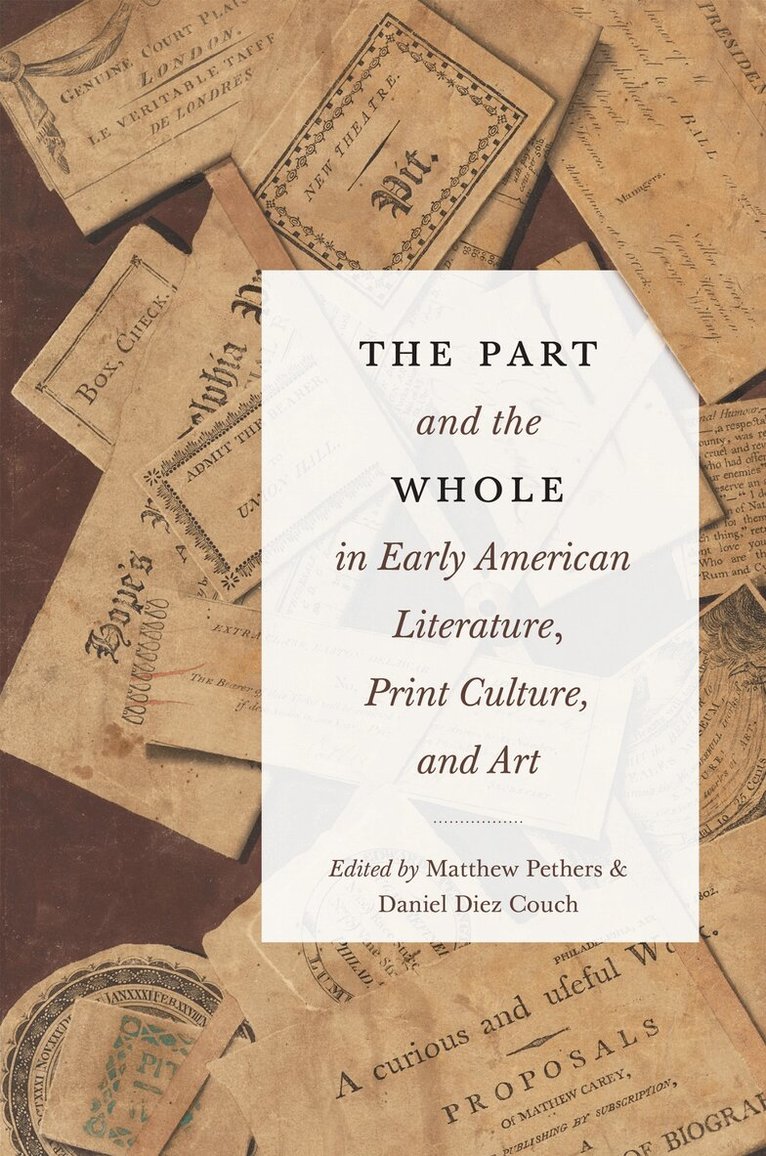
The essays in this pathbreaking collection consider the significance of varied early American fragmentary genres and practices-from diaries and poetry, to almanacs and commonplace books, to sermons and lists, to Indigenous ruins and other material shards and fragments-often overlooked by critics in a scholarly privileging of the “whole.” Contributors from literary studies, book history, and visual culture discuss a host of canonical and non-canonical figures, from Edward Taylor and Washington Irving to Mary Rowlandson and Sarah Kemble Knight, offering insight into the many intellectual, ideological, and material variations of “form” that populated the early American cultural landscape. As these essays reveal, the casting of the fragmentary as aesthetically eccentric or incomplete was a way of reckoning with concerns about the related fragmentation of nation, society, and self. For a contemporary audience, they offer new ways to think about the inevitable gaps and absences in our cultural and historical archive.