DANIEL FINKE – författare
Visar alla böcker från författaren DANIEL FINKE. Handla med fri frakt och snabb leverans.
6 produkter
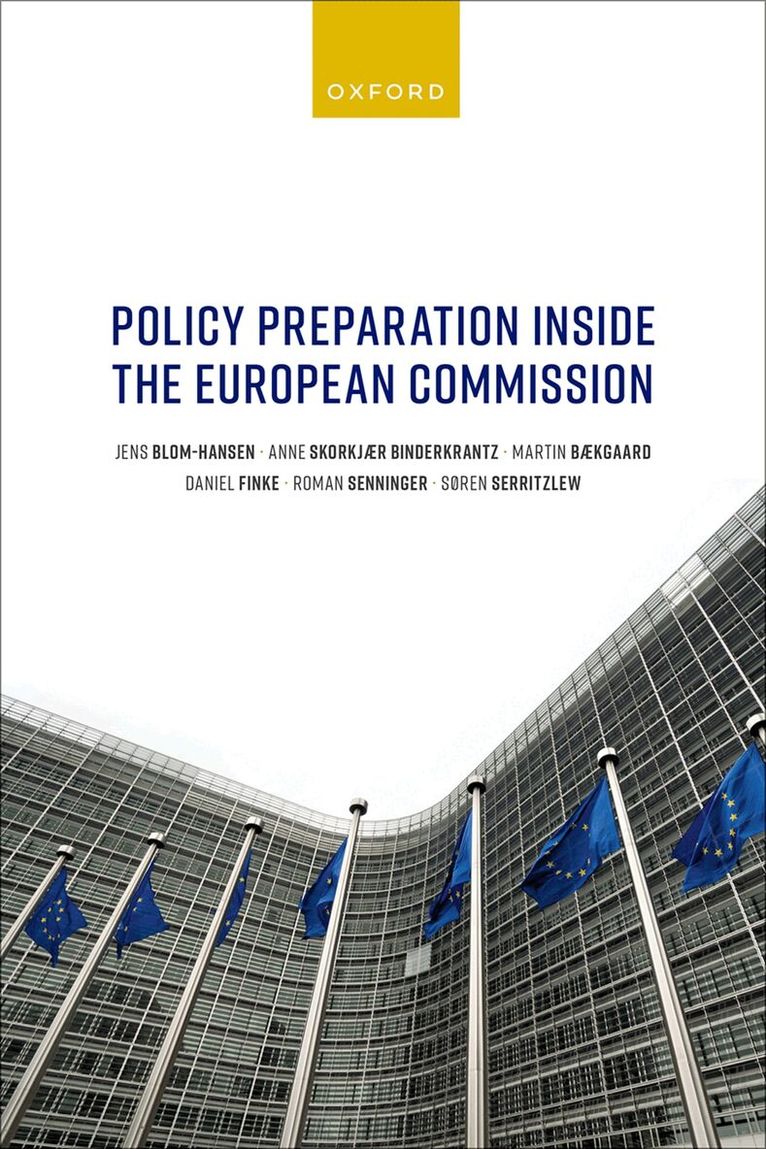
Policy Preparation Inside the European Commission
Av JENS BLOM-HANSEN, ANNE SKORKJÃR BINDERKRANTZ m. fl.
Inbunden, 2025
1205 kr
Lägg i varukorg
The European Commission is at the heart of EU policymaking. However, over the past 15-20 years, its position has been challenged due to the growing influence of the European Council, the increased powers of the European Parliament, and the introduction of European agencies. This has led some …
Policy Preparation Inside the European Commission
Av SAREN SERRITZLEW, ROMAN SENNINGER m. fl.
E-bok, 2025
1058 kr
Lägg i varukorg
The European Commission is at the heart of EU policymaking. However, over the past 15-20 years, its position has been challenged due to the growing influence of the European Council, the increased powers of the European Parliament, and the introduction of European agencies. This has led some …
Policy Preparation Inside the European Commission
Av SAREN SERRITZLEW, ROMAN SENNINGER m. fl.
E-bok, 2025
1082 kr
Lägg i varukorg
The European Commission is at the heart of EU policymaking. However, over the past 15-20 years, its position has been challenged due to the growing influence of the European Council, the increased powers of the European Parliament, and the introduction of European agencies. This has led some …
Reforming the European Union
Realizing the Impossible
Av Daniel Finke, Thomas König m. fl.
Inbunden, 2012
1037 kr
Lägg i varukorg
For decades the European Union tried changing its institutions, but achieved only unsatisfying political compromises and modest, incremental treaty revisions. In late 2009, however, the EU was successfully reformed through the Treaty of Lisbon. Reforming the European Union examines how political …
Reforming the European Union
Realizing the Impossible
Av Daniel Finke, Thomas König m. fl.
Häftad, 2012
436 kr
Lägg i varukorg
For decades the European Union tried changing its institutions, but achieved only unsatisfying political compromises and modest, incremental treaty revisions. In late 2009, however, the EU was successfully reformed through the Treaty of Lisbon. Reforming the European Union examines how political …
Reforming the European Union
Realizing the Impossible
Av George Tsebelis, Sven-Oliver Proksch m. fl.
E-bok, 2012
604 kr
Lägg i varukorg
For decades the European Union tried changing its institutions, but achieved only unsatisfying political compromises and modest, incremental treaty revisions. In late 2009, however, the EU was successfully reformed through the Treaty of Lisbon. Reforming the European Union examines how political …