Daniel Humphrey - Böcker
Visar alla böcker från författaren Daniel Humphrey. Handla med fri frakt och snabb leverans.
5 produkter
5 produkter
278 kr
Skickas inom 10-15 vardagar
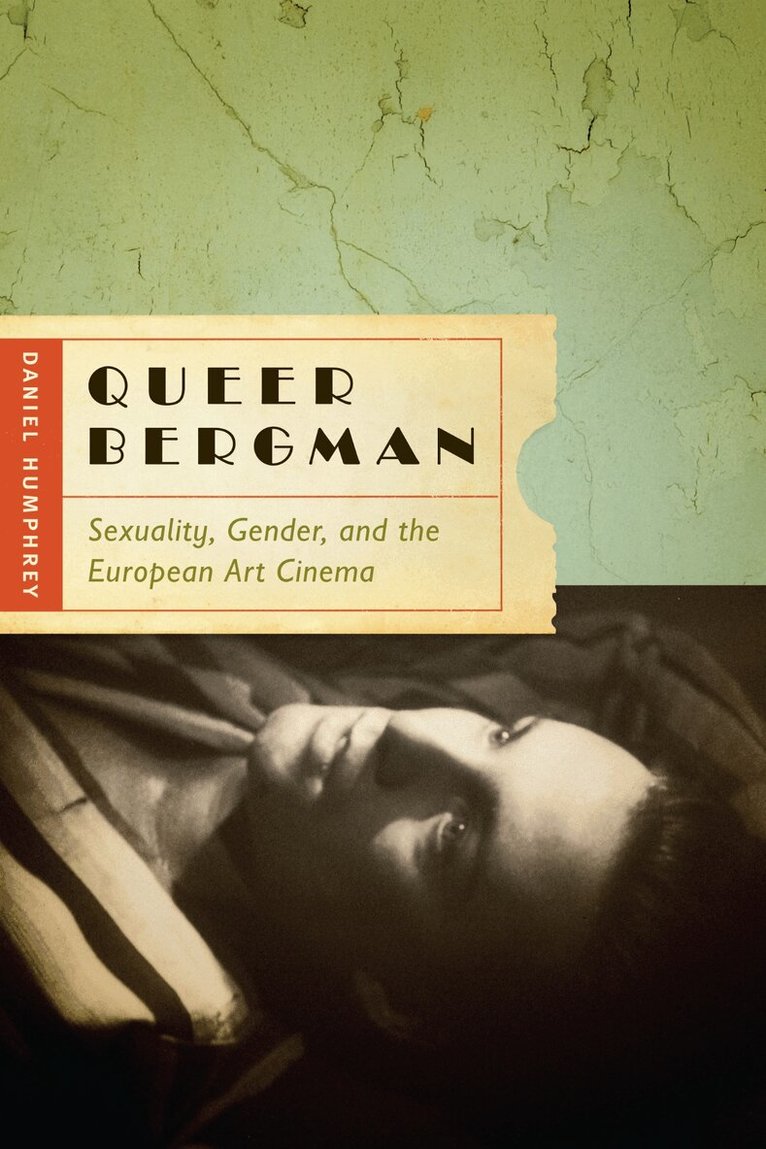
One of the twentieth century’s most important filmmakers-indeed one of its most important and influential artists-Ingmar Bergman and his films have been examined from almost every possible perspective, including their remarkable portrayals of women and their searing dramatizations of gender dynamics. Curiously however, especially considering the Swedish filmmaker’s numerous and intriguing comments on the subject, no study has focused on the undeniably queer characteristics present throughout this nominally straight auteur’s body of work; indeed, they have barely been noted.Queer Bergman makes a bold and convincing argument that Ingmar Bergman’s work can best be thought of as profoundly queer in nature. Using persuasive historical evidence, including Bergman’s own on-the-record (though stubbornly ignored) remarks alluding to his own homosexual identifications, as well as the discourse of queer theory, Daniel Humphrey brings into focus the director’s radical denunciation of heteronormative values, his savage and darkly humorous deconstructions of gender roles, and his work’s trenchant, if also deeply conflicted, attacks on homophobically constructed forms of patriarchic authority. Adding an important chapter to the current discourse on GLBT/queer historiography, Humphrey also explores the unaddressed historical connections between post–World War II American queer culture and a concurrently vibrant European art cinema, proving that particular interrelationship to be as profound as the better documented associations between gay men and Hollywood musicals, queer spectators and the horror film, lesbians and gothic fiction, and others.
390 kr
Skickas inom 10-15 vardagar
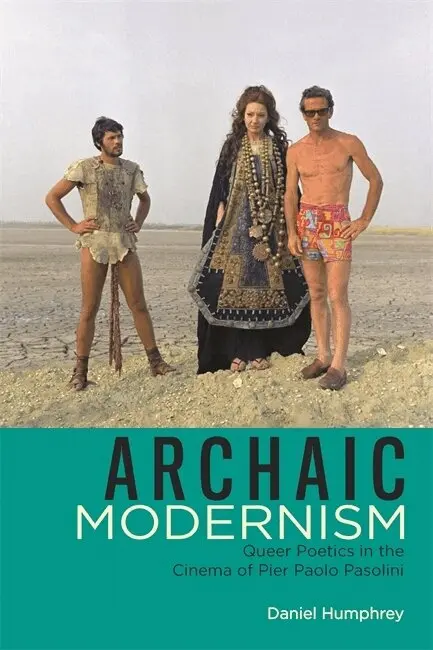
In Archaic Modernism, Daniel Humphrey offers the first book-length, English-language examination of three adaptations of Greek tragedy produced by the gay and Marxist Italian filmmaker Pier Paolo Pasolini: Oedipus Rex (1967), Medea (1969), and Notes Towards an African Orestes (1970/1973). Considering Pasolini's own theories of a "Cinema of Poetry" alongside Jacques Derrida's concept of écriture, as well as more recent scholarship by queer theory scholars advocating for an antirelational and antisocial subjectivity, Humphrey maintains that Pasolini's Greek tragedy films exemplify a paradoxical sense of "archaic modernism" that is at the very heart of the filmmaker's project. More daringly, he contends that they ultimately reveal the queer roots of Western civilization's formative texts.Archaic Modernism is comprised of three chapters. Chapter 1 focuses on Oedipus Rex, assessing both the filmic language employed and the deeply queer mythological source material that haunts the tragedy even as it remains largely at a subtextual yet palpable level. Chapter 2 extends and deepens the concept of queer fate and queer negativity in a scene-by-scene analysis of Medea. Chapter 3 looks at the most obscure of Pasolini's feature length films, Notes Towards an African Orestes, a film long misunderstood as an unwitting failure, but which could perhaps best be understood as a deliberate, sacrificial act on the filmmaker's part. Considering the film as the third in an informal, maybe unconscious, trilogy, Humphrey concludes his monograph by arguing that this "trilogy of myth" can best be understood as a deconstruction, gradually more and more severe, of three of the most important origin tales of Western civilization.Archaic Modernism makes the case that these three films are as essential as those Pasolini films more often studied in the Anglophone world: Mamma Roma, The Gospel According to Matthew, Teorema, The Trilogy of Life, and Salò, and that they are of continuing, perhaps even increasing, value today. This book is of specific interest to scholars, students, and researchers of film and queer studies.
986 kr
Skickas inom 10-15 vardagar
In Archaic Modernism, Daniel Humphrey offers the first book-length, English-language examination of three adaptations of Greek tragedy produced by the gay and Marxist Italian filmmaker Pier Paolo Pasolini: Oedipus Rex (1967), Medea (1969), and Notes Towards an African Orestes (1970/1973). Considering Pasolini's own theories of a "Cinema of Poetry" alongside Jacques Derrida's concept of écriture, as well as more recent scholarship by queer theory scholars advocating for an antirelational and antisocial subjectivity, Humphrey maintains that Pasolini's Greek tragedy films exemplify a paradoxical sense of "archaic modernism" that is at the very heart of the filmmaker's project. More daringly, he contends that they ultimately reveal the queer roots of Western civilization's formative texts.Archaic Modernism is comprised of three chapters. Chapter 1 focuses on Oedipus Rex, assessing both the filmic language employed and the deeply queer mythological source material that haunts the tragedy even as it remains largely at a subtextual yet palpable level. Chapter 2 extends and deepens the concept of queer fate and queer negativity in a scene-by-scene analysis of Medea. Chapter 3 looks at the most obscure of Pasolini's feature length films, Notes Towards an African Orestes, a film long misunderstood as an unwitting failure, but which could perhaps best be understood as a deliberate, sacrificial act on the filmmaker's part. Considering the film as the third in an informal, maybe unconscious, trilogy, Humphrey concludes his monograph by arguing that this "trilogy of myth" can best be understood as a deconstruction, gradually more and more severe, of three of the most important origin tales of Western civilization.Archaic Modernism makes the case that these three films are as essential as those Pasolini films more often studied in the Anglophone world: Mamma Roma, The Gospel According to Matthew, Teorema, The Trilogy of Life, and Salò, and that they are of continuing, perhaps even increasing, value today. This book is of specific interest to scholars, students, and researchers of film and queer studies.
1 923 kr
Skickas inom 7-10 vardagar
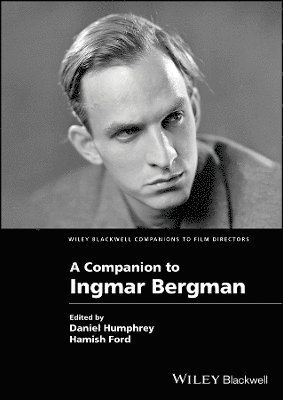
A Companion to Ingmar Bergman"This collective project brilliantly launches Bergman studies forward at least a generation or two. The 35 contributors comprise a Who's Who of prominent and rising-star Bergman scholars diversely and globally."—Arne Lunde, UCLA, author of Nordic Exposures: Scandinavian Identities in Classical Hollywood Cinema (2010)"Bergman’s films are not static. They changed dramatically over the filmmaker’s lifetime, and so too our ways of critically analysing them. This superb Companion lays out the tracks of understanding Bergman today."—Adrian Martin, Film Critic, author of Mysteries of Cinema (2018)The first book in English to address Ingmar Bergman's cinema through a broad array of classical and contemporary approaches.A Companion to Ingmar Bergman brings together 32 original essays by established scholars and exciting new voices in the field. Representing a uniquely wide range of approaches in academic film studies and beyond, the chapters that make up the volume illuminate a body of work that changed the way cinema is created, defined, experienced, understood, and interpreted.Thematically organized into four parts, the Companion discusses gender exploration and self-representation in Bergman's cinema, draws evolutionary insights from The Seventh Seal, explores existential feelings and religious iconography in the early 1960s trilogy, journeys through the filmmaker’s island landscape in the context of cinematic tourism, and much more. Throughout the book, hailing from a range of global contexts and backgrounds, the authors provide fresh insights into a deeply complex and challenging film artist, often from unexpected perspectives.An innovative mixture of new scholarship and fresh, updated employments of older approaches, A Companion to Ingmar Bergman: Examines Bergman's cinema through methodologies as diverse as Film-Philosophy, Star Studies, Bisexual Studies, Tourism Studies, Transgender Studies, and Evolutionary Studies.Delves into the director's early period in the late 1940s–1950s through his most challenging modernist period in the 1960s, and into the 1980s.Engages with films long considered problematic by commentators plus unproduced Bergman screenplays, including All These Women, "The Petrified Prince", Face to Face, and From the Life of the Marionettes.A Companion to Ingmar Bergman is a must-read for advanced undergraduate and graduate film students, postgraduate scholars, college and university lecturers and researchers, particularly those interested in the application of classical and modern approaches to the study of twentieth-century cinema, and Bergman fans around the world.
139 kr
Skickas inom 5-8 vardagar