Daniel Latouche – författare
Visar alla böcker från författaren Daniel Latouche. Handla med fri frakt och snabb leverans.
2 produkter
2 produkter
Inbunden, Engelska, 1988
1 048 kr
Skickas inom 10-15 vardagar
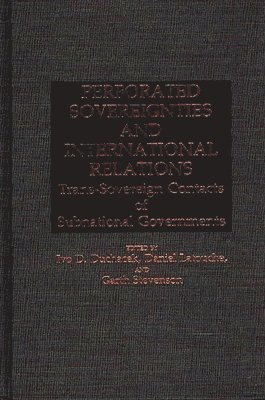
In case studies and comparative analysis of Canada, the United States, France, Switzerland, and Belgium, a distinguished international group of scholars looks at how and why provinces, states, cantons, and large municipalities increasingly seek access to foreign sources of wealth and technological information. The first book to explore the subject, this new study examines the effects of these initiatives on the traditional conduct of foreign policy and foreign trade and the implications of the continued perforation of national boundaries already subject to an unprecedented flow of foreign products, cultural influences, and visitors, as well as environmental pollution from abroad.
E-bok
PDF, Engelska, 19901 005 kr
Läs direkt efter köp
Resnick, a leading Canadian nationalist, argues that English-Canadian attitudes toward Quebec have changed fundamentally since the November 1988 election. Quebec has become too selfish, he says, and English Canada feels betrayed by Quebec''s refusal either to recognize or take seriously the desires of the rest of the country. He suggests that Quebec reconsider the social values it once supported, values which are in opposition to the market-oriented Canada-US Free Trade Agreement. Resnick argues that this agreement will only weaken the Canadian state, as would the Meech Lake Accord. Canada''s move toward the right, politically and economically, is, for Resnick, exacerbated by Quebec''s stubborn self-interest. He argues that the consequences of moving to the right, such as we have seen in the US and Great Britain, should concern both English Canada and Quebec; only by working together can Canada as a whole begin "to formulate more humane and compelling alternatives for the coming decade." Daniel Latouche makes it quite clear in his reply that the Québécois are tired of having to justify themselves, their distinctiveness, and their support of Free Trade. While English-Canadians may think they have been betrayed by Quebec, he says, it is only because they have not looked at the issues from a Québécois perspective. When vying for its share of political power, says Latouche, Quebec is only playing by the rules it has learnt from English Canada. And Free Trade, he points out, was an initiative originating in Ontario and the West. Latouche asserts that Quebec''s response to the Supreme Court ruling on Bill 101 was a legitimate use of the Canadian constitution and asks whether it is because it was Quebec that made use of this clause that it was condemned. The Supreme Court ruling, Latouche argues, protected commercial interests "thus accelerating the judicial integration of Canada within the American legal culture." All Quebec did was make use of an escape clause to protect itself. Resnick suggests that since the Quiet Revolution there has been an increased responsiveness on the part of English Canadians to Quebec and its demands. But Latouche has no time for this argument: "Do you mean that every time we manage to have a share of what all Canadians are entitled to, these are mere bones you are throwing to us. My friend, we are not dogs eating at the table because of your generosity. We are citizens and tax-payers." Letters to a Québécois Friend will not put an end to the debates. By bringing into the open the feelings of two leading nationalists - whose "nations" are not the same - this dialogue will ensure that the debates continue with increased fervour.