Daniel Leonhard Purdy – Författare
Visar alla böcker från författaren Daniel Leonhard Purdy. Handla med fri frakt och snabb leverans.
4 produkter
4 produkter
488 kr
Skickas inom 10-15 vardagar
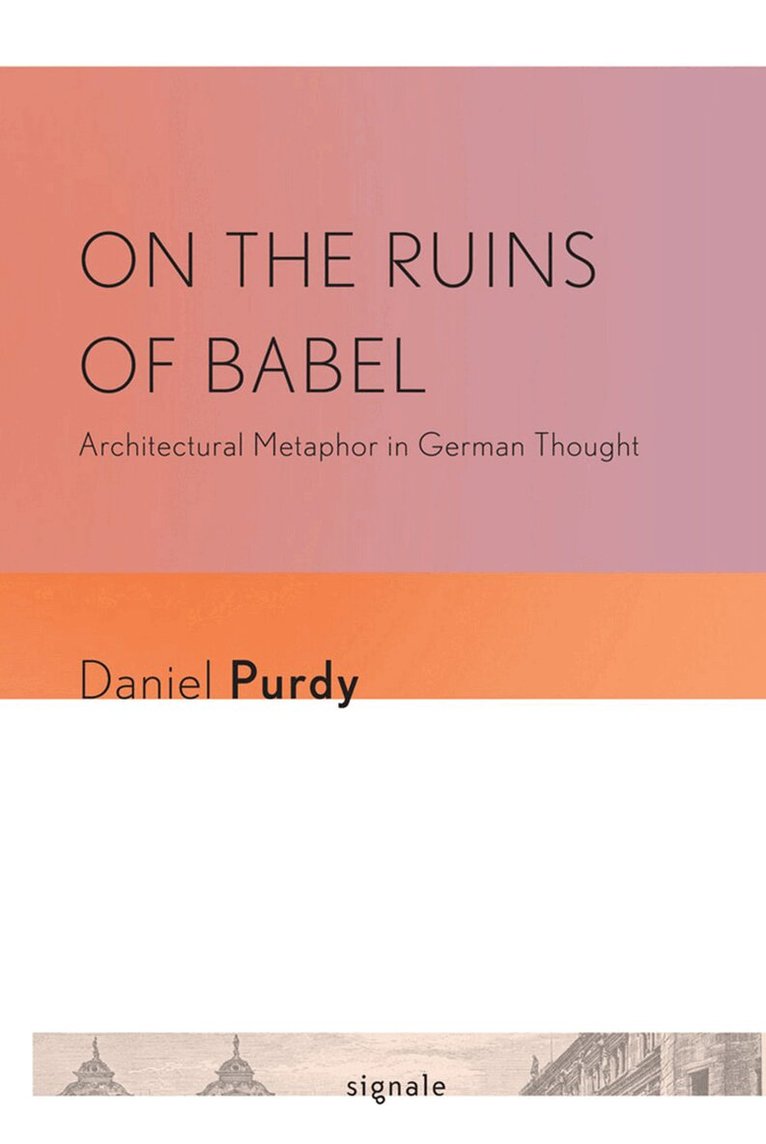
The eighteenth century struggled to define architecture as either an art or a science—the image of the architect as a grand figure who synthesizes all other disciplines within a single master plan emerged from this discourse. Immanuel Kant and Johann Wolfgang Goethe described the architect as their equal, a genius with godlike creativity. For writers from Descartes to Freud, architectural reasoning provided a method for critically examining consciousness. The architect, as philosophers liked to think of him, was obligated by the design and construction process to mediate between the abstract and the actual.In On the Ruins of Babel, Daniel Purdy traces this notion back to its wellspring. He surveys the volatile state of architectural theory in the Enlightenment, brought on by the newly emerged scientific critiques of Renaissance cosmology, then shows how German writers redeployed Renaissance terminology so that "harmony," "unity," "synthesis," "foundation," and "orderliness" became states of consciousness, rather than terms used to describe the built world. Purdy's distinctly new interpretation of German theory reveals how metaphors constitute interior life as an architectural space to be designed, constructed, renovated, or demolished. He elucidates the close affinity between Hegel's Romantic aesthetic of space and Daniel Libeskind's deconstruction of monumental architecture in Berlin's Jewish Museum.Through a careful reading of Walter Benjamin's writing on architecture as myth, Purdy details how classical architecture shaped Benjamin's modernist interpretations of urban life, particularly his elaboration on Freud's archaeology of the unconscious. Benjamin's essays on dreams and architecture turn the individualist sensibility of the Enlightenment into a collective and mythic identification between humans and buildings.
310 kr
Skickas inom 7-10 vardagar
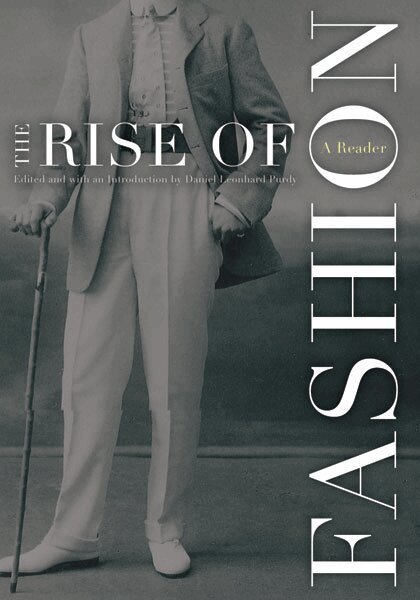
A remarkable anthology of key writings that parallels the history of fashion with modern lifeWriting more than a century before Vogue, no less a figure than G. W. F. Hegel reviewed the fashion of his day and found it wanting because, in becoming outmoded so quickly, it drew attention away from the timeless beauty of the human form. And Hegel is not unique among philosophers in his interest in fashion’s role; for more than 250 years, social thinkers have considered fashion-its transitive nature, the conformity it inspires, the vast range of its influence-as a defining feature of modern life. In The Rise of Fashion, Daniel Leonhard Purdy brings together key writings from the Enlightenment to the twentieth century that explore fashion as the ultimate expression of modernity. Making available many previously untranslated or otherwise unfamiliar works from French, German, and English, Purdy establishes an extraordinary lineage of fashion commentary dating back to Mandeville and Voltaire, which laid the groundwork for the writings on commodity culture of Adorno, Benjamin, and the Frankfurt School. From critiques of aristocratic excess to accounts of fashion’s influence on our ideals of masculinity or femininity, from the figure of the dandy and the eroticism of clothing to the class politics of fashion, this landmark reader includes works by philosophers (Carlyle, Rousseau, Georg Simmel) and social theorists (Herbert Spencer, Veblen), as well as writers (Goethe, Baudelaire, MallarmÉ, Wilde) and critics (Karl Kraus, Adolf Loos, Simone de Beauvoir).Collecting and contextualizing many of the earliest and most significant formulations of fashion theory, The Rise of Fashion provocatively examines the proposition that to be modern is to be fashionable.
Chinese Sympathies
Media, Missionaries, and World Literature from Marco Polo to Goethe
Inbunden, Engelska, 2021
1 791 kr
Skickas inom 10-15 vardagar
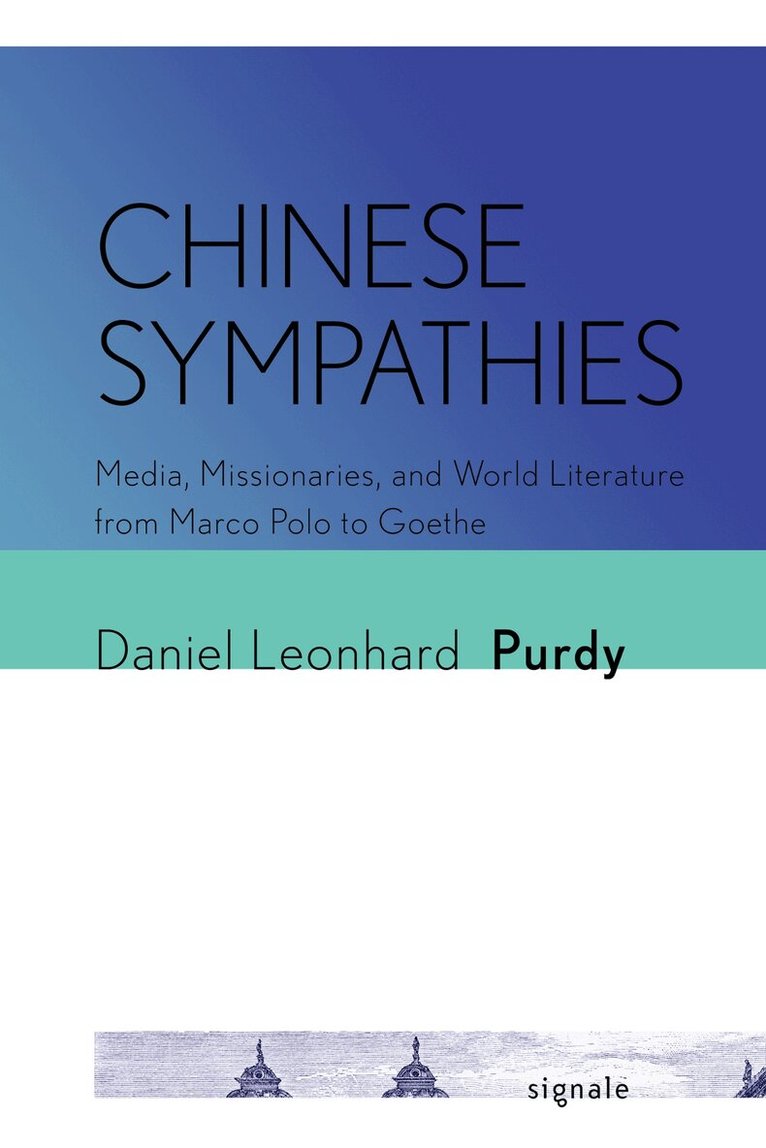
Chinese Sympathies examines how Europeans—German-speaking writers and thinkers in particular—identified with Chinese intellectual and literary traditions following the circulation of Marco Polo's Travels. This sense of affinity expanded and deepened, Daniel Leonhard Purdy shows, as generations of Jesuit missionaries, baroque encyclopedists, Enlightenment moralists, and translators established intellectual regimes that framed China as being fundamentally similar to Europe. Analyzing key German literary texts—theological treatises, imperial histories, tragic dramas, moral philosophies, literary translations, and poetic cycles—Chinese Sympathies traces the paths from baroque-era missionary reports that accommodated Christianity with Confucianism to Goethe's concept of world literature, bridged by Enlightenment debates over cosmopolitanism and sympathy, culminating in a secular principle that allowed readers to identify meaningful similarities across culturally diverse literatures based on shared human experiences.This book is freely available in an open access edition thanks to TOME (Toward an Open Monograph Ecosystem)—a collaboration of the Association of American Universities, the Association of University Presses, and the Association of Research Libraries—and the generous support of the Pennsylvania State University. Learn more at the TOME website, available at: openmonographs.org. The open access edition is available at Cornell Open (cornellpress.cornell.edu/cornell-open) and other repositories.
Chinese Sympathies
Media, Missionaries, and World Literature from Marco Polo to Goethe
Häftad, Engelska, 2021
454 kr
Skickas inom 10-15 vardagar
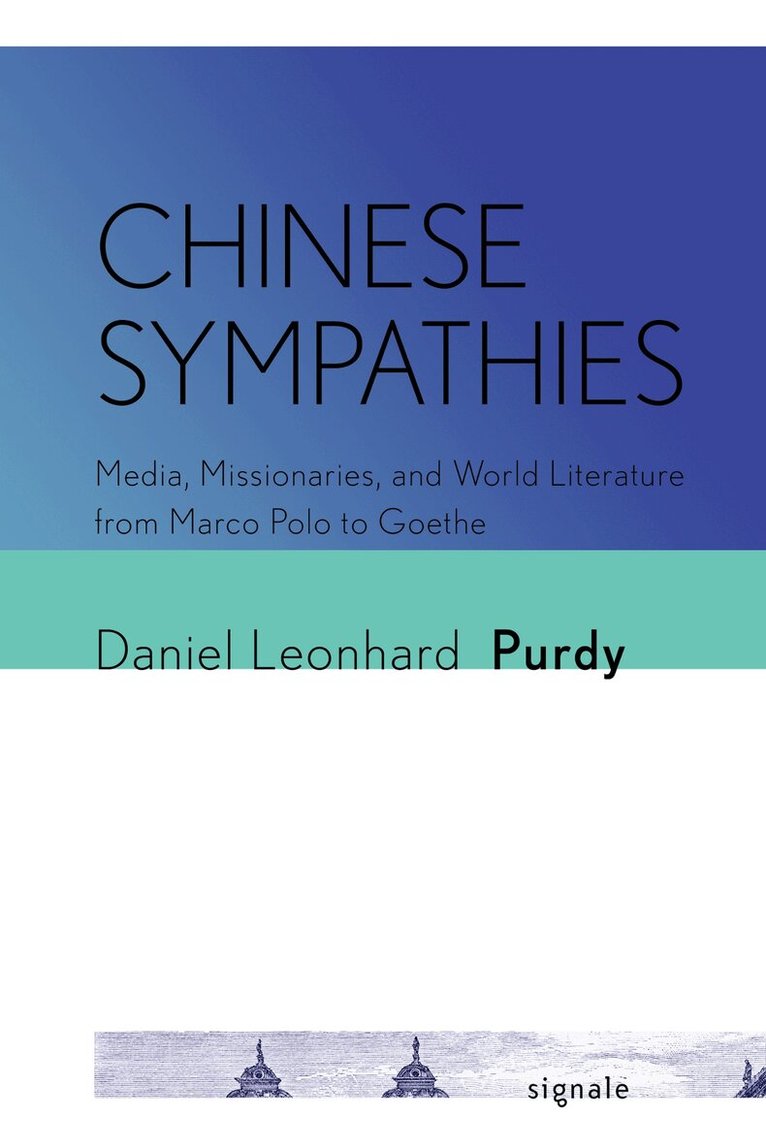
Chinese Sympathies examines how Europeans—German-speaking writers and thinkers in particular—identified with Chinese intellectual and literary traditions following the circulation of Marco Polo's Travels. This sense of affinity expanded and deepened, Daniel Leonhard Purdy shows, as generations of Jesuit missionaries, baroque encyclopedists, Enlightenment moralists, and translators established intellectual regimes that framed China as being fundamentally similar to Europe. Analyzing key German literary texts—theological treatises, imperial histories, tragic dramas, moral philosophies, literary translations, and poetic cycles—Chinese Sympathies traces the paths from baroque-era missionary reports that accommodated Christianity with Confucianism to Goethe's concept of world literature, bridged by Enlightenment debates over cosmopolitanism and sympathy, culminating in a secular principle that allowed readers to identify meaningful similarities across culturally diverse literatures based on shared human experiences.This book is freely available in an open access edition thanks to TOME (Toward an Open Monograph Ecosystem)—a collaboration of the Association of American Universities, the Association of University Presses, and the Association of Research Libraries—and the generous support of the Pennsylvania State University. Learn more at the TOME website, available at: openmonographs.org. The open access edition is available at Cornell Open (cornellpress.cornell.edu/cornell-open) and other repositories.