Daria Taglioni - Böcker
Visar alla böcker från författaren Daria Taglioni. Handla med fri frakt och snabb leverans.
4 produkter
4 produkter
392 kr
Skickas inom 10-15 vardagar
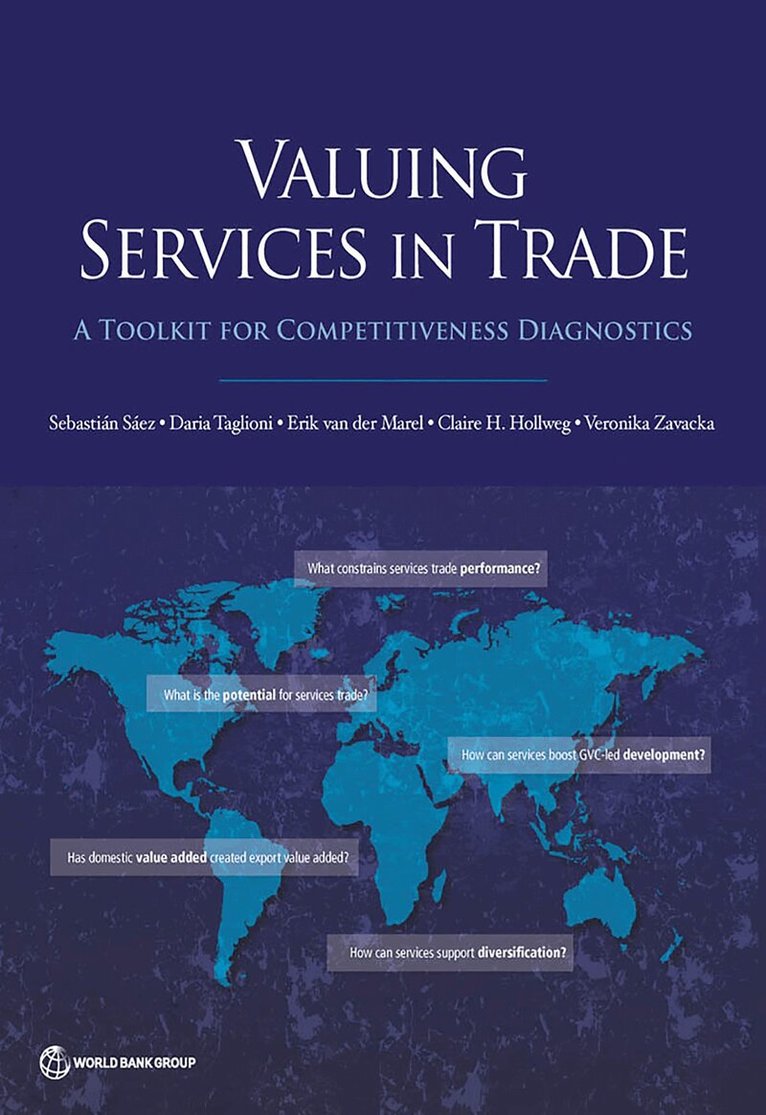
This Toolkit provides a framework, guidelines, and practical tools for conducting an analysis and diagnostics of trade competitiveness of the services sector. The methods of analysis are fully customised to address the features of the services sector. Successfully tested on country-specific assessments, the methods proposed in this toolkit aim to evaluate the competitiveness of the services sector and identify constraints to improved competitiveness and appropriate policy responses. The output of a services trade competitiveness assessment can be used to assess the overall performance of a country's services sector as well as for individual sub-sectors.In addition to the desk (quantitative) analysis, the success of a services trade competitiveness diagnostics (STCD) will depend on qualitative assessments and input from a wide variety of stakeholders in the country, including government officials and the private sector. A STCD should therefore be conducted in four key steps: preparation of a preliminary trade outcomes assessment based on available hard data; initial desk research and preparation for fieldwork; in-country field research; and finally, analysis and preparation of the final STCD report and policy recommendations.The toolkit consists of the following main sections:Overview and guidelines for conducting a STCD. This section is illustrative and appropriate to all audiences, including policy makers and managers overseeing a STCD exercise.Implementation toolkit, this provides detailed practical information and tools for carrying out the diagnostics exercise. The implementation toolkit is further divided in three modules:Module 1: Services Trade Outcomes Analysis (indicators and tools)Module 2: Services Trade Potential Analysis (indicators and tools)Module 3: Policy Options for Services Trade CompetitivenessIllustration of Reference DatabasesDatabases of indicators that can help assess the importance of services and services trade.
392 kr
Skickas inom 10-15 vardagar
Economic, technological, and political shifts as well as changing business strategies have driven firms to unbundle production processes and disperse them across countries. Thanks to these changes, developing countries can now increase their participation in global value chains (GVCs) and thus become more competitive in agriculture, manufacturing and services. This is a paradigm shift from the 20th century when countries had to build the entire supply chain domestically to become competitive internationally. For policymakers, the focus is on boosting domestic value added and improving access to resources and technology while advancing development goals.However, participating in global value chains does not automatically improve living standards and social conditions in a country. This requires not only improving the quality and quantity of production factors and redressing market failures, but also engineering equitable distributions of opportunities and outcomes - including employment, wages, work conditions, economic rights, gender equality, economic security, and protecting the environment. The internationalization of production processes helps with very few of these development challenges. Following this perspective, Making Global Value Chains Work for Development offers a strategic framework, analytical tools, and policy options to address this challenge. The book conceptualizes GVCs and makes it easier for policymakers and practitioners to discuss them and their implications for development. It shows why GVCs require fresh thinking; it serves as a repository of analytical tools; and it proposes a strategic framework to guide policymakers in identifying the key objectives of GVC participation and in selecting suitable economic strategies to achieve them.
Inclusive Global Value Chains
Policy Options in Trade and Complementary Areas for GVC Integration by Small and Medium Enterprises and Low-Income Developing Countries
Häftad, Engelska, 2016
337 kr
Skickas inom 10-15 vardagar
This report is the first comprehensive framework on how to facilitate SMEs and LIDCs access to and upgrading within global value chains. It identifies policy interventions at the global level needed to support domestic reforms.
394 kr
Skickas inom 10-15 vardagar
This volume supports Vietnam's path to economic prosperity by identifying policies and targeted interventions that will drive development through leveraging GVC participation that take major shifts in trade policy and rapid technological advances in ICT into account.