Sebastián Sáez - Böcker
Visar alla böcker från författaren Sebastián Sáez. Handla med fri frakt och snabb leverans.
7 produkter
7 produkter
502 kr
Skickas inom 10-15 vardagar
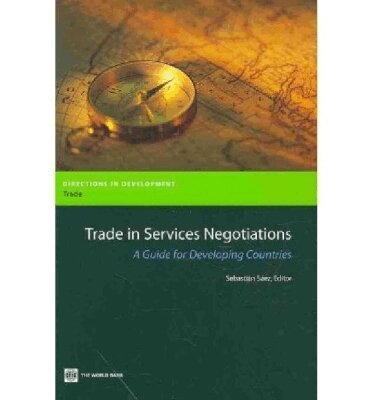
This book aims at contributing to address some of the challenges that developing countries, especially the least-developing countries, face in the design of trade in service policies and to provide governments with tools to better incorporate services in their export strategies, including negotiations and cooperation with trading partners, and unilateral reforms. This book helps to identify key policy challenges faced by developing country trade negotiators, regulatory policy officials and/or service suppliers. Management of both policy reforms and trade agreements requires investments in sounder regulatory regimes and the establishment of enforcement mechanisms to help countries gradually opening and mitigate any potential downside risks. A successful strategy requires a proper sequencing that through an orderly and transparent process allows to prepare for greater competition. Developing countries face serious resource and administrative constraints to adequately negotiate multiple services agreements that serve their trade interest.For many developing countries, the administrative burden of handling and negotiating multiple trade agreements has become a serious concern and this can hamper their opportunities to obtain adequate market access for their services exports. The book develops in detail the methodological framework for the construction of a database and the core elements that will comprise it, to help countries to organise and manage their services commitments. Little attention has been devoted to the organisation/preparation and the development, assessment and conclusion of the negotiation process. The book presents a simulation exercise designed for policymakers, trade negotiators, and trade practitioners working in the area of services. This exercise will help them to better understand the preparatory and negotiating stages of the process leading to liberalisation of trade in services.
392 kr
Skickas inom 10-15 vardagar
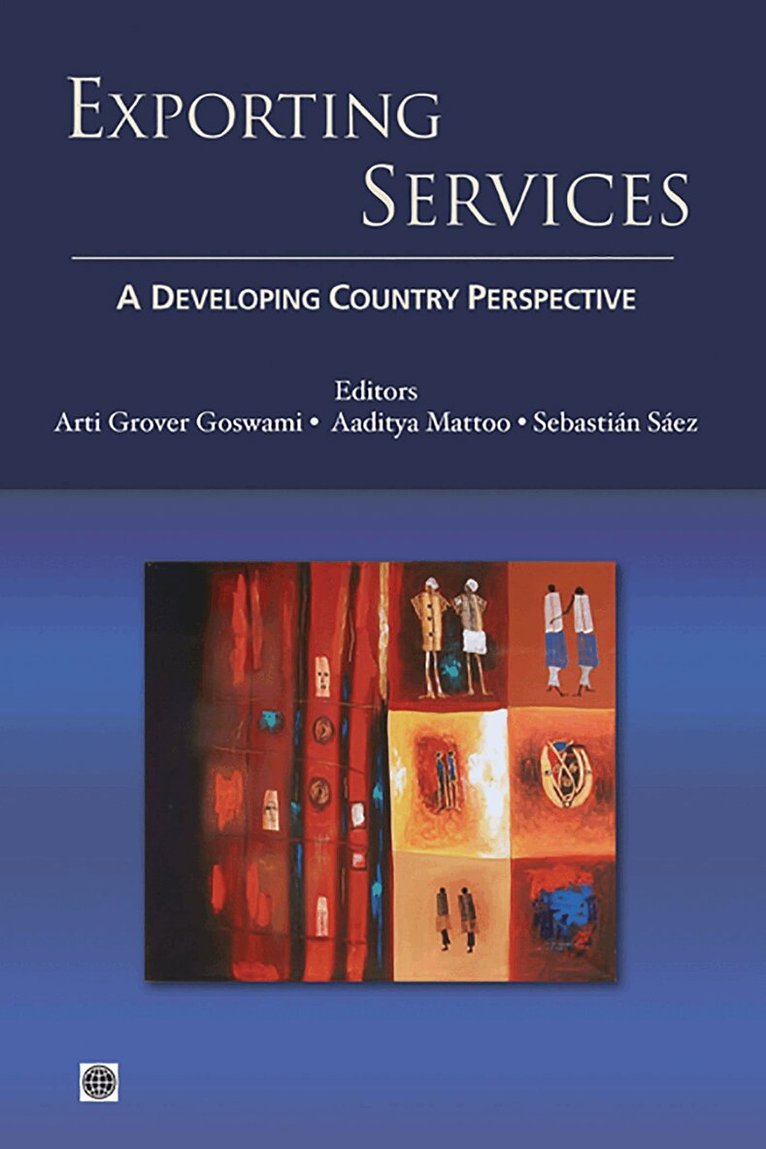
"The past two decades have seen exciting changes with developing countries emerging as exporters of services. Technological developments now make it easier to trade services across borders. But other avenues are being exploited: tourists visit not just to sightsee but also to be treated and educated, service providers move abroad under innovative new schemes, and some developing countries defy traditional notions by investing abroad in services. "Exporting Services: A Developing Country Perspective" takes a brave approach, combining exploratory econometric analysis with detailed case studies of representative countries: Brazil, Chile, the Arab Republic of Egypt, India, Kenya, Malaysia, and the Philippines. Two questions lead the analysis: How did these developing countries succeed in exporting services? What policy mix was successful and what strategies did not deliver the expected results?The analysis evaluates the role of three sets of factors: First, the fundamentals, which include a country's factor endowments, infrastructure, and institutional quality; second, policies affecting trade, investment, and labor mobility in services; and third, proactive policies in services designed to promote exports or investment. The case studies illustrate the complex nature of reforms and policy making in the service sector as well as the benefits of well-implemented reforms. Although success seems to be explained by a set of conditions that are difficult to replicate, common features can also be identified. Several countries have adopted policies to support exports, especially exports of information technology-related services. This resource will be valuable for policy makers, experts, and academics who are engaged in efforts to reform service and investment policies in their own country."
297 kr
Skickas inom 10-15 vardagar
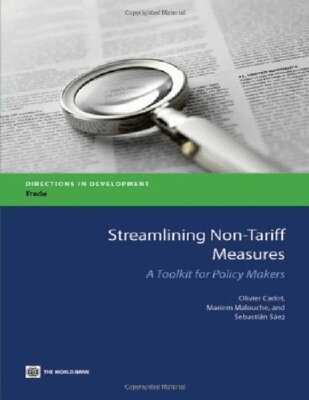
This toolkit provides a novel approach and a set of tools that allow policymakers and analysts to identify non-tariff measures (NTMs), assess their trade restrictiveness and impact on prices and welfare, and to strengthen the institutional coordination mechanism, transparency, and regulatory governance on NTMs. It also aims at encouraging economies to increasingly address the NTM agenda from a domestic competitiveness and/or poverty perspective rather than from a mercantilist standpoint of concessions to trading partners. NTMs are policy measures, other than ordinary customs tariffs, that can potentially have an economic effect on international trade in goods, changing quantities traded, or prices or both. While most NTMs are already subject to WTO disciplines, the main challenge is to allow governments to address public policy concerns without unnecessarily hurting trade competitiveness and while preventing disguised protectionism. This toolkit is predicated on the idea that the complexity and diversity of NTMs should be recognized. Problems should be identified at the country level through consultations with the private sector, and technical solutions should be sought through careful analysis and private/public dialogue. The underlying philosophy is similar to what is known as “Regulatory Impact Assessment” (RIA), but applied to the review of existing measures (no ex ante analysis), in response to specific demands from countries struggling with legacies of complicated and penalizing regulations. Dealing with existing measures has the advantage of responding to an immediate need and focusing on measures whose effects are known. The toolkit is organized as follows. Chapter 1 discusses the newly revamped NTM classification and pervasiveness of NTM. Chapter 2 elaborates on the analytics of an NTM review, walking the reader step by step through the key questions. Chapter 3 focuses on the institutional set up and key principles to successfully pursue the streamlining of regulations. Finally, chapters 4 and 5 provide some practical cases of streamlining both at the country and regional levels, and for product specific examples.
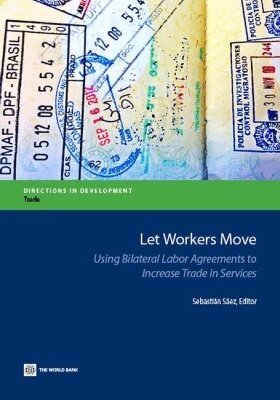
Let Workers Move
Using Bilateral Labor Agreements to Increase Trade in Services
Häftad, Engelska, 2013
296 kr
Skickas inom 10-15 vardagar
Unlike the movement of capital, the movement of labour across countries remains highly restricted - despite the huge global returns to international labour mobility. If the benefits of temporary labour mobility are so great, why is there not more movement? Progress appears to have been stymied not by the forum of negotiations but by the political sensitivity associated with even temporary labour mobility. To circumvent this problem, the use of bilateral labour agreements, which are generally not part of trade agreements, has been proposed as an alternative means of increasing temporary labour mobility.This book analyses the viability and performance of these agreements as a complement to other efforts to liberalise the temporary movement of people. It is based on the experiences of sending and receiving countries in Europe, North America, the Caribbean, and the Pacific. Although bilateral labour agreements are not designed to promote services exports by the sending country, they can be used to do so. Countries can design flexible strategies that combine both international trade and bilateral labour agreements. Trade agreements can provide rules and disciplines that grant market access for a wide range of activities. In contrast, bilateral labour agreements can allow countries, especially developing countries, to focus on the temporary movement of very specific categories of workers, such as computer programmers or electricians within the construction sector. The experiences of some Caribbean countries, the Pacific Islands countries, and the Philippines illustrate the importance of shared responsibility-at the design, implementation, and institutional levels. At the design level, sending and receiving countries need to agree on a set of objectives and align the design to meet them. At the implementation level, joint and cooperative management involving state and nonstate actors on both sides is required. At the institution-building level, needs must be jointly diagnosed, capacity constraints addressed, and, if possible, progress monitored and evaluated. Bilateral labour agreements can be an attractive option for middle-income countries whose migratory flows are relatively small and do not generate fears in receiving countries. Source country governments should make credible commitments to ensure the temporary nature of these flows. In conjunction with the private sector, they should establish mechanisms for selecting the sectors to promote in target markets.
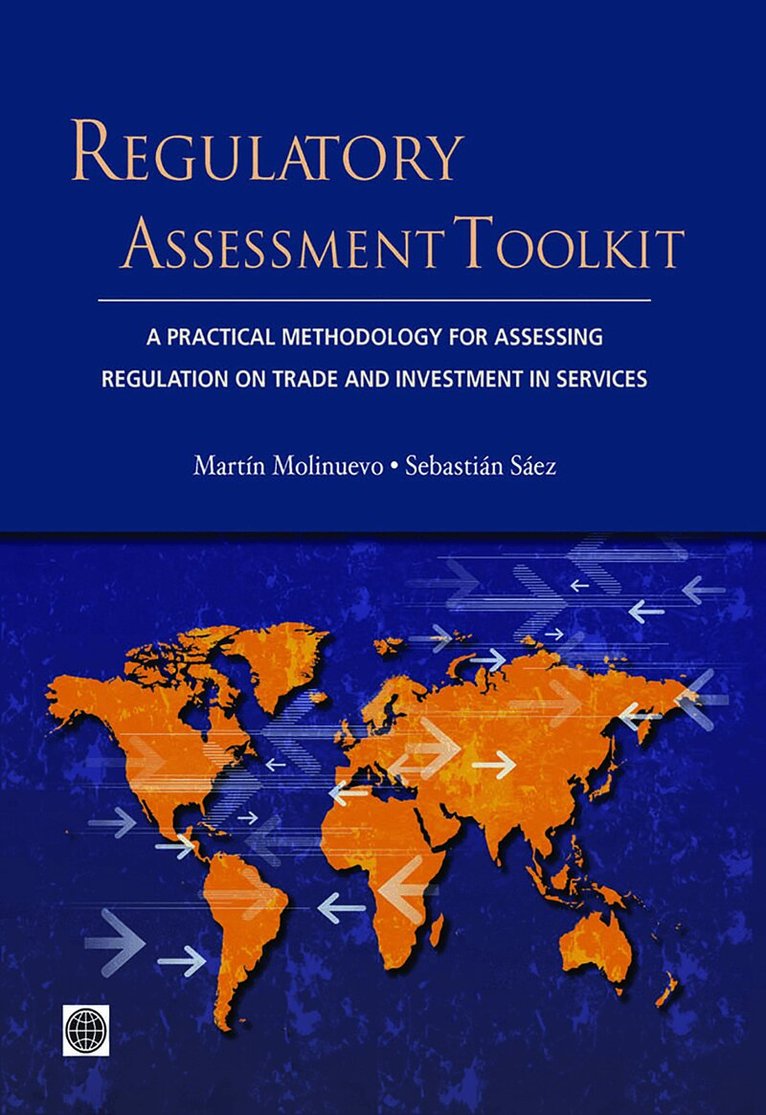
Regulatory Assessment Toolkit
A Practical Methodology to Assess Services Trade and Investment Regulations
Häftad, Engelska, 2014
392 kr
Skickas inom 10-15 vardagar
The services sector—ranging from telecommunications and banking to business processing and outsourcing—is increasingly recognised as part and parcel of any trade strategy, both as a source of export diversification in its own right as well as a key component of a country’s competitiveness. Unlike trade in goods, which is governed by border measures that regulate the entry of foreign merchandise, international trade in services is subject to a wide range of domestic laws and regulations that govern access and operations by both domestic and foreign suppliers. While such regulations are essential where market failures or externalities exist and to ensure non-economic objectives, it is often difficult to differentiate between legitimate policy objectives and protectionist measures that introduce distortions and inefficiency in the market. An unnecessarily restrictive regulatory framework limits the potential of the services sector to develop, and undermines the export opportunities and competitiveness of domestic businesses. This toolkit offers a practical methodology to assess the impact of services regulations: the Regulatory Assessment on Services Trade and Investment (RASTI). The RASTI helps to evaluate whether a country’s regulatory framework is promoting the development of an efficient domestic services market, and offers guidance on how to ensure that services regulation correctly addresses market failures and achieves public policy goals. The authors propose three steps towards a trade-related regulatory assessment: - mapping laws and regulations that affect trade and investment in services, and assessing the regulatory process and institutional arrangements; - wherever possible, providing a quantitative assessment of the impact of regulations on performance and market structure, including prices, quality and access; and - identifying alternative regulations and institutional set-ups that promote an enabling regulatory environment for services trade while achieving the desired policy goals. Performing a regulatory assessment can serve multiple purposes depending on the circumstances and the needs of the evaluators, including bridging information gaps; supporting regulatory reform; supporting trade negotiations; assessing regulatory performance; and promoting better regulatory practices. The Regulatory Assessment Toolkit will be of particular interest to policy makers and government officials from regulatory bodies, experts at development banks and donor agencies, and academics and researchers in the field of economic regulation.
392 kr
Skickas inom 10-15 vardagar
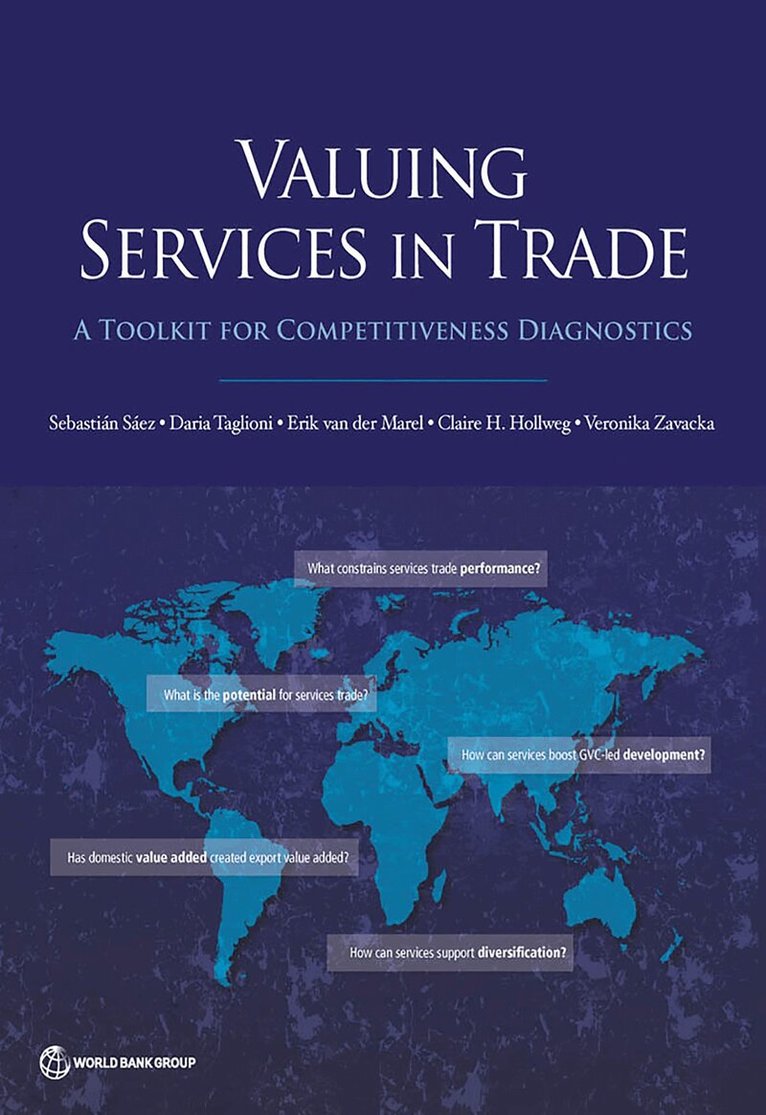
This Toolkit provides a framework, guidelines, and practical tools for conducting an analysis and diagnostics of trade competitiveness of the services sector. The methods of analysis are fully customised to address the features of the services sector. Successfully tested on country-specific assessments, the methods proposed in this toolkit aim to evaluate the competitiveness of the services sector and identify constraints to improved competitiveness and appropriate policy responses. The output of a services trade competitiveness assessment can be used to assess the overall performance of a country's services sector as well as for individual sub-sectors.In addition to the desk (quantitative) analysis, the success of a services trade competitiveness diagnostics (STCD) will depend on qualitative assessments and input from a wide variety of stakeholders in the country, including government officials and the private sector. A STCD should therefore be conducted in four key steps: preparation of a preliminary trade outcomes assessment based on available hard data; initial desk research and preparation for fieldwork; in-country field research; and finally, analysis and preparation of the final STCD report and policy recommendations.The toolkit consists of the following main sections:Overview and guidelines for conducting a STCD. This section is illustrative and appropriate to all audiences, including policy makers and managers overseeing a STCD exercise.Implementation toolkit, this provides detailed practical information and tools for carrying out the diagnostics exercise. The implementation toolkit is further divided in three modules:Module 1: Services Trade Outcomes Analysis (indicators and tools)Module 2: Services Trade Potential Analysis (indicators and tools)Module 3: Policy Options for Services Trade CompetitivenessIllustration of Reference DatabasesDatabases of indicators that can help assess the importance of services and services trade.
Services for Trade Competitiveness
Country and Regional Assessments of Services Trade
Häftad, Engelska, 2019
447 kr
Skickas inom 10-15 vardagar
This volume presents selected applications of the new methodologies developed by the World Bank's Trade and Regional Integration Unit to assess the competitiveness of countries services sector, discern the types of barriers to services that exist in the regulatory environment, and identify the resulting policy implications.