Martín Molinuevo – författare
Visar alla böcker från författaren Martín Molinuevo. Handla med fri frakt och snabb leverans.
2 produkter
2 produkter
Häftad, Engelska, 2014
465 kr
Skickas inom 10-15 vardagar
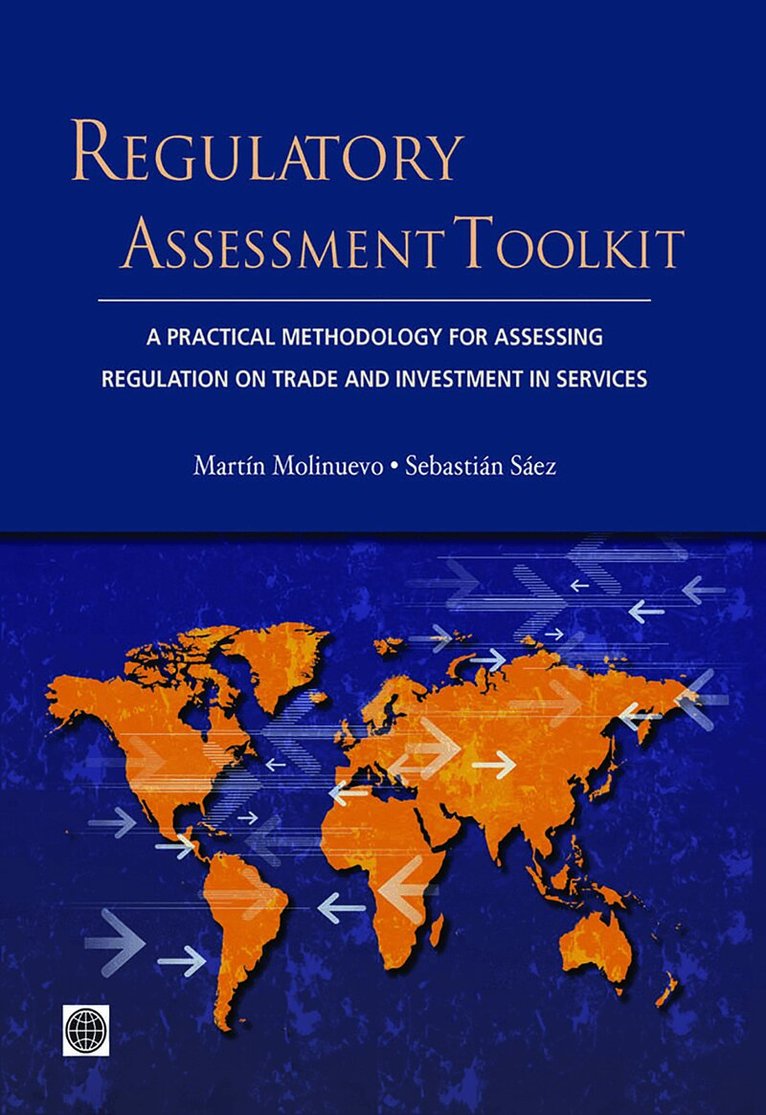
The services sector—ranging from telecommunications and banking to business processing and outsourcing—is increasingly recognised as part and parcel of any trade strategy, both as a source of export diversification in its own right as well as a key component of a country’s competitiveness. Unlike trade in goods, which is governed by border measures that regulate the entry of foreign merchandise, international trade in services is subject to a wide range of domestic laws and regulations that govern access and operations by both domestic and foreign suppliers. While such regulations are essential where market failures or externalities exist and to ensure non-economic objectives, it is often difficult to differentiate between legitimate policy objectives and protectionist measures that introduce distortions and inefficiency in the market. An unnecessarily restrictive regulatory framework limits the potential of the services sector to develop, and undermines the export opportunities and competitiveness of domestic businesses. This toolkit offers a practical methodology to assess the impact of services regulations: the Regulatory Assessment on Services Trade and Investment (RASTI). The RASTI helps to evaluate whether a country’s regulatory framework is promoting the development of an efficient domestic services market, and offers guidance on how to ensure that services regulation correctly addresses market failures and achieves public policy goals. The authors propose three steps towards a trade-related regulatory assessment: - mapping laws and regulations that affect trade and investment in services, and assessing the regulatory process and institutional arrangements; - wherever possible, providing a quantitative assessment of the impact of regulations on performance and market structure, including prices, quality and access; and - identifying alternative regulations and institutional set-ups that promote an enabling regulatory environment for services trade while achieving the desired policy goals. Performing a regulatory assessment can serve multiple purposes depending on the circumstances and the needs of the evaluators, including bridging information gaps; supporting regulatory reform; supporting trade negotiations; assessing regulatory performance; and promoting better regulatory practices. The Regulatory Assessment Toolkit will be of particular interest to policy makers and government officials from regulatory bodies, experts at development banks and donor agencies, and academics and researchers in the field of economic regulation.
E-bok
Engelska, 20112 494 kr
Läs direkt efter köp
This is the first book to tackle investment law and trade law jointly, and to compare the principles, rules, and dispute-settlement mechanisms of investment agreements with the multilateral framework of the WTO/GATS. Among the many invaluable questions the book addresses are the following: What are the substantive rules that apply to investment in services under investment agreements and the GATS? How do these disciplines differ? Which offers the best protection for investors in services and do they affect the governments’ policymaking capacity? Who can gain access to investor-State arbitration and WTO dispute settlement? The in-depth analysis, supported by an extensive review of existent jurisprudence, provides a thorough explanation of treaty standards like most favoured nation, national treatment, fair and equitable treatment, domestic regulation, and transparency, as well as procedural rules on access to the dispute-settlement mechanisms and enforcement procedures.