David A. Chappell – författare
308 kr
Skickas inom 5-8 vardagar
295 kr
Läs direkt efter köp
This book is a thorough introduction to Java Message Service (JMS), the standard Java application program interface (API) from Sun Microsystems that supports the formal communication known as "messaging" between computers in a network. JMS provides a common interface to standard messaging protocols and to special messaging services in support of Java programs. The messages exchange crucial data between computers, rather than between users--information such as event notification and service requests. Messaging is often used to coordinate programs in dissimilar systems or written in different programming languages.Using the JMS interface, a programmer can invoke the messaging services of IBM''s MQSeries, Progress Software''s SonicMQ, and other popular messaging product vendors. In addition, JMS supports messages that contain serialized Java objects and messages that contain Extensible Markup Language (XML) pages.Messaging is a powerful new paradigm that makes it easier to uncouple different parts of an enterprise application. Messaging clients work by sending messages to a message server, which is responsible for delivering the messages to their destination. Message delivery is asynchronous, meaning that the client can continue working without waiting for the message to be delivered. The contents of the message can be anything from a simple text string to a serialized Java object or an XML document.Java Message Service shows how to build applications using the point-to-point and publish-and-subscribe models; how to use features like transactions and durable subscriptions to make an application reliable; and how to use messaging within Enterprise JavaBeans. It also introduces a new EJB type, the MessageDrivenBean, that is part of EJB 2.0, and discusses integration of messaging into J2EE.
339 kr
Läs direkt efter köp
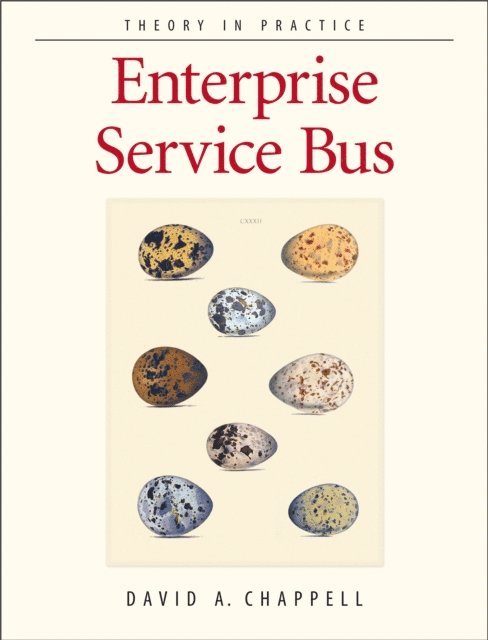
Large IT organizations increasingly face the challenge of integrating various web services, applications, and other technologies into a single network. The solution to finding a meaningful large-scale architecture that is capable of spanning a global enterprise appears to have been met in ESB, or Enterprise Service Bus. Rather than conform to the hub-and-spoke architecture of traditional enterprise application integration products, ESB provides a highly distributed approach to integration, with unique capabilities that allow individual departments or business units to build out their integration projects in incremental, digestible chunks, maintaining their own local control and autonomy, while still being able to connect together each integration project into a larger, more global integration fabric, or grid.Enterprise Service Bus offers a thorough introduction and overview for systems architects, system integrators, technical project leads, and CTO/CIO level managers who need to understand, assess, and evaluate this new approach. Written by Dave Chappell, one of the best known and authoritative voices in the field of enterprise middleware and standards-based integration, the book drills down into the technical details of the major components of ESB, showing how it can utilize an event-driven SOA to bring a variety of enterprise applications and services built on J2EE, .NET, C/C++, and other legacy environments into the reach of the everyday IT professional.With Enterprise Service Bus, readers become well versed in the problems faced by IT organizations today, gaining an understanding of how current technology deficiencies impact business issues. Through the study of real-world use cases and integration patterns drawn from several industries using ESB--including Telcos, financial services, retail, B2B exchanges, energy, manufacturing, and more--the book clearly and coherently outlines the benefits of moving toward this integration strategy. The book also compares ESB to other integration architectures, contrasting their inherent strengths and limitations.If you are charged with understanding, assessing, or implementing an integration architecture, Enterprise Service Bus will provide the straightforward information you need to draw your conclusions about this important disruptive technology.
295 kr
Läs direkt efter köp
This book is a thorough introduction to Java Message Service (JMS), the standard Java application program interface (API) from Sun Microsystems that supports the formal communication known as "messaging" between computers in a network. JMS provides a common interface to standard messaging protocols and to special messaging services in support of Java programs. The messages exchange crucial data between computers, rather than between users--information such as event notification and service requests. Messaging is often used to coordinate programs in dissimilar systems or written in different programming languages.Using the JMS interface, a programmer can invoke the messaging services of IBM''s MQSeries, Progress Software''s SonicMQ, and other popular messaging product vendors. In addition, JMS supports messages that contain serialized Java objects and messages that contain Extensible Markup Language (XML) pages.Messaging is a powerful new paradigm that makes it easier to uncouple different parts of an enterprise application. Messaging clients work by sending messages to a message server, which is responsible for delivering the messages to their destination. Message delivery is asynchronous, meaning that the client can continue working without waiting for the message to be delivered. The contents of the message can be anything from a simple text string to a serialized Java object or an XML document.Java Message Service shows how to build applications using the point-to-point and publish-and-subscribe models; how to use features like transactions and durable subscriptions to make an application reliable; and how to use messaging within Enterprise JavaBeans. It also introduces a new EJB type, the MessageDrivenBean, that is part of EJB 2.0, and discusses integration of messaging into J2EE.
330 kr
Läs direkt efter köp
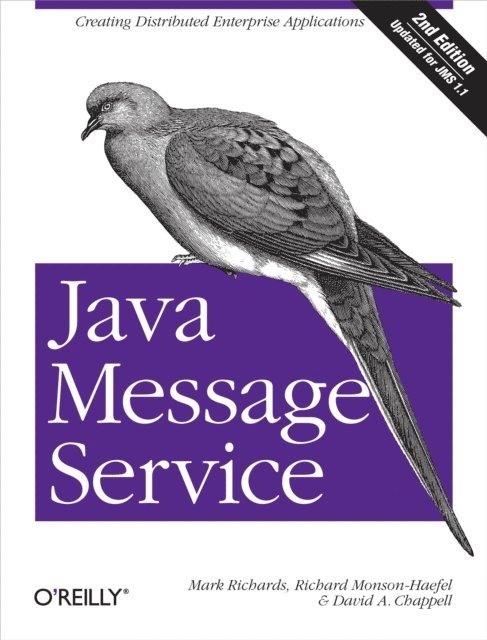
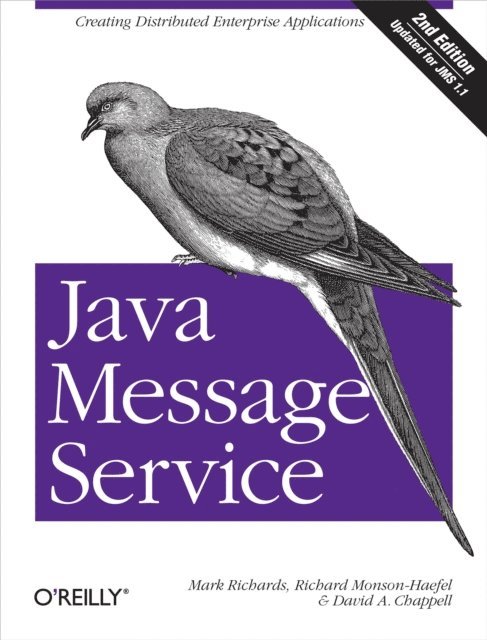
Java Message Service, Second Edition, is a thorough introduction to the standard API that supports "messaging" -- the software-to-software exchange of crucial data among network computers. You''ll learn how JMS can help you solve many architectural challenges, such as integrating dissimilar systems and applications, increasing scalability, eliminating system bottlenecks, supporting concurrent processing, and promoting flexibility and agility.Updated for JMS 1.1, this second edition also explains how this vendor-agnostic specification will help you write messaging-based applications using IBM''s MQ, Progress Software''s SonicMQ, ActiveMQ, and many other proprietary messaging services.With Java Message Service, you will:
Build applications using point-to-point and publish-and-subscribe messaging modelsUse features such as transactions and durable subscriptions to make an application reliableImplement messaging within Enterprise JavaBeans (EJB) using message-driven beansUse JMS with RESTful applications and with the Spring application frameworkMessaging is a powerful paradigm that makes it easier to uncouple different parts of an enterprise application. Java Message Service, Second Edition, will quickly teach you how to use the key technology that lies behind it.
311 kr
Läs direkt efter köp
Java Message Service, Second Edition, is a thorough introduction to the standard API that supports "messaging" -- the software-to-software exchange of crucial data among network computers. You''ll learn how JMS can help you solve many architectural challenges, such as integrating dissimilar systems and applications, increasing scalability, eliminating system bottlenecks, supporting concurrent processing, and promoting flexibility and agility.Updated for JMS 1.1, this second edition also explains how this vendor-agnostic specification will help you write messaging-based applications using IBM''s MQ, Progress Software''s SonicMQ, ActiveMQ, and many other proprietary messaging services.With Java Message Service, you will:
Build applications using point-to-point and publish-and-subscribe messaging modelsUse features such as transactions and durable subscriptions to make an application reliableImplement messaging within Enterprise JavaBeans (EJB) using message-driven beansUse JMS with RESTful applications and with the Spring application frameworkMessaging is a powerful paradigm that makes it easier to uncouple different parts of an enterprise application. Java Message Service, Second Edition, will quickly teach you how to use the key technology that lies behind it.
680 kr
Skickas inom 5-8 vardagar
668 kr
Läs direkt efter köp
668 kr
Läs direkt efter köp
317 kr
Läs direkt efter köp
Large IT organizations increasingly face the challenge of integrating various web services, applications, and other technologies into a single network. The solution to finding a meaningful large-scale architecture that is capable of spanning a global enterprise appears to have been met in ESB, or Enterprise Service Bus. Rather than conform to the hub-and-spoke architecture of traditional enterprise application integration products, ESB provides a highly distributed approach to integration, with unique capabilities that allow individual departments or business units to build out their integration projects in incremental, digestible chunks, maintaining their own local control and autonomy, while still being able to connect together each integration project into a larger, more global integration fabric, or grid.Enterprise Service Bus offers a thorough introduction and overview for systems architects, system integrators, technical project leads, and CTO/CIO level managers who need to understand, assess, and evaluate this new approach. Written by Dave Chappell, one of the best known and authoritative voices in the field of enterprise middleware and standards-based integration, the book drills down into the technical details of the major components of ESB, showing how it can utilize an event-driven SOA to bring a variety of enterprise applications and services built on J2EE, .NET, C/C++, and other legacy environments into the reach of the everyday IT professional.With Enterprise Service Bus, readers become well versed in the problems faced by IT organizations today, gaining an understanding of how current technology deficiencies impact business issues. Through the study of real-world use cases and integration patterns drawn from several industries using ESB--including Telcos, financial services, retail, B2B exchanges, energy, manufacturing, and more--the book clearly and coherently outlines the benefits of moving toward this integration strategy. The book also compares ESB to other integration architectures, contrasting their inherent strengths and limitations.If you are charged with understanding, assessing, or implementing an integration architecture, Enterprise Service Bus will provide the straightforward information you need to draw your conclusions about this important disruptive technology.
2 457 kr
Skickas inom 10-15 vardagar
584 kr
Skickas inom 10-15 vardagar