David A. Davis - Böcker
Visar alla böcker från författaren David A. Davis. Handla med fri frakt och snabb leverans.
13 produkter
13 produkter
450 kr
Skickas inom 5-8 vardagar
232 kr
Skickas inom 5-8 vardagar
250 kr
Skickas
Not Only War: A Story of Two Great Conflicts is the only World War I novel written by an African American veteran. In the book, Montgomery Jason, an idealistic African American college student, enlists to fight for freedom and democracy. When he falls in love with a French woman, he learns that freedom and democracy do not apply to black soldiers. Victor Daly wrote ""Not Only War"" in the midst of a major shift in America's racial dynamics. Hundreds of thousands of African Americans moved from the South to the North to work in wartime industries, and thousands more joined the American Expeditionary Force. Daly was among a small group of African Americans who trained as officers. He saw combat in France and was decorated for his service there. After the war, when racial violence in America escalated, Daly and many other returning soldiers fought for civil rights. During the Harlem Renaissance, African Americans used literature to make the case for equality. In ""Not Only War"", Daly portrays the effects of the color line on black soldiers in the segregated military. The two great conflicts in the book are the physical combat of war and the psychological combat of racism. In addition to the original content of ""Not Only War"", this paperback reprint includes three short stories and a previously published interview, as well as an introduction by David A. Davis.
1 169 kr
Skickas inom 10-15 vardagar
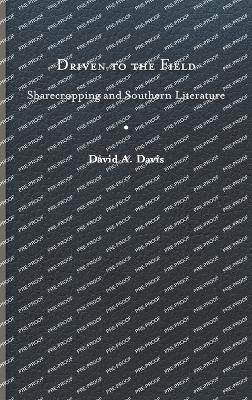
Driven to the Field traces the culture of sharecropping—crucial to understanding life in the southern United States—from Emancipation to the twenty-first century. By reading dozens of works of literature in their historical context, David A. Davis demonstrates how sharecropping emerged, endured for a century, and continues to resonate in American culture. Following the end of slavery, sharecropping initially served as an expedient solution to a practical problem, but it quickly developed into an entrenched power structure situated between slavery and freedom that exploited the labor of Blacks and poor whites to produce agricultural commodities.Sharecropping was the economic linchpin in the South’s social structure, and the region’s political system, race relations, and cultural practices were inextricably linked with this peculiar form of tenant farming from the end of the Civil War through the civil rights movement. Driven to the Field analyzes literary portrayals of this system to explain how it defined the culture of the South, revealing multiple genres of literature that depicted sharecropping, such as cotton romances, agricultural uplift novels, proletarian sharecropper fiction, and sharecropper autobiographies—important works of American literature that have never before been evaluated and discussed in their proper context.
436 kr
Skickas inom 10-15 vardagar
Driven to the Field traces the culture of sharecropping—crucial to understanding life in the southern United States—from Emancipation to the twenty-first century. By reading dozens of works of literature in their historical context, David A. Davis demonstrates how sharecropping emerged, endured for a century, and continues to resonate in American culture. Following the end of slavery, sharecropping initially served as an expedient solution to a practical problem, but it quickly developed into an entrenched power structure situated between slavery and freedom that exploited the labor of Blacks and poor whites to produce agricultural commodities.Sharecropping was the economic linchpin in the South’s social structure, and the region’s political system, race relations, and cultural practices were inextricably linked with this peculiar form of tenant farming from the end of the Civil War through the civil rights movement. Driven to the Field analyzes literary portrayals of this system to explain how it defined the culture of the South, revealing multiple genres of literature that depicted sharecropping, such as cotton romances, agricultural uplift novels, proletarian sharecropper fiction, and sharecropper autobiographies—important works of American literature that have never before been evaluated and discussed in their proper context.
2 110 kr
Skickas inom 3-6 vardagar
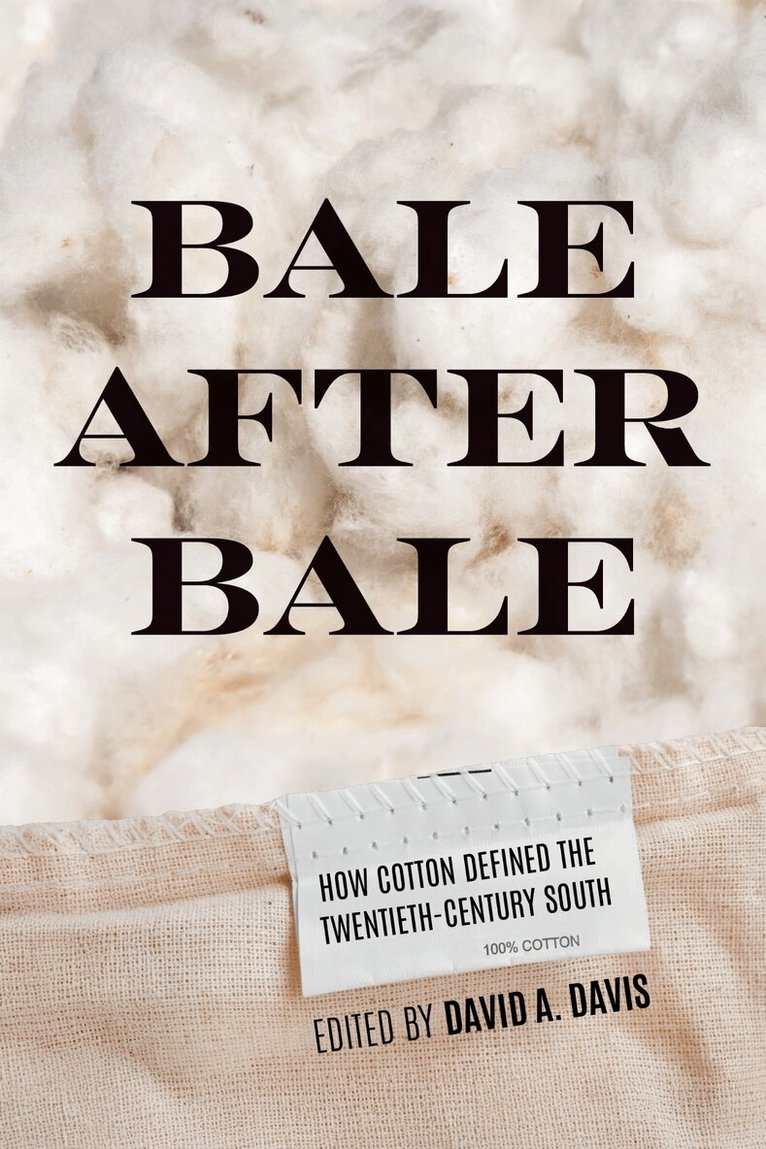
From the cotton boll to the Cotton Bowl in modern American cultureThere are few places on earth as thoroughly identified with a crop as the American South is with cotton. Burgundy is known for wine, and Java has coffee. In the South, for most of its history, cotton was king. Through much of the twentieth century, cotton cultivation determined nearly every aspect of life in the region. In Bale After Bale, leading historians and cultural critics offer multifaceted examinations and multimedia approaches to understanding the place of cotton in the twentieth-century South.The essays in this collection examine the history of the hands that picked and processed cotton, the communities who celebrated cotton, the unions who organized cotton workers, the connections between cotton farmers in the South and banana farmers in Latin America, the portrayal of cotton in Faulkner's Yoknapatawpha County, the poems and songs of the boll weevil, the role of cotton in blues music, the depiction of cotton on the silver screen, and the memories of people displaced by mechanical cotton pickers. As these essays demonstrate, understanding the nature of cotton's persistence into the twentieth century and the decline of the cotton economy are crucial to understanding the contemporary South and today's United States.
681 kr
Skickas inom 3-6 vardagar
From the cotton boll to the Cotton Bowl in modern American cultureThere are few places on earth as thoroughly identified with a crop as the American South is with cotton. Burgundy is known for wine, and Java has coffee. In the South, for most of its history, cotton was king. Through much of the twentieth century, cotton cultivation determined nearly every aspect of life in the region. In Bale After Bale, leading historians and cultural critics offer multifaceted examinations and multimedia approaches to understanding the place of cotton in the twentieth-century South.The essays in this collection examine the history of the hands that picked and processed cotton, the communities who celebrated cotton, the unions who organized cotton workers, the connections between cotton farmers in the South and banana farmers in Latin America, the portrayal of cotton in Faulkner's Yoknapatawpha County, the poems and songs of the boll weevil, the role of cotton in blues music, the depiction of cotton on the silver screen, and the memories of people displaced by mechanical cotton pickers. As these essays demonstrate, understanding the nature of cotton's persistence into the twentieth century and the decline of the cotton economy are crucial to understanding the contemporary South and today's United States.
354 kr
Skickas inom 7-10 vardagar
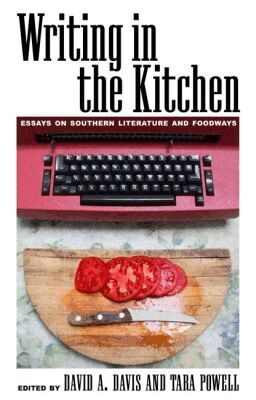
Scarlett O'Hara munched on a radish and vowed never to go hungry again. Vardaman Bundren ate bananas in Faulkner's Jefferson, and the Invisible Man dined on a sweet potato in Harlem. Although food and stories may be two of the most prominent cultural products associated with the South, the connections between them have not been thoroughly explored until now. Southern food has become the subject of increasingly self-conscious intellectual consideration. The Southern Foodways Alliance, the Southern Food and Beverage Museum, food-themed issues of Oxford American and Southern Cultures, and a spate of new scholarly and popular books demonstrate this interest. Writing in the Kitchen explores the relationship between food and literature and makes a major contribution to the study of both southern literature and of southern foodways and culture more widely. This collection examines food writing in a range of literary expressions, including cookbooks, agricultural journals, novels, stories, and poems. Contributors interpret how authors use food to explore the changing South, considering the ways race, ethnicity, class, gender, and region affect how and what people eat. They describe foods from specific southern places such as New Orleans and Appalachia, engage both the historical and contemporary South, and study the food traditions of ethnicities as they manifest through the written word.
1 352 kr
Skickas inom 10-15 vardagar
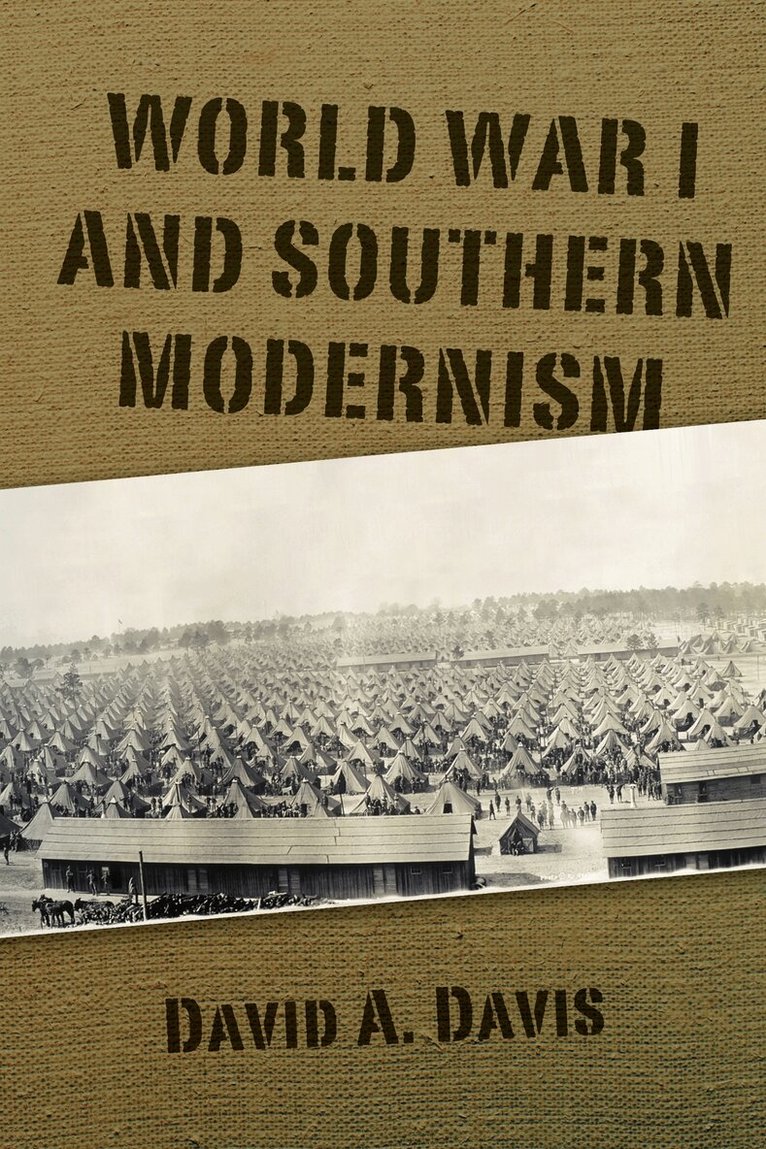
When the United States entered World War I, parts of the country had developed industries, urban cultures, and democratic political systems, but the South lagged behind, remaining an impoverished, agriculture region. Despite New South boosterism, the culture of the early twentieth-century South was comparatively artistically arid. Yet, southern writers dominated the literary marketplace by the 1920s and 1930s. World War I brought southerners into contact with modernity before the South fully modernized. This shortfall created an inherent tension between the region’s existing agricultural social structure and the processes of modernization, leading to distal modernism, a form of writing that combines elements of modernism to depict non-modern social structures. Critics have struggled to formulate explanations for the eruption of modern southern literature, sometimes called the Southern Renaissance. ,br>Pinpointing World War I as the catalyst, David A. Davis argues southern modernism was not a self-generating outburst of writing, but a response to the disruptions modernity generated in the region. In World War I and Southern Modernism, Davis examines dozens of works of literature by writers, including William Faulkner, Ellen Glasgow, and Claude McKay, that depict the South during the war. Topics explored in the book include contact between the North and the South, southerners who served in combat, and the developing southern economy. Davis also provides a new lens for this argument, taking a closer look at African Americans in the military and changing gender roles.
420 kr
Skickas inom 10-15 vardagar
Winner of the 2018 Eudora Welty Prize.When the United States entered World War I, parts of the country had developed industries, urban cultures, and democratic political systems, but the South lagged behind, remaining an impoverished, agriculture region. Despite New South boosterism, the culture of the early twentieth-century South was comparatively artistically arid. Yet, southern writers dominated the literary marketplace by the 1920s and 1930s. World War I brought southerners into contact with modernity before the South fully modernized. This shortfall created an inherent tension between the region's existing agricultural social structure and the processes of modernization, leading to distal modernism, a form of writing that combines elements of modernism to depict non-modern social structures. Critics have struggled to formulate explanations for the eruption of modern southern literature, sometimes called the Southern Renaissance. Pinpointing World War I as the catalyst, David A. Davis argues southern modernism was not a self-generating outburst of writing, but a response to the disruptions modernity generated in the region. In World War I and Southern Modernism, Davis examines dozens of works of literature by writers, including William Faulkner, Ellen Glasgow, and Claude McKay, that depict the South during the war. Topics explored in the book include contact between the North and the South, southerners who served in combat, and the developing southern economy. Davis also provides a new lens for this argument, taking a closer look at African Americans in the military and changing gender roles.
741 kr
Skickas inom 10-15 vardagar
Scarlett O'Hara munched on a radish and vowed never to go hungry again. Vardaman Bundren ate bananas in Faulkner's Jefferson, and the Invisible Man dined on a sweet potato in Harlem. Although food and stories may be two of the most prominent cultural products associated with the South, the connections between them have not been thoroughly explored until now. Southern food has become the subject of increasingly self-conscious intellectual consideration. The Southern Foodways Alliance, the Southern Food and Beverage Museum, food-themed issues of Oxford American and Southern Cultures, and a spate of new scholarly and popular books demonstrate this interest. Writing in the Kitchen explores the relationship between food and literature and makes a major contribution to the study of both southern literature and of southern foodways and culture more widely. This collection examines food writing in a range of literary expressions, including cookbooks, agricultural journals, novels, stories, and poems. Contributors interpret how authors use food to explore the changing South, considering the ways race, ethnicity, class, gender, and region affect how and what people eat. They describe foods from specific southern places such as New Orleans and Appalachia, engage both the historical and contemporary South, and study the food traditions of ethnicities as they manifest through the written word.
256 kr
Skickas inom 3-6 vardagar
245 kr
Skickas inom 3-6 vardagar