David A. Gorlewski - Böcker
Visar alla böcker från författaren David A. Gorlewski. Handla med fri frakt och snabb leverans.
3 produkter
3 produkter
Del 425 - Counterpoints
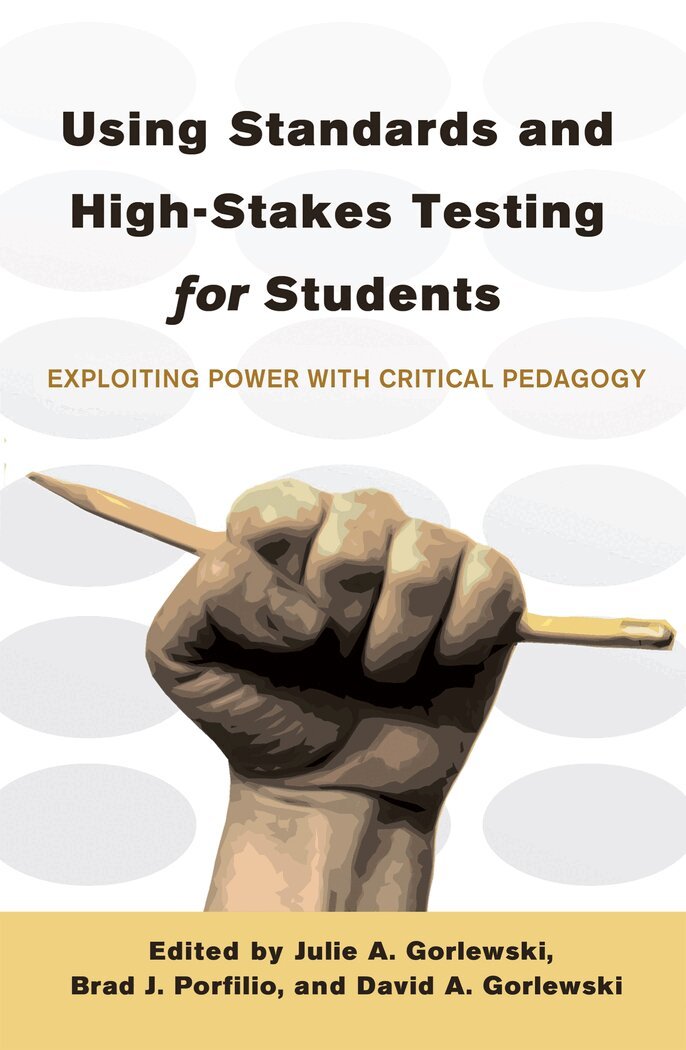
Using Standards and High-Stakes Testing for Students
Exploiting Power with Critical Pedagogy
Häftad, Engelska, 2012
416 kr
Skickas inom 5-8 vardagar
This book has received the AESA (American Educational Studies Association) Critics Choice Award 2012.This book overturns the typical conception of standards, empowering educators by providing concrete examples of how top-down models of assessment can be embraced and used in ways that are consistent with critical pedagogies. Although standards, as broad frameworks for setting learning targets, are not necessarily problematic, when they are operationalized as high-stakes assessments, test-based pedagogies emerge and frequently dominate the curriculum, leaving little room for critical pedagogies. In addition, critics maintain that high-stakes assessments perpetuate current class structures by maintaining skill gaps and controlling ideology, particularly beliefs in individualism, meritocracy, and what counts as knowledge. This book offers readers a deepened awareness of how educators can alleviate the effects of standardization, especially for students in poor and working-class communities. As teachers negotiate their roles in this time of increasing regulation and standardization, it is essential to maintain and model a critical stance toward curriculum and instruction. Educators know why this approach is vital: This book illustrates how to make it happen.
Del 425 - Counterpoints
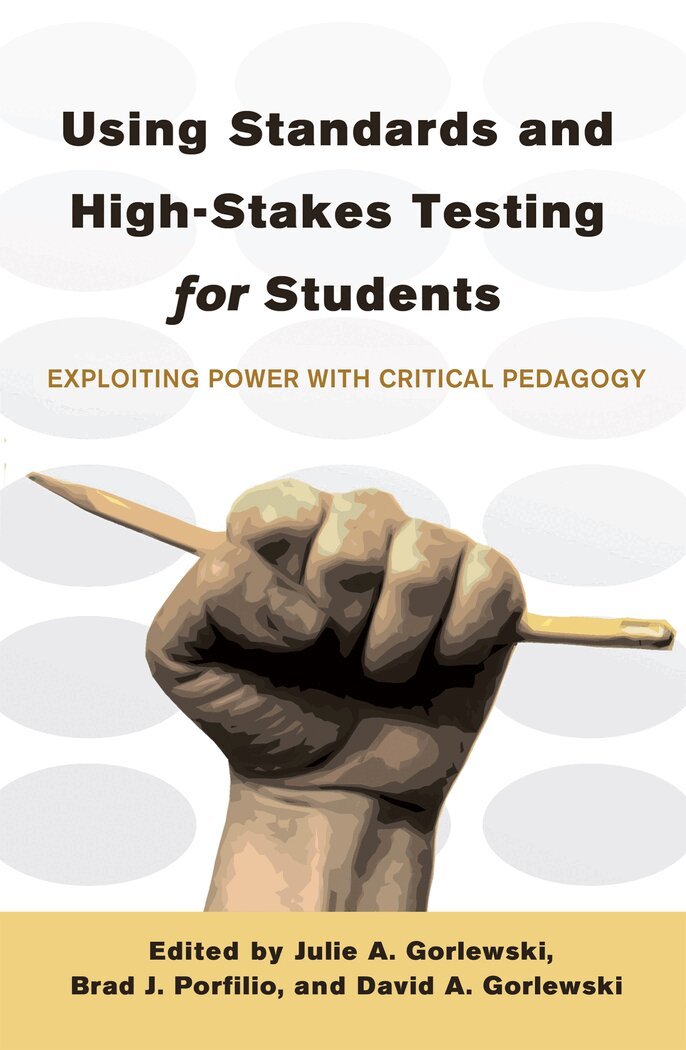
Using Standards and High-Stakes Testing for Students
Exploiting Power with Critical Pedagogy
Inbunden, Engelska, 2012
1 576 kr
Skickas inom 5-8 vardagar
This book has received the AESA (American Educational Studies Association) Critics Choice Award 2012.This book overturns the typical conception of standards, empowering educators by providing concrete examples of how top-down models of assessment can be embraced and used in ways that are consistent with critical pedagogies. Although standards, as broad frameworks for setting learning targets, are not necessarily problematic, when they are operationalized as high-stakes assessments, test-based pedagogies emerge and frequently dominate the curriculum, leaving little room for critical pedagogies. In addition, critics maintain that high-stakes assessments perpetuate current class structures by maintaining skill gaps and controlling ideology, particularly beliefs in individualism, meritocracy, and what counts as knowledge. This book offers readers a deepened awareness of how educators can alleviate the effects of standardization, especially for students in poor and working-class communities. As teachers negotiate their roles in this time of increasing regulation and standardization, it is essential to maintain and model a critical stance toward curriculum and instruction. Educators know why this approach is vital: This book illustrates how to make it happen.
Del 447 - Counterpoints
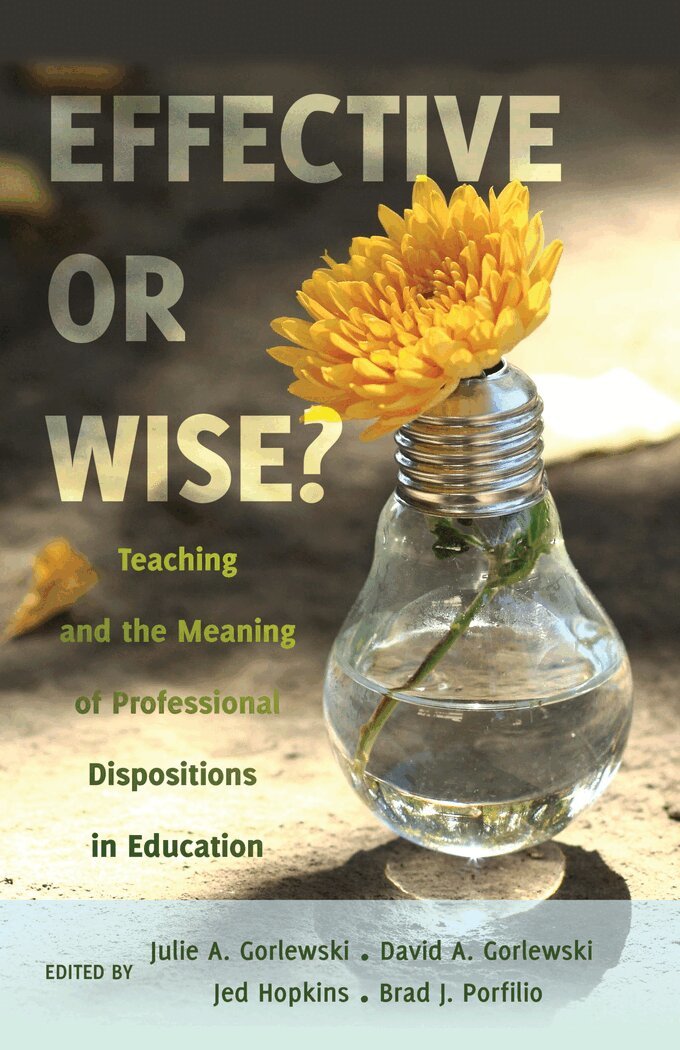
Effective or Wise?
Teaching and the Meaning of Professional Dispositions in Education
Häftad, Engelska, 2014
342 kr
Tillfälligt slut
In our work as educators, we all aspire to be effective. We also aspire to be wise. If teachers are to represent and advocate for education, we must become the stewards of a discourse that nurtures education’s possibilities. This book explores how teacher dispositions are defined, developed, cultivated, and assessed. The authors in the volume consider the various and interconnected ways in which educators’ values, beliefs, attitudes, and behaviors are performed and how these performances affect experiences and practices of learning. This text investigates complex questions, such as: How should teachers be? and Who should decide how teachers should be? In different ways, all the chapters in this book invite us into the work of reinvigorating educational discourse. The contributors contradict the idea that wisdom is the province of the lone genius who possesses knowledge that is obscure to the majority. Instead, they ask us all to participate in the necessarily collaborative endeavor of discourse stewardship in – as grand as it may sound – the pursuit of wisdom.