Julie A. Gorlewski - Böcker
Visar alla böcker från författaren Julie A. Gorlewski. Handla med fri frakt och snabb leverans.
9 produkter
9 produkter
Del 425 - Counterpoints
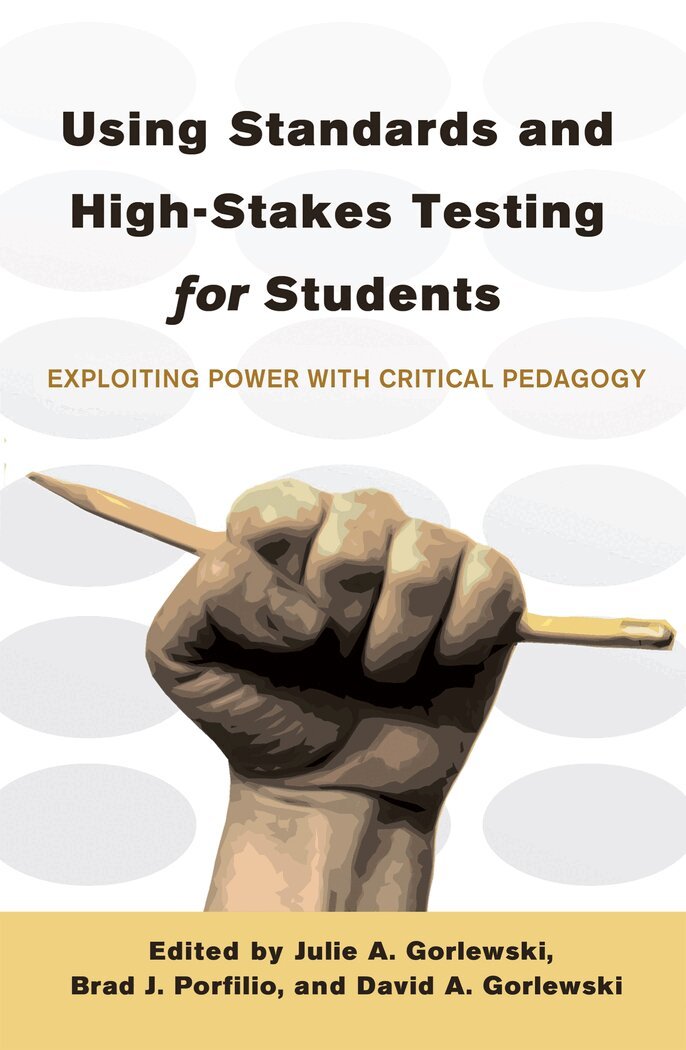
Using Standards and High-Stakes Testing for Students
Exploiting Power with Critical Pedagogy
Häftad, Engelska, 2012
416 kr
Skickas inom 5-8 vardagar
This book has received the AESA (American Educational Studies Association) Critics Choice Award 2012.This book overturns the typical conception of standards, empowering educators by providing concrete examples of how top-down models of assessment can be embraced and used in ways that are consistent with critical pedagogies. Although standards, as broad frameworks for setting learning targets, are not necessarily problematic, when they are operationalized as high-stakes assessments, test-based pedagogies emerge and frequently dominate the curriculum, leaving little room for critical pedagogies. In addition, critics maintain that high-stakes assessments perpetuate current class structures by maintaining skill gaps and controlling ideology, particularly beliefs in individualism, meritocracy, and what counts as knowledge. This book offers readers a deepened awareness of how educators can alleviate the effects of standardization, especially for students in poor and working-class communities. As teachers negotiate their roles in this time of increasing regulation and standardization, it is essential to maintain and model a critical stance toward curriculum and instruction. Educators know why this approach is vital: This book illustrates how to make it happen.
Del 425 - Counterpoints
Using Standards and High-Stakes Testing for Students
Exploiting Power with Critical Pedagogy
Inbunden, Engelska, 2012
1 576 kr
Skickas inom 5-8 vardagar
This book has received the AESA (American Educational Studies Association) Critics Choice Award 2012.This book overturns the typical conception of standards, empowering educators by providing concrete examples of how top-down models of assessment can be embraced and used in ways that are consistent with critical pedagogies. Although standards, as broad frameworks for setting learning targets, are not necessarily problematic, when they are operationalized as high-stakes assessments, test-based pedagogies emerge and frequently dominate the curriculum, leaving little room for critical pedagogies. In addition, critics maintain that high-stakes assessments perpetuate current class structures by maintaining skill gaps and controlling ideology, particularly beliefs in individualism, meritocracy, and what counts as knowledge. This book offers readers a deepened awareness of how educators can alleviate the effects of standardization, especially for students in poor and working-class communities. As teachers negotiate their roles in this time of increasing regulation and standardization, it is essential to maintain and model a critical stance toward curriculum and instruction. Educators know why this approach is vital: This book illustrates how to make it happen.
Del 447 - Counterpoints
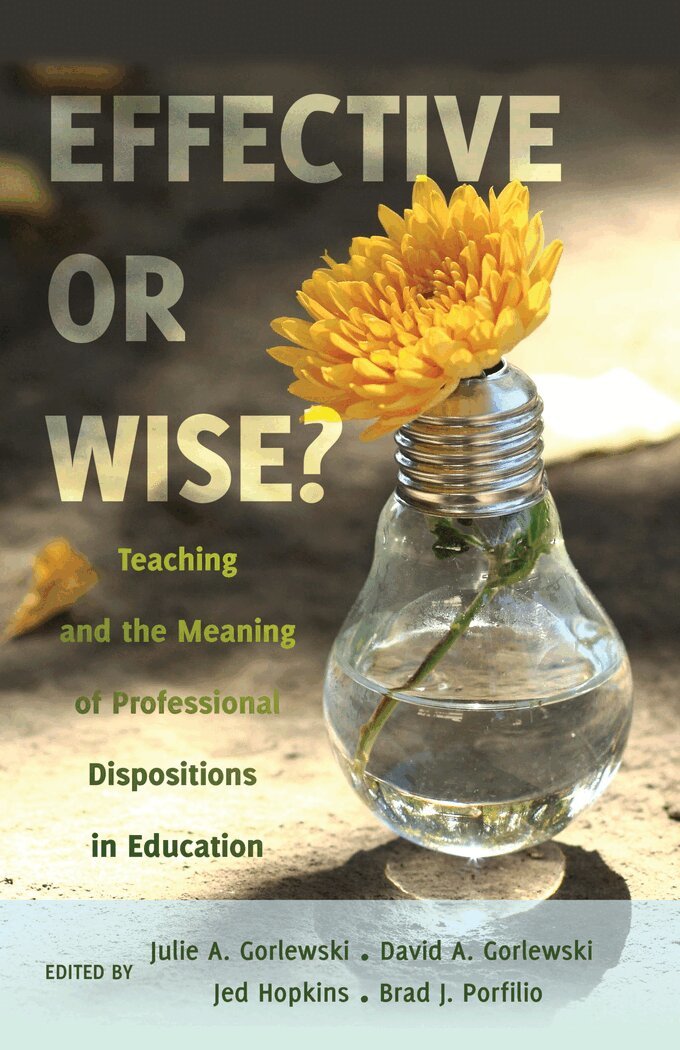
Effective or Wise?
Teaching and the Meaning of Professional Dispositions in Education
Häftad, Engelska, 2014
342 kr
Tillfälligt slut
In our work as educators, we all aspire to be effective. We also aspire to be wise. If teachers are to represent and advocate for education, we must become the stewards of a discourse that nurtures education’s possibilities. This book explores how teacher dispositions are defined, developed, cultivated, and assessed. The authors in the volume consider the various and interconnected ways in which educators’ values, beliefs, attitudes, and behaviors are performed and how these performances affect experiences and practices of learning. This text investigates complex questions, such as: How should teachers be? and Who should decide how teachers should be? In different ways, all the chapters in this book invite us into the work of reinvigorating educational discourse. The contributors contradict the idea that wisdom is the province of the lone genius who possesses knowledge that is obscure to the majority. Instead, they ask us all to participate in the necessarily collaborative endeavor of discourse stewardship in – as grand as it may sound – the pursuit of wisdom.
448 kr
Skickas inom 5-8 vardagar
Pedagogies of Kindness and Respect presents a wide variety of concepts from scholars and practitioners who discuss pedagogies of kindness, an alternative to the «no excuses» ideology now dominating the way that children are raised and educated in the U.S. today. The fields of education, and especially early childhood education, include some histories and perspectives that treat those who are younger with kindness and respect. This book demonstrates an informed awareness of this history and the ways that old and new ideas can counter current conditions that are harmful to both those who are younger and those who are older, while avoiding the reconstitution of the romantic, innocent child who needs to be saved by more advanced adults. Two interpretations of the upbringing of children are investigated and challenged, one suggesting that the poor do not know how to raise their children and thus need help, while the other looks at those who are privileged and therefore know how to nurture their young. These opposing views have been discussed and problematized for more than thirty years. Pedagogies of Kindness and Respect investigates the issue of why this circumstance has continued and even worsened today.
1 469 kr
Skickas inom 5-8 vardagar
Pedagogies of Kindness and Respect presents a wide variety of concepts from scholars and practitioners who discuss pedagogies of kindness, an alternative to the «no excuses» ideology now dominating the way that children are raised and educated in the U.S. today. The fields of education, and especially early childhood education, include some histories and perspectives that treat those who are younger with kindness and respect. This book demonstrates an informed awareness of this history and the ways that old and new ideas can counter current conditions that are harmful to both those who are younger and those who are older, while avoiding the reconstitution of the romantic, innocent child who needs to be saved by more advanced adults. Two interpretations of the upbringing of children are investigated and challenged, one suggesting that the poor do not know how to raise their children and thus need help, while the other looks at those who are privileged and therefore know how to nurture their young. These opposing views have been discussed and problematized for more than thirty years. Pedagogies of Kindness and Respect investigates the issue of why this circumstance has continued and even worsened today.
533 kr
Skickas inom 7-10 vardagar
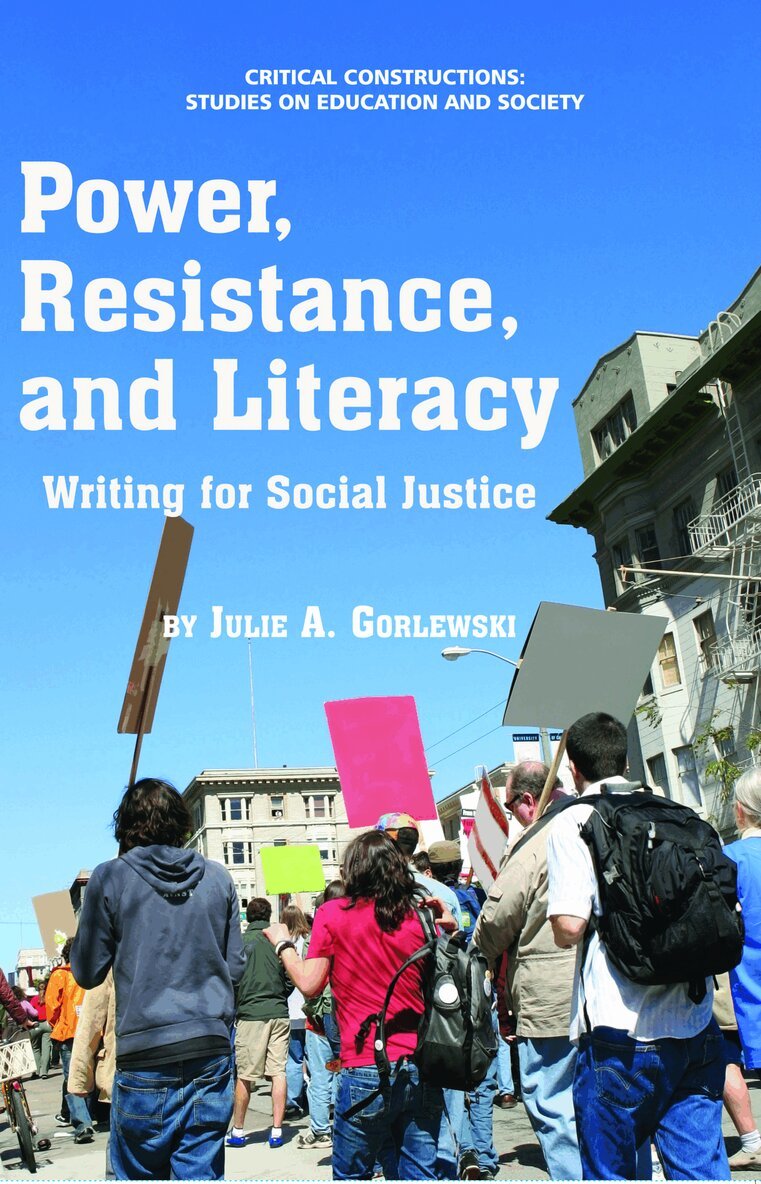
Students in public schools serving poor and working-class students are inundated by the effects of high-stakes examinations. Teachers are demoralized and students suffer substandard curricular and pedagogical experiences. These effects are articulated by students and teachers in the high school that provided the setting for the critical ethnography on which this text is based. Teachers resent being judged on the basis of students’ performance on standardized assessments. They are deprofessionalized as their roles are oriented toward working-class norms. Students feel alienated by content that is meaningless and test-based pedagogies that are disempowering.While these findings are disturbing, critical theory provides a foundation for seeking hope. By incorporating inquiry and dialogue, this theoretical framework opens a space where resistance can be revealed and examined. In this case, the study exposed glimmers of resistance, spaces in the structure of schooling where students and teachers critique the system and suggest ways of subverting the negative effects of the neoliberal reforms through dialogic, empowering, culturally responsive pedagogies.Collective resistance, achieved through dialogic pedagogies that build on understandings of resistance and power, can cultivate theoretical and material spaces where a cycle of praxis can enhance possibilities for social justice. To that end, the conclusion is devoted to the implementation of critical, dialogic approaches to literacies, approaches intended to interrupt the hegemonic influences that perpetuate social reproduction by capitalizing on the potential for solidarity and collective agency among the students and teachers who populate and educate the working classes. This book would interest teacher educators, teachers, and school administrators.
981 kr
Skickas inom 7-10 vardagar
Students in public schools serving poor and working-class students are inundated by the effects of high-stakes examinations. Teachers are demoralized and students suffer substandard curricular and pedagogical experiences. These effects are articulated by students and teachers in the high school that provided the setting for the critical ethnography on which this text is based. Teachers resent being judged on the basis of students’ performance on standardized assessments. They are deprofessionalized as their roles are oriented toward working-class norms. Students feel alienated by content that is meaningless and test-based pedagogies that are disempowering.While these findings are disturbing, critical theory provides a foundation for seeking hope. By incorporating inquiry and dialogue, this theoretical framework opens a space where resistance can be revealed and examined. In this case, the study exposed glimmers of resistance, spaces in the structure of schooling where students and teachers critique the system and suggest ways of subverting the negative effects of the neoliberal reforms through dialogic, empowering, culturally responsive pedagogies.Collective resistance, achieved through dialogic pedagogies that build on understandings of resistance and power, can cultivate theoretical and material spaces where a cycle of praxis can enhance possibilities for social justice. To that end, the conclusion is devoted to the implementation of critical, dialogic approaches to literacies, approaches intended to interrupt the hegemonic influences that perpetuate social reproduction by capitalizing on the potential for solidarity and collective agency among the students and teachers who populate and educate the working classes. This book would interest teacher educators, teachers, and school administrators.
646 kr
Skickas inom 7-10 vardagar
Democracy can mean a range of concepts, covering everything from freedoms, rights, elections, governments, processes, philosophies and a panoply of abstract and concrete notions that can be mediated by power, positionality, culture, time and space. Democracy can also be translated into brute force, hegemony, docility, compliance and conformity, as in wars will be decided on the basis of the needs of elites, or major decisions about spending finite resources will be the domain of the few over the masses, or people will be divided along the lines of race, ethnicity, class, religion, etc. because it is advantageous for maintaining exploitative political systems in place to do so. Often, these frameworks are developed and reified based on the notion that elections give the right to societies, or segments of societies, to install regimes, institutions and operating systems that are then supposedly legitimated and rendered infinitely just because formal power resides in the hands of those dominating forces.This book is interested in advancing a critical analysis of the hegemonic paradigm described above, one that seeks higher levels of political literacy and consciousness, and one that makes the connection with education. What does education have to do with democracy? How does education shape, influence, impinge on, impact, negate, facilitate and/or change the context, contours and realities of democracy? How can we teach for and about democracy to alter and transform the essence of what democracy is, and, importantly, what it should be? This book advances the notion of decency in relation to democracy, and is underpinned by an analysis of meaningful, critically-engaged education. Is it enough to be kind, nice, generous and hopeful when we can also see signs of rampant, entrenched and debilitating racism, sexism, poverty, violence, injustice, war and other social inequalities? If democracy is intended to be a legitimating force for good, how does education inform democracy? What types of knowledge, experience, analysis and being are helpful to bring about newer, more meaningful and socially just forms of democracy? Throughout some twenty chapters from a range of international scholars, this book includes three sections: Constructing Meanings for Democracy and Decency; Justice for All as Praxis; and Social Justice in Action for Democracy, Decency, and Diversity: International Perspectives. The underlying thread that is interwoven through the texts is a critical reappraisal of normative, hegemonic interpretations of how power is infused into the educational realm, and, importantly, how democracy can be re-situated and re-formulated so as to more meaningfully engage society and education.
1 093 kr
Skickas inom 7-10 vardagar
Democracy can mean a range of concepts, covering everything from freedoms, rights, elections, governments, processes, philosophies and a panoply of abstract and concrete notions that can be mediated by power, positionality, culture, time and space. Democracy can also be translated into brute force, hegemony, docility, compliance and conformity, as in wars will be decided on the basis of the needs of elites, or major decisions about spending finite resources will be the domain of the few over the masses, or people will be divided along the lines of race, ethnicity, class, religion, etc. because it is advantageous for maintaining exploitative political systems in place to do so. Often, these frameworks are developed and reified based on the notion that elections give the right to societies, or segments of societies, to install regimes, institutions and operating systems that are then supposedly legitimated and rendered infinitely just because formal power resides in the hands of those dominating forces.This book is interested in advancing a critical analysis of the hegemonic paradigm described above, one that seeks higher levels of political literacy and consciousness, and one that makes the connection with education. What does education have to do with democracy? How does education shape, influence, impinge on, impact, negate, facilitate and/or change the context, contours and realities of democracy? How can we teach for and about democracy to alter and transform the essence of what democracy is, and, importantly, what it should be? This book advances the notion of decency in relation to democracy, and is underpinned by an analysis of meaningful, critically-engaged education. Is it enough to be kind, nice, generous and hopeful when we can also see signs of rampant, entrenched and debilitating racism, sexism, poverty, violence, injustice, war and other social inequalities? If democracy is intended to be a legitimating force for good, how does education inform democracy? What types of knowledge, experience, analysis and being are helpful to bring about newer, more meaningful and socially just forms of democracy? Throughout some twenty chapters from a range of international scholars, this book includes three sections: Constructing Meanings for Democracy and Decency; Justice for All as Praxis; and Social Justice in Action for Democracy, Decency, and Diversity: International Perspectives. The underlying thread that is interwoven through the texts is a critical reappraisal of normative, hegemonic interpretations of how power is infused into the educational realm, and, importantly, how democracy can be re-situated and re-formulated so as to more meaningfully engage society and education.