David A. Mindell - Böcker
Visar alla böcker från författaren David A. Mindell. Handla med fri frakt och snabb leverans.
6 produkter
6 produkter
336 kr
Skickas
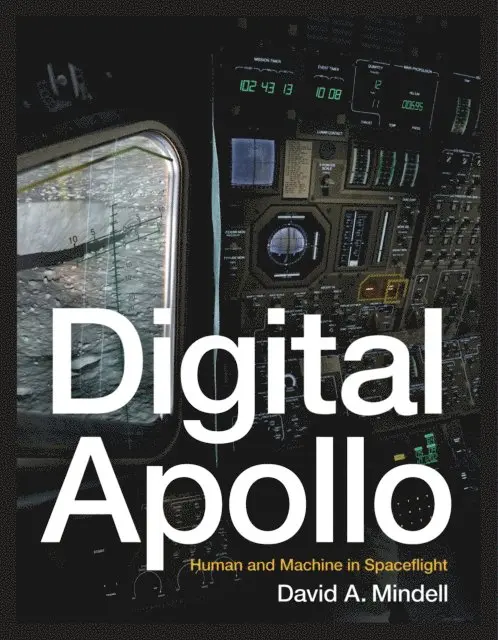
How human pilots and automated systems worked together to achieve the ultimate in flight—the lunar landings of NASA's Apollo program.As Apollo 11's Lunar Module descended toward the moon under automatic control, a program alarm in the guidance computer's software nearly caused a mission abort. Neil Armstrong responded by switching off the automatic mode and taking direct control. He stopped monitoring the computer and began flying the spacecraft, relying on skill to land it and earning praise for a triumph of human over machine. In Digital Apollo, engineer-historian David Mindell takes this famous moment as a starting point for an exploration of the relationship between humans and computers in the Apollo program. In each of the six Apollo landings, the astronaut in command seized control from the computer and landed with his hand on the stick. Mindell recounts the story of astronauts' desire to control their spacecraft in parallel with the history of the Apollo Guidance Computer. From the early days of aviation through the birth of spaceflight, test pilots and astronauts sought to be more than "spam in a can" despite the automatic controls, digital computers, and software developed by engineers.Digital Apollo examines the design and execution of each of the six Apollo moon landings, drawing on transcripts and data telemetry from the flights, astronaut interviews, and NASA's extensive archives. Mindell's exploration of how human pilots and automated systems worked together to achieve the ultimate in flight—a lunar landing—traces and reframes the debate over the future of humans and automation in space. The results have implications for any venture in which human roles seem threatened by automated systems, whether it is the work at our desktops or the future of exploration.
324 kr
Skickas
How to create our industrial future with inspiration and lessons from the originators of the industrial revolution. Climate change, global disruption, and labor scarcity are forcing us to rethink the underlying principles of industrial society. In The New Lunar Society, David Mindell envisions this new industrialism from the fundamentals, drawing on the eighteenth century when first principles were formed at the founding of the Industrial Revolution. While outlining the new industrialism, he tells the story of the Lunar Society, a group of engineers, scientists, and industrialists who came together to apply the principles of the Enlightenment to industrial processes. Those principles were collaboration, the marriage of practical and scientific knowledge, and the belief that the world could progress through making things. The Lunar Society included pioneers like James Watt, Benjamin Franklin, and Josiah Wedgwood, and their conversations no less than ignited the Industrial Revolution and shaped the founding of the United States. Telling the stories of these makers in parallel with those of our current moment of crisis on multiple fronts, Mindell argues for a new industrialism. He asks: What does industry look like when it strives to optimize for the lowest carbon footprint as well as the greatest profit? When it values resilience as much as efficiency? When it upholds dignified, inclusive, sustainable work? Optimistic but not utopian about our ability to build the world, The New Lunar Society shines a light on how a new generation can reanimate the best ideas of our thinking doer forebears and begin to build a future that is both realistic and human-centered.
256 kr
Skickas inom 3-6 vardagar
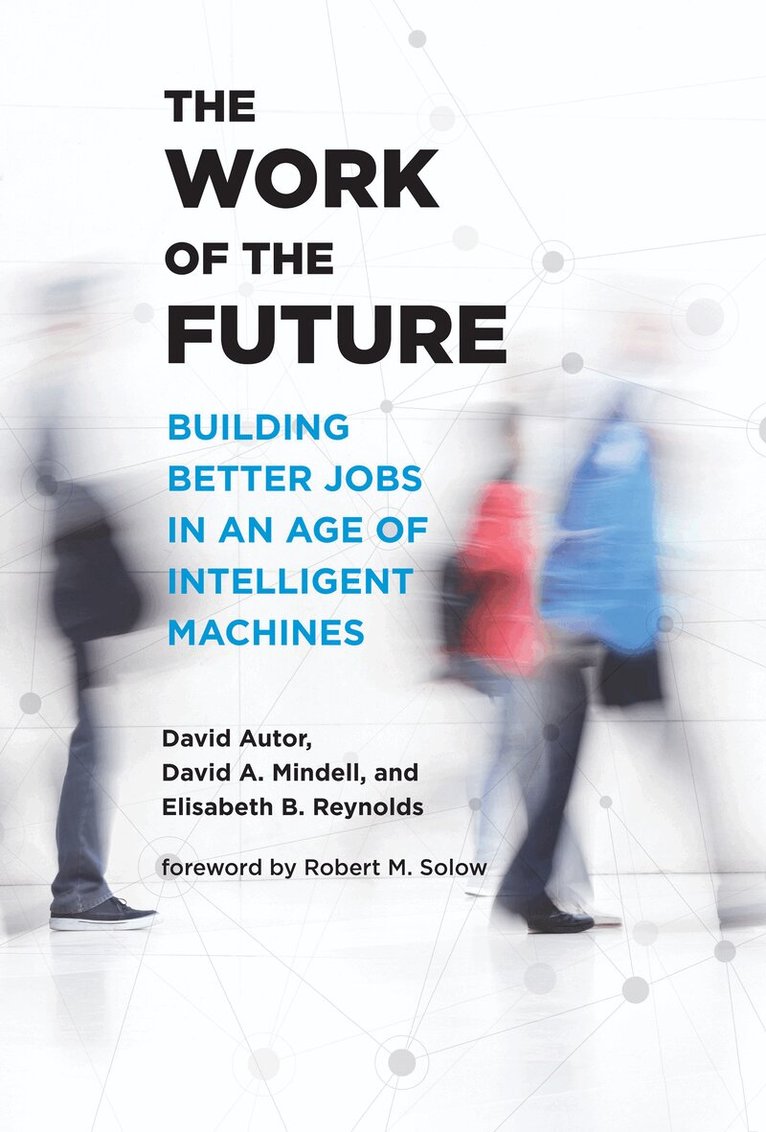
Why the United States lags behind other industrialized countries in sharing the benefits of innovation with workers and how we can remedy the problem.The United States has too many low-quality, low-wage jobs. Every country has its share, but those in the United States are especially poorly paid and often without benefits. Meanwhile, overall productivity increases steadily and new technology has transformed large parts of the economy, enhancing the skills and paychecks of higher paid knowledge workers. What’s wrong with this picture? Why have so many workers benefited so little from decades of growth? The Work of the Future shows that technology is neither the problem nor the solution. We can build better jobs if we create institutions that leverage technological innovation and also support workers though long cycles of technological transformation.Building on findings from the multiyear MIT Task Force on the Work of the Future, the book argues that we must foster institutional innovations that complement technological change. Skills programs that emphasize work-based and hybrid learning (in person and online), for example, empower workers to become and remain productive in a continuously evolving workplace. Industries fueled by new technology that augments workers can supply good jobs, and federal investment in R&D can help make these industries worker-friendly. We must act to ensure that the labor market of the future offers benefits, opportunity, and a measure of economic security to all.
Between Human and Machine
Feedback, Control, and Computing before Cybernetics
Inbunden, Engelska, 2002
571 kr
Tillfälligt slut
Today, we associate the relationship between feedback, control, and computing with Norbert Wiener's 1948 formulation of cybernetics. But the theoretical and practical foundations for cybernetics, control engineering, and digital computing were laid earlier, between the two world wars. In Between Human and Machine: Feedback, Control, and Computing before Cybernetics, David A. Mindell shows how the modern sciences of systems emerged from disparate engineering cultures and their convergence during World War II. Mindell examines four different arenas of control systems research in the United States between the world wars: naval fire control, the Sperry Gyroscope Company, the Bell Telephone Laboratories, and Vannevar Bush's laboratory at MIT. Each of these institutional sites had unique technical problems, organizational imperatives, and working environments, and each fostered a distinct engineering culture. Each also developed technologies to represent the world in a machine. At the beginning of World War II, President Roosevelt established the National Defense Research Committee, one division of which was devoted to control systems.Mindell shows how the NDRC brought together representatives from the four pre-war engineering cultures, and how its projects synthesized conceptions of control, communications, and computing. By the time Wiener articulated his vision, these ideas were already suffusing through engineering. They would profoundly influence the digital world. As a new way to conceptualize the history of computing, this book will be of great interest to historians of science, technology, and culture, as well as computer scientists and theorists. Between Human and Machine: Feedback, Control, and Computing before Cybernetics
424 kr
Skickas inom 7-10 vardagar
Today, we associate the relationship between feedback, control, and computing with Norbert Wiener's 1948 formulation of cybernetics. But the theoretical and practical foundations for cybernetics, control engineering, and digital computing were laid earlier, between the two world wars. In Between Human and Machine: Feedback, Control, and Computing before Cybernetics, David A. Mindell shows how the modern sciences of systems emerged from disparate engineering cultures and their convergence during World War II. Mindell examines four different arenas of control systems research in the United States between the world wars: naval fire control, the Sperry Gyroscope Company, the Bell Telephone Laboratories, and Vannevar Bush's laboratory at MIT. Each of these institutional sites had unique technical problems, organizational imperatives, and working environments, and each fostered a distinct engineering culture. Each also developed technologies to represent the world in a machine. At the beginning of World War II, President Roosevelt established the National Defense Research Committee, one division of which was devoted to control systems.Mindell shows how the NDRC brought together representatives from the four pre-war engineering cultures, and how its projects synthesized conceptions of control, communications, and computing. By the time Wiener articulated his vision, these ideas were already suffusing through engineering. They would profoundly influence the digital world. As a new way to conceptualize the history of computing, this book will be of great interest to historians of science, technology, and culture, as well as computer scientists and theorists. Between Human and Machine: Feedback, Control, and Computing before Cybernetics
325 kr
Skickas inom 7-10 vardagar
The USS Monitor famously battled the CSS Virginia (the armored and refitted USS Merrimack) at Hampton Roads in March 1862. This updated edition of David A. Mindell's classic account of the ironclad warships and the human dimension of modern warfare commemorates the 150th anniversary of this historic encounter. Mindell explores how mariners-fighting "blindly", below the waterline-lived in and coped with the metal monster they called the "iron coffin". He investigates how the ironclad technology, new to war in the nineteenth century, changed not only the tools but also the experience of combat and anticipated today's world of mechanized, pushbutton warfare. The writings of William Frederick Keeler, the ship's paymaster, inform much of this book, as do the experiences of everyman sailor George Geer, who held Keeler in some contempt. Mindell uses their compelling stories, and those of other shipmates, to recreate the thrills and dangers of living and fighting aboard this superweapon. Recently, pieces of the Monitor wreck have been raised from their watery grave, and with them, information about the ship continues to be discovered.A new epilogue describes the recovery of the Monitor turret and its display at the USS Monitor Museum in Newport News, Virginia. This sensitive and enthralling history of the USS Monitor ensures that this fateful ship, and the men who served on it, will be remembered for generations to come.