David A. Sousa - Böcker
1 369 kr
Skickas inom 3-6 vardagar
704 kr
Skickas inom 3-6 vardagar
602 kr
Skickas inom 3-6 vardagar
536 kr
Skickas
397 kr
Skickas
333 kr
Skickas inom 3-6 vardagar
385 kr
Skickas inom 3-6 vardagar
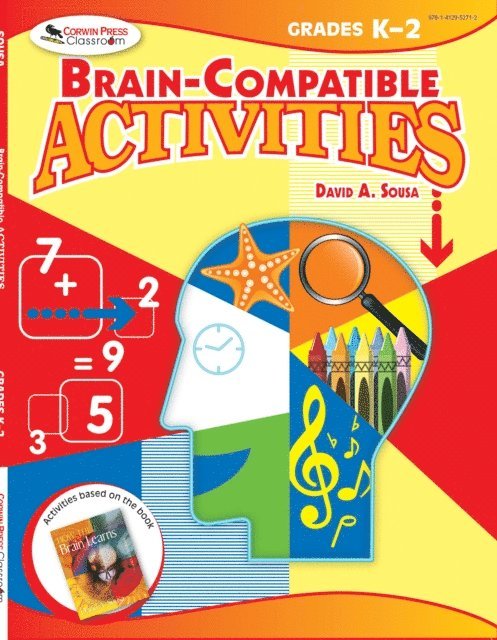
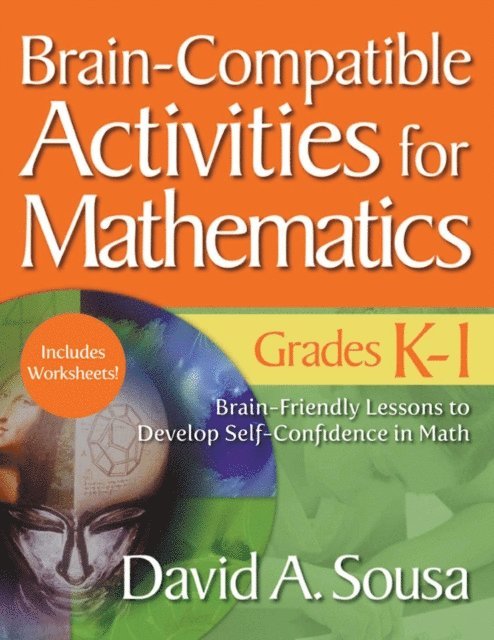
Practical, brain-compatible activities every elementary teacher can use!
Brain research has provided a tremendous opportunity to develop instructional techniques that facilitate the brain's innate learning capacity. As educators, we can take this knowledge and apply it to the strategies we use in our classrooms.
This essential resource, based on David A. Sousa's best-seller How the Brain Learns, Third Edition, provides ready-to-use, brain-compatible activities that feature some of the following strategies:
Graphic organizersMnemonic devicesCooperative learningMovement to enhance retentionMusic to stimulate brain activity and creativityThese activities, correlated with national standards, cover all the content areas in grades K–2 and include topics such as phonics, reading fluency, computation, money, community, scientific inquiry, and much more!
The more we understand how the brain learns, the more instructional options we have. This unique resource helps you make the most of the brain's learning potential and transform your teaching practices to engage every student in your classroom.For other grade-specific Corwin Press Classroom books, please see:Brain-Compatible Activities, Grades 3-5 Brain-Compatible Activities, Grades 6-8 About the AuthorDavid A. Sousa, an international educational consultant, has served at all levels of education in New Jersey public schools, including superintendent, supervisor of instruction, K–12 director of science, and junior and senior high school science instructor. Sousa has also been an adjunct professor of education at Seton Hall University, and a visiting lecturer at Rutgers University.
Sousa has presented at national conventions of educational organizations and has conducted workshops on brain research and science education in hundreds of school districts and at colleges and universities across the United States, Canada, Europe, and Asia. He has edited science books and published numerous books and articles in leading educational journals on staff development, science education, and brain research. Sousa has a bachelor of science degree in chemistry from Massachusetts State College at Bridgewater, a master of arts in teaching degree in science from Harvard University, and a doctorate from Rutgers University.
385 kr
Skickas inom 3-6 vardagar
Practical, brain-compatible activities every elementary teacher can use!
Brain research has provided a tremendous opportunity to develop instructional techniques that facilitate the brain's innate learning capacity. As educators, we can take this knowledge and apply it to the strategies we use in our classrooms.
This essential resource, based on David A. Sousa's best-seller How the Brain Learns, Third Edition, provides ready-to-use, brain-compatible activities that feature some of the following strategies:
Graphic organizersMnemonic devicesCooperative learningMovement to enhance retentionMusic to stimulate brain activity and creativityThese activities, correlated with national standards, cover all the content areas in grades 3–5 and include topics such as word selection, poetry, reading fluency, geometry, negative numbers, modes of exchange, animal habits, clouds, and much more!
The more we understand how the brain learns, the more instructional options we have. This unique resource helps you make the most of the brain's learning potential and transform your teaching practices to engage every student in your classroom.For other grade-specific Corwin Press Classroom books, please see:
Brain-Compatible Activities, Grades K-2 Brain-Compatible Activities, Grades 6-8 About the AuthorDavid A. Sousa, an international educational consultant, has served at all levels of education in New Jersey public schools, including superintendent, supervisor of instruction, K–12 director of science, and junior and senior high school science instructor. Sousa has also been an adjunct professor of education at Seton Hall University, and a visiting lecturer at Rutgers University.
Sousa has presented at national conventions of educational organizations and has conducted workshops on brain research and science education in hundreds of school districts and at colleges and universities across the United States, Canada, Europe, and Asia. He has edited science books and published numerous books and articles in leading educational journals on staff development, science education, and brain research. Sousa has a bachelor of science degree in chemistry from Massachusetts State College at Bridgewater, a master of arts in teaching degree in science from Harvard University, and a doctorate from Rutgers University.
564 kr
Skickas inom 3-6 vardagar
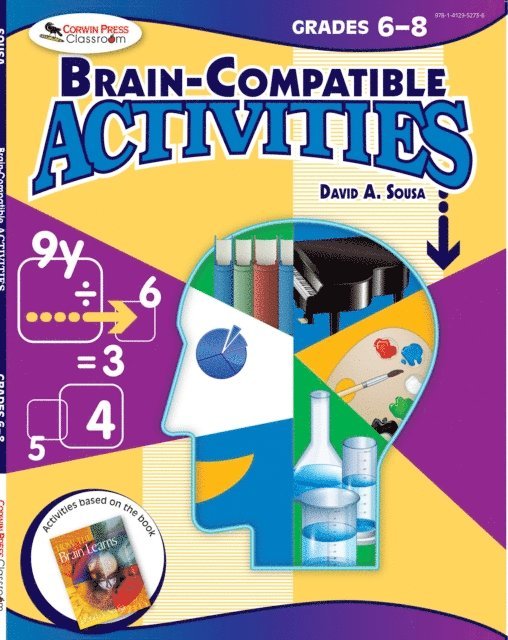
Practical, brain-compatible activities every elementary teacher can use!
Brain research has provided a tremendous opportunity to develop instructional techniques that facilitate the brain's innate learning capacity. As educators, we can take this knowledge and apply it to the strategies we use in our classrooms.
This essential resource, based on David A. Sousa's best-seller provides ready-to-use, brain-compatible activities that feature some of the following strategies:
Graphic organizersMnemonic devicesCooperative learningMovement to enhance retentionMusic to stimulate brain activity and creativityThese activities, correlated with national standards, cover all the content areas in grades 6–8 and include topics such as vocabulary, characterization, percentages, word problems, family history, historical research, mitosis, chemical equations, and much more!
The more we understand how the brain learns, the more instructional options we have. This unique resource helps you make the most of the brain's learning potential and transform your teaching practices to engage every student in your classroom.For other grade-specific Corwin Press Classroom books, please see:Brain-Compatible Activities, Grades K-2 Brain-Compatible Activities, Grades 3-5 About the AuthorDavid A. Sousa, an international educational consultant, has served at all levels of education in New Jersey public schools, including superintendent, supervisor of instruction, K–12 director of science, and junior and senior high school science instructor. Sousa has also been an adjunct professor of education at Seton Hall University, and a visiting lecturer at Rutgers University.
Sousa has presented at national conventions of educational organizations and has conducted workshops on brain research and science education in hundreds of school districts and at colleges and universities across the United States, Canada, Europe, and Asia. He has edited science books and published numerous books and articles in leading educational journals on staff development, science education, and brain research. Sousa has a bachelor of science degree in chemistry from Massachusetts State College at Bridgewater, a master of arts in teaching degree in science from Harvard University, and a doctorate from Rutgers University.
359 kr
Skickas inom 3-6 vardagar
1 369 kr
Skickas inom 3-6 vardagar
679 kr
Skickas inom 3-6 vardagar
343 kr
Skickas inom 3-6 vardagar
564 kr
Skickas inom 3-6 vardagar
"These activities are clearly laid out with directions for implementing academically rigorous math activities with our youngest students. The book's alternative method of developing number sense is likely to reach more students by focusing on different strategies that will engage the entire brain."—Rosamaria Murillo, PrincipalBaldwin Lane Elementary School, Sugarloaf, CA
"Offering detailed yet easily applicable lessons that will benefit both teacher and students, Sousa clearly explains the importance of brain-based learning tasks and their role in the area of mathematics. As one who has taught kindergarten and first grade for 25 years, I found the book an effective, enjoyable means of putting brain-compatible math into practice!"—Susan Schipper, First-Grade TeacherCharles Street Elementary School, Palmyra, NJ
Imaginative mathematics activities that maximize the brain's learning potential!
Demonstrating instructional principles discussed in David A. Sousa's bestseller, How the Brain Learns Mathematics, this resource provides brain-friendly, ready-to-use mathematics lessons for Grades K–1. Teachers will find step-by-step guidance and all the necessary reproducibles for mathematics instruction that involves partners, group work, and class movement. Through activities such as Number Jingle and Math Detective, young learners will enjoy developing skills connected with whole numbers, addition and subtraction, geometrical shapes, measurement, number patterns, and more.
Aligned with NCTM standards and focal points, the instructional strategies enhance motivation and content retention, address individual intelligences, and:
Promote writing as an important learning tool Use concrete models to make concepts meaningfulConnect mathematical ideas to the real world Incorporate graphic organizers to help students organize their thinkingTeach creative problem solvingDeepen and revitalize instruction using Sousa's proven brain-compatible approach for helping every child develop self-confidence in mathematics!
564 kr
Skickas inom 3-6 vardagar
"All math teachers will find lessons and activities that provide meaningful instruction while making mathematics more enjoyable to students. This book gives teachers the structure to plan appropriate, fun-filled lessons of their own."—Dixon D. Van Hook, Math CoachCross Creek Elementary School, Thomasville, GA
"Provides hands-on activities that follow the structure of effective lesson design. Whether you are a seasoned teacher looking for activities to expand your repertoire or a new teacher building a library of resources, this book is an essential planning tool."—Holly Savoie, Third-Grade TeacherMimosa Park Elementary School, Luling, LA
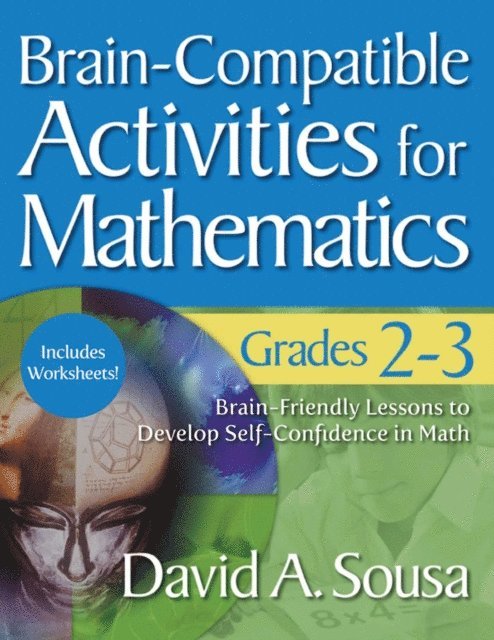
Imaginative mathematics activities that maximize the brain's learning potential!
Demonstrating instructional principles discussed in David A. Sousa's bestseller, How the Brain Learns Mathematics, this resource provides brain-friendly, ready-to-use mathematics lessons for Grades 2–3. Teachers will find step-by-step guidance and all the necessary reproducibles for mathematics instruction that involves group work, reflection, movement, and visualization. Through activities such as Jumping Jelly Beans, Math Hockey, and Treasure Hunt, young learners will enjoy developing skills connected with number patterns and place value, multi-digit addition and subtraction, multiplication and division, fractions, measurement, geometry, and more.
Aligned with NCTM standards and focal points, the instructional strategies enhance motivation and content retention, address individual intelligences, and:
Promote writing as an important learning tool Use concrete models to make concepts meaningfulConnect mathematical ideas to the real world Incorporate graphic organizers to help students organize their thinkingTeach creative problem solvingDeepen and revitalize instruction using Sousa's proven brain-compatible approach for helping every student develop self-confidence in mathematics!
564 kr
Skickas inom 3-6 vardagar
"The real-world connection and use of manipulatives, games, and items from home will hook 21st-century learners. I spend a considerable amount of time searching for appropriate lesson ideas. No more! This collection of lessons—across all math standards—provides more than enough resources to enhance my teaching."—Rachel Hull, Fifth-Grade TeacherGeorge Washington Elementary School, Eleanor, WV
"This well-organized resource enriches any math curriculum with easy-to-follow and abundant 'out of your seat' activities to engage a variety of learners. The best components are quick formative assessments within each activity that provide an immediate perspective on each child's understanding and progress."—Jennifer Harper, Fourth-Grade TeacherCavendish Town Elementary School, Proctorsville, VT
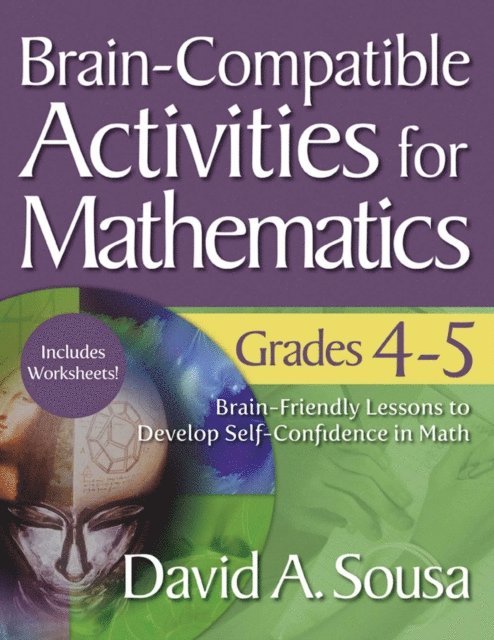
Imaginative mathematics activities that maximize the brain's learning potential!
Demonstrating instructional principles discussed in David A. Sousa's bestseller, How the Brain Learns Mathematics, this resource provides brain-friendly, ready-to-use mathematics lessons for Grades 4-5. Teachers will find step-by-step guidance and all the necessary reproducibles for mathematics instruction that involves group work, reflection, movement, and visualization. Through activities such as Scuba Division, Party Planners, Sunken Treasure, and Parachute Drop, intermediate learners will enjoy developing skills connected with multiplication and division, fractions and decimals, geometry and measurement, algebra, data analysis, and more.
Aligned with NCTM standards and focal points, the instructional strategies enhance motivation and content retention, address individual intelligences, and:
Promote writing as an important learning tool Use concrete models to make concepts meaningfulConnect mathematical ideas to the real world Incorporate graphic organizers to help students organize their thinkingTeach creative problem solvingDeepen and revitalize instruction using Sousa's proven brain-compatible approach for helping every student develop self-confidence in mathematics!
447 kr
Tillfälligt slut
508 kr
Skickas
564 kr
Skickas inom 3-6 vardagar
Learn about the brain from some fine minds in education The Best of Corwin series showcases key chapters from critically acclaimed Corwin publications for a powerful compilation of perspectives on important education issues and topics. Featuring the works of recognized pioneers in the nascent field of educational neuroscience, this cutting-edge collection show show to apply current brain research to teaching and learning. The book is divided into three parts: The Developing Brain, The Brain in School, and Instructional Strategies for Every Brain. Chapter topics include:
Brain structures and development from birth through adolescenceWhat causes the brain to pay attention and rememberHow the brain learns to read and calculateDifferences between the male and female brainThe social and academic needs of students with learning difficultiesStrategies for keeping students' brains engaged, focused, and energizedTeachers are brain-changers, and knowing more about how the brain learns can only make you more successful at reaching and engaging young minds.
485 kr
Skickas inom 10-15 vardagar
A modern classic, updated for today’s classroom needs
No skill is more fundamental to our students’ education than reading. And no recent book has done more to advance our understanding of the neuroscience behind this so-critical skill than David Sousa’s How the Brain Learns to Read. To tens of thousands of educators, Sousa revealed at last how exactly young brains learn to make sense of printed language and how you can use that information to reach students of all ages and skill levels.
With so much more to be shared--and so much more to be heard--this second edition has been revised and updated to show what the ever-growing body of research looks like in an entirely new learning climate. Top among the many new features are:
Correlations to Common Core State Standards in Literacy and English/Language Arts A new chapter on how to teach for comprehension Much more on helping older struggling readers master subject-area content Ways to tailor strategies to the unique needs of students with dyslexia and other reading difficulties, including those receiving interventions in an RTI or MTSS model Key links between how the brain learns spoken and written languageNo school can afford to teach reading skills from an outdated knowledge base. With this new edition of David Sousa’s modern classic, you can ensure a brighter future for your students, on the page, in the classroom, and beyond.
435 kr
Skickas inom 5-8 vardagar
To reach all your math students, use your brain—and theirs, too! The bestselling and award-winning first edition of How the Brain Learns Mathematics quickly revolutionized math teaching and learning. The second edition takes readers to the next level with new brain-friendly strategies backed by the latest research from education and neuroscience and even more ways to seamlessly incorporate what you learn about your students’ developing minds into your math classroom. In this essential resource, you’ll discover the cognitive mechanisms involved in processing mathematical operations, while exploring the environmental and developmental factors that create learning difficulties. How the Brain Learns Mathematics also presents a unique and simplified four-step teaching model that relates students’ classroom experience to concrete, real-world applications. Features of the new edition include
More strategies for motivating adolescents Integration of the arts into mathematics instruction New information on how technology affects attention and memory Expanded sections on number sense and ELL instruction More than 160 new references and a greatly expanded index for readers’ convenienceNo matter what grade you teach, your students are growing and changing. Understanding how their brains work is the key to reaching every one of them—and making math a positive part of their lives for years to come.
“David Sousa’s book is a wonderfully readable presentation of how neuroscience and cognitive psychology can inform the teaching of mathematics in elementary and secondary schools. Sousa engages his readers intellectually with recent research on the brain and mathematics learning, and avoids pat answers where the evidence is suggestive rather than conclusive. The book is a valuable text for teachers who want a deeper insight into thinking processes behind the learning and teaching of math.” —Robert E. Slavin, Director, Center for Research and Reform in Education Johns Hopkins University "Teaching mathematics without having read this book is like trying to master tennis without a coach. Sousa's book is a tour de force: It builds a solid bridge from cognitive neuroscience to daily classroom practice. Every teacher of mathematics will benefit from this well-researched, well-organized, thoughtful, and practical approach to making math instruction align with how brains learn." —Spencer Kagan, Publisher/Professional Developer Kagan Publishing and Professional DevelopmentFrom STEM to STEAM
Brain-Compatible Strategies and Lessons That Integrate the Arts
398 kr
Skickas inom 5-8 vardagar
Art and science both hinge on discovery, and discovery requires thinking out of the box. But how do you lead students to think creatively in STEM education? The answer is STEAM, and A is for the arts. STEAM—the integration of music, visual arts, and drama into daily STEM instruction—is proven to enhance student achievement in STEM subjects. After all, creative, real-world problem-solving is what working scientists and mathematicians actually do. But how do busy STEM educators weave arts activities into a sometimes inflexible STEM curriculum? In this new edition of From STEM to STEAM, the ground-breaking bestseller, the authors provide lessons from the field to detail the way. Authors David Sousa, expert in educational neuroscience, and Tom Pilecki, veteran arts educator, pool theircombined eighty years of expertise to deliver:
Research studies in cognitive and social neuroscience, including new findings on how technology is rewiring students’ brains, that demonstrate how arts activities enhance creativity, problem solving, memory systems, motor coordination, and analytical skills—all critical elements to achieving STEM objectives. Classroom-tested strategies and techniques for integrating the arts into STEM instruction, including sample K-12 lessons plans and planning templates. Tools for building a professional development program designed to helps arts and STEM teachers collaborate to create STEAM lessons. Sample planning frameworks that provide a smooth transition from STEM to STEAM, including advice on adapting STEAM to meet the individual needs and limitations of a school or district. A list of resources available to teachers in the STEM subjects, in the arts, in arts integration, and for STEAM.The main objective of both art and science is discovery. Lead your students to make that connection and STEAM ahead to academic success!
435 kr
Skickas inom 5-8 vardagar
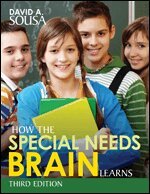
Teaching students with learning challenges just got easier with this groundbreaking guide! More and more students are having difficulty acquiring basic reading, writing, and computation skills. If you seek effective strategies to meet their needs, look no further! Use this updated third edition from education expert David A. Sousa to explore the causes of many common learning disorders and discover how to identify, accommodate, and motivate your students. Dr. Sousa answers your questions about common disabilities and provides the latest alternative instructional approaches to ensure mastery occurs. Discover cutting-edge brain research and innovative instructional strategies to help you:
Improve your understanding of the learning process Understand genetic and environmental triggers of learning problems Effectively instruct students with ADHD, LD, dyslexia, writing disabilities, autism, emotional and behavioral challenges, and more Utilize assistive technologies to remove barriers to learning Differentiate instruction in speech, reading, writing, and mathematicsLearn how the brain works and the practical know-how to transfer that knowledge to the classroom for the benefit of all students. This expert resource shows you how! "By providing the specific neurological processes behind learning difficulties, Dr. Sousa gives teachers and teacher candidates a useful resource to understand and respond to challenges experienced by students with learning difficulties and special educational needs." Gina Garner, Assistant Professor of Education, Learning Disabilities Program Director Aquinas College "This book provides knowledge of the neurological basis of learning without inundating the reader with complex terminology. The author arms the reader with strategies to address various disabilities and a plethora of ways to support their learning and emotional needs. The teacher-friendliness of this book makes it stand out." Francine Del Vecchio, Associate Professor Division of Education, Caldwell University
425 kr
Tillfälligt slut
218 kr
Tillfälligt slut
218 kr
Tillfälligt slut
Power of Student Teams
Achieving Social, Emotional, and Cognitive Learning in Every Classroom Through Academic Teaching
381 kr
Skickas inom 3-6 vardagar
Differentiation and the Brain: How Neuroscience Supports the Learner-Friendly Classroom (Use Brain-Based Learning and Neuroeducation to Differentiate
482 kr
Skickas inom 3-6 vardagar
309 kr
Tillfälligt slut