• Fri frakt över 249 kr
  • •
  • Snabba leveranser
  • •
  • Billiga böcker
Kundservice

Du är på sajten för privatpersoner.

Företag, bibliotek eller offentlig verksamhet?

Du handlar på classic.bokus.com, där alla dina funktioner finns intakta.
Till classic.bokus.com
Bokus logotyp. Gå till startsidan.
  • Erbjudanden
  • Nyheter
  • Student
  • Topplistor
  • Barn & ungdom
  • Bokus Play
  • E-böcker
  • Pocketböcker
  • Spel & pussel

10% rabatt på allt med kod NYSTART10 →

Sidfot

Mina sidor

    Hjälp

    • Kundservice
    • Vanliga frågor och svar
    • Frakt och leverans
    • Retur vid ångerrätt
    • Reklamera vara
    • Betalning
    • Köpvillkor
    • Allmänna villkor
    • Information om webbplatsens tillgänglighet

    Om Bokus

    • Om oss
    • Pressrum
    • För studenter
    • För företag
    • För bibliotek och offentlig verksamhet
    • För leverantörer
    • Hållbarhet

    Populärt

    • Aktuella erbjudanden
    • Presentkort
    • Studentlitteratur
    • Nya böcker
    • Topplistor
    • Signerade böcker
    • Engelska böcker

    Inspiration

    • Boktips
    • BookTok
    • Populära bokserier
    • Barnbokskaraktärer
    • Populära författare
    Logotyp för Bokus
    Följ oss på Facebook (extern länk)Följ oss på Instagram (extern länk)Följ oss på YouTube (extern länk)Följ oss på TikTok (extern länk)
    bokus @ CookiesAnpassa cookiesIntegritetspolicyKöpvillkor
    Till Citymail hemsida (extern länk)Till Budbee hemsida (extern länk)Till Postnord hemsida (extern länk)Till Schenker hemsida (extern länk)Till Early Bird hemsida (extern länk)Till Walleys hemsida (extern länk)
    1. Psykologi och pedagogik
    2. Pedagogik
    3. Pedagogisk metodik

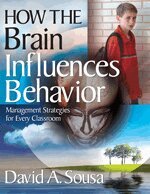
    How the Brain Influences Behavior

    Management Strategies for Every Classroom

    AvDavid A. Sousa

    Häftad, Engelska, 2008

    722 kr

    Beställningsvara. Skickas inom 3-6 vardagar. Fri frakt över 249 kr.

    Fler format och utgåvor

    Inbunden

    1 482 kr

    E-bok

    168 kr

    Beskrivning

    "This is a timely topic with workable solutions that enables students to learn in today's classrooms. A must-read for educators working with diverse populations."
    —Carolyn Chapman, Educational Consultant
    Creative Learning Connection, Inc.

    "This winning book presents clearly outlined brain research as it applies to proactively managing classroom discipline issues. A must-have for teachers who prefer to not only teach, but effectively reach every student too!"
    —Toby J. Karten, Graduate Instructor
    College of New Jersey, Gratz College

    Use research-based strategies to improve behavior in the K–12 classroom!

    Combining theory and practice, best-selling author David A. Sousa helps educators understand what is happening in the brains of students with behavior problems and offers practical, effective intervention strategies compatible with current findings in neuroscience.

    In easy-to-understand language, the author presents current information on brain development and function and highlights factors that affect social and emotional decision making and negative behaviors like impulsivity, defiance, and violence. Comprehensive yet concise, this guide for K–12 teachers and counselors provides methods for teaching self-control and fostering positive relationships with troubled students and provides case studies that match effective strategies with specific behaviors. Educators will find answers to critical questions such as:

    • How does the rate of brain development explain the erratic behavior of adolescents?
    • What type of data collection can help teachers manage misbehavior?
    • Can peer influence help curb misbehavior rather than encourage it?
    • Why are boys more likely to misbehave than girls and what can teachers do about it?
    • How do school and classroom climates affect student behavior?

    This invaluable handbook also features reproducible forms, worksheets, checklists, additional references, and an expanded list of primary research sources to help teachers understand and apply research-based principles for classroom and behavior management.

    Produktinformation

    • Utgivningsdatum:2008-09-04
    • Mått:215 x 279 x 16 mm
    • Vikt:710 g
    • Format:Häftad
    • Språk:Engelska
    • Antal sidor:264
    • Upplaga:1
    • Förlag:SAGE Publications
    • ISBN:9781412958707

    Utforska kategorier

    • Pedagogisk metodik inom Psykologi och pedagogik
    • Pedagogisk psykologi inom Psykologi och pedagogik
    • Psykoterapi som behandlingsmetod inom Medicin

    Mer om författaren

    DR. David A. Sousa is an international consultant in educational neuroscience and author of more than twenty books that suggest ways educators and parents can translate current brain research into strategies for improving learning. A member of the Cognitive Neuroscience Society, he has conducted workshops in hundreds of school districts on brain research, instructional skills, and science education at the preK–12 and university levels. He has made presentations to more than two hundred thousand educators at national conventions of educational organizations and to regional and local school districts across the United States, Canada, Europe, Australia, New Zealand, and Asia.Dr. Sousa has a bachelor’s degree in chemistry from Bridgewater State University in Massachusetts, a master of arts in teaching degree in science from Harvard University, and a doctorate from Rutgers University. His teaching experience covers all levels. He has taught senior high school science and served as a K–12 director of science, supervisor of instruction, and district superintendent in New Jersey schools. He was an adjunct professor of education at Seton Hall University for ten years and a visiting lecturer at Rutgers University.Prior to his career in New Jersey, Dr. Sousa taught at the American School of Paris (France) and served for five years as a foreign service officer and science advisor at the US diplomatic missions in Geneva (Switzerland) and Vienna (Austria).Dr. Sousa has edited science books and published dozens of articles in leading journals on professional development, science education, and educational research. His most popular books for educators include How the Brain Learns, now in its sixth edition; How the Special Needs Brain Learns, second edition; How the Gifted Brain Learns; How the Brain Learns to Read, second edition; How the Brain Influences Behavior; How the ELL Brain Learns; Differentiation and the Brain, second edition (with Carol Tomlinson); and How the Brain Learns Mathematics, second edition, which was selected by the Independent Book Publishers Association as one of the best professional development books. The Leadership Brain suggests ways for educators to lead today’s schools more effectively. Dr. Sousa’s books have been published in French, Spanish, Chinese, Arabic, Korean, Russian, and several other languages. His book Brainwork: The Neuroscience Behind How We Lead Others is written for business and organizational leaders.Dr. Sousa is past president of the National Staff Development Council (now called Learning Forward). He has received numerous awards from professional associations, school districts, and educational foundations for his commitment to research, staff development, and science education. He received the Distinguished Alumni Award and an honorary doctorate from Bridgewater State University and an honorary doctorate in humane letters from Gratz College in Philadelphia.Dr. Sousa has been interviewed on the NBC Today show, by other television programs, and by National Public Radio about his work with schools using brain research. He makes his home in south Florida.

    Recensioner i media

    “This winning book presents clearly outlined brain research as it applies to proactively managing classroom discipline issues. A must-have for teachers who prefer to not only teach, but effectively reach every student too!”

    Innehållsförteckning

    • About the AuthorAcknowledgmentsIntroductionAre Behavior Problems on the Rise?Can Neuroscience Help?About This BookQuestions This Book Will AnswerChapter ContentsOther Helpful Tools1. Handling Social MisbehaviorThe Social and Emotional BrainEmotional ProcessingPathways of Emotional SignalsWhat Leads to Social Misbehavior?The Teacher Is the KeyInterventions for Handling Social MisbehaviorDealing With Social AnxietiesUsing Social Stories to Modify BehaviorA Case Study: Using a Social Story for a Verbally Aggressive StudentA Social Story for Angry StudentsSummary2. Dealing With Impulsive BehaviorWhat Leads to Impulsivity and Violent Behavior?Genetic VariationsPrenatal Exposure to CocaineCerebral LesionsAn Important Word About TestosteroneIgnorance of Rules of BehaviorSome Strategies for Controlling Impulsive BehaviorCognitive and Cognitive-Behavioral InterventionsPutting Impulsive Problem Behavior in a Social ContextUsing Picture Books to Curb Impulsive Anger or AnxietyOther Suggested StrategiesSummary3. Teaching Self-Control Through Self-VerbalizationExamining Self-ControlWhat Is Self-Control?Are Children Learning Self-Control?Brain Structures for Self-ControlDo Mirror Neurons Play a Role in Self-Control?Losing Self-ControlHelping Students Regain Self-ControlVerbal Self-Contol of Aggressive, Defiant, or Other BehaviorThe Power of Self-TalkThe ZIPPER Strategy"Say No and Walk Away" to Resist Peer PressureSelf-Control Through Self-Talk and Self-MonitoringThe Nature of AttentionSelf-Monitoring for Other Problem BehaviorsSelf-Control Through Self-Rating of Emotional IntensityThe Anger ThermometerSummary4. Managing the Behavior of BoysWhy a Concern With Boys?Gender Differences in BehaviorGenetic and Environmental FactorsImpact of BiologySome Research Findings on Behavioral DifferencesUsing Research-Based StrategiesMovement-Based Instruction and Classroom ManagementBoy-Friendly Instruction and DisciplineThe Responsibility StrategyAnd What About Girls?The Rise of CyberbullyingBullying Versus CyberbullyingDealing With CyberbullyingSummary5. Building Positive Relationships With Troubled StudentsRelationships and ResearchInsights From NeuroscienceSome Research FindingsDeveloping Teacher-Student RelationshipsThe Importance of Positive Relationships With and for StudentsReaching Unreachable Students With Dialogue JournalsThe Lunch Bunch: An Educator′s IdeaManaging Serious Behavior Problems Through Adult MentoringSummary6. Using Peer Relationships to Modify BehaviorExamining Peer RelationshipsDealing With Peer Influence: A Two-Edged SwordThe Desire to Be LikedPeer-Mediated Behavior Management StrategiesPeer-Mediated Anger ManagementFactors to Consider in Peer MediationPeer Confrontation to Curb MisbehaviorThe Mystery Motivator/Mystery Character Intervention to Decrease Inappropriate BehaviorGroup Contingency InterventionsSummary7. Managing Oppositional BehaviorWhat Is Oppositional Behavior?Causes of Oppositional BehaviorStudents With Oppositional Behavior in the ClassroomTeacher Knowledge of Oppositional BehaviorTeacher Frustration and CountercontrolDefiant Students: Explosions Waiting to HappenAvoiding Triggers for Misbehavior in the ClassroomTeaching Students to RelaxOther StrategiesWhat About Oppositional Defiant Disorder? (ODD)Development of ODDTreatment of ODDSummary8. Developing Positive Self-EsteemThe Nature of Self-EsteemThe Power of Self-EsteemResearch on Self-EsteemGuidelines for Building Self-EsteemBuilding a New Perspective on the Troubled Student: The Strength-Based AssessmentWhat Is Strength-Based Assessment?Motivation and Attribution RetrainingMotivation Research and Attribution TheoryThe "Shine My Light" StrategySummary9. Putting It All TogetherEducational Climate: Are We Happy Here?What Is Classroom Climate?The Biology of HappinessSuccessful Behavior Management in the ClassroomAssessing Classroom ClimateClassrom Management and Cultural DiversityGuidelines for Managing Diverse ClassesPositive Behavioral Supports in the ClassroomWhat Are Positive Behavioral Supports?The Functional Assessment of BehaviorThe Behavioral Improvement PlanMultitiered Interventions and the Student Support TeamSummaryConclusionAppendixGlossaryReferencesResourcesIndex