David B. Ruderman – författare
Visar alla böcker från författaren David B. Ruderman. Handla med fri frakt och snabb leverans.
16 produkter
16 produkter
Häftad, Engelska, 2020
509 kr
Skickas inom 5-8 vardagar
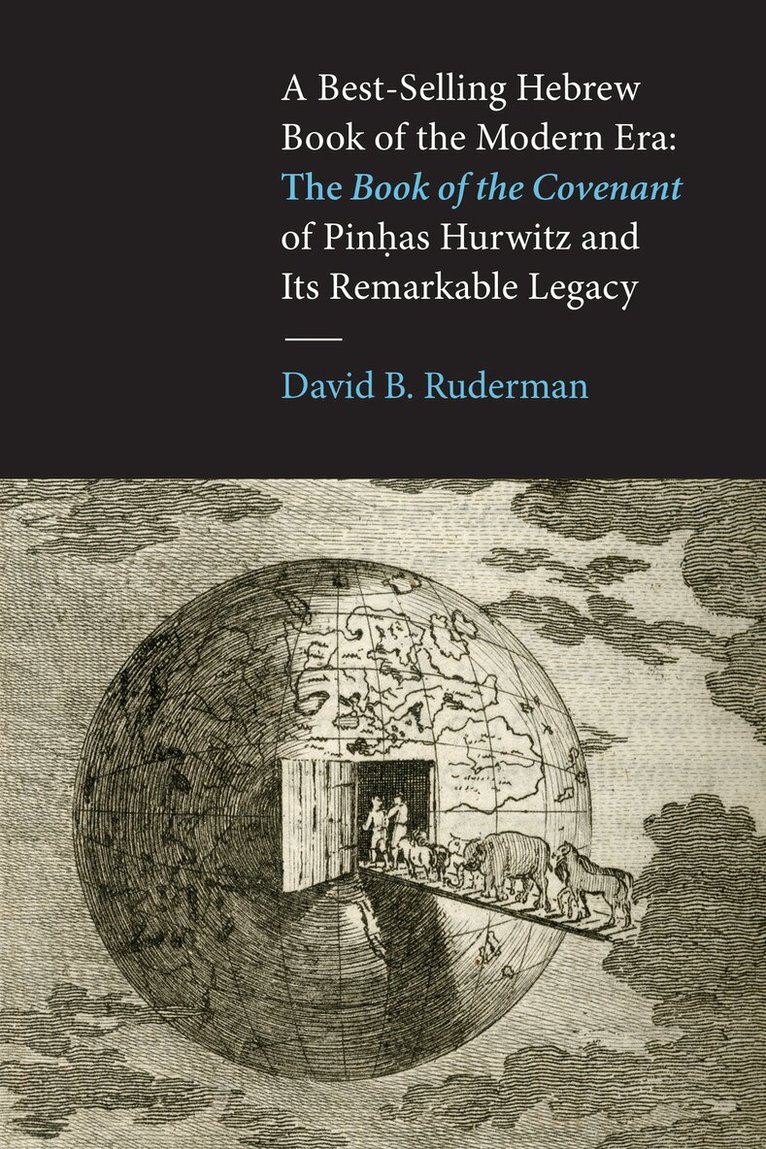
The history of a single book sheds light on the beginnings of modern Jewish thoughtIn 1797, in what is now the Czech Republic, Pinḥas Hurwitz published Book of the Covenant. Nominally an extended commentary on a sixteenth-century kabbalist text, Pinḥas’s publication was in fact a compendium of scientific knowledge and a manual of moral behavior. Its popularity stemmed from its ability to present the scientific advances and moral cosmopolitanism of its day in the context of Jewish legal and mystical tradition. Describing the latest developments in science and philosophy in the sacred language of Hebrew, Hurwitz argued that an intellectual understanding of the cosmos was not at odds with but actually key to achieving spiritual attainment. In A Best-Selling Hebrew Book of the Modern Era, David Ruderman offers a literary and intellectual history of Hurwitz’s book and its legacy. Hurwitz not only wrote the book, but also was instrumental in selling it, and his success ultimately led to the publication of more than forty editions in Hebrew, Ladino, and Yiddish. Ruderman provides a multidimensional picture of the book and the intellectual tradition it helped to inaugurate. Complicating accounts that consider modern Jewish thought to be the product of a radical break from a religious, mystical past, Ruderman shows how, instead, a complex continuity shaped Jewish society’s confrontation with modernity.
Inbunden, Engelska, 2014
811 kr
Skickas inom 5-8 vardagar
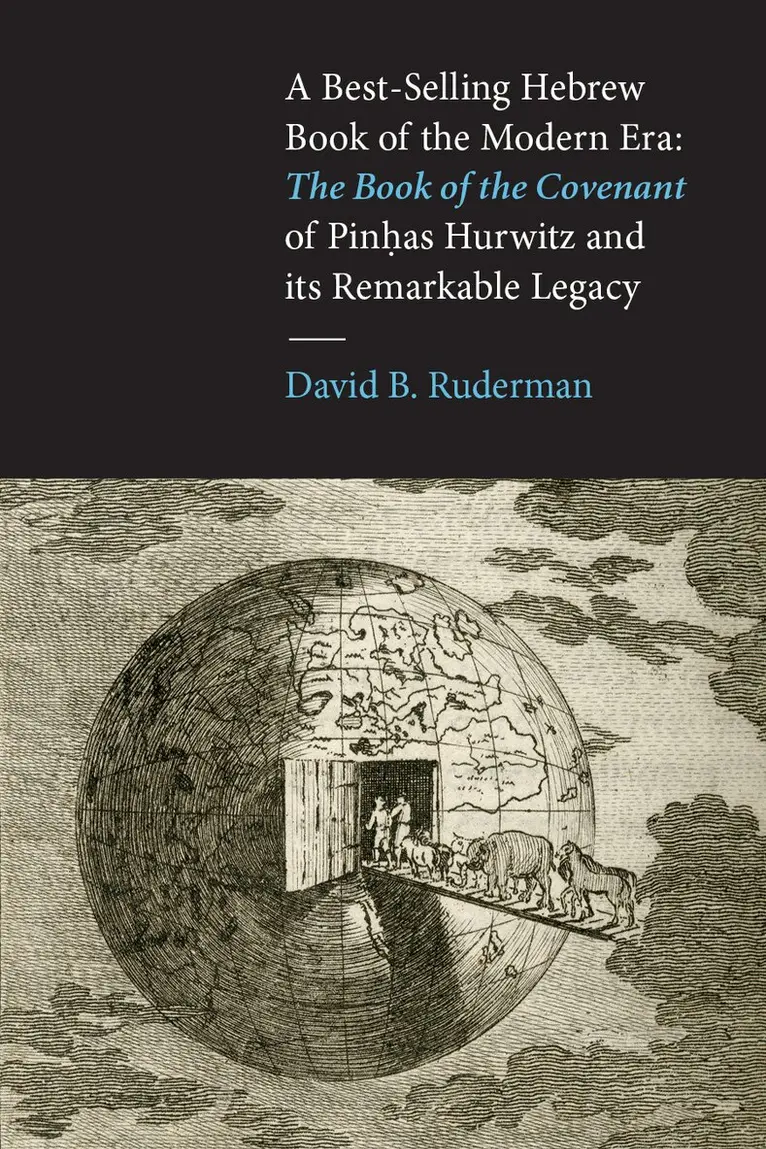
The history of a single book sheds light on the beginnings of modern Jewish thoughtIn 1797, in what is now the Czech Republic, Pinḥas Hurwitz published Book of the Covenant. Nominally an extended commentary on a sixteenth-century kabbalist text, Pinḥas’s publication was in fact a compendium of scientific knowledge and a manual of moral behavior. Its popularity stemmed from its ability to present the scientific advances and moral cosmopolitanism of its day in the context of Jewish legal and mystical tradition. Describing the latest developments in science and philosophy in the sacred language of Hebrew, Hurwitz argued that an intellectual understanding of the cosmos was not at odds with but actually key to achieving spiritual attainment. In A Best-Selling Hebrew Book of the Modern Era, David Ruderman offers a literary and intellectual history of Hurwitz’s book and its legacy. Hurwitz not only wrote the book, but also was instrumental in selling it, and his success ultimately led to the publication of more than forty editions in Hebrew, Ladino, and Yiddish. Ruderman provides a multidimensional picture of the book and the intellectual tradition it helped to inaugurate. Complicating accounts that consider modern Jewish thought to be the product of a radical break from a religious, mystical past, Ruderman shows how, instead, a complex continuity shaped Jewish society’s confrontation with modernity.
Häftad, Engelska, 2012
440 kr
Skickas inom 5-8 vardagar
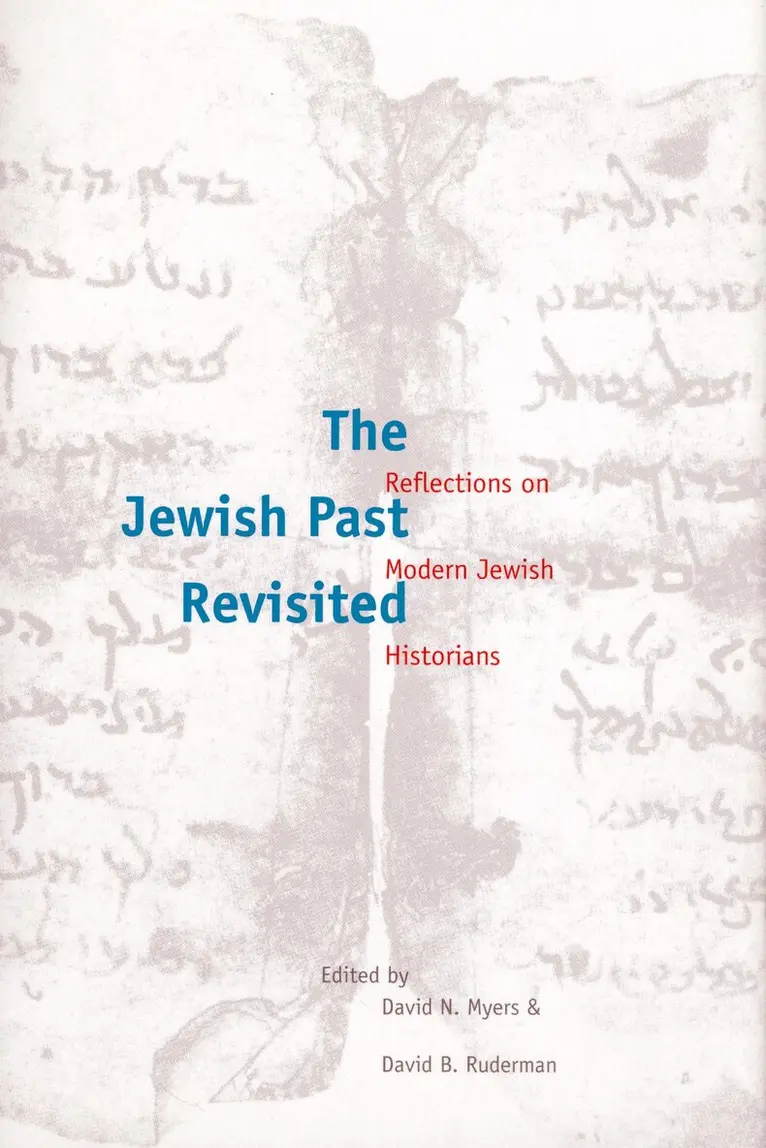
In this fascinating new collection of essays, contemporary historians examine the ways earlier historians have framed, written, and "made" the Jewish past. Probing the ideology and methodology of their professional predecessors, American and Israeli historians offer new perspectives on some of the central figures of twentieth-century Jewish historiography, including Gershom Scholem, S. D. Goitein, Yitzhak Baer, Elias Bickermann, and Cecil Roth, as well as the Israeli "New Historians." Although the lives and work of these scholars differ in many ways, Jewish historians have recurrently confronted the challenges posed by assimilation, antisemitism, and various forms of nationalism.Through their critical examinations of the construction of the Jewish past, the contributors to this volume develop important insights into current attitudes toward the dominant canons and ideals of historical scholarship and the future of historiography. They shine new light on the formation of a historical worldview and the "making" of history.
Inbunden, Engelska, 1992
669 kr
Skickas inom 5-8 vardagar
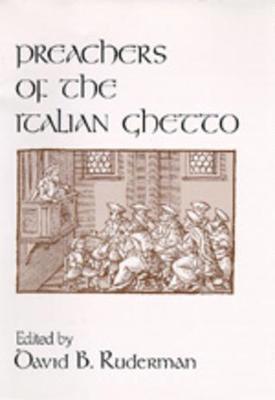
By the mid-sixteenth century, Jews in the cities of Italy were being crowded into compulsory ghettos as a result of the oppressive policies of Pope Paul IV and his successors. The sermons of Jewish preachers during this period provide a remarkable vantage point from which to view the early modern Jewish social and cultural landscape. In this eloquent collection, six leading scholars of Italian Jewish history reveal the important role of these preachers: men who served as a bridge between the ghetto and the Christian world outside, between old and new conventions, and between elite and popular modes of thought. The story of how they reflected and shaped the culture of their listeners, who felt the pressure of cramped urban life as well as of political, economic, and religious persecution, is finally beginning to be told. Through the words of the Italian ghetto preachers, we discover a richly textured panorama of Jewish life more than 400 years ago.
Inbunden, Engelska, 1988
487 kr
Skickas inom 10-15 vardagar
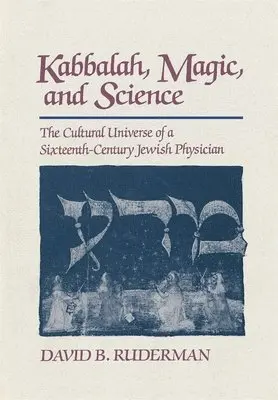
In describing the career of Abraham Yagel, a Jewish physician, kabbalist, and naturalist who lived in northern Italy from 1553 to about 1623, David Ruderman observes the remarkable interplay between early modern scientific thought and religious and occult traditions from a wholly new perspective: that of Jewish intellectual life.Whether he was writing about astronomical discoveries, demons, marvelous creatures and prodigies of nature, the uses of magic, or reincarnation, Yagel made a consistent effort to integrate empirical study of nature with kabbalistic and rabbinic learning. Yagel's several interests were united in his belief in the interconnectedness of all thing—a belief, shared by many Renaissance thinkers, that turns natural phenomena into “signatures” of the divine unity of all things. Ruderman argues that Yagel and his coreligionists were predisposed to this prevalent view because of occult strains in traditional Jewish thought He also suggests that underlying Yagel's passion for integrating and correlating all knowledge was a powerful psychological need to gain cultural respect and acceptance for himself and for his entire community, especially in a period of increased anti-Semitic agitation in Italy.Yagel proposed a bold new agenda for Jewish culture that underscored the religious value of the study of nature, reformulated kabbalist traditions in the language of scientific discourse so as to promote them as the highest form of human knowledge, and advocated the legitimate role of the magical arts as the ultimate expression of human creativity in Judaism. This portrait of Yagel and his intellectual world will well serve all students of late Renaissance and early modern Europe.
Inbunden, Engelska, 2000
1 697 kr
Skickas inom 3-6 vardagar
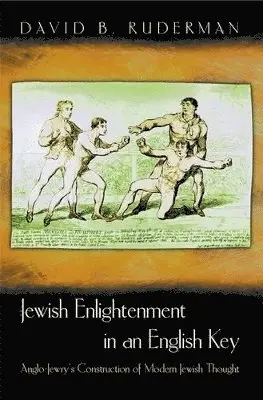
Historians of the European Jewish experience have long marginalized the intellectual achievement of Jews in England, where it was assumed no seminal figures contributed to the development of modern Jewish thought. In this first comprehensive account of the emergence of Anglo-Jewish thought in the eighteenth and nineteenth centuries, David Ruderman impels a reconsideration of the formative beginnings of modern European Jewish culture. He uncovers a vibrant Jewish intellectual life in England during the Enlightenment era by examining a small but fascinating group of hitherto neglected Jewish thinkers in the process of transforming their traditional Hebraic culture into a modern English one. This lively portrait of English Jews reformulating their tradition in light of Enlightenment categories illuminates an overlooked corner in the history of Jewish culture in England and Jewish thought during the Enlightenment. Ruderman overturns the conventional view that the origins of modern Jewish consciousness are located exclusively within the German-Jewish experience, particularly Moses Mendelssohn's circle.Independent of the better-known German experience, the encounter between Jewish and English thought was incubated amid the unprecedented freedom enjoyed by Jews in England. This resulted in a less inhibited defense of Jews and Judaism. In addition to the original and prolific thinkers David Levi and Abraham Tang, Ruderman introduces Abraham and Joshua Van Oven, Mordechai Shnaber Levison, Samuel Falk, Isaac Delgado, Solomon Bennett, Hyman Hurwitz, Emanuel Mendes da Costa, Ralph Shomberg, and others. Of obvious appeal and import to students of Jewish and English history, this study depicts the challenge of defining a religious identity in the modern age.
Häftad, Engelska, 2011
264 kr
Skickas inom 5-8 vardagar
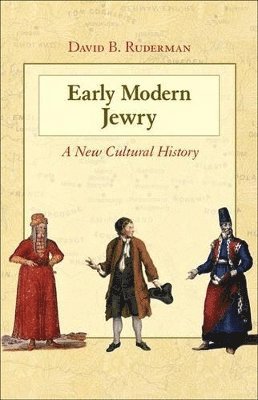
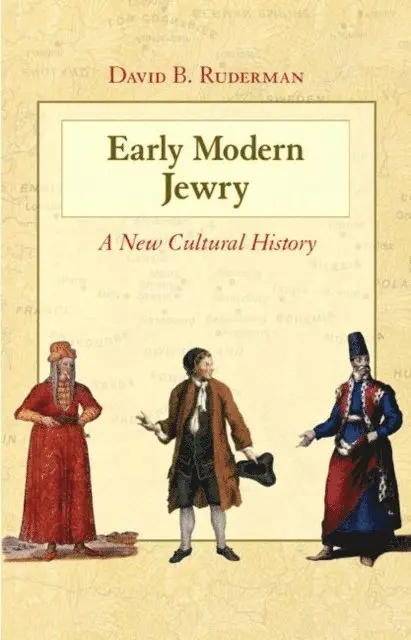
Early Modern Jewry boldly offers a new history of the early modern Jewish experience. From Krakow and Venice to Amsterdam and Smyrna, David Ruderman examines the historical and cultural factors unique to Jewish communities throughout Europe, and how these distinctions played out amidst the rest of society. Looking at how Jewish settlements in the early modern period were linked to one another in fascinating ways, he shows how Jews were communicating with each other and were more aware of their economic, social, and religious connections than ever before.Ruderman explores five crucial and powerful characteristics uniting Jewish communities: a mobility leading to enhanced contacts between Jews of differing backgrounds, traditions, and languages, as well as between Jews and non-Jews; a heightened sense of communal cohesion throughout all Jewish settlements that revealed the rising power of lay oligarchies; a knowledge explosion brought about by the printing press, the growing interest in Jewish books by Christian readers, an expanded curriculum of Jewish learning, and the entrance of Jewish elites into universities; a crisis of rabbinic authority expressed through active messianism, mystical prophecy, radical enthusiasm, and heresy; and the blurring of religious identities, impacting such groups as conversos, Sabbateans, individual converts to Christianity, and Christian Hebraists. In describing an early modern Jewish culture, Early Modern Jewry reconstructs a distinct epoch in history and provides essential background for understanding the modern Jewish experience.
Häftad, Engelska, 2012
597 kr
Skickas inom 3-6 vardagar
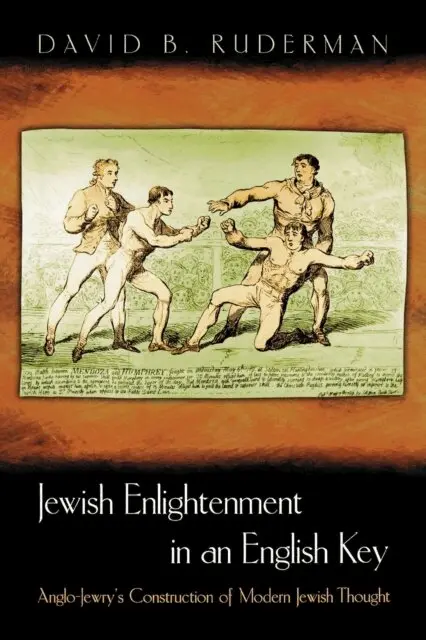
Historians of the European Jewish experience have long marginalized the intellectual achievement of Jews in England, where it was assumed no seminal figures contributed to the development of modern Jewish thought. In this first comprehensive account of the emergence of Anglo-Jewish thought in the eighteenth and nineteenth centuries, David Ruderman impels a reconsideration of the formative beginnings of modern European Jewish culture. He uncovers a vibrant Jewish intellectual life in England during the Enlightenment era by examining a small but fascinating group of hitherto neglected Jewish thinkers in the process of transforming their traditional Hebraic culture into a modern English one. This lively portrait of English Jews reformulating their tradition in light of Enlightenment categories illuminates an overlooked corner in the history of Jewish culture in England and Jewish thought during the Enlightenment. Ruderman overturns the conventional view that the origins of modern Jewish consciousness are located exclusively within the German-Jewish experience, particularly Moses Mendelssohn's circle.Independent of the better-known German experience, the encounter between Jewish and English thought was incubated amid the unprecedented freedom enjoyed by Jews in England. This resulted in a less inhibited defense of Jews and Judaism. In addition to the original and prolific thinkers David Levi and Abraham Tang, Ruderman introduces Abraham and Joshua Van Oven, Mordechai Shnaber Levison, Samuel Falk, Isaac Delgado, Solomon Bennett, Hyman Hurwitz, Emanuel Mendes da Costa, Ralph Shomberg, and others. Of obvious appeal and import to students of Jewish and English history, this study depicts the challenge of defining a religious identity in the modern age.
Inbunden, Engelska, 2004
955 kr
Skickas inom 10-15 vardagar
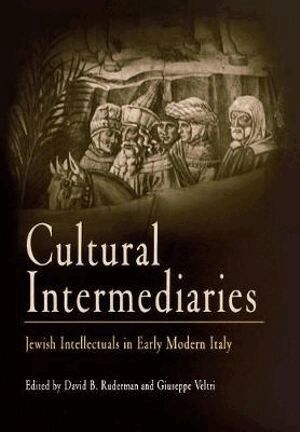
Focusing on an epoch of spectacular demographic, political, economic, and cultural changes for European Jewry, Cultural Intermediaries chronicles the lives and thinking of ten Jewish intellectuals of the Renaissance, nine of them from Italy and one a Portuguese exile who settled in the Ottoman empire after a long sojourn in Italy. David B. Ruderman, Giuseppe Veltri, and the other contributors to this volume detail how, in the relative openness of cultural exchange encountered in such intellectual centers as Florence, Mantua, Pisa, Naples, Ferrara, and Salonika, these Jewish savants sought to enlarge their cultural horizons, to correlate the teachings of their own tradition with those outside it, and to rethink the meaning of their religious and ethnic identities within the intellectual and religious categories common to European civilization as a whole.The engaging intellectual profiles created especially for this volume by scholars from Israel, North America, and Europe represent an important rereading and reinterpretation of early modern Jewish culture and society and its broader European intellectual contexts.
Inbunden, Engelska, 2007
765 kr
Skickas inom 10-15 vardagar
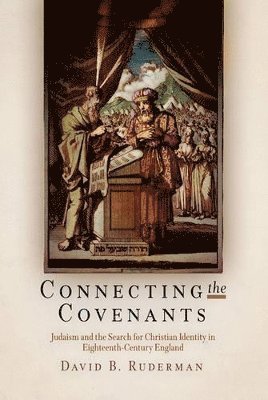
The first few decades of the eighteenth century witnessed an important moment in Jewish-Christian relations, as influential Christian scholars increasingly looked to Jewish texts to reveal the truths of their own faith. To what extent could postbiblical writings help them better understand the New Testament? And who would best be able to explicate these connections?Connecting the Covenants focuses on two separate but entwined stories, the first centering around the colorful character of Moses Marcus. The English-born son of wealthy parents and the grandson of the famous autobiographical author Glikl of Hameln, Marcus was a prominent Jew educated in the Ashkenazic yeshivah at Hamburg. On New Year's Day, 1723, Marcus was baptized as a Christian, later publishing a justification of his conversion and a vindication of his newly discovered faith in a small book in London. A trophy convert, he was promoted by figures at the highest levels of the Anglican Church as a cultural mediator between Judaism and Christianity. His modest successes in the world of the elite clerical establishment were followed, however, by conspicuous failures, both intellectual and material.The second story that David Ruderman tells emerges against the background of Marcus's professional decline. In the end, the prize convert proved to be a theologian of limited ability, far outstripped in sophistication and openness to rabbinic learning by a circle of Enlightenment Protestant scholars. It was not the Jew who had abjured Judaism who was willing or able to apply the Mishnah and Talmud to Christian exegesis, but figures such as William Whiston, Anthony Collins, William Wotton, and the Dutch scholar William Surenhusius who seized upon the ways to connect the covenants.
Inbunden, Engelska, 2019
819 kr
Skickas inom 10-15 vardagar
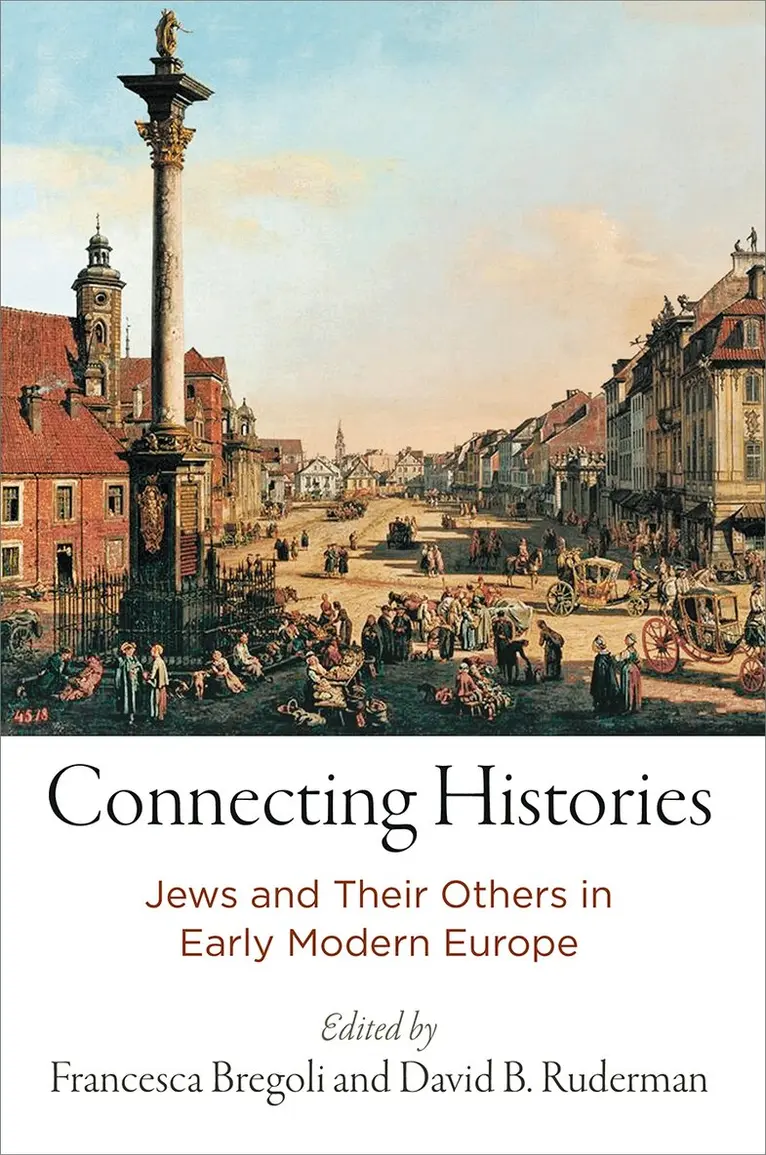
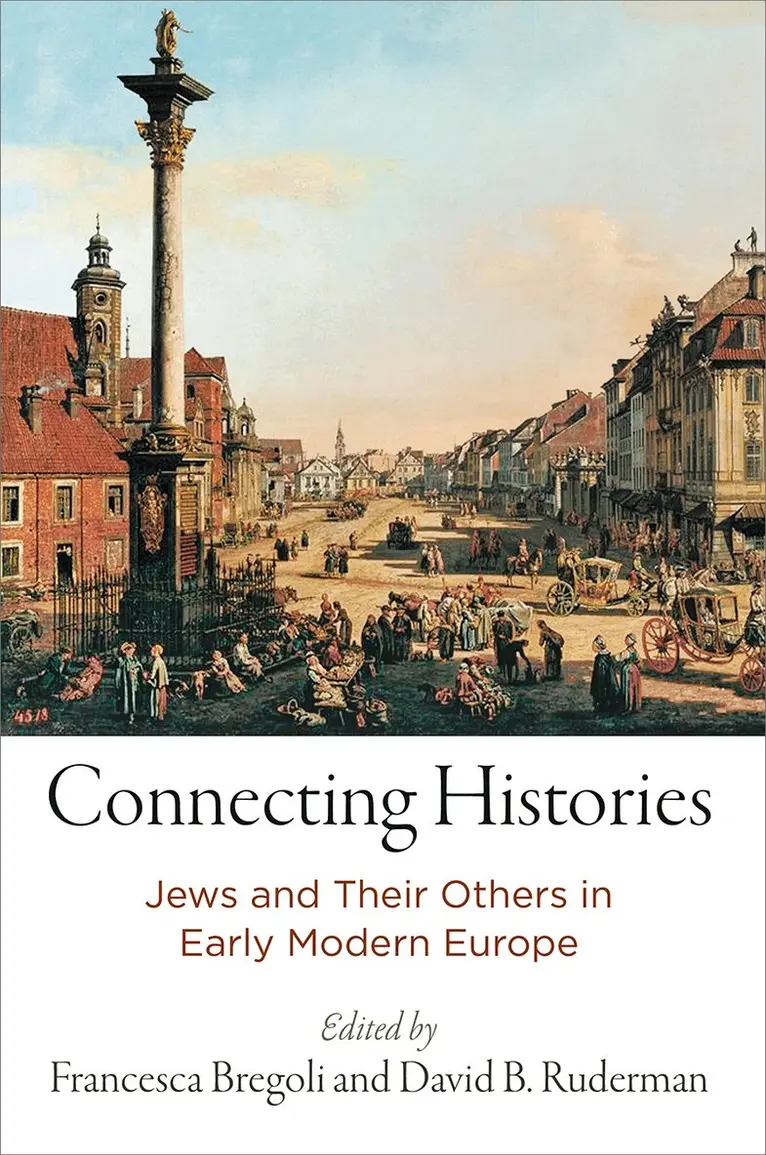
Whether forced by governmental decree, driven by persecution and economic distress, or seeking financial opportunity, the Jews of early modern Europe were extraordinarily mobile, experiencing both displacement and integration into new cultural, legal, and political settings. This, in turn, led to unprecedented modes of social mixing for Jews, especially for those living in urban areas, who frequently encountered Jews from different ethnic backgrounds and cultural orientations. Additionally, Jews formed social, economic, and intellectual bonds with mixed populations of Christians. While not necessarily effacing Jewish loyalties to local places, authorities, and customs, these connections and exposures to novel cultural settings created new allegiances as well as new challenges, resulting in constructive relations in some cases and provoking strife and controversy in others.The essays collected by Francesca Bregoli and David B. Ruderman in Connecting Histories show that while it is not possible to speak of a single, cohesive transregional Jewish culture in the early modern period, Jews experienced pockets of supra-local connections between West and East-for example, between Italy and Poland, Poland and the Holy Land, and western and eastern Ashkenaz-as well as increased exchanges between high and low culture. Special attention is devoted to the impact of the printing press and the strategies of representation and self-representation through which Jews forged connections in a world where their status as a tolerated minority was ambiguous and in constant need of renegotiation.Exploring the ways in which early modern Jews related to Jews from different backgrounds and to the non-Jews around them, Connecting Histories emphasizes not only the challenging nature and impact of these encounters but also the ambivalence experienced by Jews as they met their others.Contributors: Michela Andreatta, Francesca Bregoli, Joseph Davis, JesÚs de Prado Plumed, Andrea Gondos, Rachel L. Greenblatt, Gershon David Hundert, Fabrizio Lelli, Moshe Idel, Debra Kaplan, Lucia Raspe, David B. Ruderman, Pavel SlÁdek, Claude B. Stuczynski, Rebekka Voß.
Inbunden, Engelska, 2020
711 kr
Skickas inom 10-15 vardagar
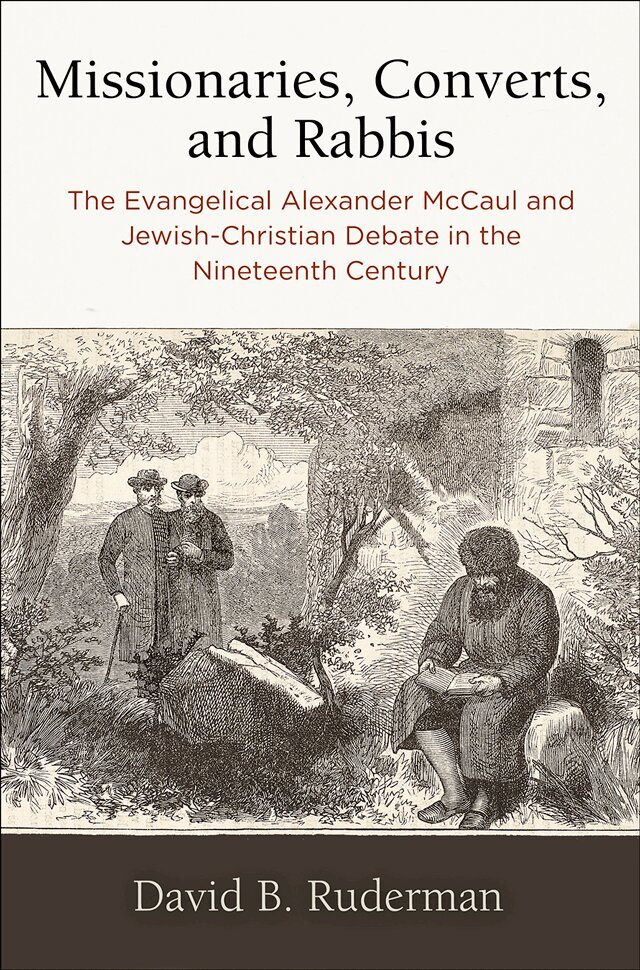
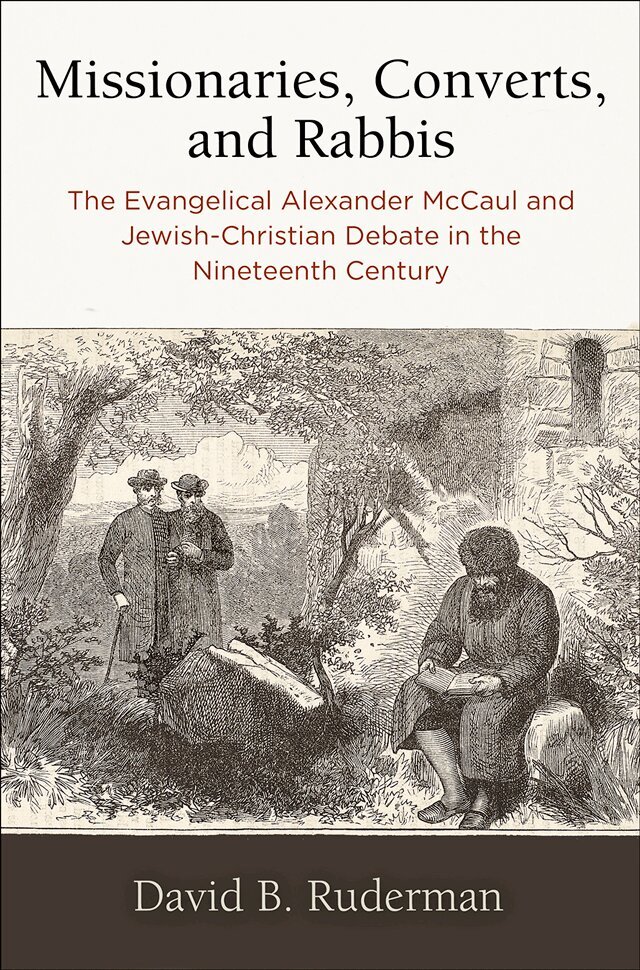
An examination of the life and work of Alexander McCaul and his impact on Jewish-Christian relationsIn Missionaries, Converts, and Rabbis, David B. Ruderman considers the life and works of prominent evangelical missionary Alexander McCaul (1799-1863), who was sent to Warsaw by the London Society for the Promotion of Christianity Amongst the Jews. He and his family resided there for nearly a decade, which afforded him the opportunity to become a scholar of Hebrew and rabbinic texts. Returning to England, he quickly rose up through the ranks of missionaries to become a leading figure and educator in the organization and eventually a professor of post-biblical studies at Kings College, London. In 1837, McCaul published The Old Paths, a powerful critique of rabbinic Judaism that, once translated into Hebrew and other languages, provoked controversy among Jews and Christians alike.Ruderman first examines McCaul in his complexity as a Hebraist affectionately supportive of Jews while opposing the rabbis. He then focuses his attention on a larger network of his associates, both allies and foes, who interacted with him and his ideas: two converts who came under his influence but eventually broke from him; two evangelical colleagues who challenged his aggressive proselytizing among the Jews; and, lastly, three Jewish thinkers-two well-known scholars from Eastern Europe and a rabbi from Syria-who refuted his charges against the rabbis and constructed their own justifications for Judaism in the mid-nineteenth century.Missionaries, Converts, and Rabbis reconstructs a broad transnational conversation between Christians, Jews, and those in between, opening a new vista for understanding Jewish and Christian thought and the entanglements between the two faith communities that persist in the modern era. Extending the geographical and chronological reach of his previous books, Ruderman continues his exploration of the impact of Jewish-Christian relations on Jewish self-reflection and the phenomenon of mingled identities in early modern and modern Europe.
Inbunden, Engelska, 1990
1 143 kr
Skickas inom 10-15 vardagar
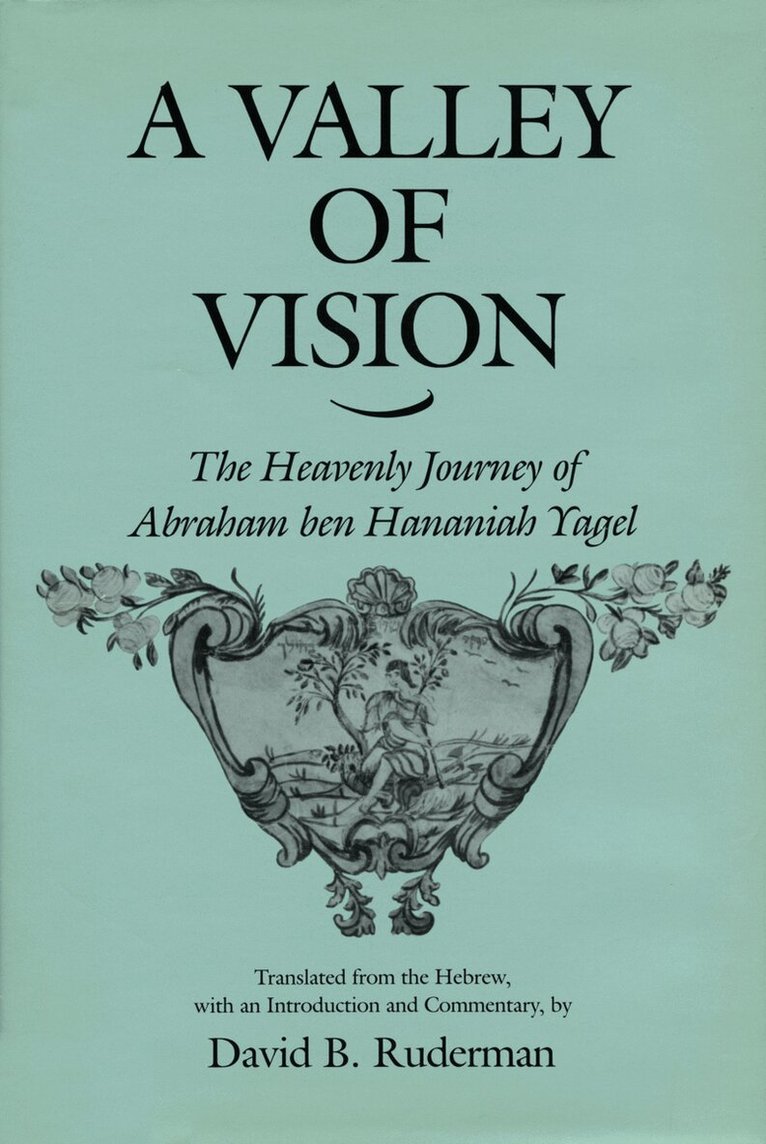
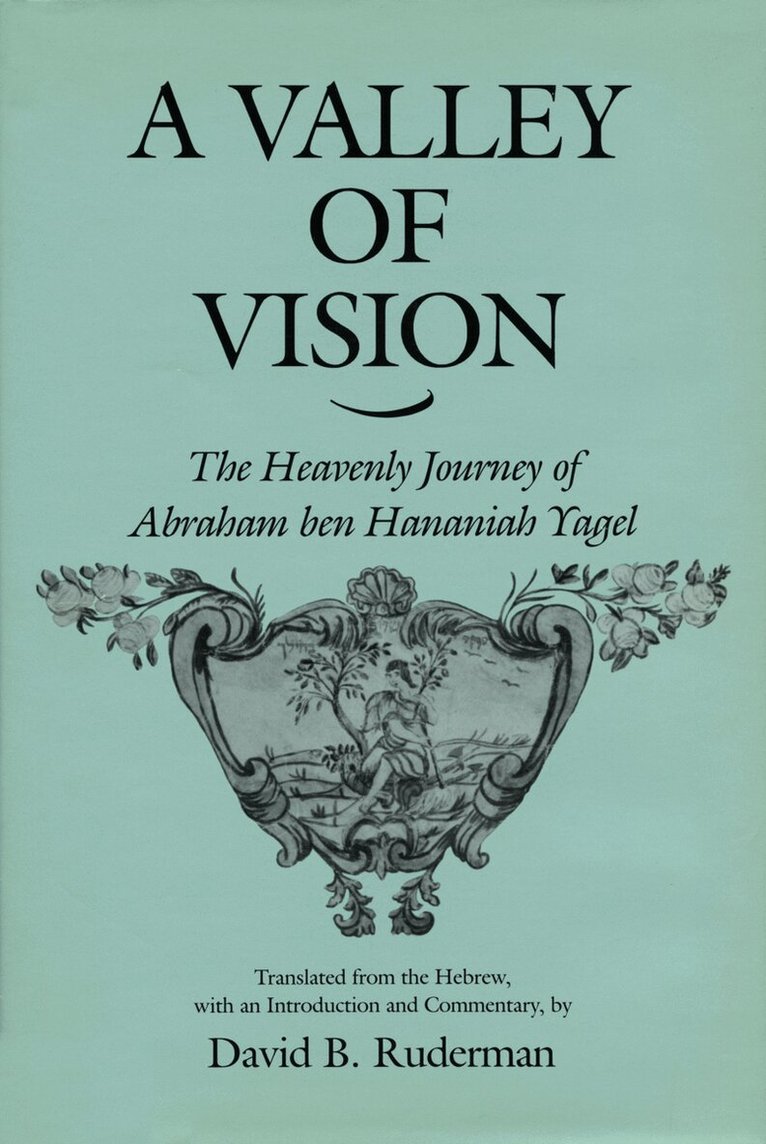
Abraham ben Hananiah Yagel 1553-c.1624) composed his Hebrew work Gei Hizzayon (A Valley of Vision) in Italy at the end of the sixteenth century. This striking text, so different from the other writings of the prolific physician, natural philosopher, and kabbalist, is first an autobiographical account of the vicissitudes of the author's years as a Jewish loan banker. It is also a description of a heavenly journey he is taken on by the soul of his recently deceased father, who visits his son while he is imprisoned in Mantua for debt. Finally, it is a series of theological and moral discussions based on the insights of Judaism, particularly the kabbalah as understood by Yagel and his Italian contemporaries.A Valley of Vision is unique in Hebrew literature in its integration of traditional Jewish materials with contemporary literary and iconographic innovations. It is also a fascinating window into the social and cultural world of Italian Jewry at the end of the sixteenth century and its effect on the entire late Renaissance period.David B. Ruderman's is the first translation of this important work into any Western language. The book will be of great interest to both the specialist and the general reader of Jewish and late Renaissance history, thought, and literature.
Häftad, Engelska, 2001
264 kr
Skickas inom 10-15 vardagar
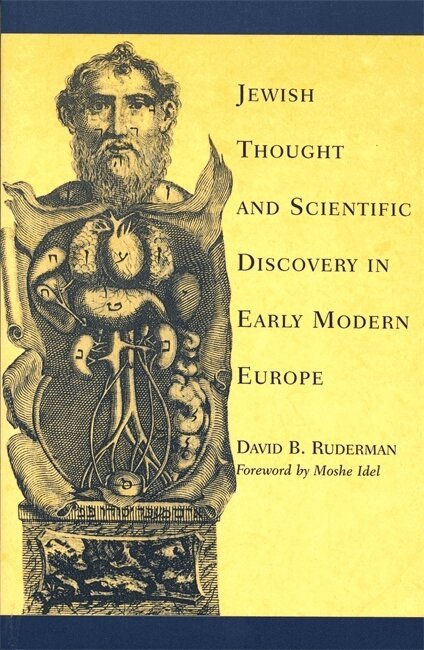
This book is a sally into the scientific dimension of Jewish intellectual history in the early modern world, dealing with many key personalities and topics in a novel way. Included are thumbnail sketches of stoicism, iatrochemistry and pantheism, in addition to reviews of the major issues in the Jewish historiography of the period. It offers comprehensive treatment of the impact of the scientific revolution on Jewish culture in early modern Europe and should be of value not only to students of Jewish intellectual history of this period, but also more generally to anyone interested in European cultural history or the history of medicine.
Inbunden, Engelska, 2025
1 269 kr
Skickas inom 5-8 vardagar
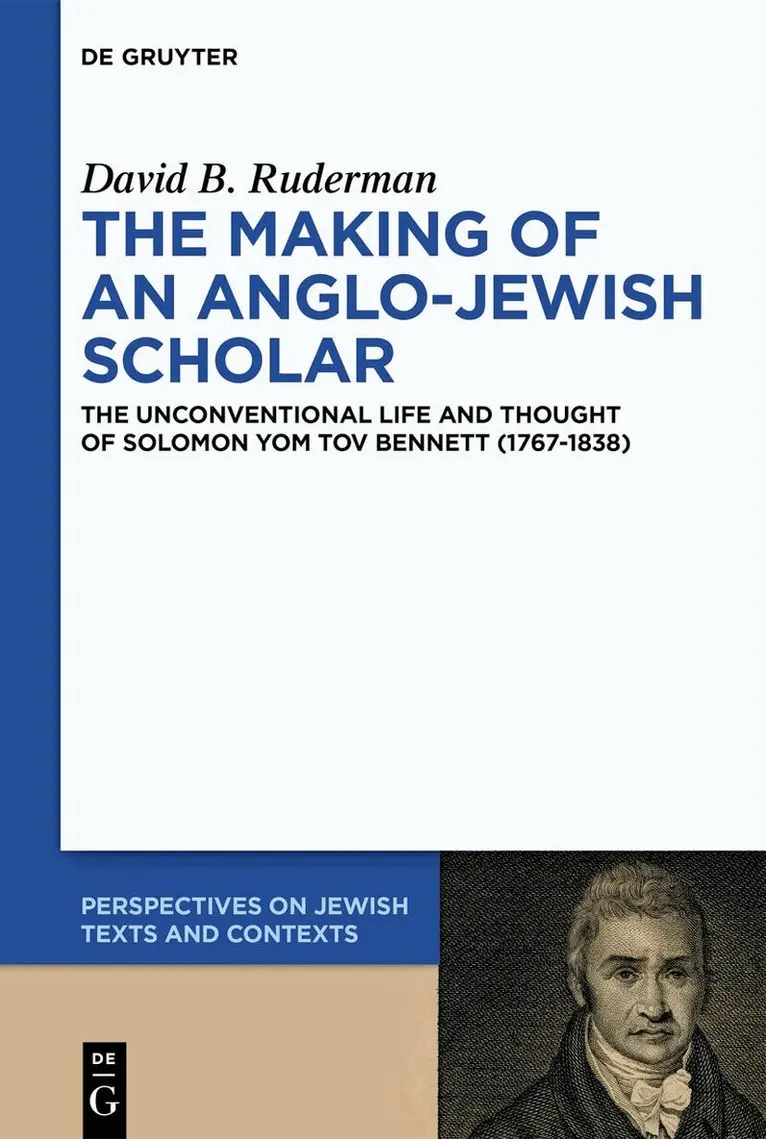
This book is a study of the life and thought of the Polish Jew Solomon Yom Tov Bennett (1767-1838), who immigrated to London where he spent the last forty years of his life. In focusing on Bennett’s learned life, it underscores the significance of this singular writer, artist, and public figure, especially his remarkable dual interests in art and thought, his biblical scholarship, his social and intellectual connections with some of the most famous and accomplished Christian intellectuals of London, and his self-determination to complete his life-long ambition of serving Western civilization by correcting and rewriting the entire standard edition of the English Old Testament.Bennett’s Christian associates respected his learning and were willing to accept him as a Jew in their ranks. His integration into the upper echelons of the Christian literary establishment—dukes, jurists, theologians, and other scholars—did not impede his loyalty to his faith. On the contrary, Bennett’s Christian friends made him more Jewish, more convinced of Judaism’s moral force, and more secure in his own skin as a member of a proud minority among Christian elites supposedly liberated, so he hoped, from the dark hostility of the Christian past. His supreme act of translating the Bible constituted the ultimate payback he could offer the altruistic Christians he had met, open to welcoming him not despite his Jewishness but because of it. Bennett’s transformation from a Polish Jewish immigrant to a proud Anglo-Jew exemplifies a unique path of modern Jewish life and self-reflection, one ultimately shaped by the particular ambiance of his newly adopted country.
Inbunden, Engelska, 2017
877 kr
Skickas inom 5-8 vardagar
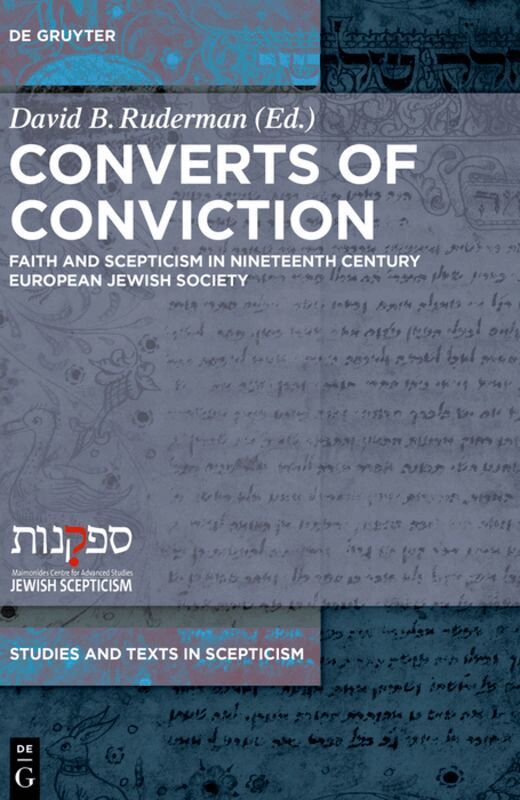
The study of Jewish converts to Christianity in the modern era has long been marginalized in Jewish historiography. Labeled disparagingly in the Jewish tradition as meshumadim (apostates), many earlier Jewish scholars treated these individuals in a negative light or generally ignored them as not properly belonging any longer to the community and its historical legacy. This situation has radically changed in recent years with an outpouring of new studies on converts in variegated times and places, culminating perhaps in the most recent synthesis of modern Jewish converts by Todd Endelman in 2015. While Endelman argues that most modern converts left the Jewish fold for economic, social, or political reasons, he does acknowledge the presence of those who chose to convert for ideological and spiritual motives. The purpose of this volume is to consider more fully the latter group, perhaps the most interesting from the perspective of Jewish intellectual history: those who moved from Judaism to Christianity out of a conviction that they were choosing a superior religion, and out of doubt or lack of confidence in the religious principles and practices of their former one. Their spiritual journeys often led them to suspect their newly adopted beliefs as well, and some even returned to Judaism or adopted a hybrid faith consisting of elements of both religions. Their intellectual itineraries between Judaism and Christianity offer a unique perspective on the formation of modern Jewish identities, Jewish-Christian relations, and the history of Jewish skeptical postures. The approach of the authors of this book is to avoid broad generalizations about the modern convert in favor of detailed case studies of specific converts in four distinct localities: Germany, Russia, Poland, and England, all living in the nineteenth- century. In so doing, it underscores the individuality of each convert’s life experience and self-reflection and the need to examine more intensely this relatively neglected dimension of Jewish and Christian cultural and intellectual history.