David Ben-Merre - Böcker
Visar alla böcker från författaren David Ben-Merre. Handla med fri frakt och snabb leverans.
6 produkter
6 produkter
683 kr
Skickas inom 3-6 vardagar
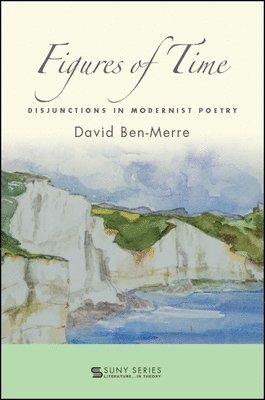
Focuses on how nuances of poetic form alter how we have come to understand cultural aspects of time.Figures of Time proposes radically new ideas about the very poetic ground of culture. Presenting unique close readings of six modern poets-Wallace Stevens, W. B. Yeats, H. D. (Hilda Doolittle), Ezra Pound, Langston Hughes, and T. S. Eliot-David Ben-Merre brings recent theoretical questions about the rhetoric of modernism and poetic figuration into current discussions in critical theory. He argues that poetic spaces, often disjunctions of sound and sense, disrupt our culturally inherited notions of time, reimagining with an often irrational and anachronistic backward glance what we take to be historical chronologies, psychological perceptions of time, and collective scripts about causality.
1 308 kr
Skickas inom 5-8 vardagar
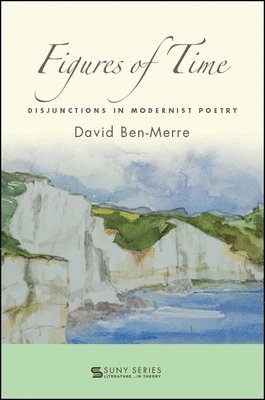
Focuses on how nuances of poetic form alter how we have come to understand cultural aspects of time.Figures of Time proposes radically new ideas about the very poetic ground of culture. Presenting unique close readings of six modern poets-Wallace Stevens, W. B. Yeats, H. D. (Hilda Doolittle), Ezra Pound, Langston Hughes, and T. S. Eliot-David Ben-Merre brings recent theoretical questions about the rhetoric of modernism and poetic figuration into current discussions in critical theory. He argues that poetic spaces, often disjunctions of sound and sense, disrupt our culturally inherited notions of time, reimagining with an often irrational and anachronistic backward glance what we take to be historical chronologies, psychological perceptions of time, and collective scripts about causality.
601 kr
Skickas inom 3-6 vardagar
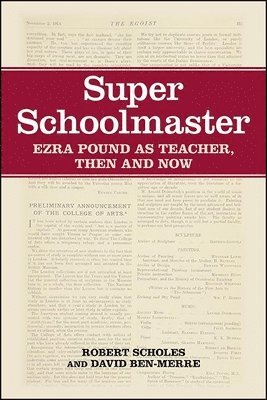
Traces the controversial poet's thinking about teaching and learning throughout his career.Once described by T. S. Eliot as "first and foremost, a teacher and campaigner," Ezra Pound has received no shortage of critical attention. Super Schoolmaster suggests that Pound still has quite a bit to teach readers in the twenty-first century, particularly amid increasing threats to the humanities and higher education. Robert Scholes and David Ben-Merre illuminate Pound's contradictory career of innovative poetics and reactionary politics by following his extensive thinking about teaching and learning within and beyond the academy. Given how scornful Pound could be of institutionalized schooling, the book's title may feel like a misnomer; however, Super Schoolmaster makes clear how wholeheartedly this modernist icon believed in the importance and vitality of learning. Pound's brief flirtation with becoming a professional academic ended early on, but his entire life's work can be seen as an immense pedagogical lesson, promoting a living, breathing culture tied to the very fabric of contemporary life. Not to ignore his critics, who have taught the necessity of reading against Pound, Scholes and Ben-Merre propose that to reread Pound now is to celebrate the joy of learning while always remaining mindful of the ultimate perils of his example.
1 545 kr
Skickas inom 3-6 vardagar
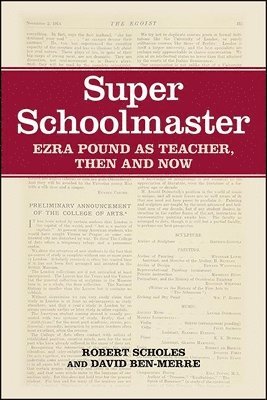
Traces the controversial poet's thinking about teaching and learning throughout his career.Once described by T. S. Eliot as "first and foremost, a teacher and campaigner," Ezra Pound has received no shortage of critical attention. Super Schoolmaster suggests that Pound still has quite a bit to teach readers in the twenty-first century, particularly amid increasing threats to the humanities and higher education. Robert Scholes and David Ben-Merre illuminate Pound's contradictory career of innovative poetics and reactionary politics by following his extensive thinking about teaching and learning within and beyond the academy. Given how scornful Pound could be of institutionalized schooling, the book's title may feel like a misnomer; however, Super Schoolmaster makes clear how wholeheartedly this modernist icon believed in the importance and vitality of learning. Pound's brief flirtation with becoming a professional academic ended early on, but his entire life's work can be seen as an immense pedagogical lesson, promoting a living, breathing culture tied to the very fabric of contemporary life. Not to ignore his critics, who have taught the necessity of reading against Pound, Scholes and Ben-Merre propose that to reread Pound now is to celebrate the joy of learning while always remaining mindful of the ultimate perils of his example.
1 307 kr
Skickas
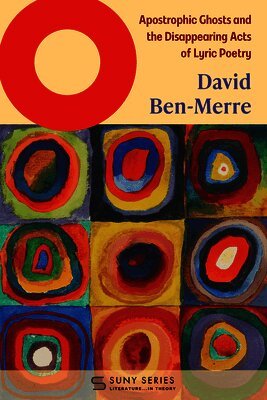
Considers how a series of poets reimagined the possibilities of "O" as a gesture of apostrophe and, even more so, of writing.In poetry circles, "O" is commonly associated with apostrophe—a dramatized turn to call out to an absent friend or idea. This call, however, is made possible by a graphic sign it pretends not to acknowledge. O follows poets who were rethinking the apostrophic "O" alongside its symbolic, iconic, and material forms. Organized conceptually rather than chronologically, the book explores how works by W. B. Yeats, Wallace Stevens, Elizabeth Bishop, James Merrill, Emily Dickinson, and Terrance Hayes, as well as the singer-songwriter Carly Simon and the band The Cure, each turn at deeply human moments to call forth an alternative to the present. Culminating in an experimental epilogue cowritten with the Romanticist Manu Samriti Chander, O engages with ongoing, sometimes excessive debates about lyric poetry and literary critical method, finding modest ground between their respective sides.
394 kr
Skickas
Considers how a series of poets reimagined the possibilities of "O" as a gesture of apostrophe and, even more so, of writing.In poetry circles, "O" is commonly associated with apostrophe—a dramatized turn to call out to an absent friend or idea. This call, however, is made possible by a graphic sign it pretends not to acknowledge. O follows poets who were rethinking the apostrophic "O" alongside its symbolic, iconic, and material forms. Organized conceptually rather than chronologically, the book explores how works by W. B. Yeats, Wallace Stevens, Elizabeth Bishop, James Merrill, Emily Dickinson, and Terrance Hayes, as well as the singer-songwriter Carly Simon and the band The Cure, each turn at deeply human moments to call forth an alternative to the present. Culminating in an experimental epilogue cowritten with the Romanticist Manu Samriti Chander, O engages with ongoing, sometimes excessive debates about lyric poetry and literary critical method, finding modest ground between their respective sides.