David D. Cooper - Böcker
Visar alla böcker från författaren David D. Cooper. Handla med fri frakt och snabb leverans.
3 produkter
3 produkter
375 kr
Skickas inom 5-8 vardagar
Thomas Merton may have seemed an unlikely candidate for a best-selling author. Cloistered in a remote Kentucky monastery, Merton struggled as a young man to reconcile the contemplative life he sought as a monk and his very public passion for writing. Publisher James Laughlin saw Merton's talent and played the muse, encouraging him with the poems, essays, and diaries of other writers and publishing nearly everything Merton sent in return.Ironically, the very society Merton rejected upon entering the monastery embraced his work, bringing him publishing success only dreamed of by more eager authors. Soon Merton discovered he had a podium, a voice, and a responsibility that weighed as heavily on him as his previous quest for silence. Laughlin's encouragement remained constant throughout, as political ally, publishing adviser, and supporting friend.Nearly thirty years of rich correspondence documents this strong literary and personal relationship and traces the remarkable development of Merton's vision: from an early focus on matters internal and religious, to a tremendous world view encompassing issues of race, politics, war, and the spiritual decay of modern society.
578 kr
Skickas inom 5-8 vardagar
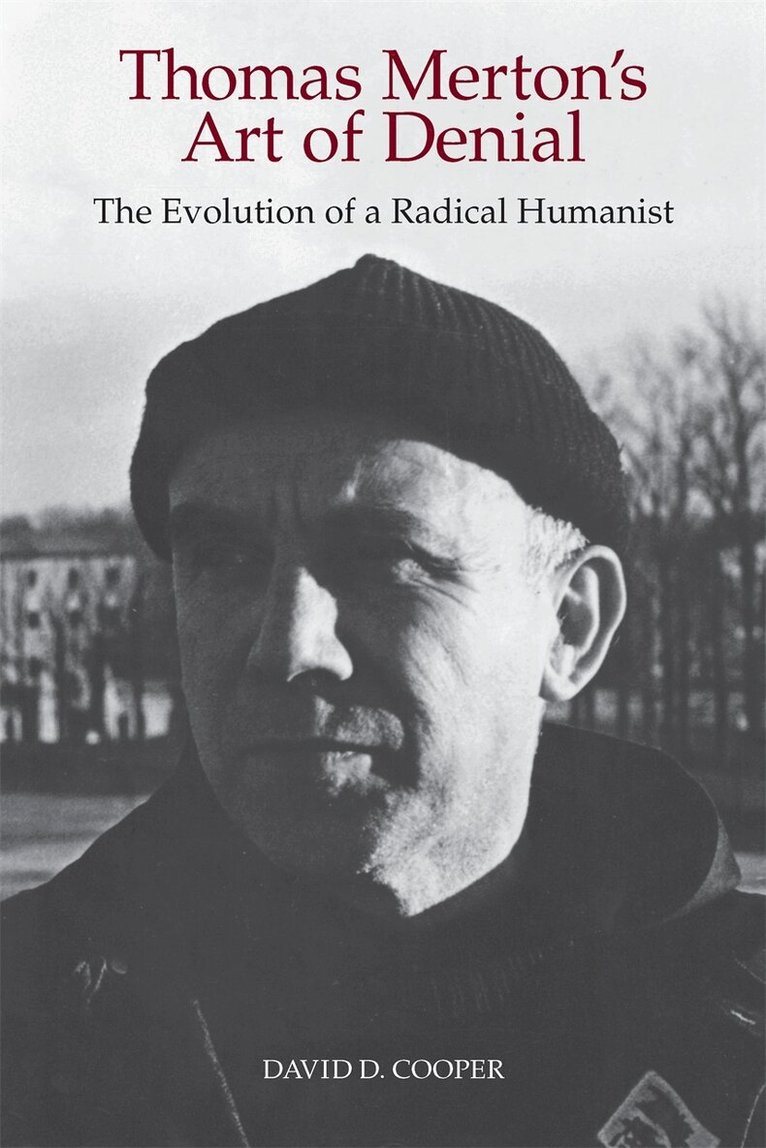
Trappist monk and best-selling author, Thomas Merton battled constantly within himself as he attempted to reconcile two seemingly incompatible roles in life. As a devout Catholic, he took vows of silence and stability, longing for the security and closure of the monastic life. But as a writer he felt compelled to seek friendships in literary circles and success in the secular world.In Thomas Merton's Art of Denial, David D. Cooper traces Merton's attempts to reach an accommodation with himself, to find a way in which "the silence of the monk could live compatibly with the racket of the writer." From the roots of this painful division in the unsettled early years of Merton's life, to the turmoil of his directionless early adult years in which he first attempted to write, he was besieged with self-doubts. Turning to life in a monastery in Kentucky in 1941, Merton believed he would find the solitude and peace lacking in the quotidian world. But, as Merton once wrote, "An author in a Trappist monastery is like a duck in a chicken coop. And he would give anything in the world to be a chicken instead of a duck."Merton felt compelled to choose between life as either a less than perfect priest or a less prolific writer. Discovering in his middle years that the ideal monastic life he had envisioned was an impossibility, Merton turned his energies to abolishing war. It was in this pursuit that he finally succeeded in fusing the two sides of his life, converting his frustrated idealism into a radical humanism placed in the service of world peace.Here is a portrait of a man torn between the influence of the twentieth century and the serenity of the religious ideal, a man who used his own personal crises to guide his youthful ideals to a higher purpose.
391 kr
Skickas inom 7-10 vardagar
Can civic engagement rescue the humanities from a prolonged identity crisis? How can the practices and methods, the conventions and innovations of humanities teaching and scholarship yield knowledge that contributes to the public good? These are just two of the vexing questions David D. Cooper tackles in his essays on the humanities, literacy, and public life. As insightful as they are provocative, these essays address important issues head-on and raise questions about the relevance and roles of humanities teaching and scholarship, the moral footings and public purposes of the humanities, engaged teaching practices, institutional and disciplinary reform, academic professionalism, and public scholarship in a democracy. Destined to stir discussion about the purposes of the humanities and the problems we face during an era of declining institutional support, public alienation and misunderstanding, student ambivalence, and diminishing resources, the questions Cooper raises in this book are uncomfortable and, in his view, necessary for reflection, renewal, and reform. With frank, deft assessments, Cooper reports on active learning initiatives that reenergized his own teaching life while reshaping the teaching mission of the humanities, including service learning, collaborative learning, the learning community movement, and student-centered and deliberative pedagogy.